Ad Blocker Detected
Our website is made possible by displaying online advertisements to our visitors. Please consider supporting us by disabling your ad blocker.
While the differences between indoor and outdoor portable power stations might seem subtle at first glance, understanding their distinct design features and safety considerations is vital for maximum use. Each type is tailored to specific environments, demanding careful evaluation of capacity, durability, and safety protocols. This nuanced comparison reveals important factors that could influence your choice—factors that become clearer as we explore the technical aspects and practical applications involved.
Key Takeaways
- Indoor power stations are compact, portable, and designed for safe use in enclosed spaces with emphasis on ventilation.
- Outdoor units feature larger capacities, rugged weather resistance, and support alternative charging methods like solar and car charging.
- Indoor stations prioritize safety, minimal emissions, and space efficiency, while outdoor models emphasize durability and environmental resilience.
- Indoor use requires proper ventilation and monitoring, whereas outdoor use demands protection against moisture, dust, and temperature extremes.
- Charging options differ: indoor stations rely on standard outlets and USB ports, while outdoor units support diverse methods for continuous power.
How Do Indoor and Outdoor Portable Power Stations Differ in Design?
Indoor and outdoor portable power stations differ markedly in their design to suit distinct environments and usage demands. Indoor models typically prioritize compactness and enhanced portability features, allowing easy movement within confined spaces. They often have smaller battery capacities, optimized for powering low-wattage devices during short-term outages or indoor activities. Conversely, outdoor units are designed with larger battery capacities to support extended use in remote locations, emphasizing durability and weather resistance. These stations incorporate rugged portability features such as reinforced handles, protective casing, and robust construction to endure harsh conditions. The differences in battery capacity and portability features reflect their specific applications: indoor units favor convenience and compactness, while outdoor models balance higher power output with rugged portability to meet outdoor demands.
When Is It Safe to Use a Power Station Indoors?
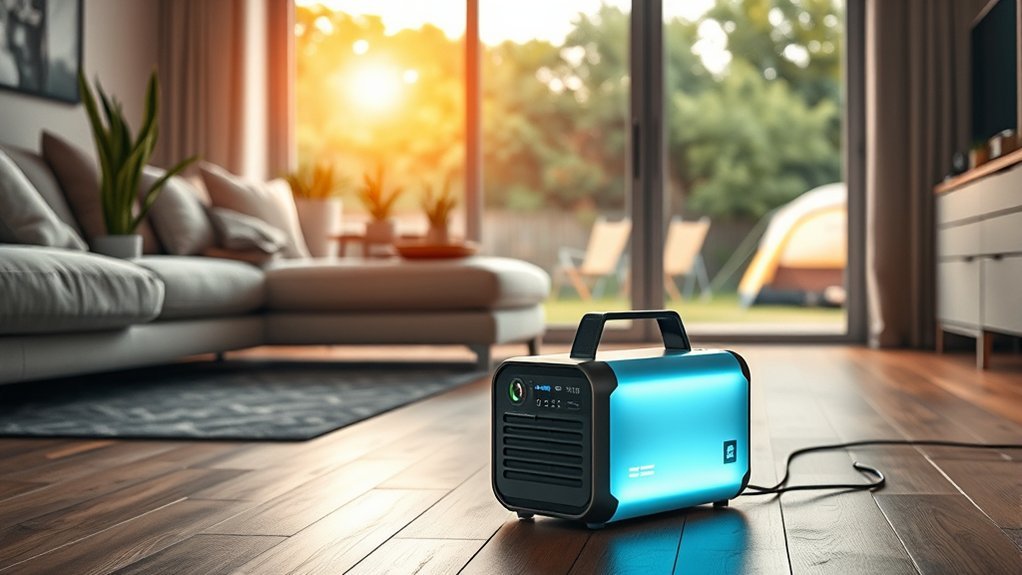
Using a power station indoors requires ensuring adequate ventilation to prevent the buildup of potentially toxic fumes. We must carefully monitor carbon monoxide levels, as this odorless gas can pose serious health risks even in well-ventilated spaces. Proper safety measures are essential to mitigate hazards associated with indoor operation.
Adequate Ventilation Needed
Because power stations emit exhaust gases and potentially hazardous fumes during operation, ensuring adequate ventilation is essential for safe indoor use. Understanding ventilation requirements involves examining the indoor space considerations, such as room size and airflow capacity. Proper ventilation helps dissipate harmful gases and maintains air quality within safe limits. We recommend installing power stations in well-ventilated areas with sufficient airflow, avoiding confined or poorly ventilated spaces. Monitoring ambient air quality and ensuring the presence of exhaust outlets or fans can further mitigate risks. Adhering to ventilation standards tailored to the power station’s emission levels minimizes the accumulation of toxic fumes. Ultimately, evaluating indoor space considerations ensures that ventilation requirements are met, enabling safer operation of portable power stations indoors.
Avoiding Toxic Fumes
Determining when it’s safe to operate a portable power station indoors hinges on understanding the device’s emission levels and the adequacy of ventilation measures in place. Indoor safety depends on minimizing exposure to toxic fumes, which can accumulate if ventilation is insufficient. Most modern power stations are designed to produce minimal emissions, but some models may still emit trace amounts of harmful gases during operation. It’s essential to assess the device’s specifications and ensure proper ventilation to prevent toxic fumes from reaching unsafe concentrations. We must recognize that even low-emission units require strategic placement and airflow management to safeguard indoor air quality. Ultimately, thorough knowledge of emission profiles and ventilation effectiveness is vital for safe indoor use, emphasizing the importance of technical awareness in maintaining indoor safety.
Monitoring Carbon Monoxide Levels
Monitoring carbon monoxide (CO) levels is essential before operating a portable power station indoors, as CO is a colorless, odorless gas that can pose serious health risks even at low concentrations. Continuous assessment guarantees there’s no gas leak, which can occur if ventilation is inadequate or the device malfunctions. Prior to use, we must verify that the power capacity aligns with the station’s specifications, as overloading may increase the risk of incomplete combustion and CO production. Using portable power stations with integrated CO sensors or external detectors provides real-time data, enabling immediate response if CO levels rise. Adequate ventilation and strict adherence to manufacturer guidelines are critical, especially in enclosed spaces, to prevent dangerous buildup and guarantee safe indoor operation.
Key Factors to Consider Before Using Outdoors
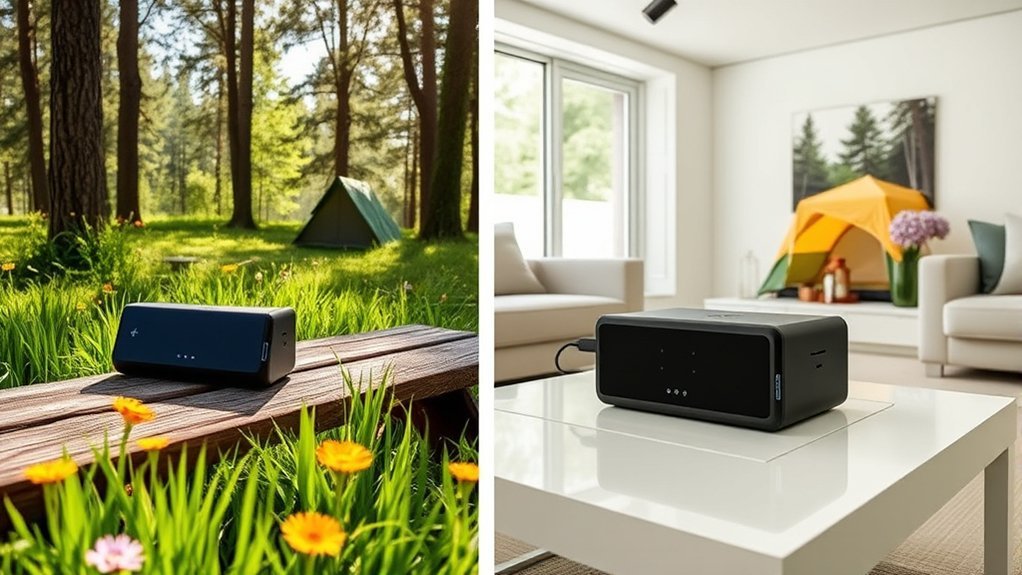
When considering outdoor use of a portable power station, evaluating environmental conditions is essential to guarantee safe and reliable operation. Weather resistance is critical; exposure to moisture, dust, or extreme temperatures can compromise device performance. Assessing portability features also matters—lightweight design and handle ergonomics facilitate transportation across uneven terrains.
| Factor | Consideration |
|---|---|
| Weather resistance | Ensure units are rated IP65 or higher for moisture and dust protection. |
| Portability features | Look for compact, lightweight models with secure handles. |
| Environmental factors | Evaluate ambient temperature and exposure risks before deployment. |
What Are the Main Advantages of Indoor Power Station Use?
Indoor power stations offer significant safety advantages through advanced protective features that minimize risks associated with electrical faults. Additionally, they enable convenient charging within controlled environments, ensuring consistent power availability. These benefits make indoor use particularly suitable for sensitive equipment and prolonged operations.
Enhanced Safety Features
Enhanced safety features are a primary advantage of using indoor portable power stations, as they are designed to mitigate common risks associated with power systems. These stations often include advanced safety certifications, ensuring compliance with rigorous standards, and enhancing user confidence. Additionally, their battery durability minimizes risks of overheating or failure over time, reducing potential hazards. The table below summarizes key safety attributes:
| Feature | Benefit | Certification Type |
|---|---|---|
| Overcurrent Protection | Prevents overloads, safeguarding devices | UL, CE certifications |
| Thermal Management | Maintains ideal battery temperatures | Industry standards |
| Short Circuit Prevention | Avoids electrical faults, reduces fire risk | Safety certifications |
These features collectively enhance safety, making indoor use more reliable and secure for users.
Convenient Indoor Charging
The convenience of indoor charging for portable power stations considerably enhances their usability, offering a seamless and accessible power management solution. Indoor environments typically provide stable power sources, enabling faster charging speeds and consistent battery capacity replenishment. This stability allows for optimized charging cycles, preserving battery health over time. Additionally, indoor charging stations often support higher charging currents, reducing downtime and ensuring readiness for emergency or daily use. The controlled environment minimizes exposure to external factors like temperature fluctuations, which can impact battery capacity and charging efficiency. Overall, indoor charging simplifies maintenance, maximizes battery capacity, and accelerates charging speed, making portable power stations more reliable and user-friendly for continuous, efficient power supply.
How Do Outdoor Power Stations Enhance Your Adventures?
Outdoor power stations markedly improve the efficiency and reliability of our adventures by providing portable, high-capacity energy sources that are easy to transport and deploy in remote environments. Their substantial battery capacity ensures sustained power for critical devices, reducing downtime and enhancing operational effectiveness. Advanced portability features, such as lightweight design, ergonomic handles, and compact form factors, facilitate seamless integration into various outdoor settings. These features enable us to carry heavy loads with minimal effort and position the station conveniently for immediate use. The combination of high battery capacity and optimized portability directly supports extended excursions, camping trips, or remote work sites. Overall, these power stations deliver dependable energy solutions that enhance our outdoor experiences through improved mobility and continuous power availability.
Common Safety Tips for Indoor and Outdoor Usage
Ensuring safety when operating portable power stations requires adherence to specific guidelines tailored for both indoor and outdoor environments. Proper ventilation prevents overheating, which can compromise battery lifespan and reduce overall power capacity. Avoid covering vents or exposing units to moisture, as these factors can lead to short circuits or corrosion. When handling batteries, always use appropriate protective equipment to mitigate electrical hazards. Maintaining optimal power capacity involves monitoring usage to prevent overloading circuits, especially indoors, where space constraints heighten risk. Regular inspections for damage or wear extend battery lifespan and ensure consistent performance. In outdoor settings, securing the station against environmental elements preserves its integrity. Clear safety protocols safeguard users and optimize the device’s longevity, ensuring reliable operation in diverse conditions.
Which Type of Power Station Suits Your Needs Best?
Choosing the right portable power station depends on analyzing your specific energy needs, usage environment, and mobility requirements. For indoor use, a compact design with a high-capacity power station battery and enhanced portability features ensures efficiency and safety. Outdoor applications demand rugged construction, larger batteries, and higher wattage outputs for extended use. Consider the table below for key differences:
| Feature | Indoor Power Station | Outdoor Power Station | Common Use Case |
|---|---|---|---|
| Power station battery | Moderate capacity, safety-focused | Larger capacity, durability | Emergency home backup, camping |
| Portability features | Compact, lightweight | Heavy-duty, rugged | Hiking, RV trips |
| Environmental tolerance | Sensitive to elements | Weather-resistant | Outdoor adventures |
| Charging options | Standard outlets, USB ports | Solar, car charging | Remote work, outdoor events |
| Usage environment | Controlled, indoor spaces | Variable, outdoor settings | Off-grid, disaster preparedness |
This comparison guides selecting a power station aligned with your specific needs.
Frequently Asked Questions
Can Indoor Portable Power Stations Run Sensitive Electronics Safely?
Indoor portable power stations can safely run sensitive electronics when equipped with proper surge protection and reliable battery safety features, ensuring stable voltage and preventing damage from power fluctuations. Always verify these safety measures before use.
What Are the Maintenance Requirements for Outdoor Power Stations?
We maintain outdoor power stations by regularly checking battery lifespan, ensuring weather resilience, and cleaning components; neglecting these leads to reduced efficiency, lifespan, and vulnerability—because even rugged gear needs a bit of tender loving care, right?
Are There Environmental Restrictions for Outdoor Power Station Use?
We guarantee outdoor power station use complies with environmental regulations to minimize ecological impact and prioritize outdoor safety, analyzing local restrictions and emission standards, thereby maintaining operational legality and safeguarding surrounding ecosystems during deployment.
How Long Do Portable Power Stations Typically Last Before Needing Replacement?
Typically, portable power stations last around 3 to 5 years, depending on battery lifespan and usage. Replacement factors include cycle count, environmental conditions, and maintenance, which all influence the device’s overall longevity before needing replacement.
Do Indoor Power Stations Emit Any Harmful Fumes or Gases?
Indoor power stations generally don’t emit harmful fumes or gases, but chemical emissions are possible if batteries malfunction. Adequate ventilation is essential to prevent accumulation, ensuring safety during prolonged use and reducing potential health risks.
Conclusion
Ultimately, choosing between indoor and outdoor power stations is like selecting the right tool to navigate a complex landscape. By understanding their distinct designs and safety considerations, we can navigate this terrain with confidence. Whether we’re illuminating a cozy room or powering an adventurous expedition, aligning the station’s capabilities with our environment guarantees seamless, reliable energy flow. It’s about harmonizing technology with context, creating a steady current that supports our needs without compromise.