Ad Blocker Detected
Our website is made possible by displaying online advertisements to our visitors. Please consider supporting us by disabling your ad blocker.
Like a well-orchestrated symphony, optimizing the fastest method to charge a portable power station requires precision and understanding of the underlying mechanics. We need to analyze the interplay between high-current chargers, suitable power sources, and the importance of safety measures. Each component’s efficiency influences overall charging speed, yet many overlook subtle factors that could accelerate or hinder the process. To truly maximize performance, examining these variables becomes essential — and the key might lie just beyond conventional approaches.
Key Takeaways
- Use high-current chargers compatible with the power station’s maximum input rating for faster charging.
- Optimize solar panel positioning and orientation to maximize sunlight exposure and charging efficiency.
- Connect directly to AC wall outlets with appropriate, high-amperage chargers for rapid input.
- Minimize device disconnections and ensure secure, intact cables to maintain optimal current flow.
- Monitor temperature and environmental conditions to prevent heat-related slowdowns and ensure safe, quick charging.
How Do Portable Power Stations Charge Faster?
To accelerate the charging process of portable power stations, understanding the key factors that influence charging speed is essential. Increasing charging current can reduce overall charging time but must be balanced against battery longevity and charging safety. High current rates may generate excessive heat, risking thermal degradation and compromising battery lifespan. Consequently, optimizing charge algorithms that regulate current flow ensures efficient charging without jeopardizing safety or battery health. Additionally, advanced battery management systems monitor temperature, voltage, and current to prevent overcharging and overheating. By carefully controlling these parameters, we can enhance charging speed while maintaining long-term battery integrity. Ultimately, a precise balance between rapid charging and safeguarding battery longevity and safety defines the most effective methods for faster power station charging.
Using High-Amperage Wall Chargers for Rapid Charging
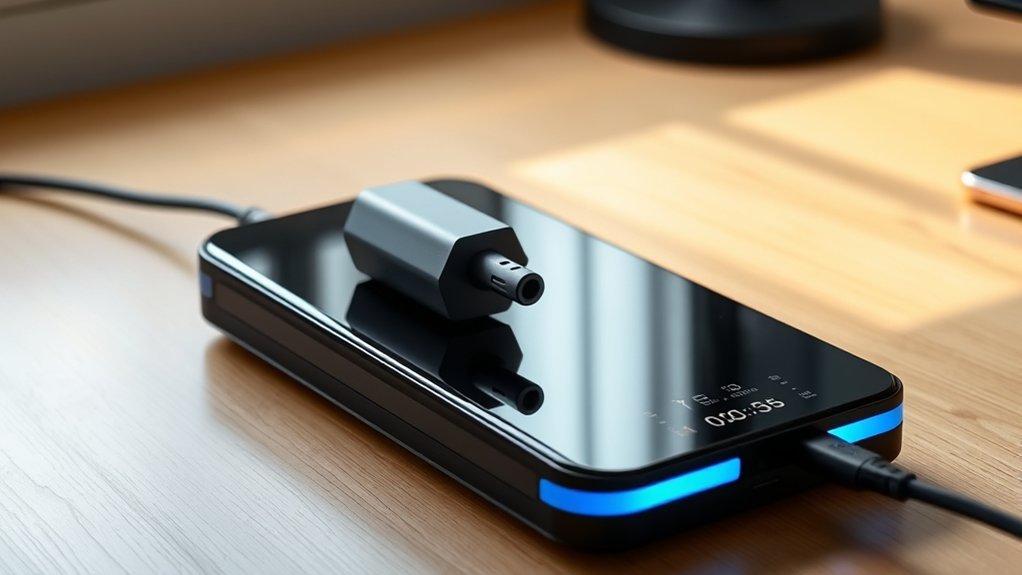
Utilizing high-amperage wall chargers can considerably reduce charging times for portable power stations by delivering increased current directly to the battery. This approach accelerates the charging process without compromising efficiency, provided the power station’s specifications support higher input currents. From a technical standpoint, faster charging can benefit battery maintenance by minimizing the duration of high-stress states, potentially extending battery lifespan when managed properly. However, it’s essential to evaluate the power station’s design to ensure power delivery doesn’t induce thermal stress or reduce durability over time. Higher amperage chargers demand rigorous quality standards to prevent damage, and consistent use can influence overall power station durability. Consequently, selecting chargers that align with your device’s rated capacity is critical for safe, rapid charging.
Charging With Solar Panels: What’s the Fastest Solar Setup?
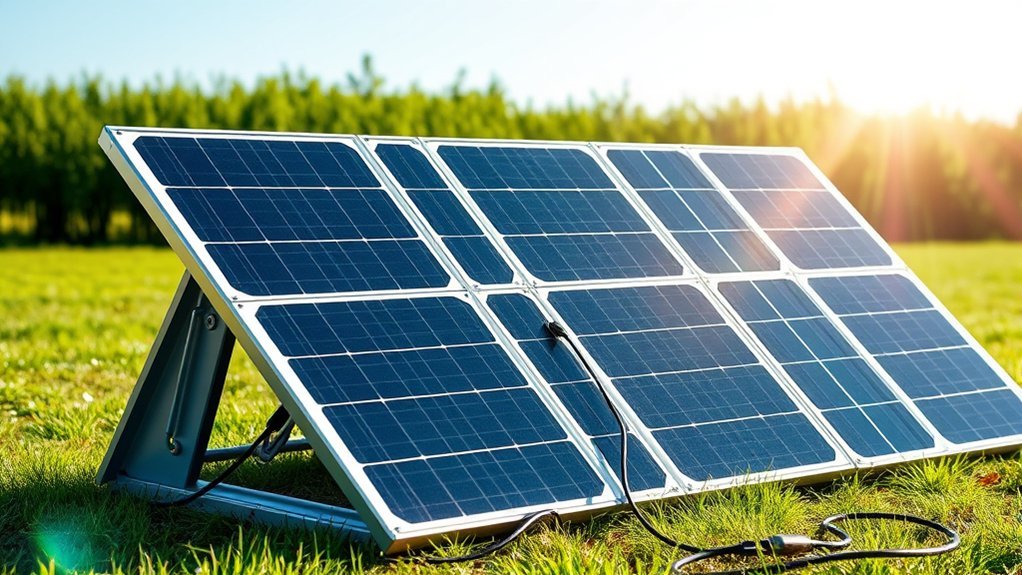
To maximize solar charging speed, we focus on ideal panel arrangements that guarantee consistent sunlight exposure throughout the day. Properly positioning panels to minimize shading and maintain a direct angle to the sun is vital for efficiency. By analyzing sunlight patterns and adjusting panel orientation accordingly, we can greatly accelerate charging times.
Optimal Panel Arrangement
Arranging solar panels effectively is essential for maximizing the charging speed of a portable power station. Critical panel placement ensures consistent sunlight exposure, which directly influences energy transfer efficiency and preserves battery longevity by preventing overheating and uneven charge cycles. Series versus parallel configurations impact the voltage and current delivered, affecting the overall energy density and charge rate. Proper arrangement minimizes energy loss through shading or misalignment, indispensable for high-efficiency setups. By optimizing panel angles and spacing, we enhance sunlight capture during peak hours, accelerating charge times without compromising battery health. This strategic arrangement balances rapid energy input with long-term battery stability, guaranteeing that the power station maintains peak performance over its lifespan.
Sunlight Exposure Optimization
Maximizing sunlight exposure is essential for achieving the fastest solar charging of a portable power station. To enhance charging speed, we must consider the relationship between sunlight intensity, panel positioning, and the station’s battery capacity. Increased sunlight directly boosts the current output, reducing the time needed to complete charging cycles. Ensuring panels are perpendicular to the sun’s rays minimizes energy loss, which is vital for larger battery capacities requiring multiple charging cycles. Proper tracking of the sun’s position throughout the day helps maintain ideal exposure, preventing performance drops caused by suboptimal angles. By fine-tuning these variables, we can greatly reduce charging times, preserve battery health over repeated cycles, and maximize overall efficiency in solar-powered charging setups.
Optimizing Charging Speed: Tips and Best Practices
Optimizing charging speed requires a strategic approach that considers both the power station’s specifications and the charging environment. Effective power management ensures rapid charging without compromising battery lifespan. To achieve this, we recommend:
- Use the recommended charger and cable: Matching the power station’s technical specifications prevents overcurrent, enhancing charge rate and safeguarding battery health.
- Maintain ideal temperature: Charging in a controlled environment prevents thermal stress, which can degrade the battery and slow charging.
- Monitor charging progress: Regularly check the power input and adjust settings if necessary, ensuring efficient energy transfer without overloading the system.
Implementing these practices balances maximum charging speed with longevity, ensuring the power station remains reliable over time.
Comparing Different Charging Methods: Pros and Cons
When comparing charging methods, we analyze factors like charging speed efficiency, port compatibility limits, and overall portability. Each method offers distinct advantages and drawbacks that impact practical use and device performance. Understanding these trade-offs helps optimize charging strategies for different scenarios.
Charging Speed Efficiency
Different charging methods for portable power stations vary considerably in their speed and efficiency, impacting how quickly devices can be replenished. Faster charging minimizes downtime, but it can also influence battery capacity and the number of charging cycles a unit can sustain.
- AC wall charging offers rapid transfer rates, often reaching 80% charge in under two hours, but frequent fast charging can degrade battery capacity over time.
- DC car charging is convenient for on-the-go replenishment, providing moderate speeds with less impact on longevity.
- Solar charging is eco-friendly but slower, often taking several hours to fully charge, though it preserves battery health by reducing stress on charging cycles.
Evaluating these methods involves balancing charging speed with long-term battery performance.
Port Compatibility Limits
Port compatibility plays a significant role in determining the practicality and versatility of various charging methods for portable power stations. Different ports, such as USB-C, AC, or DC inputs, vary in their device durability and impact on battery lifespan. Some ports support higher power levels, enabling faster charging but risking increased wear on connectors and internal components. Others are limited to lower currents, which prolong device lifespan but slow down charging times. The choice of port influences overall system efficiency and longevity.
| Port Type | Pros | Cons |
|---|---|---|
| USB-C | Fast charging, universal compatibility | Potential port wear, limited power at lower currents |
| AC Input | High power delivery, rapid recharge | Larger, less portable |
| DC Input | Efficient, direct power transfer | Compatibility issues, limited device options |
Portability and Convenience
Choosing the most portable and convenient charging method for a portable power station involves evaluating the balance between ease of use, device compatibility, and transportability. When assessing options, consider how each impacts battery lifespan and port durability.
- Solar Charging: Highly portable and eco-friendly, but weather-dependent, with potential impacts on port durability over time due to environmental exposure.
- AC Wall Charging: Offers rapid, reliable power, but reduces portability and may cause wear on internal ports if frequently plugged/unplugged.
- Car Charging: Convenient for on-the-go use, yet limited by vehicle compatibility, and frequent connections can affect port lifespan.
Each method’s convenience depends on specific use cases, with trade-offs affecting overall device longevity and ease of transport.
What to Consider Before Choosing a Fast Charging Solution
What factors should we evaluate before selecting a fast charging solution for a portable power station? First, evaluating the battery capacity is vital; larger capacities often require higher charging currents, which can impact charging safety. We must verify the charger’s output aligns with the power station’s specifications to prevent overheating or damage. Charging safety is paramount—select solutions with built-in protections against overvoltage, overcurrent, and short circuits. Compatibility also matters: not all fast chargers work seamlessly with every model, so verifying manufacturer recommendations is important. Additionally, consider the charging protocol and connector type to optimize efficiency and safety. By thoroughly considering these factors, we can choose a fast charging solution that balances rapid recharge times with longevity and safety.
Troubleshooting Common Charging Speed Issues
When a portable power station charges more slowly than expected, it often indicates underlying issues that require systematic troubleshooting. First, verify the power source’s stability; inconsistent input can impact charging speed, risking reduced battery lifespan over time. Second, check for damaged or loose cables, as compromised connections hinder ideal current flow, affecting charging efficiency. Third, consider the station’s temperature; excessive heat or cold can trigger safety precautions, delaying or slowing charging to preserve battery health. Ensuring proper environmental conditions and inspecting hardware integrity are essential steps. Addressing these factors helps maximize charging speed while maintaining safety precautions. By resolving these issues, you can prevent long-term damage and prolong your power station’s lifespan.
Frequently Asked Questions
Can Charging Speed Affect Battery Lifespan?
Charging speed can influence battery lifespan; rapid charging accelerates battery degradation due to increased heat and stress. Advanced charging technology mitigates this by optimizing current flow, preserving battery health while maintaining faster charge times for portable power stations.
Are There Safety Risks With Fast Charging Methods?
Yes, rapid charging can pose safety risks like overheating or electrical surges; therefore, adhering to strict safety precautions—such as using certified chargers and monitoring temperature—is essential to prevent potential power station hazards.
Does Temperature Impact Charging Efficiency?
Temperature effects considerably influence charging efficiency; high temperatures can cause thermal stress and reduce battery lifespan, while low temperatures slow chemical reactions, decreasing charging speed and efficiency. Maintaining ideal temperature ranges is essential for effective power station charging.
Can Multiple Charging Methods Be Combined?
Yes, we can combine multiple charging methods for efficiency, leveraging charging method compatibility and diverse power source options. This approach maximizes charging speed, optimizes power management, and guarantees continuous power supply, especially in critical or remote applications.
How Do Charging Speeds Vary With Different Power Station Brands?
Charging speeds vary considerably across brands due to differences in brand compatibility and advanced charging technology; some brands optimize rapid charging with proprietary tech, while others rely on standard methods, impacting overall efficiency and charging time.
Conclusion
In summary, maximizing charging speed hinges on selecting the right high-current charger and optimizing environmental and connection factors. Studies show that using a high-amperage wall charger can reduce charging times by up to 50% compared to standard methods. By understanding the technical nuances and carefully balancing safety with efficiency, we can greatly enhance our portable power station’s readiness, ensuring reliable performance when we need it most. Prioritizing these practices makes rapid, safe charging not just feasible but reliable.