Ad Blocker Detected
Our website is made possible by displaying online advertisements to our visitors. Please consider supporting us by disabling your ad blocker.
Did you know that the average portable power station with a capacity of 300Wh typically takes around 3 to 6 hours to fully recharge using a standard AC outlet? This duration can vary considerably based on factors like capacity, charging method, and charger wattage. Understanding these variables is essential to optimize your charging process and guarantee reliable power availability, especially during critical situations. Let’s explore what influences these times and how you can manage them effectively.
Key Takeaways
- Charging time varies based on power station capacity, typically ranging from 3 to 24 hours depending on size and input power.
- High-wattage chargers and fast charging methods significantly reduce full charge durations.
- Larger capacity batteries take longer to fully charge, especially if using standard AC outlets.
- External factors like power source stability and charging infrastructure influence overall charging speed.
- Proper management and compatible chargers help optimize charging time and preserve battery health.
How Do Power Stations Get Charged? An Overview
Power stations are typically charged through the process of recharging their internal batteries or energy storage systems, which serve as the primary power source for portable or backup units. This process involves transferring electrical energy into the battery cells via charging circuits. Over time, battery degradation occurs, reducing capacity and efficiency. Each charging cycle—defined as a complete charge and discharge—accelerates this degradation. To optimize lifespan, power stations often incorporate smart charging algorithms that control voltage and current, minimizing wear. The number of charging cycles directly impacts battery longevity, with most lithium-ion batteries lasting between 300 to 1,000 cycles before significant capacity loss. Proper management of charging cycles and understanding battery health are essential to maintaining performance and ensuring reliable operation.
Factors That Influence Charging Time for Power Stations
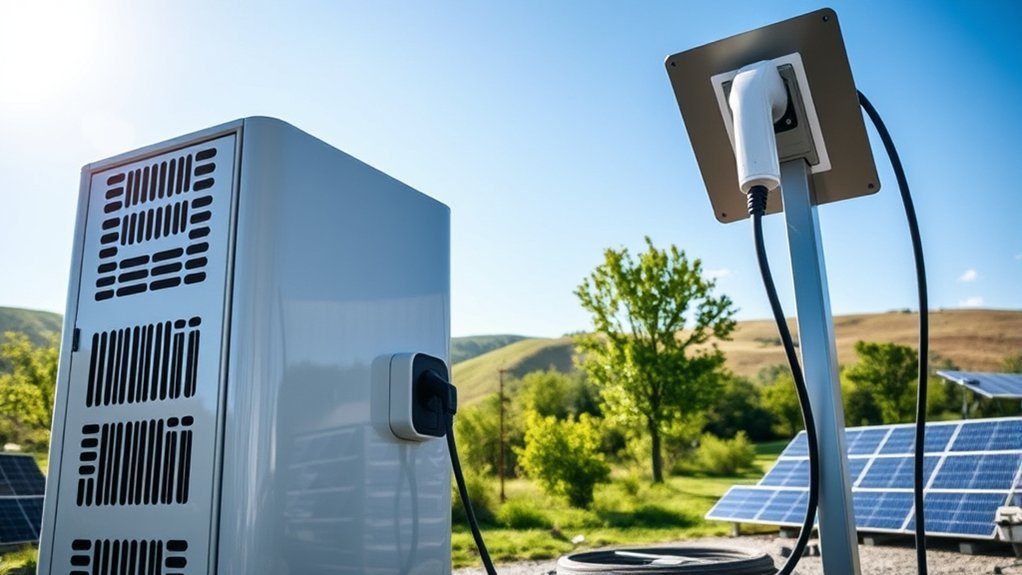
Charging method variations, such as fast versus standard charging, considerably impact the time required to fully charge a power station. Additionally, the capacity of the power station determines how long it takes to reach full charge, with larger capacities generally requiring more time. Understanding these factors enables more accurate predictions of charging durations and optimized charging strategies.
Charging Method Variations
The method used to replenish a power station’s battery considerably affects the overall charging duration, as different techniques deliver varying levels of efficiency and speed. Fast-charging methods, such as high-current DC input, significantly reduce charging times but may impact battery longevity if not managed properly. Conversely, slower, standard AC charging prioritizes battery health and enhances charging safety, preserving long-term performance. The choice of method influences heat generation, which directly affects battery degradation, making controlled charging essential. Additionally, some power stations incorporate intelligent charging algorithms that optimize speed while safeguarding the battery’s lifespan. Understanding these variations helps balance charging efficiency with safety considerations, ensuring the power station remains reliable over time without compromising battery health.
Power Station Capacity
What role does capacity play in determining how long it takes to fully charge a power station? Capacity directly influences charging time; larger capacities require more energy input, extending the duration needed to reach full charge. Additionally, battery degradation over time reduces effective capacity, which can alter charging efficiency. As batteries undergo more charging cycles, their ability to hold a full charge diminishes, often leading to longer charging times or incomplete charges. This degradation impacts not only the initial charging duration but also the overall lifespan of the power station. Understanding these factors helps optimize charging strategies, ensuring efficient use while minimizing wear caused by frequent charging cycles. Ultimately, capacity and battery health are critical in accurately estimating and managing charging times.
Comparing Charging Methods: Wall Outlet, Solar, and Car Chargers
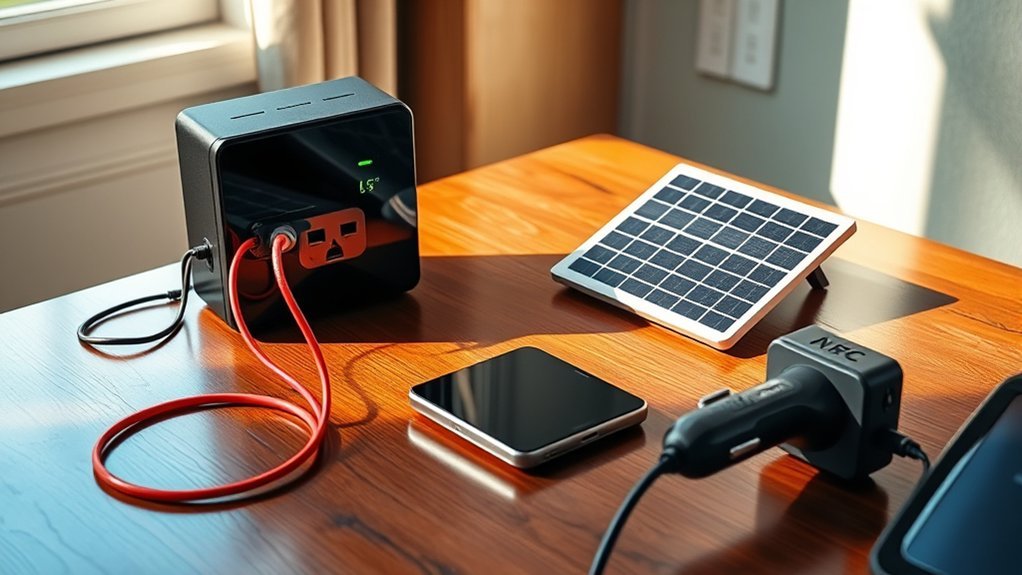
While each charging method offers distinct advantages, understanding their efficiency and time requirements is essential for ideal use of a power station. Wall outlet charging provides the fastest recharge times due to higher power output, typically ensuring maximum battery longevity if charging safety protocols are followed. Solar charging, though slower, offers a sustainable option with minimal impact on battery health, especially when managed with proper regulators. Car chargers deliver moderate speed but may vary based on vehicle power output, making them useful for emergency recharges. Prioritizing safe charging practices across all methods preserves battery longevity and reduces risks associated with overcurrent or overheating. Selecting the appropriate method depends on balancing desired charge time with safety considerations, ensuring efficient operation without compromising battery health.
How Capacity and Battery Size Affect Charging Duration
When evaluating how long it takes to fully charge a power station, understanding the relationship between capacity and battery size is essential. Larger capacity batteries inherently require more energy, extending charging time. Battery health plays a vital role; deteriorated batteries may charge slower or unevenly, impacting overall duration. Additionally, charging safety protocols influence the process—overly aggressive charging can compromise battery integrity, especially in high-capacity units. Ideal charging strategies balance speed with safety, ensuring the battery’s longevity. The size of the battery directly correlates with the energy input needed, meaning that larger batteries demand longer charge cycles. Recognizing these factors helps users plan charging times effectively, preserving battery health and maintaining safe charging practices.
Charging Speed: Why Some Power Stations Charge Faster Than Others
The speed at which a power station charges primarily depends on its charging technology and input power capabilities. Advanced fast-charging protocols and higher wattage inputs enable quicker energy transfer, reducing overall charging time. However, rapid charging can impact battery longevity if not managed correctly, so manufacturers incorporate sophisticated circuitry to balance speed with long-term battery health. Additionally, charging safety protocols are vital; faster chargers must incorporate safeguards to prevent overheating, overcurrent, and voltage spikes. These measures guarantee safe operation without compromising the battery’s integrity. Ultimately, the interplay between high-capacity input power and intelligent charging technology determines whether a power station charges swiftly or more slowly, with safety and battery longevity remaining top priorities in design considerations.
Estimating Charging Time Based on Power Source and Charger Type
Estimating the charging time of a power station requires analyzing both the power source and the charger type employed. The power source’s capacity directly influences charging duration, with higher wattage sources reducing charging time but potentially impacting battery lifespan. Charger type, whether rapid or standard, also plays a vital role by delivering differing current levels, which can affect warranty coverage if misused.
- Higher wattage sources (e.g., AC wall outlets) decrease charging time but may accelerate battery degradation if used excessively.
- Fast chargers shorten the charging cycle but could void warranty coverage if they exceed manufacturer specifications.
- Using compatible chargers ensures ideal balance between minimizing charging time and preserving battery lifespan, maintaining warranty validity.
Tips to Speed Up Your Power Station Charging Process
Optimizing the charging environment and selecting suitable power sources can considerably reduce charging time. Ensuring stable, high-quality power input prevents fluctuations that slow the process. By prioritizing these factors, we can enhance efficiency and minimize overall charging duration.
Optimize Charging Environment
Maximizing charging efficiency requires creating an ideal environment that minimizes external interference and maximizes power transfer. To enhance battery longevity and guarantee charging safety, consider these steps:
- Maintain a stable temperature: Keep the power station in a cool, ventilated area, as high temperatures can degrade battery health and slow charging speeds.
- Use surge protectors: Protect against voltage fluctuations that may compromise charging safety and damage internal components.
- Minimize external interference: Avoid placing the station near electromagnetic sources or heavy electrical devices, which can disrupt efficient power flow.
Use Appropriate Power Sources
Choosing the right power source directly impacts the speed and safety of charging your power station. Utilizing sources aligned with recent battery innovations ensures ideal charge transfer, reducing charging time without compromising battery integrity. For instance, high-current AC outlets or fast-charging solar panels can markedly accelerate the process. It’s essential to prioritize charging safety by avoiding unstable or incompatible sources that may cause voltage fluctuations, overheating, or damage. Confirm that your power source provides stable, appropriate voltage and current levels compatible with your station’s specifications. Properly selected power sources not only speed up charging but also extend your power station’s lifespan. By adhering to these guidelines, you maximize charging efficiency while safeguarding against potential safety hazards.
Common Challenges That Can Delay Full Charging
While most power stations are designed for efficient charging, several common challenges can extend the time required for full recharge.
- Battery degradation reduces the capacity of the power station’s cells, causing slower charging rates and necessitating longer recharge times.
- Power management issues can limit input flow, especially if the charging source isn’t enhanced or inconsistent, resulting in delayed full charging.
- Charging infrastructure limitations or incompatible connectors can hinder ideal power transfer, further prolonging the process.
Addressing these challenges involves maintaining battery health through proper usage and ensuring robust power management systems are in place. Recognizing these factors helps us maximize charging efficiency and reduce delays in achieving a full charge.
How to Plan Your Charging Routine for Outdoor Adventures or Emergencies
Planning your charging routine for outdoor adventures or emergencies requires a strategic approach to guarantee your power station remains functional when it’s most needed. Prioritize maintaining battery longevity by avoiding overcharging and utilizing efficient charging cycles, which extend overall lifespan. Consider portability factors; select a power station with a manageable size and weight for your specific needs, making certain it’s easy to carry without compromising capacity. Schedule regular charges based on expected energy consumption, factoring in potential delays or increased usage during emergencies. Use solar panels or portable power sources to supplement charging, especially in remote locations. Proper planning minimizes downtime, maximizes device readiness, and assures reliable power availability, all while preserving the battery’s health and optimizing portability considerations for various outdoor or emergency scenarios.
What to Expect: Typical Charging Times for Different Power Station Models
Understanding the typical charging times for various power station models helps us manage expectations and plan effectively. Charging durations vary based on capacity, input power, and charging method, impacting battery longevity and safety.
- Smaller portable models with 200-500Wh capacity typically require 3-6 hours for full charge using standard AC outlets, enhancing charging safety and battery health.
- Mid-sized units, around 500-1500Wh, often need 6-12 hours, depending on input power and charger type, ensuring safe charging cycles.
- Large models exceeding 1500Wh can take 12-24 hours or more, emphasizing the importance of controlled charging conditions to preserve battery longevity and prevent overheating.
Accurate timing helps us avoid overcharging, maintaining ideal battery health and safety.
Frequently Asked Questions
Can You Overcharge a Power Station?
You can’t overcharge a power station if it has proper charging protocols; modern systems automatically cut off at full capacity, preserving battery lifespan. Following manufacturer guidelines guarantees ideal performance and prevents damage from overcharging.
Does Temperature Affect Charging Speed?
Temperature considerably impacts charging speed; just like a car engine performs best within ideal ranges, extreme heat or cold reduces charging efficiency and battery longevity. We recommend charging in moderate conditions for optimal power station performance.
Are There Safety Risks During Charging?
Charging safety is essential, as improper procedures can risk battery lifespan and safety hazards. We recommend following manufacturer guidelines, avoiding overcharging, and monitoring temperature to guarantee safe charging and maintain ideal battery health during the process.
How Often Should I Fully Charge My Power Station?
We recommend fully charging your power station every three to six months to optimize battery lifespan and maintain ideal charging cycles, preventing capacity loss and ensuring reliable performance without overcharging, which could otherwise shorten its overall battery health.
Can I Charge Multiple Devices Simultaneously?
Yes, we can charge multiple devices simultaneously, provided they are compatible with the power station’s output ports. This optimizes the charging cycle, ensuring device compatibility and efficient power transfer without compromising safety or performance.
Conclusion
In essence, understanding the nuances of charging times helps us better synchronize our power needs with available resources. By selecting appropriate methods and maintaining ideal conditions, we can minimize delays and guarantee our power stations are ready when needed. While some variables are beyond immediate control, diligent planning and quality equipment can considerably enhance efficiency. Ultimately, a well-managed charging routine acts as a silent partner, quietly supporting us through both routine and unforeseen demands.