Ad Blocker Detected
Our website is made possible by displaying online advertisements to our visitors. Please consider supporting us by disabling your ad blocker.
When blackouts strike, having a reliable portable power station can make all the difference. We recognize the importance of staying connected, whether it’s for essential devices or outdoor activities. There are many options on the market, each with different features suited for various needs. Curious about which models stand out and how to choose the right one? Let’s explore some top contenders and what makes them effective during extended outages.
Key Takeaways
- Prioritize high-capacity, durable batteries like LiFePO4 for reliable long-term use during extended outages.
- Look for models with multiple AC, USB-C, and DC ports to power various devices simultaneously.
- Opt for lightweight, compact stations under 10 pounds for easy portability during emergencies.
- Ensure the power station supports eco-friendly recharging options like solar panels for off-grid use.
- Choose units with advanced safety features and rugged design for safe, durable operation in blackouts.
Jackery Explorer 1000 V2 Portable Solar Power Station
The Jackery Explorer 1000 V2 is an ideal choice for anyone seeking reliable power during blackouts, thanks to its substantial 1,070Wh LiFePO4 battery and 1,500W AC output. It can power multiple appliances like refrigerators, AC units, and electric pots simultaneously, thanks to its versatile ports—including USB-C, USB-A, DC car, and three pure sine wave AC outlets. Fast charging is a key feature, with PD 100W USB-C charging and the ability to fully recharge in just 1.7 hours using the Jackery app. Its durable battery offers over 4,000 charge cycles, ensuring long-term reliability for extended emergencies.
Best For: outdoor enthusiasts, emergency preparedness, and anyone needing reliable off-grid power for multiple devices.
Pros:
- High-capacity 1,070Wh LiFePO4 battery with over 4,000 charge cycles ensuring long-term durability
- Fast charging capabilities, fully recharging in just 1.7 hours with the Jackery app
- Multiple versatile ports including USB-C, USB-A, DC car, and three pure sine wave AC outlets for simultaneous device charging
Cons:
- Solar panels are sold separately, requiring an additional purchase for solar charging
- Not compatible with smart home systems or integration with home automation
- Relatively heavy at 23.8 pounds, which may impact portability for some users
Portable 600W Power Station with 299Wh Battery
For outdoor enthusiasts and homeowners alike, the Portable 600W Power Station with 299Wh battery offers reliable backup power during blackouts. Weighing just 6.8 pounds and measuring 9.4×6.5×7.1 inches, it’s highly portable for camping, road trips, or emergency use. It supplies 600W continuous power through multiple outlets, including AC, USB-C, USB-A, and DC ports, with a pure sine wave inverter for safety. Recharging options include wall outlets, solar panels, and car chargers, with an integrated LED light for emergencies. Its built-in safety features and real-time display make it a dependable, compact solution for keeping essential devices powered when you need it most.
Best For: outdoor enthusiasts, homeowners, and emergency preparedness individuals seeking reliable, portable backup power for a variety of devices and outdoor activities.
Pros:
- Lightweight and compact design weighing only 6.8 pounds for easy portability
- Multiple output options including AC, USB-C, USB-A, and DC ports for versatile device compatibility
- Pure sine wave inverter provides clean, stable power safe for sensitive electronics
Cons:
- Limited battery capacity of 299Wh may require frequent recharging for prolonged use
- Recharging via solar panels requires an additional purchase of the MPPT controller (sold separately)
- The device’s 600W continuous output may not support larger appliances or high-power tools
N300 Portable Power Station with 256Wh Battery
When blackouts strike, reliable backup power matters most for essential devices and remote outings. The N300 Portable Power Station with a 256Wh LiFePO4 battery delivers dependable energy on the go. It recharges quickly in just 1.5 hours via a 250W AC input or solar power, making it perfect for off-grid adventures. With a stable 300W pure sine wave output and multiple ports—including a USB-C, AC outlets, and Qi wireless charging—it powers laptops, small appliances, and more simultaneously. Its ultra-fast UPS ensures seamless device operation during outages, and Bluetooth control allows for smart energy management. Compact and durable, it’s ideal for camping, travel, or backup needs.
Best For: outdoor enthusiasts, travelers, and homeowners seeking reliable, portable backup power for essential electronics and small appliances during outages or off-grid adventures.
Pros:
- Fast recharging in 1.5 hours via AC or solar, ideal for quick turnaround times.
- Multiple charging options including USB-C, AC outlets, and Qi wireless charging for versatile device compatibility.
- Durable and safe design with LiFePO4 battery, drop-resistant casing, and advanced safety features ensuring long-lasting use.
Cons:
- Limited 256Wh capacity may not power larger appliances for extended periods.
- Weighs 7.7 pounds, which, while portable, might be cumbersome for some users during extended hikes.
- Solar input maximum of 140W may require longer charging times under cloudy conditions.
MARBERO 88Wh Portable Solar Power Station
Compact and lightweight, the MARBERO 88Wh Portable Solar Power Station is perfect for emergencies and outdoor adventures. Its small size (6.5 x 4.6 x 3.1 inches) and 3.2-pound weight make it easy to carry. Built with durable ABS plastic and an ergonomic handle, it’s designed for camping, road trips, or backup power at home. It offers multiple outlets, including a 110V/80W AC, USB, and DC ports, plus an LED flashlight with SOS mode. It charges quickly—up to 80% in about two hours—and supports solar charging. Its safety features, like the BMS system, guarantee reliable, safe operation during all your outdoor or emergency needs.
Best For: outdoor enthusiasts, emergency preparedness, and travelers seeking portable, reliable power solutions for small devices and appliances.
Pros:
- Compact, lightweight design making it easy to carry and store
- Supports multiple charging options including solar, AC, and car outlets
- Built-in LED flashlight with SOS mode enhances emergency utility
Cons:
- Limited capacity of 88Wh may not power larger appliances for extended periods
- Peak power output of 120W restricts use with high-wattage devices
- No wireless charging feature, requiring wired connections for device charging
ENOFLO Portable Power Station with Solar and USB
The ENOFLO Portable Power Station with Solar and USB is ideal for outdoor enthusiasts and emergency preparedness, thanks to its lightweight design and versatile charging options. Weighing just 2.2 pounds and measuring around 5.7 x 4.4 x 4.1 inches, it’s easy to carry with its hidden handle. It offers six output ports, including AC, USB-C, USB-A, and DC, supporting devices like phones, laptops, and small appliances. With a 97.68Wh lithium-ion battery, it supports multiple recharging methods—AC, solar, and car USB-C—making it perfect for camping, outdoor adventures, or power outages. Safety features and a built-in flashlight add to its reliability.
Best For: outdoor enthusiasts, campers, and emergency preparedness individuals seeking a compact, versatile, and portable power solution for small electronic devices.
Pros:
- Lightweight and portable design with a hidden handle for easy carrying
- Multiple charging options including AC, solar, and car USB-C
- Built-in safety features and a reliable Battery Management System (BMS)
Cons:
- Limited battery capacity at 97.68Wh may not power larger appliances for long
- Solar panel not included, requiring additional purchase for solar charging
- Only supports devices below 120W, limiting usage with high-power appliances
Factors to Consider When Choosing Portable Power Stations for Blackout Situations
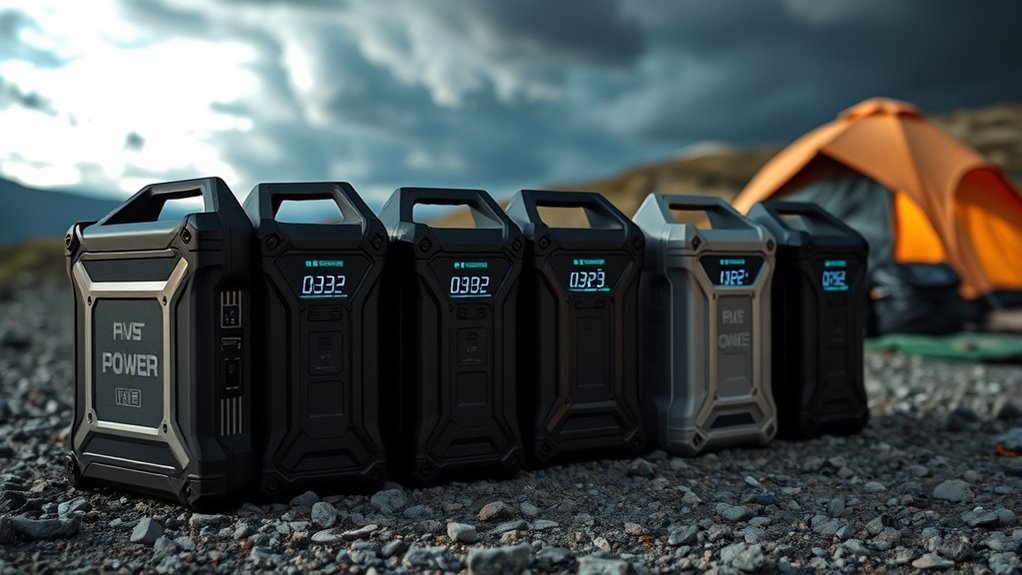
When choosing a portable power station for blackouts, we need to take into account factors like battery capacity and the types of ports it offers. We also have to think about how to charge it, its size for easy transport, and how safe and durable it is. These points help us pick the right device to keep essential devices running during power outages.
Battery Capacity Needs
Choosing the right portable power station for a blackout starts with understanding your device power needs. We need to determine the total wattage of all devices we want to run simultaneously, guaranteeing the station’s capacity matches or exceeds this. Battery capacity, measured in watt-hours (Wh), indicates how long a station can power your essentials. For extended outages or multiple devices, opt for higher capacities like 1,000Wh or more. However, larger batteries are heavier and less portable, so balancing capacity with transportability is key. Keep in mind, battery capacity degrades over time and with repeated charge cycles. Selecting a model with durable chemistry, such as LiFePO4, helps assure your power station remains reliable through many uses.
Port Selection Options
Selecting a portable power station involves more than just considering battery capacity; the types and number of available ports also play a vital role in guaranteeing we can power all our devices effectively during a blackout. Multiple AC outlets allow us to run several home appliances or larger electronics simultaneously, which is essential during emergencies. USB-C PD ports offer fast charging for smartphones, tablets, and laptops, so we can quickly replenish critical devices. Including DC car ports adds versatility for charging vehicle-related devices, while wireless charging options provide convenience for compatible gadgets. Having dedicated ports for specific devices helps optimize power management, preventing overloads and ensuring compatibility. Overall, a variety of port options ensures we can meet different charging needs efficiently, keeping us prepared and connected during blackouts.
Charging Methods Available
To guarantee we can keep our devices powered during blackouts, it’s crucial to take into account the various charging methods supported by portable power stations. Look for models offering multiple recharging options, such as AC outlets, solar panels, car chargers, and USB-C inputs, to maximize flexibility. Check the charging times for each method; some devices can recharge in as little as 1.5 hours via AC or USB-C, allowing rapid recovery. Compatibility with solar panels is essential for eco-friendly, off-grid recharging during extended outages. Fast charging capabilities like PD 100W USB-C are also valuable for quickly replenishing power. Additionally, features like emergency charging modes enhance safety and efficiency when power is unpredictable, ensuring reliable operation during blackouts.
Size and Portability
When dealing with blackout situations, size and portability become key factors in ensuring we can easily move and set up our power sources. Smaller, lightweight stations are much easier to carry during emergencies or outages, making them ideal for quick deployment. Compact designs with ergonomic handles improve portability, especially for outdoor use or when quick setup is needed. Devices weighing under 10 pounds allow for frequent movement and versatile use across different locations. Power stations with dimensions less than 9 inches in any direction are perfect for storing in small spaces or fitting into backpacks. Ultimately, the right size should balance energy capacity with ease of handling, so we can move and position our power station without difficulty, ensuring reliable power wherever and whenever it’s needed.
Safety and Durability
Ensuring safety and durability is vital when choosing portable power stations for blackout situations, as these factors directly impact reliability and user protection. We look for models with advanced safety features like overload, over-voltage, over-current, over-temperature, and short-circuit protections to prevent accidents. Durable battery technology, such as LiFePO4, guarantees the power station can handle over 4,000 charge cycles while maintaining over 70% capacity, ensuring long-term use. It’s essential to verify that the device is built with high-quality, fire-retardant materials and carries UL certification to meet safety standards. Additionally, robust casing, drop-resistant features, and multi-layer safety systems with cooling vents help prevent overheating and withstand environmental stresses, guaranteeing safe, reliable operation during extended outages.
Frequently Asked Questions
How Long Can Each Power Station Run Essential Devices During a Blackout?
We can typically run essential devices for several hours, ranging from 4 to over 24 hours, depending on the power station’s capacity and the devices’ energy consumption. Smaller stations last shorter, larger ones last longer.
Are Portable Power Stations Safe to Use Indoors?
We believe portable power stations are safe indoors when used correctly, as over 85% of users report no issues. Just guarantee proper ventilation, avoid water exposure, and follow manufacturer instructions for safe, reliable indoor use.
Can These Power Stations Be Charged via Car or External Power Sources?
Yes, these power stations can be charged via car or external power sources. We often connect them to car outlets or wall adapters, making it easy to recharge them on the go or during emergencies.
What Maintenance Is Required to Keep These Stations Functional?
We regularly check and clean the batteries, keep firmware updated, store them in a cool, dry place, and avoid overusing or discharging completely. Proper maintenance guarantees our power stations stay reliable when we need them most.
How Do Weather Conditions Affect Portable Power Station Performance?
A stitch in time saves nine, and weather affects power stations too. Harsh conditions like rain, snow, or extreme heat can reduce efficiency, damage components, or shorten lifespan, so we always protect and store them properly for peak performance.
Conclusion
Staying connected during blackouts is all about smart choices and reliable gear. With a bit of planning, we can enjoy peace of mind knowing our essentials stay powered, no matter what’s happening outside. These portable stations are like silent allies, quietly supporting us through the quiet moments and unexpected twists. By choosing the right one, we guarantee our comfort and safety are gently preserved, even when the lights dim.