Ad Blocker Detected
Our website is made possible by displaying online advertisements to our visitors. Please consider supporting us by disabling your ad blocker.
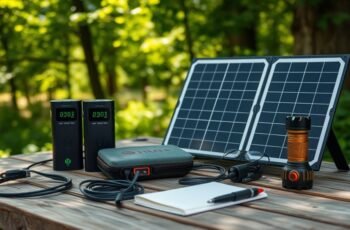
Did you know that portable solar panels can substantially reduce your camping footprint while ensuring your devices stay powered? Many outdoor enthusiasts overlook how easy it is to harness renewable energy in remote settings, making their trip more sustainable. By choosing the right setup, you can enjoy reliable power without the noise or pollution of traditional generators. Curious about how to maximize efficiency and minimize environmental impact on your next adventure?
Key Takeaways
- Choose lightweight, weather-resistant solar panels suited for outdoor conditions and your power needs.
- Set up panels in sunny, unobstructed areas with proper tilt and orientation for optimal sunlight exposure.
- Regularly clean panels and inspect wiring to maintain efficiency and prevent system issues.
- Use integrated batteries or portable power banks to store energy for nighttime use or cloudy days.
- Support eco-friendly camping by reducing reliance on generators, minimizing noise, and lowering environmental impact.
How Portable Solar Panels Enhance Your Camping Experience
Since camping often involves being away from conventional power sources, portable solar panels provide a reliable and eco-friendly way to keep our devices charged and essential equipment powered. Their solar panel durability ensures they withstand outdoor elements like wind, rain, and sun exposure, making them dependable camping power sources. This resilience means we can trust them to perform consistently, reducing the need for batteries or generators that harm the environment. Using renewable energy aligns with sustainable camping practices, minimizing our carbon footprint. Portable solar panels give us independence, allowing us to stay connected, capture memories, and operate small appliances without relying on fossil fuels. Overall, their durability and eco-friendliness substantially enhance our outdoor experience, making camping more convenient and environmentally conscious.
Choosing the Right Solar Panel for Camping
Choosing the right solar panel for camping involves considering factors like power needs, portability, and durability to guarantee reliable performance in outdoor conditions. Solar panel materials play a vital role; lightweight, weather-resistant materials like monocrystalline or flexible panels are ideal for camping. These materials withstand outdoor elements and are easier to carry. Battery integration is equally important, allowing you to store energy for use during cloudy days or nighttime. Look for panels with built-in or compatible batteries that can efficiently store power without adding bulk. By selecting panels that balance high-quality materials with effective battery integration, we assure a sustainable, reliable power source that supports our camping adventures while minimizing environmental impact.
Setting Up and Using Solar Panels in the Outdoors
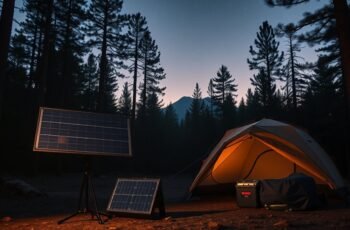
When setting up solar panels outdoors, we focus on selecting a location with maximum sun exposure while minimizing shade. Proper panel orientation guarantees we capture the most sunlight throughout the day, optimizing energy generation. By positioning our panels thoughtfully, we support a sustainable camping experience that relies on renewable energy.
Choosing the Right Location
Finding the most suitable spot to set up our portable solar panels is essential for maximizing energy production during our outdoor adventures. We should choose a location with ample sunlight, free from shading, to guarantee efficient charging. Equally important is considering wildlife safety; we avoid placing panels near animal trails or habitats to prevent disturbance. Campsite accessibility is also key—select a flat, stable area close to our camp to make setup and adjustments easier. We prioritize spots that don’t block pathways or hinder movement, maintaining a harmonious outdoor experience. By thoughtfully selecting our location, we enhance our solar efficiency and promote respectful, sustainable camping practices that protect local ecosystems and maximize convenience.
Proper Panel Orientation
To maximize the energy our portable solar panels can generate, we need to carefully orient them toward the sun. Proper panel tilt and understanding the sunlight angle are essential for optimal performance. Adjusting the panel tilt helps track the sun’s movement, capturing the most sunlight throughout the day. Keep in mind that the ideal angle varies with your location and the season, so adjusting accordingly boosts efficiency.
- Set the panel tilt to match your latitude for year-round use
- Adjust the angle midday to follow the sun’s highest point
- Avoid shading from trees or rocks during setup
- Orient panels true south (or north in the southern hemisphere)
- Keep panels clean and free of debris for maximum sunlight absorption
Following these steps ensures sustainable energy collection during your camping trip.
Best Practices for Maintaining Solar Efficiency
Maintaining ideal solar efficiency requires regular attention to the cleanliness and positioning of your panels. We recommend routinely inspecting and cleaning the panels to remove dust, dirt, and debris that block sunlight. Using gentle, non-abrasive cleaners and soft cloths helps preserve the panel surface’s integrity. Proper positioning, aligned with the sun’s path, maximizes energy absorption. Additionally, investing in quality battery storage ensures that excess energy generated during peak sunlight is stored effectively for later use, reducing waste. Keeping batteries in a cool, ventilated space prolongs their lifespan and maintains peak performance. Consistent maintenance practices like panel cleaning and monitoring battery health not only boost efficiency but also support a sustainable camping experience by reducing reliance on external power sources and conserving resources.
Comparing Portable Solar Panel Types and Features
When comparing portable solar panel types, we focus on their compatibility with different devices and setups to guarantee efficient energy use. We also examine key features like durability, weight, and ease of transport, which impact overall performance in outdoor settings. Understanding these differences helps us choose sustainable solutions that best meet our camping needs.
Panel Types and Compatibility
Choosing the right portable solar panel depends on understanding the different types available and how their features align with your outdoor power needs. Panel types vary in size, weight, and power output, influencing durability and compatibility considerations. Flexible panels are lightweight and easy to transport, ideal for irregular surfaces, but may lack robustness. Rigid panels offer higher durability and efficiency, making them suitable for extended camping trips. Foldable panels combine portability with durability, providing a balance for versatile use. Monocrystalline panels are more efficient and durable, whereas polycrystalline options are budget-friendly but slightly less resilient. When selecting, consider how each type’s panel durability and compatibility with your devices affect your overall camping experience.
- Lightweight, foldable design for easy transport
- Rigid, weather-resistant frames for durability
- Compatibility with various charging ports and batteries
- Flexibility to fit uneven or curved surfaces
- Durability against outdoor elements
Key Features and Performance
Understanding the key features of different portable solar panel types helps us select the best option for our outdoor power needs. Battery capacity and wattage output are essential factors to take into account. Higher battery capacity means we can store more energy for cloudy days or longer trips, ensuring consistent power. Wattage output determines how quickly the panel can generate electricity, affecting how fast we can charge our devices. Flexible panels often have lower wattage but are lightweight and durable, ideal for lightweight setups. Rigid panels tend to offer higher wattage output and better efficiency, making them suitable for extended camping stays. By comparing these features, we can choose a solar panel that balances power, portability, and sustainability, helping us stay connected while minimizing our environmental impact.
Packing Tips for Solar Power Equipment
Packing your solar power equipment efficiently is *vital* to *guarantee* its safety and peak performance during your camping trip. Proper packing protects your solar panel accessories and *assures* quick setup at your campsite. Use packing techniques that minimize space and prevent damage, such as wrapping panels in soft, non-abrasive material. Keep all connectors and cables organized in a dedicated bag to avoid tangles or loss. Consider using lightweight, durable cases for batteries and controllers, making transport easier. Label everything clearly for easy identification. Additionally, pack in a way that allows for quick access to essential items, like charging cables and adapters. Combining thoughtful packing techniques with protective gear helps sustain your solar equipment’s longevity and efficiency, making your camping experience more enjoyable and eco-friendly.
Troubleshooting Common Solar Panel Issues While Camping
When camping with solar panels, encountering technical issues is inevitable, but quick troubleshooting can save your trip. If your battery isn’t charging properly, consider battery calibration—sometimes, recalibrating helps reset the system and improves performance. Check for consistent sunlight and clean the panels to maximize efficiency. Wiring troubleshooting is also essential; inspect all connections for looseness, corrosion, or damage, ensuring wires are secure and intact. Use a multimeter to test voltage and continuity, identifying potential faults. Remember, a well-maintained wiring setup prevents future problems and extends your system’s lifespan. Staying attentive to these issues helps you maintain reliable power, making your camping experience smoother and more sustainable. Prompt troubleshooting keeps your solar setup functioning at its best in the great outdoors.
Eco-Friendly Benefits of Using Solar Power During Your Trip
Using solar power during our camping trips offers significant eco-friendly benefits that help reduce our environmental impact. It minimizes reliance on fossil fuels, lowers carbon emissions, and promotes sustainable energy use. Portable solar panels with high solar panel durability ensure long-lasting performance without harming the environment. They’re designed to withstand outdoor conditions, reducing waste from replacements. Solar power also maintains the natural campsite aesthetics by avoiding bulky generators and noisy equipment, preserving the tranquility of nature. Additionally, using renewable energy encourages eco-conscious habits that protect ecosystems and wildlife. By choosing solar, we support cleaner, greener outdoor adventures while enjoying reliable power. It’s a practical choice that aligns with our commitment to sustainability and helps leave a positive footprint on the environment.
Frequently Asked Questions
How Long Do Portable Solar Panels Typically Last During Camping Trips?
Portable solar panels usually last through several camping trips, thanks to their durable construction and high battery efficiency. Proper care extends their lifespan, making them a sustainable choice for reliable power, even during extended outdoor adventures.
Are Portable Solar Panels Safe to Use Around Wildlife?
We believe portable solar panels are safe around wildlife when used responsibly. They minimize wildlife disturbances, ensuring sustainable solar panel safety by avoiding noise and light pollution, helping protect nature’s delicate balance during our camping adventures.
Can Solar Panels Charge Other Devices Besides Phones and Lights?
Yes, solar panels can charge various devices like cameras, GPS units, and even small power banks, making them versatile substitute energy sources. Proper solar panel maintenance guarantees efficiency and sustainability, helping you enjoy eco-friendly camping experiences.
What Are the Best Storage Practices for Solar Panels When Not in Use?
Like a resting eagle, we store solar panels in a cool, dry place, ensuring proper battery maintenance and ideal storage temperature. This preserves their energy and extends lifespan, promoting sustainable use and reliable power when you need it most.
Do Portable Solar Panels Work Effectively in Cloudy or Rainy Weather?
Portable solar panels have reduced cloudy efficiency and rainy performance, but they still generate some power. We find they’re most effective in clear conditions, helping us stay sustainable and powered during outdoor adventures, even in less-than-ideal weather.
Conclusion
Just like planting seeds for a greener future, using portable solar panels during our camping trips nurtures sustainability. We’ve seen how a single panel can keep our devices charged and reduce waste—proof that small, eco-friendly choices add up. Embracing solar power turns outdoor adventures into acts of environmental stewardship, ensuring nature stays pristine for generations to come. Together, we can harness the sun’s energy and make every camping trip a step toward a more sustainable planet.