Ad Blocker Detected
Our website is made possible by displaying online advertisements to our visitors. Please consider supporting us by disabling your ad blocker.
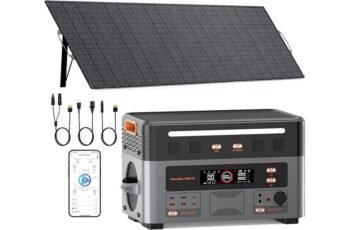
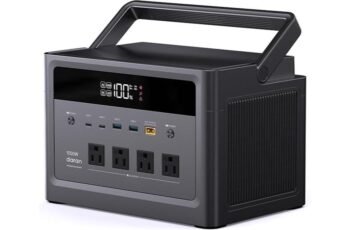
We find the P2001 PLUS pairs a 2,048Wh LiFePO4 battery with 2,400W rated output and 4,800W surge capacity, making it suitable for home backup, RVs, and demanding appliances. It’s 23% lighter and smaller than conventional stations with similar capacity, but its 21.5kg weight still makes frequent carrying cumbersome. Fast AC and solar charging, 13 ports, app controls, and sub-0.01-second EPS switching add versatility. We’ll examine its features, trade-offs, and best-fit uses below.
Key Takeaways
- The P2001 PLUS offers 2,048Wh capacity, 2,400W rated output, and 4,800W peak power for demanding devices.
- Its 21.5kg weight makes frequent carrying difficult, though it is 23% lighter and smaller than comparable-capacity stations.
- The LiFePO4 battery is rated for over 4,000 cycles, and AC plus solar charging can reach full capacity in 90 minutes.
- Thirteen output ports, app controls, and EPS backup switching in under 0.01 seconds add versatility for home and mobile use.
- It suits backup power, RVs, camping, and work sites when capacity and features matter more than lightweight portability.
2048Wh Capacity & Portability
The P2001 Plus stores 2,048Wh and delivers 2,400W of rated output, with a 4,800W peak for brief surges. This Capacity rating places it among high-capacity portable stations suited to backup and mobile use.
At 21.5kg, it’s substantial to lift, but the portability design reduces both weight and size by 23% compared with conventional stations of similar capacity. We can consequently move it more easily than many same-capacity alternatives, though it remains less convenient for frequent carrying than compact, lower-capacity units.
For home, office, camping, RV, or road-trip use, we get considerable stored energy without the bulk typical of comparable models.
Detailed features
Beyond its capacity and portability, the P2001 Plus pairs a long-life LiFePO4 battery with rapid, adjustable charging. Its battery is rated for over 4,000 cycles, while a battery management system and control unit monitor cell voltage and temperature.
AC input reaches 1,800W, and we can adjust it from 500W to match available power. AC and solar charging can take the station from empty to full in 90 minutes; intelligent current adjustment accommodates voltage fluctuations.
For charging flexibility, the unit also offers 13 output ports. Bluetooth and Wi-Fi smart controls let’s monitor battery status and power use, and manage charging and outputs remotely.
Pros and Cons
We’ll compare the P2001 Plus’s advantages, including its capacity, fast charging, and broad output selection, with practical trade-offs such as its 21.5kg weight.
We’ll also assess how its battery life, backup switching, and app controls compare with the needs of portable and home use. This balance will help you judge where its strengths outweigh its limitations.
Pros
Several strengths set the P2001 Plus apart: its 2,048Wh LiFePO4 battery delivers 2,400W of rated output, while its 21.5kg weight is 23% lower than that of conventional stations with comparable capacity. Its 4,800W peak output supports demanding appliances, and 13 ports let’s charge or power multiple devices at once.
The Durable LiFePO4 Battery is rated for over 4,000 cycles, while its battery management system monitors cell voltage and temperature. We can recharge from AC and solar in as little as 90 minutes.
Smart App Controls provide remote monitoring and adjustment, and EPS backup switches in under 0.01 seconds.
Cons
Despite its high capacity, the P2001 Plus weighs 21.5kg, which may make it cumbersome to carry on trips. Although it’s 23% lighter and smaller than conventional stations with similar capacity, we’ll still need to plan for heavy lifting when loading it into a vehicle or moving it around camp.
Its solar charging capability also depends on available sunlight and compatible input, so Limited solar input can slow recharging compared with its 1,800W AC option. We should consider this trade-off if we rely on off-grid charging.
At 2048Wh, it offers substantial storage, but its weight and solar dependence may limit portability and flexibility.
Concluding thoughts
Overall, the P2001 Plus balances 2,048Wh of capacity and 2,400W rated output with a 21.5kg design that’s 23% lighter and smaller than conventional units of similar capacity. Its 4,800W peak output and 13 ports support more devices than many portable stations, while EPS switching under 0.01 seconds adds practical outage protection.
We’d favor it for home backup, RV travel, camping, or work sites needing substantial power without a bulkier unit. The LiFePO4 battery’s 4,000-plus cycles and app controls strengthen Long Term Value. Ideal User Profiles include buyers prioritizing capacity, fast charging, and versatile outputs over lightweight portability.
Frequently Asked Questions
Can the P2001 Plus Be Used While It Is Charging?
Yes, we can use the P2001 Plus while it charges, enabling Pass through charging and simultaneous operation. We can power connected devices as AC or solar input replenishes its battery, though charging speed depends on available input power.
Is the P2001 Plus Safe to Use Indoors?
Yes, we can use the P2001 Plus indoors; unlike fuel generators, it produces no carbon monoxide during operation. Still, we should maintain indoor ventilation, keep its cooling vents unobstructed, and follow the manual’s safety instructions.
Can It Power Devices That Require More Than 2,400w?
No, we can’t run devices continuously above its 2,400W rating; its 4,800W peak may handle brief Appliance Startup Surge demands. For High Wattage Device Compatibility, compare running and startup wattage with both limits before connecting.
How Should the Power Station Be Stored When Not in Use?
Store the power station in cool, dry storage, away from extreme temperatures and moisture. We recommend periodic recharging to maintain battery health, though the manufacturer’s guidance doesn’t specify an interval; check charge status before use.
Are Replacement Batteries or Repairs Available?
We can’t confirm Replacement Battery Options or Repair Service Availability from the supplied information. Unlike models with documented user-replaceable packs, this station’s LiFePO4 battery has built-in monitoring; contact the manufacturer’s customer service before arranging repairs.
Conclusion
We find the P2001 PLUS unusually capable for a 21.5kg power station: its 2,048Wh LiFePO4 battery, 2,400W output, and 13 ports cover far more than phones and laptops. Compared with bulkier units of similar capacity, it’s easier to take camping or on the road, while adjustable charging and sub-0.01-second EPS switching add practical flexibility. It won’t replace a whole-home generator, but its fast charging, long cycle rating, and app controls make it a formidable portable backup.