Ad Blocker Detected
Our website is made possible by displaying online advertisements to our visitors. Please consider supporting us by disabling your ad blocker.
Most people underestimate how complex the efficiency of a power station truly is, often focusing only on output rather than the intricate processes that influence it. Power plants must convert vast amounts of fuel into electricity with minimal losses, a task affected by numerous technical and operational factors. Understanding these elements reveals why ongoing improvements are critical to balancing energy demand with environmental and economic sustainability, making it essential to explore what truly determines a plant’s efficiency.
Key Takeaways
- Power station efficiency measures how well fuel energy is converted into usable electricity, calculated as output divided by input energy.
- Higher efficiency reduces fuel consumption, operational costs, and greenhouse gas emissions.
- The conversion process involves burning fuel, producing steam, driving turbines, and generating electricity.
- Factors influencing efficiency include fuel quality, technology, design, and integration of renewable energy sources.
- Future innovations focus on digital systems, advanced materials, and smart grids to further improve efficiency and sustainability.
What Is Power Station Efficiency and Why Does It Matter?
What exactly is power station efficiency, and why is it a critical metric? It measures how effectively a power plant converts fuel into usable electricity, directly impacting operational costs and environmental impact. High efficiency minimizes fuel consumption and emissions, which is essential as we pursue renewable integration to reduce reliance on fossil fuels. Achieving this requires not only advanced technology but also a well-trained workforce capable of maintaining and optimizing plant performance. Workforce training ensures operators understand evolving systems and sustainable practices, boosting overall efficiency. As renewable sources become more integrated, efficiency metrics help identify gaps and opportunities for improvement. Ultimately, understanding and improving power station efficiency is crucial for a sustainable, cost-effective, and resilient energy infrastructure.
How Do Power Stations Convert Fuel Into Electricity?
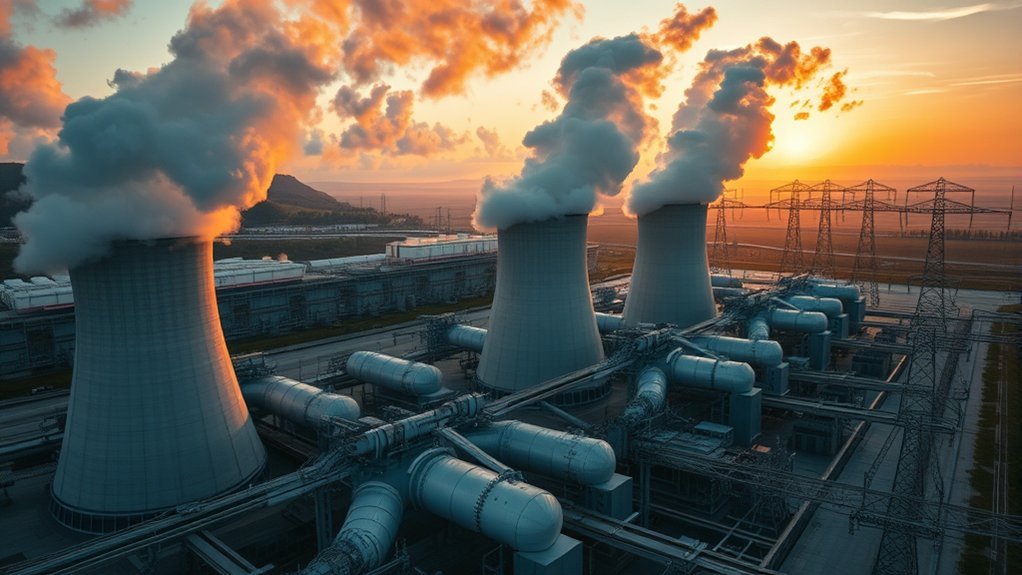
Power stations convert fuel into electricity through a series of thermodynamic processes that harness the energy stored in various fuel sources. Fuel combustion releases chemical energy, which heats water to produce steam. This steam drives turbines connected to generators, converting thermal energy into electrical energy. The efficiency of this energy conversion depends on how effectively heat is transferred and how well the turbines operate. Below is a simplified overview of this process:
| Step | Process Description | Key Energy Form |
|---|---|---|
| 1 | Fuel combustion | Chemical energy |
| 2 | Heat transfer to water | Thermal energy |
| 3 | Steam drives turbine | Mechanical energy |
| 4 | Turbine spins generator | Electrical energy |
| 5 | Power output | Electricity |
What Factors Influence Power Station Efficiency?

The efficiency of a power station is primarily influenced by fuel quality, technological design, and operational strategies. Variations in fuel purity and energy content directly affect conversion effectiveness, while advanced technology and optimized processes minimize losses. Understanding these factors allows us to identify opportunities for enhancing overall performance.
Fuel Quality Impact
How considerably does fuel quality influence the overall efficiency of a power station? It directly impacts combustion efficiency, which determines how effectively energy is extracted from fuel. Higher-quality fuel, with fewer impurities and consistent composition, enhances combustion stability and reduces emissions. Conversely, poor fuel quality leads to incomplete combustion, increased fouling, and lower thermal efficiency. Factors affecting fuel quality include moisture content, ash content, energy density, and chemical composition. These elements influence how efficiently heat is generated and transferred within the system. Maximizing fuel quality minimizes operational disruptions and maximizes power output. Ensuring consistent, high-grade fuel supplies is essential for maintaining ideal combustion efficiency and overall power station performance.
- Reduced fouling and corrosion
- Improved combustion stability
- Lower emissions and pollutants
- Enhanced thermal transfer
- Consistent power output
Technology and Design
Advancements in technology and thoughtful design choices are critical factors that directly influence power station efficiency. Incorporating renewable integration allows for optimized resource utilization and reduces emissions, which can enhance overall performance. Modern turbines and heat exchangers are designed for higher thermodynamic efficiency, minimizing energy losses. The deployment of smart grid technologies enables real-time data collection and responsive load management, ensuring power is distributed efficiently and reducing waste. These innovations facilitate better coordination between generation sources and demand, supporting grid stability and flexibility. Additionally, modular design approaches enable easier upgrades and maintenance, maintaining high efficiency over time. By integrating renewable sources within advanced technological frameworks and leveraging smart grid capabilities, power stations can achieve significant gains in operational effectiveness and sustainability.
Operational Efficiency Strategies
Optimizing operational efficiency in power stations hinges on several interrelated factors that directly impact performance outcomes. Effective strategies focus on maximizing resource utilization and minimizing losses. Emphasizing renewable integration reduces reliance on fossil fuels, improving sustainability and stability. Grid optimization enhances load balancing, reducing transmission losses and improving responsiveness. Key factors include real-time monitoring systems for predictive maintenance, advanced control algorithms for dynamic adjustments, and flexible operation protocols to adapt to fluctuating demand. Additionally, integrating energy storage solutions ensures consistent output, while optimizing thermal efficiency minimizes fuel consumption. These strategies require precise coordination across systems, emphasizing data-driven decision-making and technological adaptability. Together, they form a thorough approach to advancing power station efficiency, ensuring reliable, sustainable energy delivery.
How Is Power Station Efficiency Calculated?
Calculating power station efficiency involves evaluating the ratio of useful electrical energy output to the total energy input, typically expressed as a percentage. This measurement considers factors such as energy losses in conversion processes, which impact overall efficiency. When evaluating efficiency, we also examine how effectively a plant integrates renewable sources, which can influence operational parameters and grid stability. Renewable integration may introduce variability, affecting how efficiently the station converts primary energy into electricity. To guarantee accurate assessment, we analyze thermal, mechanical, and electrical efficiencies, alongside the plant’s ability to maintain grid stability amid fluctuating renewable inputs. Ultimately, these calculations help identify improvement areas, optimize performance, and support a balanced, resilient power system.
What Are Typical Efficiency Levels for Different Types of Power Plants?
Different types of power plants operate at varying levels of efficiency based on their primary energy sources and technological designs. Conventional thermal plants, like coal and natural gas, typically achieve efficiencies between 33-45%, constrained by thermodynamic limits. Nuclear plants operate around 33-37%, with advancements aiming to improve these figures. Renewables, such as wind and solar, often have higher capacity factors but lower thermal efficiency, emphasizing grid optimization for integration. Hydropower can reach efficiencies exceeding 90%, due to minimal energy losses. Achieving higher efficiency levels involves technological innovations and strategic grid management, including renewable integration, which enhances overall system performance and reduces waste. These efficiency metrics are vital for optimizing energy output and reducing emissions across different power generation types.
Why Improving Power Station Efficiency Benefits the Environment and Economy?
Improving power station efficiency directly reduces emissions and pollution, which benefits environmental health and helps meet regulatory standards. Additionally, higher efficiency lowers operational costs, leading to significant economic savings and potential growth opportunities. By optimizing energy use, we can support sustainable development while strengthening economic resilience.
Reduced Emissions and Pollution
Enhancing power station efficiency directly reduces emissions and pollutants released into the atmosphere. Improved efficiency minimizes fuel consumption and enhances the effectiveness of renewable integration, further decreasing reliance on fossil fuels. This leads to significant emission reduction, particularly in greenhouse gases like CO₂ and NOx. Key impacts include:
- Lowered particulate matter and sulfur oxide emissions
- Enhanced capacity for renewable energy integration
- Reduced carbon footprint per unit of power generated
- Mitigation of acid rain and smog formation
- Strengthened environmental compliance and sustainability goals
Cost Savings and Economic Growth
Optimizing power station efficiency yields substantial cost savings for operators and consumers alike, while simultaneously fostering economic growth. Improved efficiency reduces fuel consumption and operational costs, enabling more competitive electricity pricing and increased investment in renewable integration. As we advance, integrating renewables becomes more feasible with efficient plants, supporting a diversified energy grid. Additionally, the transition necessitates workforce training to develop specialized skills for modern, high-efficiency systems, stimulating employment and technological innovation. These improvements enhance grid stability and reduce reliance on fossil fuels, leading to long-term economic benefits. By lowering operational costs and promoting renewable adoption, efficient power stations create a sustainable economic environment that benefits both the environment and society at large.
What Technologies Are Enhancing Power Plant Efficiency Today?
Advancements in technology have driven significant improvements in power plant efficiency by integrating sophisticated systems that maximize energy conversion and reduce losses. Modern innovations focus on optimizing operational performance, particularly through renewable integration and grid modernization. These technologies include advanced control systems that enhance turbine efficiency, real-time monitoring for predictive maintenance, and high-efficiency heat recovery systems. Grid modernization enables better load management, reducing waste and improving stability. Renewable integration incorporates solar, wind, and other clean energy sources, decreasing dependency on fossil fuels. Additionally, digital twins and data analytics improve decision-making and operational precision. Together, these innovations create a more efficient, sustainable power generation landscape, reducing emissions and enhancing overall system resilience.
Technological advancements boost power plant efficiency through renewable integration, smart controls, and grid modernization for a sustainable energy future
- Advanced control systems for turbines
- Real-time monitoring and predictive analytics
- High-efficiency heat recovery
- Renewable integration with solar and wind
- Grid modernization for load management
How Can Power Station Efficiency Be Improved in the Future?
Future improvements in power station efficiency will likely depend on the integration of emerging technologies such as artificial intelligence, machine learning, and advanced materials. These innovations enable more precise control and predictive maintenance, reducing operational losses. Renewable integration plays a critical role, as optimizing renewable sources like wind and solar requires sophisticated management systems to handle variability. Smart grids further enhance efficiency by facilitating real-time data exchange, grid balancing, and demand response, minimizing energy waste. Combining these technologies allows for dynamic optimization of power generation and distribution, increasing overall efficiency. As these systems evolve, they will enable power stations to operate more flexibly and reliably, ultimately reducing emissions and resource consumption while supporting a sustainable energy future.
Frequently Asked Questions
How Does Power Station Efficiency Impact Electricity Prices for Consumers?
We believe higher power station efficiency reduces electricity prices for consumers by cutting operational costs. Technological innovation plays a vital role, enabling cost reduction and optimizing energy conversion, ultimately making electricity more affordable and sustainable for everyone.
What Role Do Government Policies Play in Improving Power Plant Efficiency?
Government policies, through policy incentives and regulatory standards, drive improvements in power plant efficiency by encouraging technological upgrades and emissions reductions, ultimately optimizing energy output, reducing costs, and ensuring sustainable, reliable electricity supplies for consumers.
How Do Renewable Energy Sources Compare in Efficiency to Traditional Power Plants?
We believe renewable sources like solar variability and biomass conversion are exponentially more efficient than traditional plants, transforming raw energy into power with minimal losses, though they face challenges like intermittency that require advanced technical solutions.
What Are Common Challenges Faced When Upgrading Existing Power Station Equipment?
We face challenges like equipment obsolescence, which complicates upgrades, and high upgrade costs that strain budgets. These issues require careful technical planning and cost-benefit analysis to guarantee reliable, efficient power station operation amid evolving energy demands.
How Is Power Station Efficiency Monitored and Maintained Over Time?
We relentlessly monitor efficiency metrics and perform equipment enhancement, ensuring peak performance; this continuous process prevents efficiency decay, akin to an engine finely tuned, maintaining ideal power station operation over time through precise, data-driven adjustments.
Conclusion
In summary, enhancing power station efficiency is crucial for sustainable energy and economic viability. While some may see efficiency improvements as costly or complex, investing in advanced technologies yields tangible benefits—reducing fuel costs and emissions. Visualize a chart comparing efficiency gains over time; it clearly shows that continuous technological upgrades lead to significant environmental and financial returns. Embracing these innovations guarantees a more resilient, cleaner power grid for the future.