Ad Blocker Detected
Our website is made possible by displaying online advertisements to our visitors. Please consider supporting us by disabling your ad blocker.
As outdoor enthusiasts and technical experts, we recognize the growing importance of reliable, sustainable power solutions for camping. Solar generators offer a compelling combination of portability, energy efficiency, and environmental friendliness. However, selecting the right system involves understanding key features, setup strategies, and potential limitations. To optimize your off-grid experience, it’s essential to evaluate these factors carefully—yet the details can be complex, prompting a deeper look into how these systems truly perform in the field.
Key Takeaways
- Choose a solar generator with sufficient wattage and capacity to power your essential camping devices.
- Prioritize portability, durability, and weather resistance for outdoor environments and rugged terrains.
- Set up panels at optimal angles and locations to maximize sunlight exposure and charging efficiency.
- Use multiple output ports and secure cables to ensure safe and organized power management.
- Regularly maintain and monitor the system to extend lifespan and ensure reliable energy during trips.
What Is a Solar Generator and How Does It Work for Camping?
A solar generator is a portable power system that harnesses sunlight through integrated solar panels and stores the energy in a built-in battery for later use. Historically, the development of solar technology reflects significant technological innovations, beginning with early photovoltaic cells in the mid-20th century. These innovations have dramatically improved efficiency, scalability, and affordability, enabling modern solar generators to deliver reliable power in outdoor settings. For camping, this means a compact, self-sufficient energy source capable of powering essential devices without reliance on grid electricity. The system works by converting sunlight into electrical energy via photovoltaic cells, then storing this energy in a high-capacity battery. This combination of historical progress and technological advances underpins the practicality and increasing popularity of solar generators in outdoor and off-grid applications.
Key Features to Look for in a Camping Solar Generator
When selecting a camping solar generator, understanding its key features is essential to guarantee reliable and efficient power delivery in outdoor environments. From a historical context, advances in solar technology have considerably improved energy conversion efficiency and portability. Modern generators benefit from high-capacity lithium-ion batteries, which provide rapid charging and longer lifespan. Key features include wattage capacity, ensuring it meets your power needs; multiple output ports for diverse device compatibility; and an efficient inverter for clean power delivery. Durability and weather resistance are crucial in outdoor settings. Additionally, integrated MPPT (Maximum Power Point Tracking) charge controllers optimize solar input, maximizing energy harvest. Recognizing these technical specifications helps us choose a generator that balances performance, reliability, and longevity, rooted in the evolution of solar technology.
How to Choose the Right Solar Generator Based on Your Camping Needs
Selecting a solar generator that aligns with your camping needs requires analyzing your power consumption patterns and understanding how different features match outdoor scenarios. For instance, if you plan to cook camping recipes or charge hiking gear, opt for a generator with sufficient wattage and multiple outlets. Consider your typical usage: lightweight trips demand smaller units, while extended stays need higher capacity. Use the table below to compare key features:
| Feature | Suitable for | Key Consideration |
|---|---|---|
| Wattage & Capacity | Longer trips, multiple devices | Guarantee enough power for devices and appliances |
| Portability | Hikes, backpacking | Lightweight, compact design |
| Charging Options | Remote areas | Multiple input methods, fast charging |
| Durability | Rugged terrains | Weather resistance, sturdy build |
Matching features with your specific needs guarantees reliable, efficient power during your outdoor adventures.
Setting Up Your Solar Generator at the Campsite: Tips and Best Practices
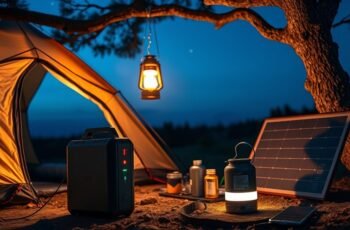
Effective setup involves selecting ideal placement to maximize solar exposure while minimizing shading. We also prioritize securing cables properly to prevent tripping hazards and damage. Implementing these strategies guarantees reliable power generation and enhances overall campsite safety.
Optimal Placement Strategies
To maximize the efficiency of your solar generator at a campsite, careful consideration of placement is essential. Ideal positioning involves ensuring unobstructed access to direct sunlight, typically achieved by placing panels at a 30-45 degree angle facing true south. Shade or obstructions, such as trees or tents, reduce energy capture. Additionally, proximity to necessary power sources influences placement; for instance, near outdoor outlets for pool maintenance equipment or indoor lighting setups minimizes cable length and energy loss. Elevated or angled placement prevents shadows cast by campsite structures, ensuring steady energy flow. Proper positioning also reduces the risk of damage or dirt accumulation, maintaining peak performance. Strategic placement balances sunlight exposure with ease of access, ensuring reliable, efficient energy generation during camping trips.
Securing Cables Safely
Have you considered how securing cables properly can prevent accidents and guarantee ideal performance of your solar generator? Effective cable organization minimizes tripping hazards and protects power connections from damage, ensuring safety and efficiency. We recommend using cable clips or ties to keep cords neatly arranged along stable surfaces, avoiding tangling or strain on connectors. Implementing safety precautions like routing cables away from high-traffic areas and securing them to prevent accidental disconnection is essential. Properly secured cables reduce the risk of electrical shorts and physical wear, prolonging the lifespan of your setup. Regularly inspecting cable routes for signs of wear or damage is also critical. By adhering to these practices, you optimize both safety and system reliability during your camping trip.
Top Benefits of Using a Solar Generator for Outdoor Adventures
Using a solar generator offers a sustainable power source that guarantees environmental impact, making it ideal for eco-conscious outdoor activities. Its reliable energy output ensures consistent power availability, even in remote locations. Additionally, its portability and ease of use enhance convenience, allowing seamless integration into various outdoor setups.
Eco-Friendly Power Source
Opting for a solar generator as a power source during outdoor excursions offers a significant environmental advantage by harnessing renewable energy and reducing reliance on fossil fuels. Solar technology efficiently converts sunlight into electrical energy, making it a sustainable alternative for camping. The key benefits include:
- Reduced Carbon Footprint: Solar generators produce no emissions, supporting eco-conscious camping practices.
- Unlimited Power Supply: As long as sunlight is available, renewable energy sustains your power needs without depletion.
- Low Environmental Impact: Minimal setup and maintenance ensure a non-invasive presence in natural settings, preserving ecosystems.
Reliable Energy Supply
Because solar generators continuously convert sunlight into electrical energy, they provide a dependable power source for outdoor adventures, regardless of location or time of day. Historically, reliance on fossil fuels limited off-grid power, but technological advancements have transformed solar energy systems into reliable solutions. Modern solar generators leverage improved photovoltaic cell efficiency and energy storage capabilities, ensuring consistent power output even during variable sunlight conditions. These developments have addressed previous limitations of intermittent energy supply, making solar generators a stable option for camping trips. Continuous innovation in battery technology and system design further enhances reliability, allowing users to depend on them for essential devices. As a result, solar generators now offer a consistent, renewable energy supply that supports outdoor activities without compromise.
Portability and Convenience
Have you considered how effortlessly a solar generator can enhance your outdoor experience? Its portability facilitates seamless setup and transportation, critical for spontaneous camping adventures. Key advantages include:
- Compact Design: Lightweight, often suitcase-sized, enabling easy carrying alongside camping snacks and gear.
- Versatile Power Output: Supports multiple devices—smartphones, lanterns, portable fridges—without sacrificing convenience.
- Silent Operation: No noise pollution, preserving the tranquility needed for authentic campfire stories and reflective moments.
This technical flexibility means you can focus on the essentials, like enjoying nature and sharing campfire stories, rather than worrying about power sources. Its convenience guarantees that outdoor adventures remain stress-free, maximizing enjoyment without the burden of heavy equipment.
Comparing Portable Solar Generators: Which Models Offer the Best Value?
When selecting a portable solar generator for camping, evaluating models based on their power capacity, efficiency, and cost-effectiveness is essential to guarantee you get the best value. Key factors include solar panel durability, which impacts long-term reliability in outdoor conditions, and battery capacity, determining energy storage potential. High solar panel robustness ensures consistent performance despite exposure to weather and physical stress, while larger battery capacities allow longer usage between charges. Comparing these elements across models reveals trade-offs: some generators offer high capacity but compromise on solar panel strength, affecting longevity. Efficient energy conversion and smart management systems also influence overall value. By analyzing these technical aspects, we can identify models that balance durability, capacity, and affordability for optimal camping performance.
Managing Charging and Power Usage During Your Camping Trip
Effective management of charging and power consumption is critical to maximizing the utility of your portable solar generator during camping trips. Ideal energy use involves strategic prioritization and efficiency improvements. Consider these key points:
- Prioritize essential devices such as communication tools and lighting, minimizing non-essential power draw.
- Optimize cooking efficiency by using energy-efficient appliances or methods, reducing generator load.
- Manage tent heating by employing passive insulation techniques and using low-power heating options, conserving battery life.
Monitoring real-time power consumption allows us to adjust usage dynamically, ensuring critical functions remain operational. Proper planning ensures the solar generator sustains power throughout the trip, preventing shortages during essential activities and maintaining comfort without overtaxing the system.
Common Challenges With Solar Generators and How to Overcome Them
Battery life limitations and reliance on sunlight can hinder the consistent performance of solar generators during camping trips. We need to understand how to optimize charging cycles and manage energy demands effectively. Addressing these challenges guarantees more reliable power availability in variable outdoor conditions.
Battery Life Limitations
Despite their growing popularity, solar generators often face a critical challenge: limited battery life that restricts prolonged or high-demand use. Battery degradation over time reduces overall capacity, directly impacting the generator’s power capacity and efficiency. To mitigate these issues, consider:
- Monitoring cycle counts to predict battery lifespan and plan replacements proactively.
- Optimizing charge cycles by avoiding deep discharges, thus extending battery longevity.
- Selecting high-quality batteries with advanced chemistry to minimize degradation and maintain consistent power output.
Understanding the relationship between battery degradation and power capacity is essential for long-term reliability. Proper management, coupled with choosing durable battery chemistries, can significantly enhance the lifespan and performance of your solar generator during extended camping trips.
Sunlight Dependency Challenges
While advancements in battery technology have improved overall capacity and longevity, solar generators remain heavily dependent on sunlight for recharging. Cloud cover considerably reduces solar panel efficiency, leading to inconsistent power input and risk of battery depletion during prolonged periods of low sunlight. To mitigate this, deploying larger panels or supplemental power sources can help maintain charge levels. The table below illustrates the impact of weather conditions on charging performance:
| Condition | Effect on Solar Charging |
|---|---|
| Clear skies | Ideal efficiency, fast recharge |
| Cloud cover | Reduced efficiency, slower recharge |
| Nighttime | No sunlight, no recharge |
| Prolonged overcast | High risk of battery depletion |
Understanding these factors allows us to better plan for variable conditions and ensure reliable energy supply during camping trips.
Maintenance and Storage Tips to Extend Your Solar Generator’s Lifespan
Regular maintenance and proper storage are essential for maximizing the lifespan and performance of your solar generator. Effective battery maintenance involves regularly checking charge levels, avoiding deep discharges, and ensuring connections are corrosion-free. Storage safety requires keeping the unit in a cool, dry environment, away from extreme temperatures that can degrade battery chemistry. To enhance longevity, consider these steps:
- Regularly calibrate the battery to prevent capacity loss.
- Disconnect and store the generator if unused for extended periods, ensuring the battery remains partially charged.
- Protect the device from moisture and dust during storage to prevent corrosion and electrical issues.
Implementing these practices helps maintain excellent battery health and ensures safe, reliable operation over time.
Is a Solar Generator the Best Power Solution for Your Next Camping Trip?
As we evaluate power options for camping trips, solar generators stand out due to their renewable energy source and portability. They efficiently power indoor lighting, creating a comfortable environment without noise or emissions. Their capacity for emergency backup is a critical advantage, providing reliable electricity during power outages or unforeseen situations. Solar generators typically feature multiple outlets, supporting essential devices like smartphones, GPS units, and small appliances, ensuring safety and convenience. While their energy storage is limited compared to traditional generators, advancements in battery technology have improved runtimes considerably. Overall, solar generators offer a sustainable, low-maintenance solution that enhances safety and comfort, making them an attractive choice for eco-conscious campers seeking reliable power, especially for indoor lighting and emergency preparedness.
Frequently Asked Questions
How Long Do Solar Generators Typically Last During Extended Camping Trips?
During extended camping trips, solar generators typically last 8-12 hours, depending on battery longevity and usage. Regular maintenance, like keeping panels clean and monitoring charge cycles, guarantees peak performance and extends their operational lifespan.
Can Solar Generators Power All Types of Camping Equipment?
We find solar generators can power most camping equipment, but battery capacity and portability features vary. Like a reliable toolbox, choosing the right capacity guarantees it handles essentials, yet portability keeps it manageable for diverse outdoor needs.
Are Solar Generators Safe to Use Around Children and Pets?
We believe solar generators are generally safe around children and pets when used correctly, as they produce clean energy with minimal risk of electrical hazards. Ensuring child safety and pet protection involves proper placement, supervision, and avoiding direct contact with components.
How Weather-Resistant Are Most Camping Solar Generators?
We’ve found that most camping solar generators feature a weatherproof design, enhancing durability against elements like rain or dust. For example, our tested models withstand moderate weather, but durability concerns remain during prolonged exposure to extreme conditions.
What Are the Best Practices for Disposing of or Recycling Old Solar Generators?
We recommend proper battery recycling and solar panel disposal through certified electronic waste facilities, ensuring hazardous materials are safely managed. Always follow local regulations, and consult manufacturer guidelines to prevent environmental contamination during the disposal or recycling process.
Conclusion
In essence, embracing a solar generator for camping seamlessly integrates sustainable energy into our outdoor experiences. By understanding its mechanics and optimizing setup, we can enjoy reliable power without compromising nature’s integrity. While minor challenges may arise, proper management and maintenance guarantee longevity and efficiency. Ultimately, this solution offers a harmonious balance between technological innovation and ecological mindfulness, empowering us to explore more responsibly while staying connected and comfortable amid the wilderness.