Ad Blocker Detected
Our website is made possible by displaying online advertisements to our visitors. Please consider supporting us by disabling your ad blocker.
When evaluating portable power solutions, we recognize that both power stations and inverter generators have distinct efficiencies shaped by their design and intended applications. Understanding how they operate, their capacity, and long-term costs is essential for making an informed choice. As we compare their performance metrics, it becomes clear that the most suitable option depends heavily on specific use cases and priorities, prompting us to contemplate which aligns better with your needs.
Key Takeaways
- Portable power stations convert stored battery energy to AC power, offering high efficiency for short-term use without fuel losses.
- Fuel-powered generators have inherent energy conversion losses during combustion, reducing overall efficiency.
- Power stations operate silently with minimal energy waste, while generators lose efficiency through mechanical and exhaust processes.
- Battery charging efficiency depends on source input; fuel generators’ efficiency varies with engine load and fuel quality.
- Long-term efficiency favors power stations due to lower operating costs and no fuel consumption during use.
How Do Portable Power Stations and Inverter Generators Work?
While both portable power stations and inverter generators serve the purpose of supplying portable electrical power, they operate through fundamentally different mechanisms. Portable power stations utilize advanced battery technology, typically lithium-ion or lithium-polymer batteries, to store and deliver electricity via inverter circuitry. These systems convert DC stored energy into AC power suitable for sensitive electronics. In contrast, inverter generators rely on fuel types such as gasoline or propane to power an internal combustion engine that drives a alternator, producing AC electricity. The engine’s rotational energy is then modulated through electronic inverters to produce stable, clean power. This distinction in core technology—batteries versus fuel-driven engines—dictates their operational principles, fueling methods, and overall efficiency characteristics.
Comparing Power Output and Capacity for Different Needs
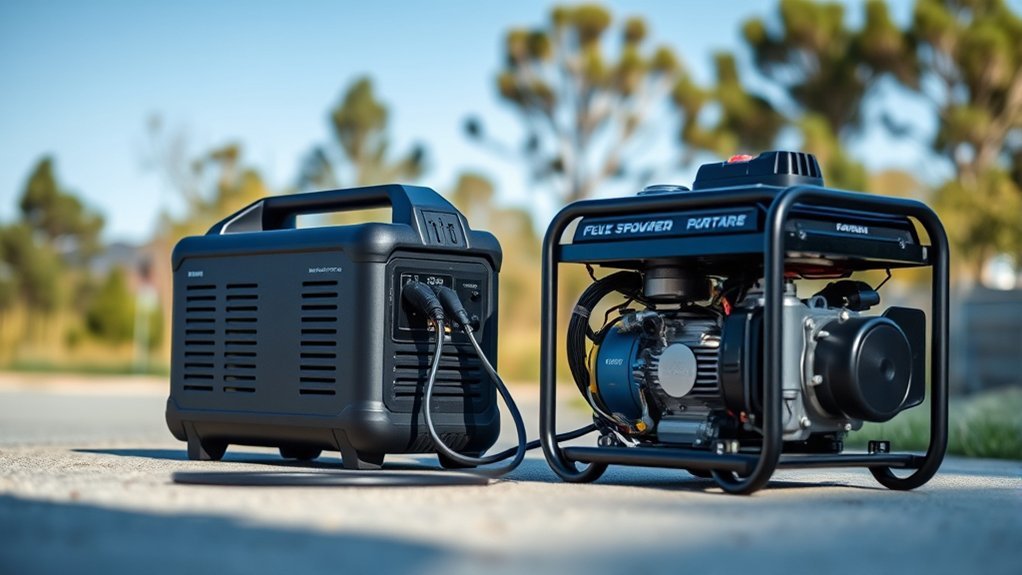
Evaluating the power output and capacity of portable power stations versus inverter generators is essential to determine their suitability for specific applications. Power needs vary considerably: small devices require minimal energy, while heavy-duty tools demand higher capacity. Battery technology underpins portable power stations, offering scalable, silent operation, while fuel types—gasoline, propane—drive inverter generators, providing consistent high output. The table below compares their capabilities:
| Feature | Portable Power Stations | Inverter Generators |
|---|---|---|
| Power Output | Up to 3000W | 2000W to 7000W |
| Capacity (Wh) | 200Wh to 2000Wh | Fuel tank size varies |
| Suitability | Small appliances, electronics | Heavy-duty tools, appliances |
Battery technology limits capacity but offers cleaner, quieter power; fuel types support higher outputs but involve noise and emissions.
Efficiency in Portability and Ease of Use
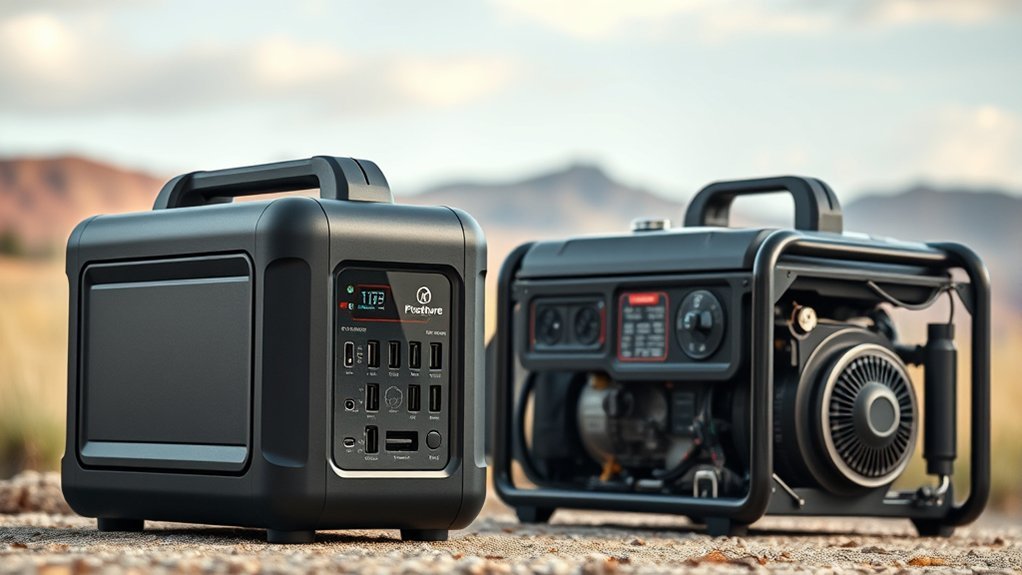
Evaluating the efficiency of portable power stations and inverter generators regarding portability and ease of use reveals distinct advantages for each. Portable power stations excel with compact design and lightweight portability features, enhancing mobility in remote or emergency situations. Their battery longevity ensures long-term usability without frequent refueling, simplifying operation. Conversely, inverter generators are generally more robust, but their size and weight can limit transportability. They often require more effort to move and set up, impacting overall ease of use.
- Compact, lightweight designs for quick transport
- Intuitive controls for straightforward operation
- Built-in handles and wheels for enhanced portability
- Reduced noise levels improve user experience
- Minimal maintenance, emphasizing user convenience
Fuel Consumption and Runtime: Which Is More Cost-Effective?
Analyzing fuel efficiency and runtime durability reveals critical differences between portable power stations and fuel-powered inverters. We compare fuel consumption rates to determine which option offers lower operational costs over extended use. This assessment helps identify the more cost-effective choice for various application scenarios.
Fuel Efficiency Comparison
When comparing fuel efficiency between portable power stations and fuel-powered inverter generators, understanding their fuel consumption and runtime is essential for determining cost-effectiveness. The core factors involve differences in fuel types and how battery technology impacts overall efficiency. Fuel-powered generators typically consume gasoline or diesel at higher rates, offering longer runtimes but increased operational costs. Conversely, portable power stations utilize rechargeable batteries, relying on electricity stored via charging, which minimizes ongoing fuel expenses but depends heavily on battery technology efficiency.
- Fuel types (gasoline, diesel, propane) influence consumption rates
- Battery technology determines recharging efficiency and cycle life
- Fuel-powered generators often have higher fuel consumption
- Power stations have no direct fuel costs but depend on grid or solar charging
- Cost-effectiveness hinges on usage patterns and fuel prices
Runtime Durability Analysis
Although both portable power stations and fuel-powered inverter generators serve to supply portable energy, their runtime durability largely depends on distinct factors—fuel consumption rates for generators and battery capacity for power stations. For power stations, battery lifespan and charging cycles critically influence long-term performance; frequent charging can degrade capacity over time, reducing runtime. In contrast, inverter generators’ runtime hinges on fuel consumption rates, with efficiency directly impacting operational duration and cost-effectiveness. While fuel-based units offer continuous runtime as long as fuel is available, power stations require careful management of battery health to maintain consistent output. Ultimately, evaluating total operational costs involves considering battery degradation for power stations and fuel efficiency for generators, making the choice dependent on usage frequency, longevity needs, and maintenance considerations.
Environmental Impact and Eco-Friendliness of Each Option
We recognize that emissions and pollution levels differ markedly between portable power stations and fuel-powered inverter generators, impacting air quality and environmental health. Compatibility with renewable energy sources varies, with portable stations often supporting solar input, whereas generators rely on fossil fuels. Additionally, noise output and overall carbon footprint are critical factors in evaluating their eco-friendliness and suitability for environmentally conscious use.
Emissions and Pollution Levels
Portable power stations generally produce zero emissions during operation, making them a more environmentally friendly choice, particularly regarding air quality and pollution reduction. Their battery capacity allows for clean energy storage without releasing pollutants. In contrast, fuel-powered inverter generators emit pollutants such as nitrogen oxides, carbon monoxide, and particulate matter, depending on fuel types used. These emissions contribute to air pollution and environmental degradation.
- Battery-powered systems have minimal environmental impact during use.
- Fuel types influence emission levels markedly.
- Power stations avoid combustion, reducing particulate emissions.
- Fuel-powered units release greenhouse gases, impacting climate change.
- Efficiency in emissions correlates with the choice of energy source and fuel type.
Renewable Energy Compatibility
Have you considered how each power source interacts with renewable energy sources and their overall environmental impact? Portable power stations, leveraging advanced battery technology, are inherently compatible with renewable integration, such as solar panels. They store excess renewable energy efficiently, enabling eco-friendly off-grid use without emissions. Conversely, fuel-powered inverter generators rely on combustion, which introduces pollutants and hampers renewable integration efforts. Although generators can complement renewable sources temporarily, their dependence on fossil fuels diminishes overall environmental benefits. Battery technology advancements have improved sustainability, making portable stations a more eco-conscious choice. This synergy with renewable energy not only reduces carbon footprint but also supports sustainable energy strategies. Ultimately, portable power stations align better with environmentally friendly initiatives due to their compatibility with renewable sources and cleaner operation.
Noise and Carbon Footprint
When evaluating the environmental impacts of power sources, noise levels and carbon emissions are critical considerations. Fuel-powered inverter generators produce significant emissions and noise pollution, impacting local ecosystems and human health. In contrast, portable power stations operate silently, with minimal carbon footprint, thanks to their battery-based systems. Their battery life determines how long they can sustain power, influencing overall eco-friendliness. The portability benefits of power stations further reduce transportation emissions since they don’t require fuel delivery or engine maintenance.
- Fuel generators emit CO2 and other pollutants, contributing to climate change.
- Noise from fuel generators can disturb wildlife and neighbors.
- Portable stations offer quieter operation, ideal for sensitive environments.
- Battery-powered options eliminate direct emissions during use.
- Both options’ environmental impact depends heavily on usage patterns and maintenance.
Noise Levels: Quiet Operation vs. Potential Disturbance
While fuel-powered inverter generators typically produce louder noise levels, portable power stations are engineered for quiet operation, reducing potential disturbance. Advances in battery technology allow these stations to operate with minimal mechanical noise, while integrated sound insulation materials further dampen vibrations and sound emission. The absence of combustion engines eliminates engine noise spikes common in inverter generators, making portable stations suitable for sensitive environments. These sound-insulating features ensure that noise remains consistent and unobtrusive, even during prolonged use. As a result, portable power stations provide a significant advantage in settings demanding discretion, such as outdoor events or emergency situations, where noise pollution must be minimized. Their design prioritizes not only efficiency but also acoustic comfort, making them a quieter alternative overall.
Maintenance and Longevity: Which Option Lasts Longer?
In evaluating the overall practicality of portable power stations versus fuel-powered inverter generators, their maintenance requirements and lifespan are key factors. Portable power stations generally have longer longevity due to fewer moving parts and lower maintenance costs, primarily centered around battery health and periodic system checks. Conversely, inverter generators demand routine engine maintenance, oil changes, and spark plug replacements, impacting their lifespan and increasing ongoing costs. Battery life directly affects portable station reliability, with most units lasting several years before replacement. Fuel-powered generators, while more durable overall, tend to require more frequent servicing, especially in harsh conditions.
- Battery replacements in power stations are infrequent but essential
- Fuel generator parts wear out faster, requiring regular upkeep
- Maintenance costs for generators are typically higher
- Portable units often have longer service intervals
- Overall lifespan favors fuel generators with proper maintenance
Suitability for Emergency Backup and Outdoor Adventures
Portable power stations and fuel-powered inverter generators each offer distinct advantages for emergency backup and outdoor activities, making their suitability context-dependent. Portable power stations excel in battery longevity, providing reliable, maintenance-free power with minimal fuel storage concerns; they are ideal for short-term emergencies or moderate outdoor use. Conversely, fuel-powered inverter generators deliver higher power output and longer operational periods, especially when equipped with ample fuel storage, making them suitable for extended outdoor adventures or prolonged outages. Their reliance on fuel introduces considerations for refueling logistics, while battery longevity in power stations ensures consistent performance over time without replenishment. The choice depends on the duration and power needs; short-term, low-maintenance backup favors power stations, while high-demand, extended use favors fuel-powered generators.
Cost Analysis: Upfront Investment vs. Long-Term Savings
Evaluating the cost implications of portable power stations versus fuel-powered inverter generators requires a careful examination of upfront investments and long-term expenses. Initially, portable power stations often have higher purchase prices due to advanced battery technology, but they lack ongoing fuel costs. Conversely, inverter generators generally have lower upfront costs but incur continuous expenses from various fuel types, such as gasoline or diesel, which fluctuate in price. Long-term savings with power stations stem from reduced operational costs and maintenance, while generators may require regular servicing and fuel refills.
- Battery technology advances lower replacement costs over time
- Fuel types impact ongoing operational expenses
- Portable stations typically have minimal maintenance needs
- Initial investment for power stations is higher but more predictable
- Fuel costs can fluctuate markedly over the lifespan
Making the Right Choice: Which Is More Efficient for Your Specific Use Case?
Choosing between a portable power station and a fuel-powered inverter generator hinges on understanding how each option aligns with your specific energy needs and operational context. Battery technology advancements have markedly improved efficiency in portable power stations, offering consistent, quiet power suitable for sensitive electronics. Conversely, fuel-powered generators typically excel in fuel efficiency over extended periods, making them ideal for high-demand or remote applications. To determine the most efficient choice, consider your typical load, duration of use, and environmental constraints. For short-term, low-to-moderate demands, battery-based systems often provide superior efficiency and convenience. For continuous, high-power requirements, fuel-powered inverter generators may deliver better fuel efficiency and longer runtime. Analyzing these factors helps optimize operational efficiency tailored to your specific use case.
Frequently Asked Questions
How Do Weather Conditions Affect the Performance of Portable Power Stations and Generators?
Weather conditions impact power stability and resilience; extreme cold reduces battery efficiency, while heat accelerates component wear. Both portable power stations and generators require proper insulation and cooling to maintain ideal performance and guarantee reliable power supply.
Are There Safety Concerns Specific to Fuel-Powered Inverter Generators?
We recognize fuel safety concerns and fire hazards in fuel-powered inverter generators, so we emphasize proper ventilation, regular maintenance, and safe storage practices to mitigate risks and guarantee operational safety during use.
Can Portable Power Stations Handle High Surge Power Demands?
Absolutely, portable power stations can handle high surge power demands, acting like a sturdy bridge over turbulent waters. Their battery capacity guarantees reliable power during surges, but peak demands may momentarily exceed their limits, requiring careful consideration.
How Do Maintenance Requirements Differ Between the Two Options?
We find portable power stations demand minimal maintenance, focusing on battery longevity and periodic calibration, while fuel-powered inverter generators require regular oil changes, fuel stability checks, and engine inspections for consistent performance and longevity.
Which Option Is Better for Long-Term Energy Independence?
We believe portable power stations offer superior long-term energy independence, with an average battery lifespan of 5-15 years, compared to generators’ fuel efficiency decline over time. Their lower maintenance makes them a more sustainable, reliable choice.
Conclusion
Ultimately, choosing between a portable power station and a fuel-powered inverter generator depends on your specific energy needs and priorities. We’ve seen that power stations excel in eco-friendliness and convenience, while generators deliver raw power and longer runtimes. Isn’t it essential to weigh upfront costs against operational efficiency? By analyzing your usage patterns and environmental considerations, you can select the most efficient solution tailored to your demands—ensuring reliable power without unnecessary compromise.