Ad Blocker Detected
Our website is made possible by displaying online advertisements to our visitors. Please consider supporting us by disabling your ad blocker.
It’s a coincidence that many overlook a critical distinction when choosing power stations, yet this choice can considerably impact device longevity and performance. As professionals analyze the technical differences between pure sine wave and modified sine wave inverters, it becomes clear that understanding their waveform characteristics is essential for ideal application. To determine which option aligns with your needs, it’s important to evaluate performance, cost, and potential risks—topics that reveal a nuanced landscape worth exploring further.
Key Takeaways
- Pure sine wave stations produce cleaner, more stable power, ideal for sensitive electronics, unlike modified sine wave stations’ stepped, less precise waveform.
- They operate more efficiently, generate less electrical noise, and extend device lifespan compared to the higher energy consumption of modified sine wave units.
- Pure sine wave inverters are compatible with most devices, including medical and audio equipment, whereas modified sine wave inverters may cause malfunctions.
- Although initially more expensive, pure sine wave stations offer better long-term reliability and safety for critical and sensitive systems.
- Modified sine wave stations are cost-effective upfront but may lead to device damage, increased maintenance, and reduced lifespan over time.
What Are Pure Sine Wave and Modified Sine Wave Inverters?
Have you ever wondered how different types of inverters convert DC power into AC power? Pure sine wave and modified sine wave inverters achieve this conversion through distinct methods, impacting electrical safety and battery compatibility. Pure sine wave inverters produce a smooth, consistent AC waveform, closely mimicking utility power, which guarantees safer operation for sensitive electronics and reduces electrical noise. Conversely, modified sine wave inverters generate a stepped waveform that approximates AC power but can cause electrical interference or damage to certain devices. When selecting an inverter, understanding these differences is vital for electrical safety, especially in sensitive applications, and for ensuring compatibility with your battery bank. Clear knowledge of these inverters’ characteristics helps optimize system performance and longevity.
How Do Pure Sine Wave and Modified Sine Wave Power Stations Differ in Performance?
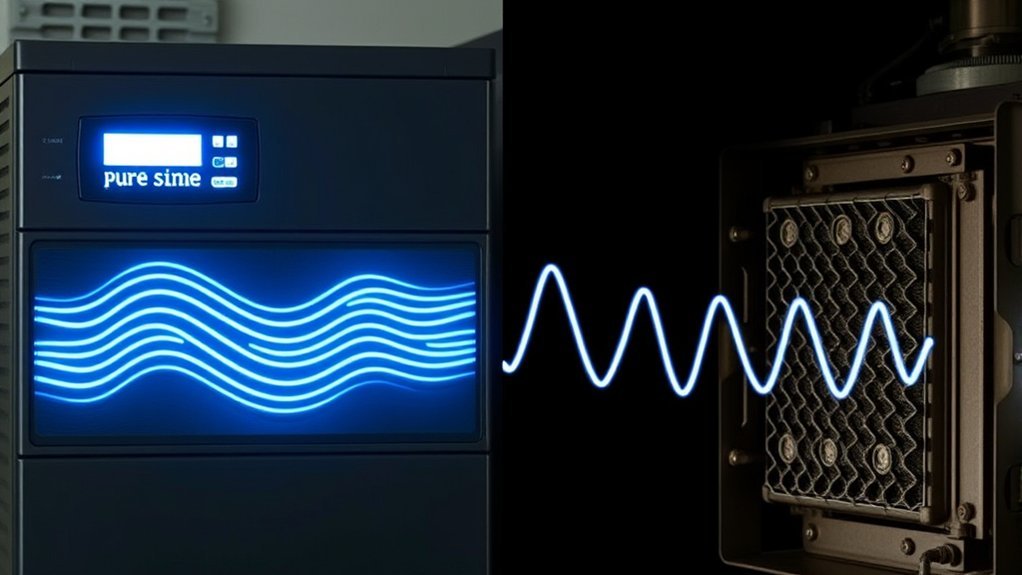
We observe that pure sine wave stations deliver higher power quality, closely resembling utility grids, which enhances device performance and longevity. Modified sine wave stations, however, often introduce harmonic distortions, potentially causing compatibility issues with sensitive electronics. Analyzing these performance differences helps us determine the appropriate power station for specific applications.
Power Quality Differences
How considerably do the power quality differences between pure sine wave and modified sine wave power stations impact their performance? Pure sine wave stations produce a cleaner, more stable waveform, resulting in better power quality. This stability minimizes harmonic distortion, which benefits sensitive electronics and prolongs battery lifespan by reducing stress on inverters. Conversely, modified sine wave stations generate a stepped, less smooth waveform that can cause increased electrical noise and heat, potentially shortening device lifespan and reducing efficiency. These quality disparities also influence environmental impact; pure sine wave units tend to operate more efficiently, generating less waste heat and requiring fewer maintenance interventions. Consequently, the superior power quality of pure sine wave stations enhances device performance and sustainability, emphasizing their advantages in critical applications.
Compatibility With Devices
The compatibility of power stations with various devices largely depends on the waveform they produce, as pure sine wave units closely mimic utility power and are compatible with most electronic equipment. Pure sine wave inverters deliver a smooth, consistent waveform, guaranteeing ideal performance and reducing stress on sensitive devices like computers and medical equipment. Modified sine wave units, however, generate a stepped waveform, which can cause malfunctions or increased wear over time. Battery capacity influences device compatibility; higher capacity ensures stable power delivery for longer periods, especially critical for sensitive electronics. Additionally, environmental impact differs: pure sine wave inverters often require more complex components, potentially increasing manufacturing footprint, whereas modified sine wave units are simpler but may contribute to higher electronic waste due to shorter device lifespan.
Which Devices Are Best Suited for Pure Sine Wave Power Stations?

Pure sine wave power stations are ideally suited for sensitive electronic devices that require clean, stable power to operate reliably. These include medical equipment, audio-visual gear, and precision instruments, which depend on consistent waveform quality to prevent malfunction. Devices with high battery capacity needs, such as laptops and certain power tools, benefit from the stable output. Additionally, pure sine wave stations enhance solar compatibility, guaranteeing efficient energy conversion and system longevity. The following table summarizes device categories best suited for pure sine wave power:
| Device Type | Battery Capacity Requirements | Solar Compatibility |
|---|---|---|
| Medical Equipment | High | Excellent |
| Audio-Visual Devices | Moderate to High | Excellent |
| Sensitive Instruments | Very High | Superior |
| Power Tools | Variable | Good |
This clarity guarantees peak performance and longevity.
What Are the Advantages and Disadvantages of Modified Sine Wave Power Stations?
Modified sine wave power stations offer a cost-effective and affordable solution, making them accessible for many applications. However, their compatibility with sensitive devices and overall power quality can be compromised, leading to potential reliability issues. Understanding these trade-offs is essential for determining their suitability in specific use cases.
Cost-Effectiveness and Affordability
While modified sine wave power stations are generally more affordable upfront, their cost-effectiveness depends heavily on the specific applications and devices they serve. They often have lower initial costs, making them attractive for short-term or low-power needs. However, their waveform can cause increased strain on certain electronics, potentially reducing battery longevity over time and increasing maintenance costs. From an environmental perspective, these stations may lead to higher energy consumption due to inefficiencies, indirectly impacting the environment through increased resource use. For users with sensitive or high-precision equipment, the reduced efficiency may outweigh initial savings. Ultimately, evaluating the long-term operational costs, device compatibility, and environmental impact is essential to determine whether the lower upfront investment truly offers cost-effective advantages.
Compatibility With Devices
Compatibility with various devices markedly influences the practicality of using modified sine wave power stations. These inverters produce a waveform that can cause issues with sensitive electronics, leading to potential malfunction or reduced lifespan. Devices like motors, compressors, or precision instruments often require pure sine wave power for ideal operation. However, many small appliances and tools with moderate battery capacity tolerate modified sine wave better. Solar compatibility is generally limited, as the waveform can interfere with efficient energy transfer from solar charge controllers, especially those optimized for pure sine wave output. While modified sine wave stations are cost-effective and suitable for basic devices, their limitations in compatibility restrict their use with sensitive or high-capacity batteries, demanding careful device selection to avoid damage and guarantee reliable performance.
Power Quality and Reliability
Despite their affordability and simplicity, modified sine wave power stations present notable trade-offs in power quality and reliability. Their waveform introduces higher harmonic distortion, which can cause equipment to operate less efficiently or overheat, especially sensitive devices. This impacts overall power quality, leading to potential reliability issues over time. As battery technology advances, the importance of stable, high-quality power sources grows, particularly for renewable integration where fluctuating inputs demand consistent output. Modified sine wave inverters often struggle to support renewable systems that rely on precise power delivery, limiting their effectiveness. Over time, these issues may result in increased maintenance or early equipment failure. While suitable for basic applications, their limitations in power quality and reliability make pure sine wave stations a more dependable choice for critical or sensitive systems.
How Do Cost and Compatibility Influence Your Choice of Inverter Type?
Cost and compatibility are critical factors influencing the selection of an inverter type, as they directly impact both budget considerations and operational integration. Pure sine wave inverters typically cost more but offer superior compatibility with sensitive electronics, reducing the risk of damage. Modified sine wave models are more affordable, making them appealing for budget-conscious applications, yet they may require larger battery capacity or additional filtering to guarantee compatibility with certain devices. When considering portable design, the inverter’s size and weight become essential, especially if portability is a priority. Ultimately, balancing cost with compatibility involves evaluating the specific power demands, device sensitivity, and system integration requirements. This guarantees ideal performance while maintaining cost efficiency and operational reliability.
Can Using a Modified Sine Wave Inverter Damage Sensitive Electronics?
Modified sine wave inverters produce a stepped, square-like waveform that differs markedly from the smooth, pure sine wave generated by utility grids or pure sine inverters. This waveform can cause issues with sensitive electronics, leading to potential damage or reduced performance. Devices such as medical equipment, audio systems, and precision measurement tools often rely on stable, clean power; the irregular voltage fluctuations from modified sine waves may induce overheating, component stress, or early failure. Over time, this can decrease battery lifespan due to increased power draw or inefficiencies. Additionally, the environmental impact might be elevated if sensitive devices fail prematurely, requiring more frequent replacements or repairs. Consequently, while cost-effective, using a modified sine wave inverter for sensitive electronics poses risks that could offset initial savings through increased environmental footprint and maintenance needs.
Which Power Station Is More Reliable for Long-Term Use?
When evaluating long-term reliability, pure sine wave power stations generally outperform modified sine wave systems due to their consistent and high-quality output. This consistency reduces stress on components, thereby extending battery lifespan and improving overall durability. Additionally, pure sine wave inverters are more compatible with solar systems, ensuring more efficient energy transfer and less potential damage to sensitive electronics.
- Superior waveform stability reduces wear on batteries and electronics
- Enhanced solar compatibility promotes sustained, efficient energy conversion
- Lower risk of component failure over time increases operational lifespan
These factors make pure sine wave systems a more reliable choice for long-term use, especially in applications requiring steady power quality and longevity. Their ability to minimize wear and maximize compatibility ultimately results in more dependable performance over years of operation.
How Do Noise and Efficiency Compare Between the Two Inverter Types?
Pure sine wave inverters typically operate more quietly and with higher efficiency compared to their modified sine wave counterparts. Noise levels are considerably lower, reducing electromagnetic interference and minimizing operational disturbances. This translates into a better overall efficiency comparison, as pure sine wave inverters convert power more effectively with less energy loss.
| Inverter Type | Noise Levels | Efficiency Comparison |
|---|---|---|
| Pure Sine Wave | Low, minimal electromagnetic interference | Higher, closer to grid power |
| Modified Sine Wave | Higher, more electrical noise | Lower, more energy waste |
| Impact on Devices | Less noise, smoother operation | Increased longevity and performance |
Which Power Station Should You Choose Based on Your Specific Needs?
Choosing the appropriate power station depends on analyzing your specific energy requirements, usage environment, and budget constraints. For applications demanding long-term operation or frequent use, prioritize models with superior battery life to minimize downtime. If portability is critical—such as for outdoor activities or emergency scenarios—compact, lightweight units are preferable.
Key considerations include:
- Battery life: Longer-lasting batteries support extended use without frequent recharges.
- Portability: Smaller, lighter stations enhance ease of transport and deployment.
- Power quality needs: Sensitive electronics benefit from pure sine wave output, influencing your choice between inverter types.
Assessing these factors ensures you select a power station aligned with your operational demands, balancing efficiency, convenience, and cost-effectiveness.
Frequently Asked Questions
Can Modified Sine Wave Inverters Handle High Power Applications Effectively?
Modified sine wave inverters generally struggle with high power applications due to lower waveform fidelity, which impacts power quality. We find they are less effective for demanding loads, risking equipment performance and longevity, unlike pure sine wave options.
Are There Environmental Impacts Associated With Using Pure or Modified Sine Wave Inverters?
Like a ripple in water, environmental impacts differ; pure sine wave inverters typically produce less noise pollution, supporting cleaner renewable energy use, whereas modified sine wave inverters may generate more electromagnetic interference, affecting surrounding ecosystems.
How Does Inverter Size Affect Portability and Installation?
Smaller inverters enhance portable design, making transport easier, but may limit power output, complicating installation for larger systems. Larger inverters, while offering increased capacity, often require more complex installation and reduce portability.
What Maintenance Is Required for Pure Versus Modified Sine Wave Power Stations?
Like tuning a fine instrument, maintaining pure sine wave stations involves checking waveform accuracy and cooling systems regularly, while modified sine wave units need less upkeep but may produce higher noise levels and less stable output, requiring occasional system checks.
Do Inverter Types Influence Battery Lifespan or Efficiency?
Inverter types considerably affect battery lifespan and efficiency due to inverter compatibility and their influence on battery degradation; choosing a suitable inverter guarantees ideal performance, reduces wear, and extends overall battery life, especially with sensitive pure sine wave models.
Conclusion
Ultimately, choosing between pure and modified sine wave power stations hinges on your priorities—cost, device sensitivity, and reliability. It’s ironic that the cheaper option might threaten your delicate electronics, yet the more precise pure sine wave often demands a higher investment. While performance and longevity favor the pure sine wave, budget constraints might tempt us toward the modified. In the end, understanding your specific needs allows us to avoid the true cost of misplaced savings.