Ad Blocker Detected
Our website is made possible by displaying online advertisements to our visitors. Please consider supporting us by disabling your ad blocker.
Much like choosing between a reliable compass and a versatile map, selecting the right backup power system hinges on understanding their core differences. Portable power stations and grid-tied backup systems each offer distinct advantages and limitations that can profoundly impact performance, cost, and suitability for specific needs. As we examine their technical aspects, the decision becomes clearer—yet, the true challenge lies in matching these options to your unique energy requirements and operational environment.
Key Takeaways
- Portable power stations offer mobility and quick deployment, while grid-tied systems provide stable, large-scale, and permanent energy backup.
- Portable units use lithium-ion batteries for temporary, high-mobility power, whereas grid systems leverage the grid for continuous, scalable energy.
- Portable devices are ideal for remote or emergency use; grid-tied systems are suited for long-term, fixed-location energy needs.
- Initial costs are higher for grid-tied systems with ongoing maintenance; portable units have lower setup costs but limited capacity.
- Grid-tied systems provide higher reliability and scalability but lack portability, unlike portable power stations designed for mobility.
Understanding the Basics of Portable Power Stations and Grid-Tied Backup Systems
While both portable power stations and grid-tied backup systems serve to provide electricity during outages or off-grid situations, they differ fundamentally in design, operation, and application. Portable power stations rely on advanced battery technology, typically lithium-ion, to store energy for mobile use; their design emphasizes portability and ease of deployment. In contrast, grid-tied systems integrate with existing electrical infrastructure, using large-scale batteries or direct connection to the grid to supply power. The environmental impact of portable units depends largely on battery chemistry and lifespan, with lithium-ion batteries offering higher efficiency but raising concerns about resource extraction and disposal. Grid-tied systems, while potentially more sustainable over the long term, involve larger infrastructure footprints. Both approaches reflect differing priorities in energy storage, environmental considerations, and operational flexibility.
Comparing Cost, Installation, and Maintenance Requirements
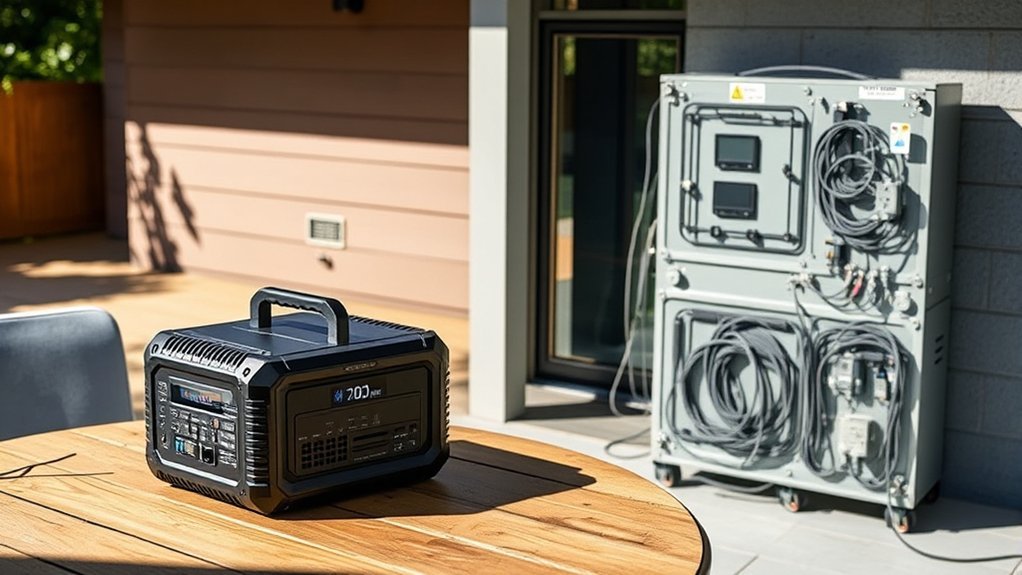
When evaluating portable power stations and grid-tied backup systems, their cost, installation, and maintenance profiles reveal significant differences that influence overall feasibility and long-term viability. A thorough cost comparison shows that portable units typically require higher initial investment relative to their size but incur lower ongoing expenses. In contrast, grid-tied systems involve substantial upfront costs for equipment and professional installation, but benefit from reduced operational expenses over time. Maintenance considerations also vary; portable power stations demand minimal upkeep, mainly battery management, whereas grid-tied systems require regular inspections and potential repairs of inverters and connection points. These factors directly impact long-term reliability, with grid-tied systems offering more consistent performance but at higher initial and maintenance costs, while portable units provide flexibility with simpler maintenance routines.
Evaluating Flexibility and Mobility for Different Uses
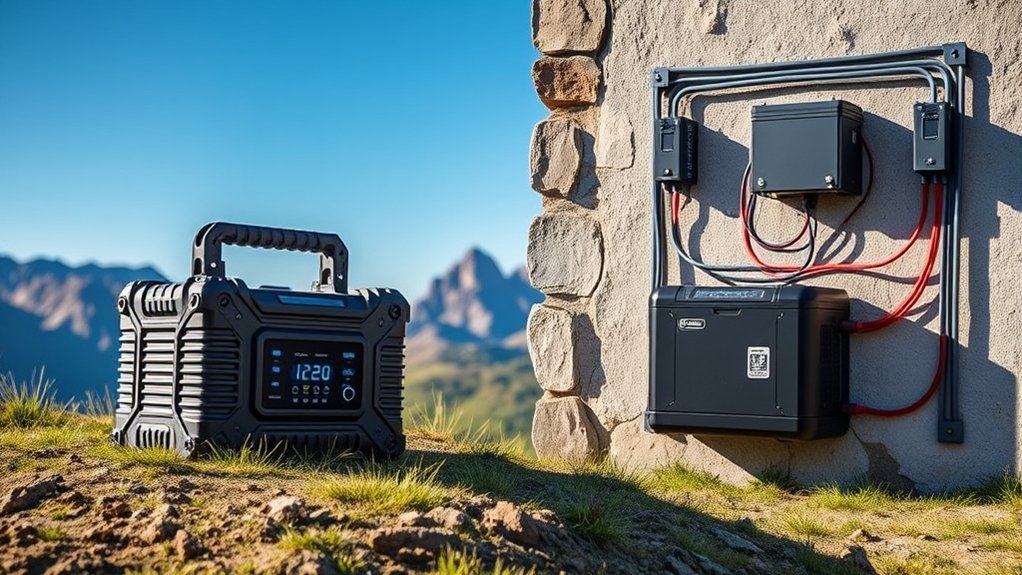
When evaluating flexibility and mobility, we focus on how easily each system can be transported and set up across different environments. Power capacity and runtime determine whether a system can meet varying energy demands, while adaptability to different locations highlights its versatility. Analyzing these factors helps identify which solution best supports diverse use cases and operational requirements.
Portability and Ease of Transport
Portability and ease of transport are critical factors when comparing portable power stations to grid-tied backup systems, as they directly influence flexibility and suitability for various applications. Portable units excel in mobility, allowing deployment in remote or emergency scenarios, but their design impacts battery lifespan and environmental impact. Lightweight construction, integrated handles, and compact form factor facilitate quick relocation and setup. Conversely, grid-tied systems, typically fixed installations, lack mobility but offer stable power with minimal maintenance. When evaluating these options, consider:
- The weight and size of portable units
- The durability of materials used
- Ease of carrying or mounting
- Environmental considerations in manufacturing and disposal
These factors determine not only transportability but also the long-term sustainability of each system.
Power Capacity and Runtime
Power capacity and runtime are fundamental metrics that determine a system’s suitability for different applications, especially when balancing flexibility with mobility. Portable power stations typically feature high-capacity batteries with diverse chemistries like lithium-ion, offering rapid recharge cycles and high energy density, which enhance runtime. In contrast, grid-tied backup systems leverage the main power grid, providing virtually unlimited capacity but limited mobility. Battery chemistry influences environmental impact; lithium-based systems tend to have lower emissions during operation but pose challenges in manufacturing and disposal. Runtime varies markedly: portable units excel for short-term, high-mobility needs, while grid-tied systems support continuous, large-scale operation. Evaluating these factors helps in selecting the appropriate system aligned with specific use cases and sustainability considerations.
Adaptability to Various Locations
Evaluating the flexibility and mobility of backup systems reveals significant differences in their suitability for various environments and use cases. Portable power stations excel in adaptability, making them ideal for remote camping and emergency preparedness. Their compact design allows easy transportation across diverse terrains, enabling quick deployment in remote locations. Grid-tied backup systems, however, are generally fixed installations, limiting mobility but offering stable power during outages when connected to a reliable grid.
- Portable power stations can be carried easily to remote camping sites or disaster zones.
- They require minimal setup, ideal for quick deployment in emergency scenarios.
- Grid-tied systems demand stable infrastructure, reducing flexibility in off-grid or temporary setups.
- The mobility of portable units enhances their suitability for diverse, unpredictable environments.
Analyzing Reliability, Power Output, and Scalability
While both portable power stations and grid-tied backup systems aim to guarantee continuous energy supply, their reliability, power output, and scalability differ considerably. Portable stations excel in renewable integration and emergency preparedness, offering decentralized, immediate backup but depend on battery capacity and recharge options. Grid-tied systems provide higher, consistent power output and greater scalability, integrating renewable sources seamlessly into the grid. However, they rely on grid stability, reducing their reliability during outages. The following table compares these aspects:
| Aspect | Portable Power Station | Grid-Tied Backup System |
|---|---|---|
| Reliability | Moderate; dependent on battery health | High; relies on grid stability |
| Power Output | Limited; suitable for essential loads | High; supports larger loads |
| Scalability | Limited; adding units is possible | Highly scalable with infrastructure |
Which Backup System Fits Your Lifestyle and Energy Needs?
Determining the most suitable backup system depends on evaluating your specific energy requirements, lifestyle, and geographic considerations. Our choice hinges on factors like capacity, portability, and integration potential. For those prioritizing renewable integration, portable power stations offer flexibility for solar or wind sources, supporting sustainable energy goals. Conversely, grid-tied backup systems excel in emergency preparedness, providing seamless, large-scale power with minimal manual intervention.
- Energy demands: High consumption favors grid-tied systems, while moderate needs suit portable options.
- Mobility: Active lifestyles benefit from portable power stations.
- Location: Remote or off-grid areas may require renewable-compatible systems.
- Reliability: Emergency preparedness demands consistent, reliable backup, influencing system choice.
Pros and Cons of Portable Power Stations Versus Grid-Tied Backup Systems
When comparing portable power stations and grid-tied backup systems, we focus on portability and flexibility versus reliability and power stability. Portable units offer mobility but may lack consistent output during extended use, while grid systems provide steady power but lack mobility. Analyzing these trade-offs helps determine which solution best fits specific needs and operational contexts.
Portability and Flexibility
What makes portable power stations stand out regarding portability and flexibility? Their compact design and lightweight construction enhance user convenience, enabling easy transport across diverse locations. This mobility allows users to deploy power solutions in remote or emergency settings without dependency on grid infrastructure. Additionally, portable stations feature integrated handles and rugged casings for durability during transit. Their battery longevity ensures sustained performance over multiple charges, supporting prolonged usage. However, their limited capacity constrains the availability of power when compared to grid-tied systems. Conversely, grid-tied backup systems excel in providing continuous, high-capacity power but lack portability, restricting flexibility to stationary installation. Ultimately, portable power stations prioritize user convenience and adaptability, making them suitable for dynamic environments and temporary needs.
Reliability and Power Stability
Portable power stations offer a level of reliability and power stability that is highly advantageous in certain scenarios, yet they also present limitations compared to grid-tied backup systems. Their dependability hinges on battery lifespan, which diminishes over time and impacts long-term performance. Charging efficiency varies depending on input sources, affecting how quickly and effectively they can be recharged during outages. While portable units provide immediate, self-contained power, their capacity to sustain high-demand loads is limited by battery capacity and cycle life. Conversely, grid-tied systems deliver consistent power quality and stability, leveraging the grid’s infrastructure, which typically ensures a longer lifespan and more efficient charging cycles. However, they are vulnerable to grid outages unless guaranteed with additional energy storage.
Frequently Asked Questions
How Long Can a Portable Power Station Typically Run During an Outage?
A portable power station typically runs for several hours to a day during an outage, depending on its battery capacity and the power draw of connected devices, though portability concerns may limit its size and runtime capacity.
What Are the Environmental Impacts of Each Backup System Type?
We find portable power stations generally have a lower carbon footprint, especially with battery recycling efforts, while grid-tied systems may cause more environmental impact due to energy transmission losses and larger infrastructure demands.
Can Portable Power Stations Be Charged Using Renewable Energy Sources?
Yes, portable power stations can be charged using renewable energy sources like solar panels, enhancing solar integration and reducing environmental impact. Proper management of battery lifespan guarantees efficiency and longevity of the power station during sustainable charging practices.
How Do Maintenance Requirements Differ Between the Two Systems?
We tackle maintenance differences by analyzing battery lifespan and cost analysis; portable power stations require regular checks and component replacements, while grid-tied systems demand minimal upkeep, making maintenance more manageable and cost-effective over time.
Are There Safety Concerns Associated With Each Backup Backup Option?
We believe both systems pose safety concerns; portable stations may generate noise pollution and have limited battery lifespan, while grid-tied backups risk electrical faults. Proper maintenance and safety protocols mitigate these issues for reliable, secure power solutions.
Conclusion
Ultimately, choosing between portable power stations and grid-tied backup systems is like selecting the right tool for a specific job. Portable units offer flexibility for immediate, on-the-go needs, while grid-tied systems provide a robust, long-term foundation. By analyzing your energy demands and lifestyle, we can determine the best fit—ensuring your power solution is as precise as a well-calibrated instrument, ready to perform reliably when you need it most.