Ad Blocker Detected
Our website is made possible by displaying online advertisements to our visitors. Please consider supporting us by disabling your ad blocker.
When selecting a portable power station for RV use, we recognize that size and capacity directly influence functionality and convenience. Small units offer mobility and quick recharging but are limited in energy output, while larger units provide substantial power at the expense of portability and cost. Understanding the specific energy demands of your RV setup is essential. Let’s explore how these factors influence your choice and what considerations should guide your decision-making process.
Key Takeaways
- Small power stations are lightweight, portable, and ideal for minimal energy needs, while large units offer higher capacity for extended, high-demand RV use.
- Large stations support multiple appliances simultaneously but are heavier and less portable than compact, lightweight small units.
- Small units recharge quickly and are solar-compatible, suitable for quick, off-grid power, whereas large units prioritize sustained power output.
- Larger stations are more expensive and challenging to transport, making them less practical for mobile RV setups.
- Choice depends on energy requirements: small for basic needs, large for powering multiple devices and longer trips.
How Do Small and Large Power Stations Differ in Size and Portability
How do small and large power stations differ in size and portability? Small units are compact, lightweight, and designed for easy transport, making them ideal for quick setups or limited space. They typically feature integrated batteries requiring minimal maintenance and often support solar compatibility, enabling renewable charging options. Larger stations, by contrast, are bulkier and heavier, prioritizing increased power capacity over portability. They often have multiple connection points and heavier batteries, which require more extensive battery maintenance and careful handling. While small stations excel in portability and simplicity, large units are better suited for extended use and higher power demands. The choice depends on your needs, balancing size, ease of transport, and the capacity to support additional features like solar charging.
What Power Capacity Do You Need for Your RV? Small vs Large Units Explored
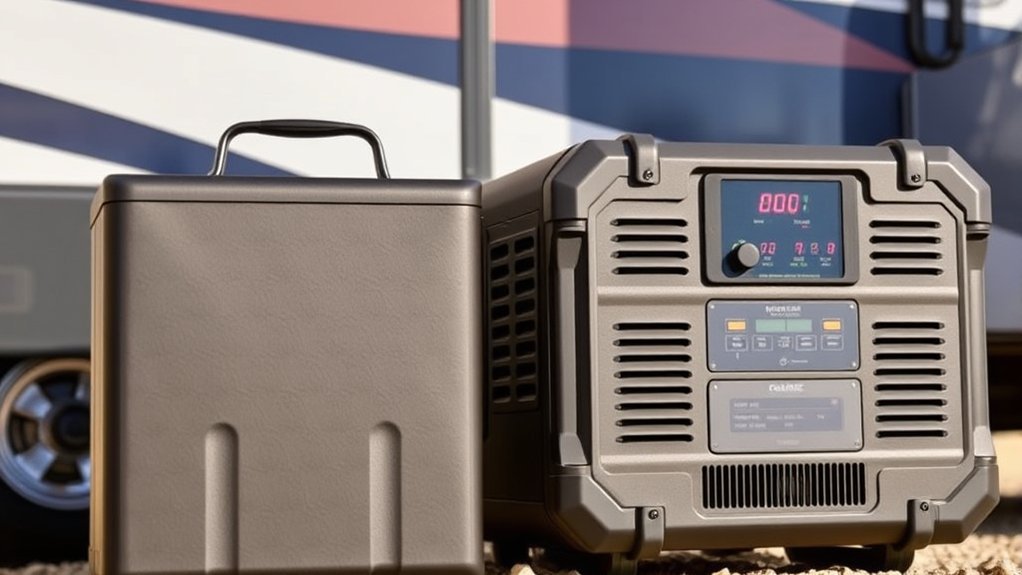
When determining the appropriate power capacity for your RV, we focus on evaluating your energy needs and available space. Smaller units offer enhanced portability but may limit power output, while larger units provide greater capacity at the expense of size. Balancing these factors ensures you select a power station that meets your operational requirements efficiently.
Power Needs Assessment
Determining the appropriate power capacity for your RV requires a careful assessment of your electrical load and usage patterns. We recommend calculating the total wattage of essential appliances, considering peak and continuous power demands. For those interested in solar compatibility, verify the power station can handle your desired solar input and energy conversion efficiency. Larger units often support higher wattage outputs, suitable for multiple devices or appliances, but may come with more complex warranty coverage. Conversely, smaller units offer portability and ease of use, ideal for minimal power needs. Accurate power needs assessment helps match capacity with your actual consumption, preventing underperformance or overinvestment. Ultimately, understanding your electrical load ensures you select a power station that offers reliable operation while aligning with your solar setup and warranty expectations.
Portability and Space
Choosing the right portable power station for your RV hinges on balancing capacity with portability; larger units provide greater power but often come with increased weight and bulk, while smaller units are lightweight and easy to transport but may lack sufficient capacity for extended use. When evaluating portability, consider battery chemistry, as lithium-ion batteries offer high energy density, reducing weight without sacrificing capacity, and typically support faster charging speeds. Larger units often incorporate advanced battery chemistries to optimize charging speed and longevity, but their increased size impacts storage space and mobility. Smaller units excel in compactness and ease of handling, making them suitable for minimal power needs or short trips. Ultimately, selecting a unit depends on matching your power requirements with the physical constraints of your RV’s storage and your portability preferences.
Advantages of Small Portable Power Stations for RV Enthusiasts
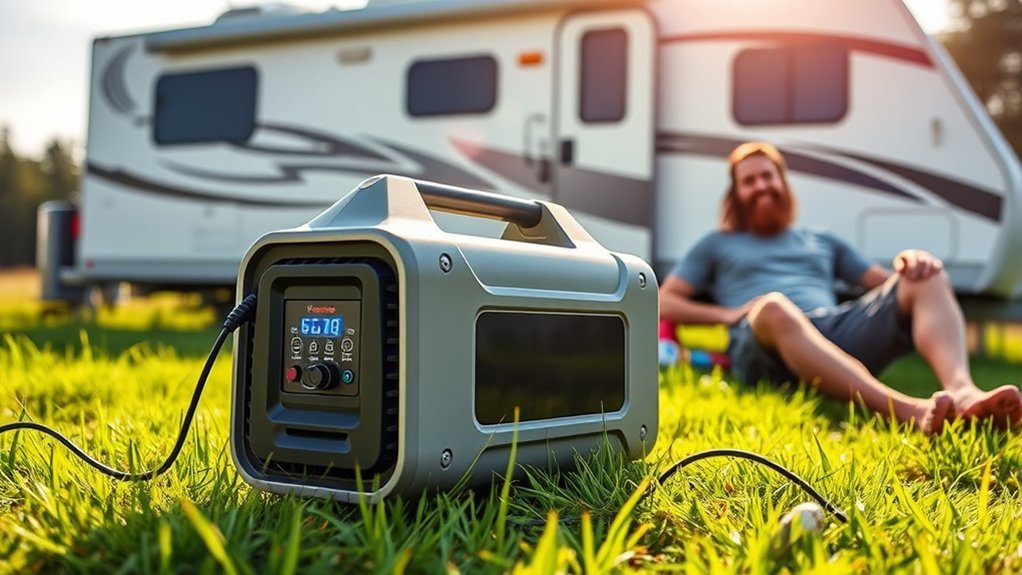
Small portable power stations offer significant advantages for RV enthusiasts due to their lightweight and compact design, enhancing mobility and ease of transport. They also feature straightforward recharge options, enabling quick and efficient power replenishment with minimal downtime. Additionally, their versatile power outputs support a range of devices, making them adaptable to various camping and emergency scenarios.
Lightweight and Portable
Because of their compact design, small portable power stations offer unmatched ease of transport and setup for RV enthusiasts. Their lightweight structure simplifies mobility, making it practical to move and position the unit without assistance. This portability enhances flexibility in various camping environments, especially where space is limited. Additionally, their smaller size facilitates easier integration with solar panels, enabling efficient solar power utilization for off-grid energy solutions. These units often feature optimized battery longevity, ensuring reliable performance over extended periods and multiple charge cycles. The combination of lightweight construction, solar integration potential, and durable batteries makes small power stations an ideal choice for RV users seeking a highly portable, efficient power solution that doesn’t compromise performance or convenience.
Easy to Recharge
Ever wondered how quickly a portable power station can be recharged during your RV adventures? Small units typically feature efficient charging cycles, often due to their compact design and optimized circuitry, which can extend battery longevity by reducing stress on internal components. Their lightweight nature allows for easier connection to various power sources, including solar panels, thanks to high solar compatibility. This enables rapid recharging even in remote locations, minimizing downtime. Many small stations support fast charging protocols and multiple input options, ensuring that you can replenish power quickly and efficiently. The combination of quick recharging, enhanced battery longevity, and solar compatibility makes small portable power stations a practical choice for maintaining a reliable power supply during extended RV trips.
Versatile Power Options
The compact design of small portable power stations translates into a diverse array of power options, making them particularly adaptable for RV use. These units typically support multiple input sources, including integrated or attachable solar panels, which enable renewable energy harvesting. This flexibility extends battery lifespan by reducing reliance on grid power and minimizing deep discharge cycles. Their ability to operate efficiently with solar panels allows for extended off-grid usage, conserving stored energy for critical devices. Additionally, the variety of output ports—AC, USB, and DC—facilitates powering a broad spectrum of appliances and electronics simultaneously. This versatility guarantees that users can optimize energy sources, prolong battery health, and maintain reliable power, all within a compact, portable form factor ideal for RV applications.
Benefits of Large Portable Power Stations for Extended RV Trips
Extended RV trips demand reliable power sources that can sustain multiple devices and appliances over long periods without frequent recharging. Large portable power stations excel in this role by offering higher capacity and enhanced features. They support extensive solar integration, maximizing renewable energy use and reducing reliance on external power sources. The increased battery longevity guarantees prolonged operation, even under heavy loads. Visualize powering:
- Multiple appliances simultaneously, including refrigerators and microwaves
- Continuous device charging over days
- Extended off-grid camping with minimal power concerns
- Reliable backup during unexpected outages
These stations enable seamless energy management, making them ideal for extended trips. Their robust design supports sustained performance, ensuring all essential devices remain operational, and emphasizing their suitability for demanding RV adventures.
Limitations of Small Power Stations: When They Fall Short
Small power stations often fall short during demanding RV use because their limited capacity cannot sustain multiple devices or high-energy appliances over extended periods. Their smaller batteries require more frequent maintenance to guarantee peak performance, which can be a logistical challenge during extended trips. Additionally, their limited solar compatibility restricts efficient recharging options in off-grid settings, leading to potential power shortages. This makes them unsuitable for powering high-consumption appliances or maintaining continuous operation of essential systems. The compact design, while portable, compromises overall energy availability, and their inability to support multiple simultaneous loads can hinder functionality. For sustained RV use, understanding these limitations helps determine when investing in a larger, more capable power station is necessary.
Drawbacks of Large Power Stations: Are They Too Heavy or Expensive?
While large power stations provide significant energy capacity, their weight and cost often pose substantial drawbacks. The heavy battery chemistry, often lithium-ion or lithium-polymer, increases overall weight, making transportation and installation challenging. Additionally, the high expense stems from advanced battery materials and complex manufacturing processes, elevating initial investment. Charging methods for large stations typically require dedicated infrastructure or high-capacity power sources, further adding to costs and logistical complexity. The size and weight can limit portability, reducing flexibility for RV setups. Key considerations include:
Large power stations are heavy, costly, and less portable, making them less ideal for mobile or budget-conscious use.
- Heavy battery chemistry that demands reinforced housing
- Expensive components driven by advanced battery materials
- Complex charging methods requiring specialized equipment
- Reduced portability due to overall size and weight
These factors make large stations less practical for those prioritizing mobility and affordability.
Choosing the Right Power Station Based on Your RV Usage and Budget
Choosing the right power station for your RV depends heavily on your specific energy needs and budget constraints. It’s crucial to evaluate battery technology—lithium-ion batteries offer higher energy density and longer lifespan, making them suitable for extended use. Consider your typical power consumption, such as appliances, lighting, and electronics, to determine the required capacity. For budget-conscious setups, smaller units with basic features may suffice, but larger stations provide increased power and versatility. Renewable charging options, like solar panels, can enhance sustainability and reduce reliance on grid power. When selecting, guarantee compatibility with your RV’s power demands and future expansion plans. Precise assessment of usage patterns and available charging infrastructure will guide you toward an ideal, cost-effective solution.
Tips to Maximize Power Efficiency and Safety in Your RV Energy Setup
Maximizing power efficiency and safety in your RV energy setup requires careful attention to system design and operational practices. Properly selecting battery chemistry guarantees peak performance and longevity, reducing thermal risks and enhancing cycle life. Solar integration should be refined with high-quality charge controllers to prevent overcharging and maximize energy harvest. Maintain correct wiring practices to minimize resistance and voltage drops, improving overall efficiency. Regularly monitor system parameters, including voltage and current, to detect anomalies early. Use appropriate fuses and circuit breakers to protect against overloads. Additionally, ensure ventilation around batteries, especially when using lithium or lead-acid chemistries, to prevent overheating. These measures collectively enhance safety, extend component lifespan, and guarantee reliable power management during your RV adventures.
Frequently Asked Questions
How Long Do Portable Power Stations Typically Last on a Single Charge?
Typically, portable power stations last through 500 to 1,000 charging cycles, which equates to several years of daily use. Battery lifespan varies based on usage patterns, with proper maintenance extending operational life before capacity diminishes considerably.
Can Small Power Stations Handle High-Demand Appliances?
Small power stations generally struggle with high-demand appliances due to limited battery capacity and slower charging speeds, which prevent sustained power output; they’re better suited for low-power devices or short-term needs.
Are There Any Safety Concerns With Large Power Stations in RVS?
Large power stations in RVs pose safety concerns like fire hazards due to potential overheating and theft risks from their valuable nature. We recommend secure installation and proper ventilation to mitigate these technical safety issues effectively.
How Do Weather Conditions Affect Power Station Performance?
Like a knight’s armor, weather conditions considerably impact power station performance, with climate impact affecting efficiency and weather resilience. Extreme temperatures, humidity, and wind can reduce battery life and compromise safety in RV applications.
What Maintenance Is Required for Portable Power Stations?
We regularly calibrate the battery and follow strict storage precautions, such as keeping the power station in a cool, dry place and avoiding deep discharges, to guarantee ideal performance and longevity of our portable power stations.
Conclusion
Ultimately, selecting between small and large power stations boils down to balancing weight, capacity, and budget. If you’re chasing lightweight convenience, small units might be your match—until they aren’t. For those with extended needs and heft to spare, large stations deliver power at a premium. In the end, it’s a strategic choice—do you want to carry a feather or a freight train? Just remember, the right setup keeps your RV powered, not stranded.