Ad Blocker Detected
Our website is made possible by displaying online advertisements to our visitors. Please consider supporting us by disabling your ad blocker.
When considering the maintenance demands of portable power stations versus traditional generators, it’s clear that each option carries its own set of complexities and ease of upkeep. While portable units tend to require minimal intervention, traditional generators involve a more intricate routine that can impact long-term costs and operational simplicity. Understanding these differences is essential for making an informed decision, especially when factoring in cost, convenience, and safety. We invite you to explore these maintenance aspects further to determine which aligns best with your needs.
Key Takeaways
- Portable power stations require minimal maintenance, mainly battery checks, while traditional generators need oil, filter, and spark plug servicing.
- Regular cleaning of vents and cooling systems is essential for both, but more frequent in generators due to mechanical parts.
- Fuel management and stale fuel replacement are critical for traditional generators, whereas portable stations avoid fuel-related issues.
- Portable stations operate quietly and simplify upkeep; generators may need noise control and vibration management.
- Long-term costs favor portable stations due to lower ongoing expenses and reduced technical maintenance requirements.
What Are the Key Maintenance Tasks for Portable Power Stations?
To guarantee peak performance and longevity of portable power stations, regular maintenance is vital. Key tasks focus on preserving battery longevity, which is essential for overall device lifespan. Regularly monitoring battery health through voltage and capacity checks helps identify degradation early, ensuring ideal operation. Addressing potential overheating or thermal issues prevents damage that could compromise portability concerns. Cleaning vents and cooling systems maintains efficient heat dissipation, reducing stress on internal components. Additionally, firmware updates are necessary to optimize battery management algorithms and protect against software glitches. Proper storage practices, such as avoiding extreme temperatures and discharging the battery to recommended levels before long-term storage, also extend lifespan. These maintenance steps ensure that portable power stations remain reliable, portable, and ready for use when needed.
How Do Traditional Generators Require Regular Care and Upkeep?
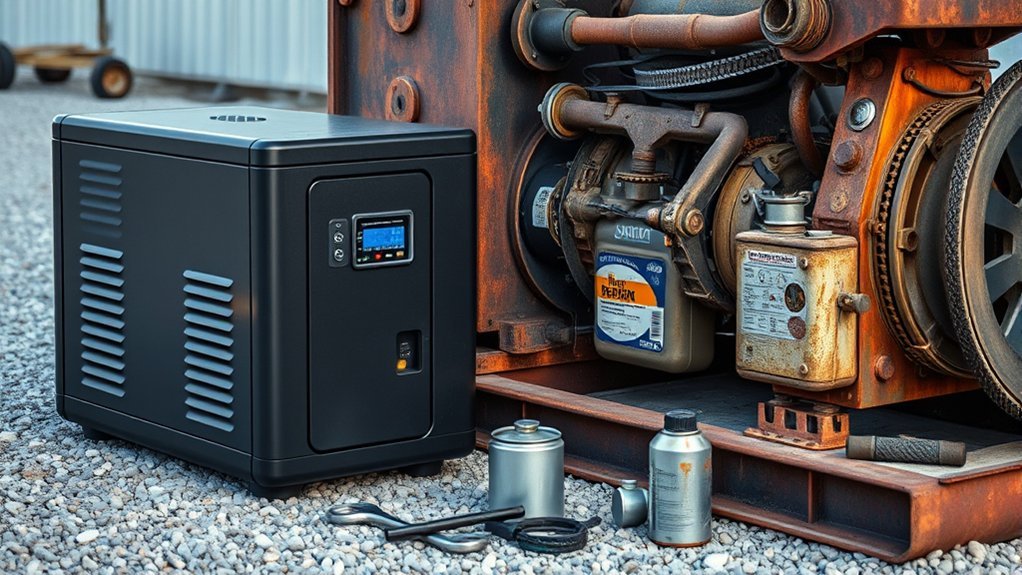
Regular maintenance is essential to guarantee the reliable operation and longevity of traditional generators. This involves routine checks of fuel efficiency, as clogged filters or degraded fuel can impair performance and increase emissions. Regular oil changes and spark plug inspections ensure ideal combustion, which directly impacts fuel consumption and overall efficiency. Additionally, maintaining proper cooling systems prevents overheating, preserving engine health. Noise levels are another critical aspect; worn components or poor insulation can elevate sound emissions, making operation disruptive. Periodic cleaning of air filters and exhaust systems reduces noise and enhances efficiency. Overall, diligent upkeep not only sustains fuel efficiency but also minimizes operational noise, assuring the generator remains a dependable and compliant power source over its lifespan.
Comparing Maintenance Costs: Which Option Is More Budget-Friendly Over Time?
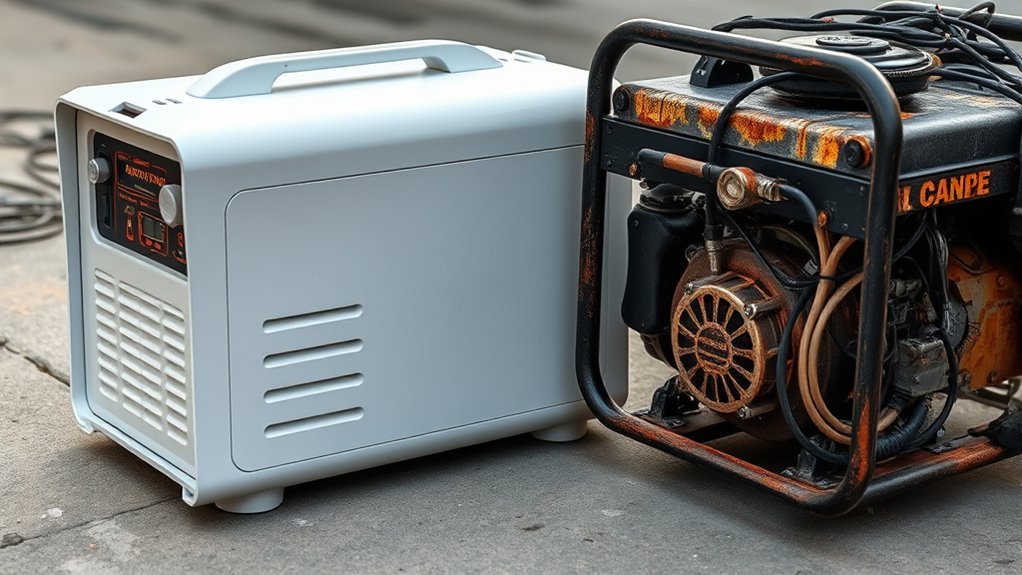
When evaluating the long-term affordability of portable power stations versus traditional generators, maintenance costs emerge as a critical factor. Portable power stations generally have lower ongoing expenses due to their fewer mechanical parts, requiring minimal maintenance and no fuel. In contrast, traditional generators incur costs related to fuel efficiency, as fuel consumption considerably impacts operating expenses over time. Additionally, noise levels are a consideration—traditional generators tend to be louder, potentially necessitating additional soundproofing or maintenance to manage wear caused by vibration. While initial costs may favor portable stations, traditional generators can become more expensive over time due to fuel and maintenance needs. Ultimately, a detailed comparison of fuel efficiency and noise-related wear helps determine which option is more budget-friendly in the long run.
Ease of Use: Which Maintenance Routine Is Simpler for Everyday Users?
Evaluating the ease of maintenance routines reveals significant differences in user experience between portable power stations and traditional generators. Portable power stations generally offer simpler maintenance due to their integrated battery systems, which require minimal intervention beyond regular charging and monitoring battery health. Their longer battery life reduces frequent replacements, streamlining upkeep. In contrast, traditional generators demand routine tasks such as oil changes, air filter replacements, and spark plug inspections, which can be complex for everyday users. Additionally, noise levels are a vital factor; portable power stations operate quietly, making them easier to manage without disturbing surroundings. Overall, portable power stations provide a more straightforward maintenance routine, while traditional generators involve more technical steps and higher noise levels, complicating daily upkeep.
Tips for Maintaining Your Power Equipment to Ensure Longevity and Safety
Proper maintenance is essential to maximize the lifespan and guarantee the safe operation of your power equipment. Regularly inspecting and cleaning components prevents corrosion and dirt buildup, which can reduce battery lifespan and impair fuel efficiency. For batteries, assure proper charging cycles and avoid complete discharges to prolong their life. For traditional generators, monitor fuel levels and replace stale fuel to prevent clogging and engine issues. Use the following table to guide maintenance priorities:
| Maintenance Task | Frequency |
|---|---|
| Battery health check | Monthly |
| Fuel system inspection | Every 50 hours of use |
| Cooling system cleaning | Quarterly |
Adhering to these practices keeps your equipment reliable, safe, and efficient over time.
Frequently Asked Questions
How Often Should I Perform Maintenance on My Portable Power Station?
We recommend calibrating the battery and performing firmware updates every three to six months, depending on usage. Regular maintenance guarantees peak performance, prevents issues, and extends your portable power station’s lifespan through proper battery calibration and firmware updates.
What Are the Common Signs Indicating Maintenance Is Needed for Traditional Generators?
We notice increased noise levels, reduced fuel efficiency, or irregular engine performance, which signal maintenance is needed. Addressing these issues promptly guarantees peak operation, minimizes downtime, and maintains safety standards for traditional generators.
Are There Environmental Considerations for Disposing of Old Generator Parts?
Is eco-friendly disposal of old generator parts feasible? Yes, proper disposal involves managing hazardous waste responsibly, recycling metals, and avoiding environmental contamination. We guarantee compliance with regulations, minimizing ecological impact through careful, analytical waste management practices.
Can Portable Power Stations Be Maintained Without Professional Help?
We believe portable power stations can often be maintained through DIY troubleshooting and battery calibration, provided users follow manufacturer instructions carefully. Regular checks, understanding internal components, and cautious handling help guarantee peak performance without professional intervention.
How Does Maintenance Impact the Lifespan of Each Power Source?
Proper maintenance enhances battery longevity in power stations and improves fuel efficiency in traditional generators, directly extending their operational lifespan. Regular checks and timely repairs prevent degradation, ensuring peak performance and cost savings over the equipment’s entire service life.
Conclusion
In summary, portable power stations require minimal upkeep, greatly reducing long-term expenses and downtime—our analysis shows they can save users up to 50% on maintenance compared to traditional generators. With simpler routines involving regular charging and cleaning, they are ideal for users seeking reliability and ease. Maintaining peak performance ensures safety and prolongs lifespan, making portable stations a more practical, cost-effective choice for diverse energy needs.