Ad Blocker Detected
Our website is made possible by displaying online advertisements to our visitors. Please consider supporting us by disabling your ad blocker.
Like a well-placed bridge connecting two critical points, choosing between high capacity and compact portable power stations requires understanding their distinct strengths and limitations. As technology advances, the decision hinges on specific needs—whether sustained heavy-duty power or portability for lighter tasks. Maneuvering through these options involves weighing trade-offs that can considerably impact your efficiency and readiness. To make an informed choice, it’s essential to explore what each type offers and how they align with your operational demands.
Key Takeaways
- High capacity stations support prolonged, heavy-duty use, while compact units excel in portability and quick setup.
- Larger size and weight make high capacity stations less portable compared to lightweight, travel-friendly compact models.
- High capacity units are ideal for industrial, off-grid, and renewable energy applications; compact stations suit outdoor, emergency, and short-term needs.
- Charging times are longer for high capacity stations; compact units typically feature faster recharging for immediate use.
- Cost and size increase with capacity, making high capacity stations more expensive and less portable than compact options.
What Are High Capacity Portable Power Stations and When Do You Need One?
High capacity portable power stations are robust energy storage devices designed to deliver significant power output over extended periods. They feature larger batteries that guarantee sustained operation, making them ideal for long-term or high-demand applications. Battery longevity is a key factor, as these units are engineered for durable, repeated cycles, extending their functional lifespan. Solar compatibility enhances their versatility, allowing for renewable energy integration and off-grid use. When you require reliable power for extended outdoor activities, emergency backup, or industrial tasks, a high capacity station provides the necessary endurance and capacity. Their ability to efficiently handle multiple devices simultaneously and leverage solar input makes them indispensable in scenarios demanding extended, sustainable energy solutions.
Benefits of High Capacity Power Stations for Heavy-Duty Use
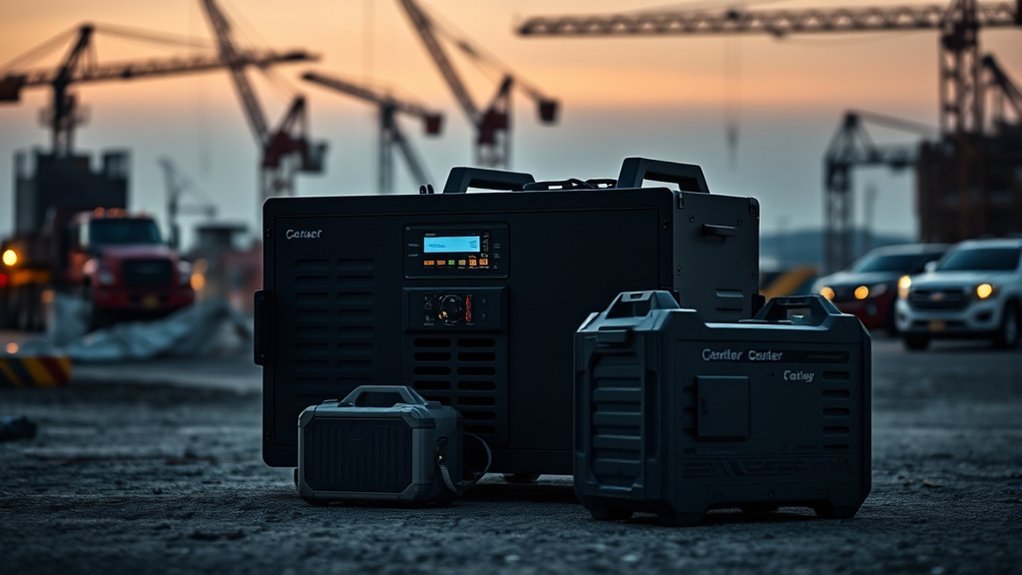
Because heavy-duty applications demand sustained and reliable power, high capacity power stations serve as essential tools for industries and outdoor professionals alike. Advanced battery technology enables these stations to deliver prolonged energy output, supporting continuous operation of critical equipment. Their substantial capacity minimizes downtime, making them suitable for demanding tasks such as construction, remote site work, and emergency power supply. Additionally, high capacity units often integrate renewable energy sources, like solar panels, enhancing sustainability and reducing reliance on grid power. This synergy allows for extended operation in off-grid environments, lowering operational costs and environmental impact. The robustness of these power stations ensures dependable performance under heavy load conditions, making them indispensable for applications requiring consistent, high-volume power over extended periods.
Challenges and Limitations of High Capacity Models
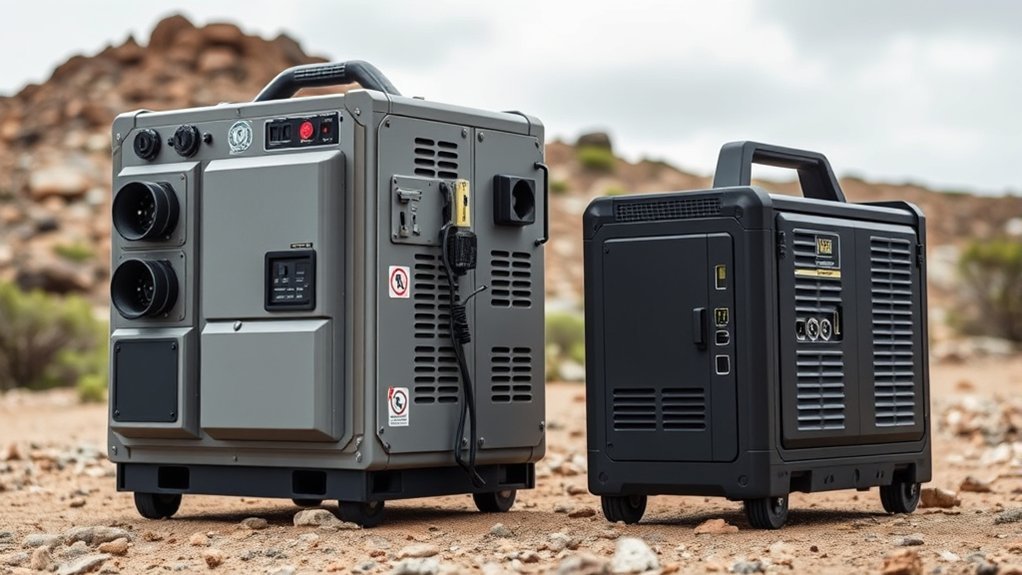
High capacity power stations tend to be larger and heavier, which can hinder portability and ease of transport. They also require longer charging times, impacting operational efficiency during extended use. These factors present significant practical limitations despite their increased energy capacity.
Size and Portability
Have you ever noticed how larger capacity power stations tend to be bulky and unwieldy? This size and portability issue stems from advanced battery technology, which requires extensive cell arrangements to store more energy, increasing overall dimensions. While high capacity models excel in providing extended runtime, their size hampers portability and convenience. The larger form factor complicates transportation, setup, and storage, making them less suitable for quick deployment or outdoor use. Additionally, the increased size impacts charging efficiency, as larger batteries often take longer to replenish despite advancements in charging technology.
| Model Type | Size | Charging Efficiency | Portability |
|---|---|---|---|
| High Capacity | Larger | Slower charging | Less portable |
| Compact | Smaller | Faster charging | Highly portable |
Increased Weight Challenges
While larger capacity power stations offer extended runtime, their increased weight presents significant handling and logistical challenges. The added mass impacts mobility, making transportation and placement more cumbersome, especially in remote or rugged environments. This weight often correlates with larger battery packs, which can influence battery longevity by increasing thermal management demands, potentially affecting overall lifespan. Additionally, the increased capacity can affect charging efficiency; heavier units may require more energy to recharge and may have more complex power management systems, reducing overall efficiency. These factors necessitate careful consideration of deployment scenarios, as the benefits of higher capacity must be balanced against the practical limitations imposed by weight, affecting both operational ease and system longevity.
Longer Charging Times
Extended charging times pose a significant challenge for high-capacity portable power stations, especially in scenarios requiring rapid or multiple recharges. Longer charge cycles can accelerate battery degradation, impacting overall battery lifespan and reducing long-term efficiency. This limitation hampers their suitability for emergency situations or continuous use, where quick turnaround is essential. Additionally, high-capacity models often face compatibility issues with renewable energy sources, as their longer charging times may not align with variable solar or wind inputs. This mismatch can lead to inefficiencies and increased reliance on grid power. While advancements in fast-charging technologies are improving recharge speeds, the inherent trade-off remains: larger batteries require more time to replenish, constraining their practicality in time-sensitive applications.
Why Choose a Compact Portable Power Station? Key Advantages
Compact portable power stations prioritize portability and ease of use, making them ideal for quick setup and mobility. Their space-saving design allows for seamless integration into various environments without sacrificing essential functionality. This combination guarantees reliable power access in situations where size and weight are critical factors.
Portability and Ease of Use
Because portability is a primary concern, compact portable power stations offer significant advantages in ease of use. Their lightweight design, combined with streamlined interfaces, simplifies setup and operation, making them ideal for diverse applications. Advanced battery technology ensures efficient energy storage, while renewable integration options, such as solar compatibility, enhance sustainability. These stations often feature intuitive controls, reducing user effort during deployment. The portability factor enables quick relocation and access in remote or emergency situations, maintaining reliable power supply.
| Feature | Benefit |
|---|---|
| Lightweight Design | Easier transportation and handling |
| Simplified Interface | User-friendly operation |
| Renewable Integration | Supports sustainable energy sources |
| Compact Size | Fits easily into limited spaces |
| Advanced Battery Tech | Longer lifespan and faster recharge capabilities |
Space-Saving Design
A key advantage of choosing a portable power station with a space-saving design is its ability to maximize utility within limited environments. Compact units leverage advanced battery technology to optimize energy density, reducing size without sacrificing capacity. Their design facilitates easier integration with renewable sources like solar panels, enabling sustainable power solutions in confined spaces. These stations often feature streamlined forms that fit seamlessly into tight areas, such as RVs, cabins, or urban setups. Additionally, space-saving models enhance mobility, making them ideal for outdoor activities or emergency use.
- Efficient use of battery technology for high energy density
- Simplified renewable integration for eco-friendly power
- Reduced physical footprint for tight spaces
- Lightweight construction for portability
- Streamlined design for easy storage
Ideal Scenarios for Using Compact Power Stations
While high-capacity power stations excel in prolonged, high-demand situations, compact power stations are best suited for scenarios requiring portability and quick setup. They are ideal for short-term use, outdoor activities, and emergency situations where mobility is essential. Their battery lifespan remains ideal for frequent, brief cycles, and charging efficiency is maximized due to smaller capacity, enabling rapid recharge. These stations are perfect for powering essential devices such as smartphones, laptops, and small appliances.
| Use Case | Key Considerations |
|---|---|
| Camping or outdoor trips | Lightweight, fast charging, portable |
| Emergency backup | Quick deployment, reliable power |
| Remote work sites | Easy to transport, efficient charging |
| Short-term events | Compact design, immediate power supply |
Comparing Power Output: How Much Power Do You Really Need?
Understanding your power needs is essential when choosing a portable power station, as different devices require varying levels of energy. To determine your required power output, consider the wattage of your essential devices and the duration of use. High-capacity stations typically feature advanced battery chemistry, offering higher watt-hour ratings for prolonged use and better solar compatibility. Conversely, compact stations deliver lower power but excel in portability. Key factors include:
- Total wattage of devices
- Surge power requirements
- Runtime expectations
- Battery chemistry for efficiency
- Compatibility with solar charging systems
Portability and Convenience: Which Station Fits Your Lifestyle?
Choosing the right portable power station depends heavily on how we prioritize portability and convenience in our lifestyle. Compact units excel in weight and size, making them ideal for frequent travel or outdoor activities. They often feature advanced battery chemistries, such as lithium-ion or lithium-polymer, which maximize energy density and reduce weight, enhancing portability. Charging speed is a critical factor; compact stations typically support faster recharging via AC or fast-charging ports, minimizing downtime. High-capacity units, while offering extended power, tend to be bulkier and heavier, reducing overall convenience. Consequently, selecting a station requires balancing size, battery chemistry, and charging speed to match our specific mobility needs. For those valuing portability above all, a lightweight, fast-charging unit with efficient battery chemistry is ideal.
Cost Differences Between High Capacity and Compact Units
High-capacity portable power stations typically come with a considerably higher upfront cost compared to compact units due to their larger batteries and advanced features. A detailed price comparison reveals that high-capacity models often range from 30% to 50% more expensive, reflecting their enhanced energy storage and output capabilities. When evaluating cost, consider warranty coverage, as high-capacity units tend to offer longer or more extensive warranties, which can justify their higher price. Additional factors influencing the cost difference include:
- Larger battery capacity
- Advanced inverter technology
- Enhanced safety features
- Extended warranty periods
- Additional ports and functionalities
These elements contribute to the initial investment but also impact long-term durability and reliability.
How to Decide Which Portable Power Station Suits Your Needs
How do you determine which portable power station best meets your specific needs? First, assess your power requirements—consider the total wattage and duration of use. For longer-term or frequent use, prioritize units with a higher battery lifespan to guarantee durability over time. If renewable integration is essential, select models compatible with solar panels or other renewable sources, maximizing sustainability. For short-term or emergency use, compact units may suffice, but they might lack the capacity for extended power needs. Conversely, high capacity units provide extended runtime but come with increased size and weight. Ultimately, choosing the right station involves balancing capacity, battery lifespan, and renewable integration to match your specific application, whether camping, backup power, or off-grid living.
Frequently Asked Questions
How Long Do High Capacity Power Stations Typically Last on a Full Charge?
High capacity power stations typically last through around 500 to 1,000 charging cycles, equating to about 2 to 5 years of daily use, depending on battery lifespan and usage patterns, before their capacity diminishes considerably.
Are Compact Power Stations Suitable for Emergency Backup During Power Outages?
Yes, compact power stations are suitable for emergency backup due to advanced battery technology and high portability, enabling quick deployment. However, portability concerns may limit their capacity for extensive power needs during prolonged outages.
Can High Capacity Stations Charge Multiple Devices Simultaneously?
Yes, high capacity stations can charge multiple devices simultaneously, leveraging superior battery efficiency and faster charging speeds. This guarantees efficient device management during extended use, making them ideal for complex power needs and continuous operation.
What Maintenance Is Required for Long-Term Use of These Power Stations?
We believe proper maintenance routines extend battery lifespan; regularly check connections, keep units clean, and store in cool, dry places. These practices guarantee long-term reliability and ideal performance of portable power stations over extended use periods.
Do Portable Power Stations Have Built-In Safety Features?
We’ve found that portable power stations incorporate advanced battery technology with built-in safety features, including safety certifications, to prevent overcharging, overheating, and short circuits, ensuring reliable, secure operation during long-term use.
Conclusion
In steering the landscape of portable power, we see each station as a carefully calibrated instrument, tuned to specific demands. High capacity units are the steadfast engines powering industrial pursuits, while compact models are agile tools for fleeting needs. Your choice hinges on balancing weight and power—like selecting the right gear for a journey. By understanding your power profile, you can orchestrate a seamless, reliable energy symphony tailored precisely to your unique rhythm.