Ad Blocker Detected
Our website is made possible by displaying online advertisements to our visitors. Please consider supporting us by disabling your ad blocker.
It’s interesting how the rise of fast charging stations coincides with increased demand for quick energy solutions, yet understanding their technical differences from standard chargers is vital for making informed choices. Both options serve distinct purposes, but their impact on device longevity, cost, and efficiency varies markedly. As we compare these power stations, it’s important to weigh not just speed but also safety and long-term value, prompting us to explore which solution truly fits different needs.
Key Takeaways
- Fast chargers deliver higher power (over 150 kW) for rapid charging, while standard chargers offer lower power (3.7–22 kW) for gradual charging.
- Fast charging reduces recharge time to around 30 minutes, whereas standard charging takes hours, prioritizing energy efficiency and battery longevity.
- Fast charging can cause increased thermal stress, potentially degrading batteries faster and raising safety risks; standard charging is gentler on batteries.
- Fast chargers are more expensive, complex, and require robust infrastructure, while standard stations are more affordable and easier to maintain.
- Fast charging suits large batteries and urgent needs, whereas standard charging is ideal for smaller batteries and routine, low-cost use.
What Are Fast Charging and Standard Charging Power Stations?
While both fast charging and standard charging power stations serve the essential function of replenishing electric vehicle batteries, they differ considerably in their design and operational capabilities. Fast chargers are engineered to deliver high power levels, often exceeding 150 kW, enabling rapid energy transfer without compromising battery safety. Their effectiveness depends heavily on battery chemistry, as certain chemistries tolerate high current flow better, influencing charging protocols. Standard chargers, typically providing 3.7 to 22 kW, support gradual charging suited for daily use, relying on more extensive charging infrastructure to guarantee widespread accessibility. The distinction in design reflects underlying technical considerations, such as thermal management and voltage regulation, which are crucial for preserving battery health across different chemistries. Understanding these differences clarifies the roles each station type plays within a holistic charging network.
How Do Fast Chargers Deliver Power Differently Than Standard Chargers?
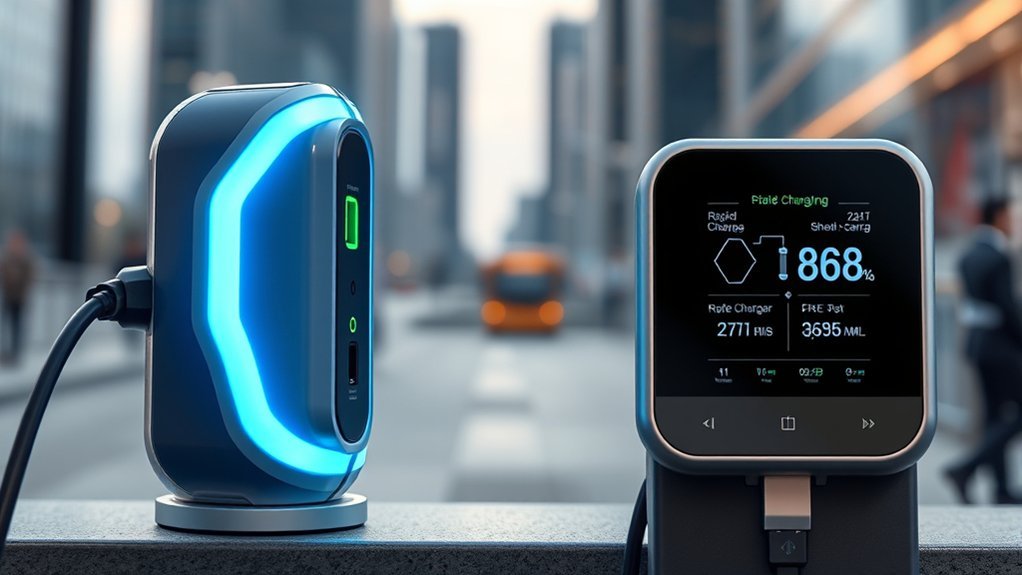
Fast chargers utilize higher power delivery methods, enabling increased current and voltage levels compared to standard chargers. This results from advanced charging protocols that optimize power transfer and minimize thermal constraints. Understanding these mechanisms is key to distinguishing how fast chargers markedly accelerate charging speeds.
Power Delivery Methods
The way fast chargers deliver power fundamentally differs from standard chargers through their use of higher voltage and current levels, enabling rapid energy transfer to the vehicle’s battery. This approach leverages advances in battery technology, allowing for greater charge acceptance rates without compromising battery integrity. Fast chargers typically utilize Direct Current (DC) output, bypassing onboard converters, which accelerates charging times. They also incorporate sophisticated power management systems to optimize energy flow, often integrating renewable energy sources to enhance sustainability. Standard chargers, conversely, rely on lower voltage and current, delivering energy more gradually. These methods prioritize safety and battery longevity over speed. As battery technology evolves, so too do the delivery methods, with fast chargers increasingly designed to efficiently handle higher power levels while supporting renewable energy integration.
Charging Speed Mechanisms
Charging speed mechanisms fundamentally differ between fast chargers and standard chargers, primarily in how they deliver electrical energy to the vehicle’s battery. Fast chargers utilize higher power levels and advanced communication protocols within the charging infrastructure, enabling rapid current transfer without risking thermal runaway. They leverage improvements in battery technology, such as higher thermal stability and increased charge acceptance, to sustain faster charging rates. Conversely, standard chargers operate at lower power levels, gradually delivering energy to protect battery longevity. The charging infrastructure for fast chargers incorporates sophisticated power management systems to handle high current loads efficiently. This distinction in charging speed mechanisms reflects ongoing advancements in battery technology and infrastructure design, optimizing for both speed and safety during rapid charging processes.
What Are the Key Benefits of Using Fast Charging Stations?
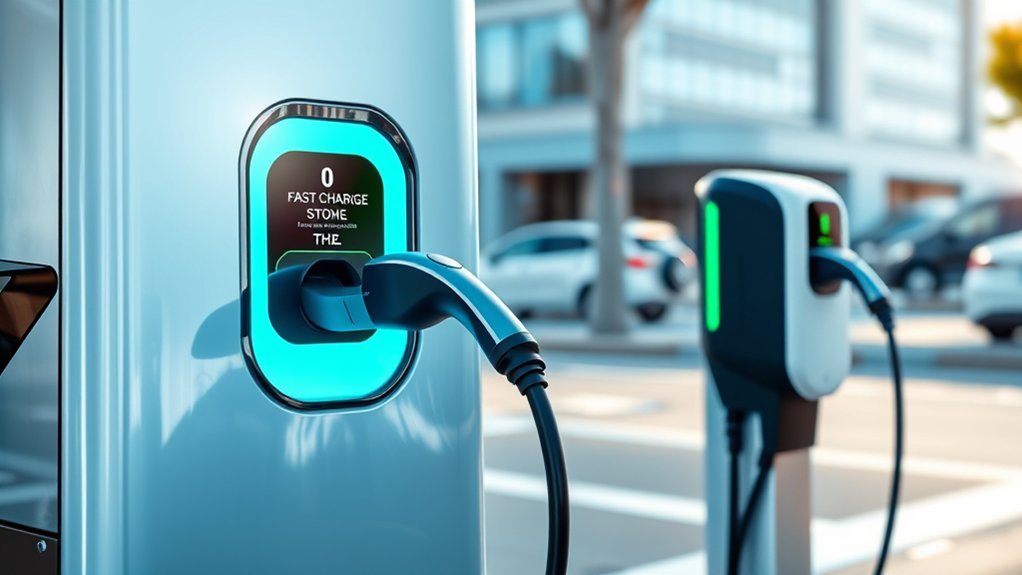
Fast charging stations provide markedly higher power delivery, enabling quicker recharges and minimizing wait times. This increased speed enhances operational efficiency and user experience, especially in high-traffic environments. Consequently, reduced downtime and improved convenience make fast chargers a strategic asset for optimizing energy infrastructure.
Rapid Charging Speeds
Since time efficiency is critical for electric vehicle users, rapid charging stations offer a notable advantage by markedly reducing charging durations. Advances in battery technology enable these stations to deliver high power levels without degrading cell integrity, facilitating faster energy transfer. This speed is especially beneficial when coupled with renewable energy sources, which can supply cleaner, sustainable power at rapid rates. Rapid charging minimizes downtime, allowing vehicles to recharge in a fraction of the time required by standard stations, therefore optimizing fleet operations and individual usage. By leveraging cutting-edge battery chemistry and power electronics, these stations ensure safety and efficiency during high-rate charging. Overall, the combination of rapid charging speeds and renewable energy integration greatly enhances EV usability and promotes broader adoption.
Increased Convenience Factor
The primary advantage of fast charging stations lies in their ability to substantially enhance user convenience by drastically reducing wait times. This efficiency stems from advancements in battery technology, enabling rapid energy transfer without compromising battery lifespan. Additionally, fast chargers often integrate renewable energy sources, supporting sustainable practices. The reduced charging duration allows users to maximize mobility and productivity, especially during long trips or tight schedules. The convenience factor is further amplified by the widespread deployment of fast stations in urban and highway corridors, minimizing detours. This synergy of battery innovation and renewable energy deployment makes fast charging stations not only more practical but also aligned with environmental goals.
| Benefit | Explanation |
|---|---|
| Reduced Wait Times | Quick energy transfer minimizes downtime during charging |
| Sustainability | Use of renewable energy reduces carbon footprint |
| User Flexibility | Enables spontaneous travel and better time management |
Reduced Downtime
Reducing downtime during charging sessions markedly boosts overall efficiency for electric vehicle users. Fast charging stations minimize the time required to replenish battery capacity, enabling more efficient utilization of charging infrastructure. Key benefits include:
- Optimized Charging Station Design: Fast chargers are engineered for rapid energy transfer, decreasing overall station occupancy time.
- Minimized Wait Times: Reduced charging duration alleviates congestion, especially at high-demand locations.
- Enhanced Turnover Rates: Quicker sessions allow more vehicles to access charging points within a given timeframe.
- Compatibility with Battery Capacity: Advanced fast chargers adapt to various battery sizes, ensuring minimal downtime regardless of vehicle specifications.
This combination of design and technological capabilities ensures that downtime is markedly curtailed, maximizing throughput and operational efficiency.
Why Choose Standard Charging Power Stations for Your Devices?
Opting for standard charging power stations often provides a reliable, cost-effective solution for maintaining device longevity and performance. These stations typically deliver consistent power output, reducing stress on device batteries and minimizing degradation over time. They are well-suited for applications like wireless charging, where steady, reliable energy transfer is essential for efficiency and safety. Additionally, solar powered stations serve as an eco-friendly alternative, harnessing renewable energy without requiring fast charging capabilities. This approach extends device lifespan by avoiding heat buildup associated with rapid charging. Standard stations are generally more affordable, require less maintenance, and are less complex, making them ideal for environments where cost and longevity outweigh the need for speed.
How Do Speed and Efficiency Compare Between Fast and Standard Chargers?
Fast chargers deliver power at considerably higher rates than standard chargers, which directly impacts charging speed and overall efficiency. This accelerated charging is enabled by advancements in battery technology and optimized charging infrastructure. To compare:
- Charging Speed: Fast chargers can deliver up to 80% charge in 30 minutes, whereas standard chargers may take several hours.
- Efficiency: Fast chargers minimize energy loss through advanced power management, improving overall efficiency.
- Battery Technology: Modern batteries are designed to handle rapid influxes of energy without degradation, supporting faster charging.
- Charging Infrastructure: The widespread deployment of high-capacity stations enhances the practicality of fast charging, although infrastructure costs remain a consideration.
Are There Safety Risks or Device Longevity Concerns With Fast Charging?
While fast charging offers notable advantages in convenience and efficiency, it also raises concerns about safety risks and potential impacts on device longevity. Specifically, rapid charging can accelerate battery degradation and increase overheating risks, which may compromise device safety and lifespan. The higher current flow can induce thermal stress, leading to faster capacity loss over time. To illustrate, consider the following factors:
| Factor | Impact |
|---|---|
| Battery degradation | Accelerated capacity loss with repeated fast charges |
| Overheating risks | Elevated thermal stress can damage internal components |
| Safety concerns | Potential fire hazards if overheating occurs |
| Thermal management | Effectiveness varies across device models |
| Longevity | Overall reduction in usable device lifespan |
Understanding these factors helps evaluate the safety and longevity implications of fast charging.
Which Charging Solution Is More Cost-Effective in the Long Run?
When evaluating long-term cost-effectiveness, we focus on charging speed efficiency and equipment maintenance expenses. Fast chargers, while reducing charging times, often incur higher maintenance and replacement costs due to increased wear. Conversely, standard chargers may have lower operational costs but could lead to longer vehicle downtime and potential productivity losses.
Charging Speed Efficiency
Determining which charging solution offers better long-term cost efficiency requires analyzing both upfront investments and operational expenses. When evaluating charging speed efficiency, fast chargers typically deliver quicker power delivery, reducing vehicle downtime but often at higher energy costs due to increased power demands. Conversely, standard chargers, though slower, tend to be more energy-efficient over time, especially when integrated with renewable energy sources that optimize battery technology utilization.
Consider these key points:
- Energy consumption rates differ, with fast chargers consuming more per session.
- Battery technology impacts charging efficiency, influencing long-term operational costs.
- Renewable energy integration can offset higher energy costs associated with fast charging.
- Charging duration affects overall system throughput and energy costs, with slower charging optimizing renewable resources.
Ultimately, the cost-effectiveness hinges on balancing charging speed with energy efficiency and renewable energy deployment.
Equipment Maintenance Costs
Evaluating long-term equipment maintenance costs reveals notable differences between fast and standard charging stations. Fast chargers typically involve more complex hardware, leading to higher maintenance expenses linked to component wear and battery longevity concerns. Conversely, standard stations usually have simpler systems with lower upkeep costs, but may require more frequent repairs due to increased usage. The environmental impact also influences costs: faster chargers accelerate battery degradation, potentially increasing replacement frequency.
| Aspect | Fast Charging Stations | Standard Charging Stations |
|---|---|---|
| Maintenance Frequency | Higher due to complex parts | Lower, simpler design |
| Battery Longevity | Reduced by rapid charging | Longer lifespan |
| Equipment Upkeep Cost | Higher | Lower |
| Environmental Impact | Higher, faster battery wear | Lower, more sustainable |
| Long-term Cost-Effectiveness | Less cost-effective over time | More cost-effective in the long run |
How Do Compatibility and Device Support Influence Your Choice?
Since not all charging stations are universally compatible, understanding device support is crucial when selecting a station. Compatibility depends on factors like connector types, charging protocols, and power output, which directly impact device performance. Key considerations include:
- Battery capacity: Larger batteries require stations with appropriate power levels to guarantee efficient charging.
- Device support: Compatibility with fast-charging standards (e.g., USB Power Delivery) affects charging speed and safety.
- Charging station location: Accessibility and infrastructure influence whether standard or fast charging suits your needs.
- Connector and protocol compatibility: Ensuring your device supports the station’s technology prevents potential damage or insufficient charge rates.
Matching device support with station features ensures maximum charging efficiency, safety, and convenience.
When Should You Opt for Fast Charging Over Standard Charging?
Fast charging becomes the ideal choice when time efficiency is a priority, especially in situations where rapid device replenishment is essential. It is most beneficial when the battery capacity is large, requiring swift recharge cycles to minimize downtime. The decision also hinges on the existing charging infrastructure; fast chargers are often more compatible with modern, high-capacity batteries and specialized power stations.
| Criterion | Suitable for Fast Charging | Suitable for Standard Charging |
|---|---|---|
| Battery Capacity | Large (> 50 kWh) | Small (< 50 kWh) |
| Charging Infrastructure | Advanced, high-speed stations | Basic, standard stations |
| Usage Frequency | Frequent, time-sensitive | Occasional, leisurely |
What Factors Should You Consider When Selecting a Power Station for Your Needs?
When selecting a power station tailored to your needs, several technical factors demand careful consideration to guarantee peak performance and efficiency. Key among these are:
- Battery capacity – Determines how much energy it can store, affecting runtime and scalability.
- Solar integration – Evaluates compatibility with solar panels for renewable energy use.
- Charging speed options – Balances fast charging capabilities against standard charging for your usage pattern.
- Port selection and output power – Ensures sufficient ports and power levels for your device array.
Analyzing these factors helps optimize performance, especially in remote or off-grid scenarios, where renewable energy and capacity are vital. Making informed decisions ensures your power station meets your energy demands reliably and efficiently over the long term.
Frequently Asked Questions
Are Fast Chargers Compatible With All Electronic Devices?
Fast chargers aren’t compatible with all electronic devices due to device compatibility issues and charging speed limitations; some gadgets lack the necessary hardware or software to handle rapid power delivery, so always verify compatibility before use.
How Does Environmental Impact Differ Between Fast and Standard Chargers?
Think of energy consumption and emission levels as a double-edged sword; fast chargers typically consume more energy, leading to higher emissions, whereas standard chargers are more efficient, reducing environmental impact through lower energy use and emissions.
Can Using Fast Chargers Void Device Warranties?
Using fast chargers can sometimes void device warranties due to warranty concerns and potential compatibility issues, especially if the charger exceeds recommended power levels or isn’t compatible with your device’s specifications, so it’s important to verify manufacturer guidelines first.
What Maintenance Is Required for Fast Charging Stations?
We regularly inspect and calibrate fast charging stations to optimize battery longevity and mitigate power grid impact, ensuring efficient operation. Preventative maintenance like cleaning and software updates is essential for consistent performance and minimizing potential system failures.
How Do Charging Station Locations Influence User Convenience?
In urban areas, strategically placed charging stations boost accessibility, reducing range anxiety, whereas rural placements may hinder user convenience due to limited infrastructure, demonstrating how location considerably impacts user experience and adoption of charging technology.
Conclusion
In conclusion, choosing between fast and standard charging stations depends on evaluating speed, safety, cost, and compatibility. We must analyze our priorities—whether rapid energy transfer, device longevity, or affordability—while considering device specifications and usage patterns. By examining these factors, we can make informed decisions that optimize performance, extend battery life, and balance efficiency with cost-effectiveness. Ultimately, understanding these nuances empowers us to select the most suitable charging solution for our specific needs.