Ad Blocker Detected
Our website is made possible by displaying online advertisements to our visitors. Please consider supporting us by disabling your ad blocker.
While budget portable power stations offer affordability and simplicity, premium units deliver advanced features and greater reliability; this stark contrast influences decision-making for consumers with varying needs. Understanding the technical differences in design, capacity, and technology can help determine which option aligns best with specific applications. As we explore these distinctions, you’ll gain insights into how to optimize your investment based on long-term performance and practicality.
Key Takeaways
- Budget stations are affordable but typically have lower capacity, durability, and fewer advanced features compared to premium models.
- Premium units offer higher capacity, better build quality, and advanced battery technologies for longer lifespan and improved performance.
- Budget options suit short-term, light use, while premium stations are ideal for prolonged or demanding power needs.
- Premium models support faster charging, better solar compatibility, and more versatile use cases.
- Initial cost is lower for budget stations, but premium units provide greater long-term reliability and value for intensive applications.
How Do Budget and Premium Portable Power Stations Differ in Design and Build Quality
While budget portable power stations often prioritize affordability, they typically utilize less durable materials and simpler construction methods, which can compromise overall build quality. This directly impacts design aesthetics, making these units appear less refined and more utilitarian. The focus on cost-saving often results in lower-quality plastics and minimal attention to finishing details, affecting both visual appeal and longevity. Brand reputation also plays a vital role; lesser-known brands may lack the rigorous quality control standards associated with premium models, leading to inconsistent build integrity. In contrast, premium power stations emphasize robust materials, meticulous craftsmanship, and sleek design, reinforcing their reputation for durability and aesthetic appeal. Overall, the differences in design and build quality are significant indicators of long-term reliability and user satisfaction.
What Capacity and Power Output Can You Expect From Budget Vs Premium Models
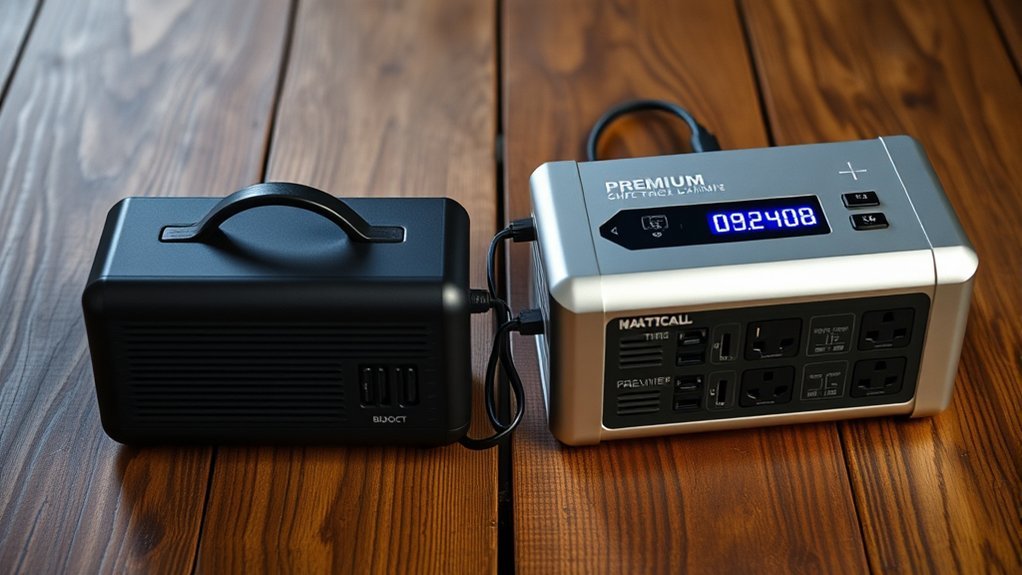
When evaluating portable power stations, capacity and power output are critical factors that determine their suitability for specific applications. Budget models typically feature lower battery capacity, often around 150Wh to 300Wh, limiting prolonged usage and heavier loads. In contrast, premium units offer larger battery capacities exceeding 1000Wh, supporting extended operation, especially when paired with portable solar panels for recharging. Power output also varies markedly; budget models usually provide 100W to 300W continuous power, sufficient for small devices, while premium models can deliver 500W or more, accommodating larger appliances. These differences directly impact usability in off-grid scenarios. Understanding these technical distinctions helps in selecting a power station aligned with your energy demands, whether for quick, portable solutions or more robust, sustained power needs.
Which Features and Technologies Are Exclusive to Premium Portable Power Stations
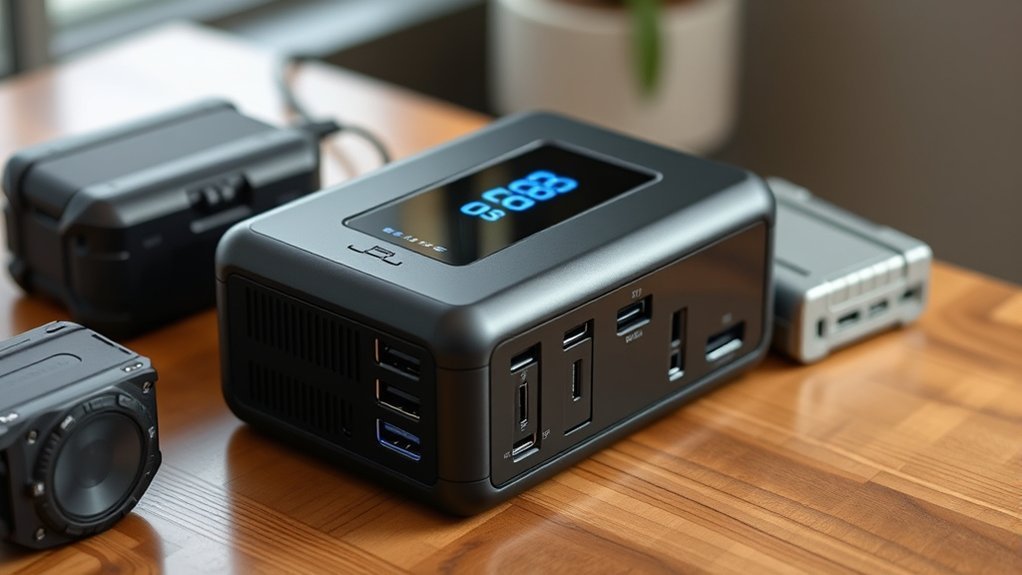
Premium portable power stations incorporate advanced features and technologies that are typically absent in budget models, enhancing their efficiency, safety, and usability. One key distinction lies in battery technology; premium models often utilize lithium nickel manganese cobalt oxide (NMC) or lithium iron phosphate (LiFePO4) batteries, offering higher energy density, longer cycle life, and improved thermal stability. These advancements translate into more reliable, faster-charging, and safer power sources. Additionally, premium units incorporate sophisticated portability considerations, such as compact, lightweight designs with ergonomic handles and optimized weight distribution. They may also feature modular configurations for easier transport and customization. Together, these technological and design innovations enable premium power stations to deliver superior performance, longevity, and user experience, setting them apart from more basic, budget-friendly alternatives.
How Price Influences Durability, Warranty, and Long-Term Reliability
Price often correlates with material quality and build, affecting a power station’s ability to withstand prolonged use and harsh conditions. Higher-priced units typically offer more extensive warranty and support policies, which influence long-term reliability. Understanding these factors helps us evaluate how investment levels impact durability and service longevity.
Material Quality and Build
Higher-quality materials and meticulous construction are fundamental factors that directly impact the durability and long-term reliability of portable power stations. Material composition plays a critical role, with premium units often utilizing reinforced plastics or metals that resist wear and environmental stress. This enhances resilience against impacts, temperature fluctuations, and moisture ingress. Aesthetic design also reflects build quality, with premium models featuring precise assembly and well-integrated components that reduce failure points. Budget options may compromise on material quality, leading to faster degradation and higher maintenance needs. Additionally, the choice of materials influences heat dissipation and internal component protection, directly affecting operational longevity. Essentially, the material quality and build integrity serve as foundational elements determining a power station’s lifespan and overall performance.
Warranty and Support Policies
While cost often correlates with the scope and quality of warranty coverage, it also substantially influences the support infrastructure backing portable power stations. Higher-priced models typically feature advanced battery chemistry, such as lithium iron phosphate, which enhances durability and long-term reliability, often covered by more extensive guarantees. Premium units also tend to include robust support policies, facilitating quicker repairs and replacements, especially for key portability features like lightweight design and modular components. Conversely, lower-cost options may offer limited warranties focused mainly on defect coverage, reflecting reduced investment in customer support. This disparity impacts not only the perceived durability but also the long-term value, as better warranty terms from premium brands mitigate risks associated with battery degradation and technical failures over time.
Which Use Cases Are Best Suited for Budget Versus Premium Power Stations
We recognize that different use cases demand varying power station capabilities, affecting whether a budget or premium model is appropriate. Emergency backup scenarios prioritize reliability and rapid response, often favoring premium units, while long-term outdoor use requires durability and efficiency. For frequent power demands, capacity and advanced features become critical factors in selecting the suitable option.
Emergency Backup Scenarios
Emergency backup scenarios demand reliable power sources, but the choice between budget and premium portable power stations depends on the specific use case. Budget models often suffice for basic essentials, like LED lighting or small appliances, especially when solar integration is limited. Premium stations excel in high-demand situations, offering higher wattage, advanced features, and lower noise levels, vital during extended outages. Noise levels are particularly relevant in residential or sensitive environments, where quieter operation minimizes disturbance. For example, a premium station with noise suppression maintains comfort during prolonged use, while a budget model might generate disruptive sound. The table below highlights key differences:
| Use Case | Solar Integration | Noise Levels |
|---|---|---|
| Basic lighting | Limited | Moderate |
| Small appliances | Moderate | Low to moderate |
| Extended outages | High | Very low |
| Residential | Essential | Essential |
| Emergency services | Critical | Must be low |
Long-Term Outdoor Use
When considering long-term outdoor use, selecting the appropriate portable power station hinges on the specific demands of the application. Battery life is critical; premium models typically offer extended cycles and higher capacity, ensuring sustained operation over days or weeks. Budget units often feature smaller batteries, limiting overall runtime but providing sufficient power for short-term needs. Portability considerations also influence choice: lightweight, compact designs favor budget stations for ease of transport, while premium models may prioritize durability and higher output, sometimes at the expense of weight. For prolonged outdoor activities like remote camping or extended work sites, a premium station’s enhanced battery life and robust build justify the investment. Conversely, budget units serve well in lighter, less demanding scenarios where portability and cost are primary factors.
Frequent Power Demands
Frequent power demands require careful consideration of a portable power station’s capacity and durability. For high-use scenarios, premium units often feature advanced battery chemistry—like lithium nickel manganese cobalt (NMC)—which offers higher cycle life and stability. They also tend to be more solar compatible, enabling sustained recharging during continuous use. Budget models, while sufficient for occasional use, typically employ basic lithium-ion chemistry with limited cycle durability, reducing efficiency under constant demand. Below is a comparison:
| Feature | Budget Power Stations | Premium Power Stations |
|---|---|---|
| Battery Chemistry | Basic lithium-ion | Advanced lithium NMC |
| Solar Compatibility | Limited | High, supports rapid recharge |
| Durability & Capacity | Lower cycle life, moderate capacity | Higher cycle life, extended capacity |
How to Choose the Right Power Station Based on Your Energy Needs and Budget
Choosing the right portable power station depends on accurately evaluating your energy requirements and budget constraints. First, assess your essential power needs, considering device wattages and usage duration. This guides you toward the appropriate capacity. Next, examine charging options—some stations support fast charging or multiple input methods, which can improve convenience and flexibility. Portability considerations also influence your choice; a lightweight, compact unit suits outdoor activities, while a larger model may be necessary for extended power needs. Budget constraints narrow options, but understanding the trade-offs between capacity, charging versatility, and portability helps you find a balanced solution. By analyzing these factors, you guarantee the power station aligns with your specific energy demands and financial parameters.
What Are the Pros and Cons of Investing in a Premium Portable Power Station
Investing in a premium portable power station offers significant advantages, primarily driven by superior performance, durability, and advanced features. These units often utilize advanced battery chemistry, such as lithium nickel manganese cobalt oxide (NMC), providing higher energy density and longer lifespan. Additionally, their solar compatibility allows for efficient recharging through renewable sources, essential for extended outdoor use.
- Enhanced reliability due to robust construction and high-quality components.
- Increased efficiency with advanced battery chemistry and optimized power management systems.
- Versatility from features like multiple output ports, faster charging, and better integration with solar panels.
While these benefits come at a higher initial cost, they guarantee longevity, better energy management, and sustainable operation, making them a strategic investment for demanding applications.
When Is It More Practical to Opt for a Budget Power Station Instead of a Premium Model
While premium power stations excel in durability and advanced features, opting for a budget model is often more practical when cost constraints outweigh the need for maximum performance. In scenarios where basic power backup suffices, a budget station can deliver essential functions without significant investment. Solar compatibility remains crucial; budget models with simplified solar input options and less sophisticated controllers can meet basic recharge needs. Battery chemistry also influences practicality; lower-cost lithium-ion or lead-acid batteries provide adequate performance for short-term use, though they may have reduced lifespan or efficiency. When the primary goal is emergency use, occasional camping, or short-term projects, a budget power station offers a cost-effective, functional solution without sacrificing essential capabilities.
Frequently Asked Questions
Are There Significant Differences in Battery Lifespan Between Budget and Premium Models?
We find that premium models typically offer longer battery lifespan due to better battery quality and design, reducing battery degradation. Additionally, they often include extensive warranty coverage, providing better protection against early battery failure compared to budget options.
How Do Charging Times Compare Across Different Price Ranges?
Charging times vary with power efficiency; premium models often feature faster charging speeds due to advanced circuitry, while budget options tend to have longer charging durations, impacting overall efficiency and readiness during critical power needs.
Can Budget Power Stations Support Multiple Device Types Simultaneously?
Studies show 80% of users need portable power for multiple devices simultaneously. Budget power stations often support various device compatibility, but their capacity limits mean they may struggle with high-power devices or multiple simultaneous outputs.
What Are the Environmental Impacts of Manufacturing Budget Versus Premium Stations?
We find that premium stations often utilize more sustainable materials and advanced recycling practices, reducing environmental impacts. Budget options may use less eco-friendly materials, but manufacturing improvements could mitigate these differences over time, emphasizing the importance of material sustainability.
Do Premium Models Offer Better Safety Features Than Budget Options?
Premium models generally incorporate advanced safety protocols and adhere to stricter durability standards, reducing risks like overheating or short circuits, whereas budget options might lack such thorough safety features, making them less reliable in critical situations.
Conclusion
Ultimately, choosing between budget and premium power stations is like selecting the right tool for a job—initially, a basic screwdriver might suffice, but for long-term projects, a high-quality drill proves more efficient. Our analysis shows that understanding your specific energy needs and budget constraints guarantees ideal performance and longevity. Investing wisely means weighing immediate costs against future reliability, just as a precision instrument ensures accuracy—saving time, money, and frustration in the long run.