Ad Blocker Detected
Our website is made possible by displaying online advertisements to our visitors. Please consider supporting us by disabling your ad blocker.
Many assume that all portable power solutions are interchangeable, but understanding the fundamental differences between portable power stations and extension cords from car inverters reveals significant disparities in capacity, safety, and reliability. While both serve to provide energy away from standard outlets, their suitability varies greatly depending on application specifics. Recognizing these distinctions is essential for making informed choices, yet the nuances may surprise you—especially when considering long-term use and safety implications.
Key Takeaways
- Portable power stations offer higher capacity, longer runtimes, and support sensitive electronics, unlike car inverters limited by vehicle battery capacity.
- Car inverters are lightweight and convenient for short-term, low-power needs but depend on vehicle engine operation.
- Power stations provide safer, more reliable power with built-in protections, while inverters pose safety risks if misused.
- Power stations are more environmentally friendly and durable, whereas inverters can cause vehicle battery wear and electrical hazards.
- For extended, off-grid, or sensitive device use, portable power stations are generally a better, more versatile choice.
How Do Portable Power Stations and Car Inverters Work?
While both portable power stations and car inverters convert stored energy into usable electrical power, they operate through fundamentally different mechanisms. Portable power stations utilize integrated batteries, often lithium-ion, which determine battery longevity and influence overall lifespan. They include advanced battery management systems to optimize charging speed and extend battery health. Conversely, car inverters draw power directly from a vehicle’s 12V or 24V DC outlet, converting it via an internal inverter circuit to AC power. This process is immediate but limited by the vehicle’s power capacity and the inverter’s efficiency. While power stations offer sustained, controlled energy output with longer battery longevity, inverters provide quick, on-demand AC power but rely on vehicle operation for charging and longer-term use.
Comparing Portability: Which Is Easier to Carry?
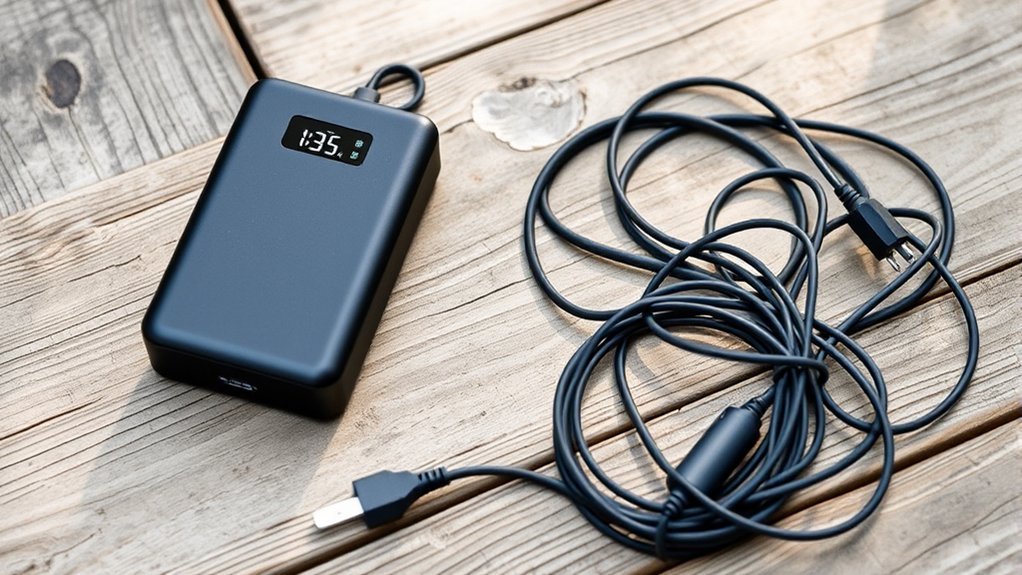
When evaluating portability, the design and weight of each device markedly influence ease of carrying. Portable power stations tend to be bulkier yet often feature handles and ergonomic designs that facilitate transport. Car inverters paired with extension cords are lightweight but require a vehicle for mobility, limiting independence. Battery efficiency impacts the overall weight-to-power ratio, with higher efficiency units being more portable. Additionally, environmental impact influences design choices; lighter, eco-friendly materials favor portability. The table below summarizes these aspects:
| Feature | Portable Power Station | Car Inverter + Extension Cord |
|---|---|---|
| Weight | Heavier, but portable with handles | Lightweight, relies on vehicle |
| Design | Compact, ergonomic | Minimal, simple setup |
| Battery Efficiency | Higher efficiency increases portability | Not applicable |
| Environmental Impact | More sustainable materials used | Less sustainable, depends on vehicle usage |
| Ease of Carrying | Moderate, depends on weight and design | Very easy, vehicle-dependent |
Assessing Power Capacity: Which Can Charge More Devices?
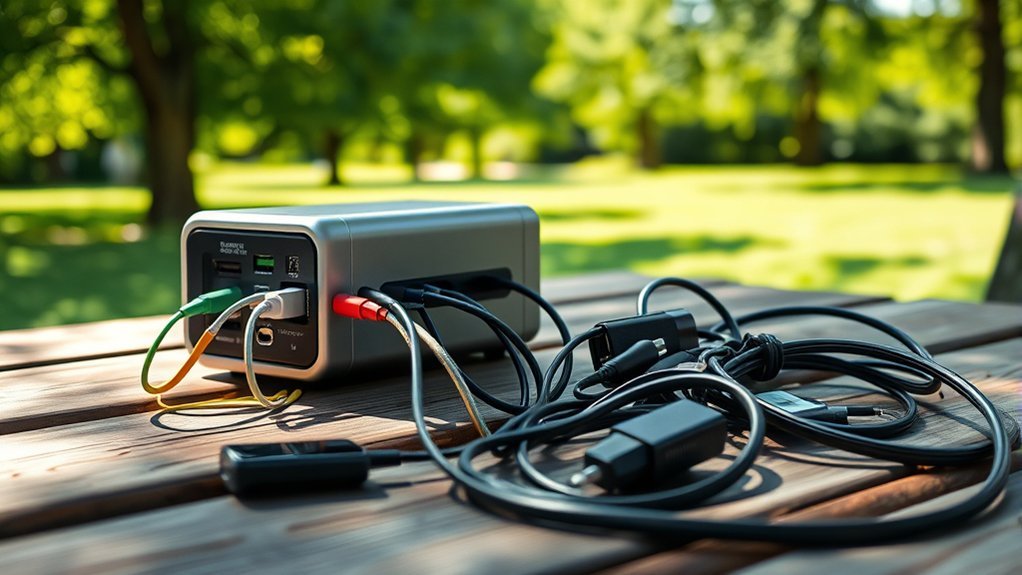
To determine which setup can charge more devices, we need to analyze their power output limits, compatibility range, and continuous usage duration. The power station generally offers higher wattage capacity and broader device compatibility, supporting multiple devices simultaneously for extended periods. Conversely, car inverters and extension cords may have limitations that restrict their overall charging capacity and duration.
Power Output Limits
Evaluating the power output limits of portable power stations and car inverters is essential to determine which device can support more simultaneous charging devices. Power output directly influences the number and type of devices that can be charged efficiently, considering factors like battery efficiency and charging speed. For instance:
- Maximum continuous wattage dictates how many devices, especially high-power ones, can run concurrently.
- Peak surge capacity affects handling short-term power demands during startup.
- Voltage stability impacts charging speed, especially for sensitive electronics.
- Output port types and ratings determine compatibility and maximum load per device.
Understanding these factors helps us assess which device offers better support for multiple devices without risking overloads or degraded charging performance.
Device Compatibility Range
Evaluating the device compatibility range of portable power stations and car inverters involves examining their total power capacity and output configurations to determine how many devices each can support simultaneously. Portable power stations typically feature multiple AC, USB, and DC outlets, enabling the charging of diverse devices, including sensitive electronics. In contrast, car inverters generally offer fewer outlets, often limited to a single AC socket and USB port. The capacity directly affects the number of devices supported and their simultaneous operation. Additionally, the battery lifespan of portable units influences long-term device compatibility, as frequent deep discharges can degrade performance. From an environmental perspective, a device with higher capacity and durability reduces replacement frequency, consequently minimizing environmental impact. Overall, understanding these factors helps determine which system supports a broader range of devices efficiently.
Continuous Usage Duration
When comparing the continuous usage duration of portable power stations and car inverters, the key factor is their respective power capacity and energy storage capabilities. Portable power stations typically offer higher battery life, enabling longer operation times for multiple devices simultaneously. Conversely, car inverters rely on fuel efficiency, which limits their continuous usage depending on engine running time. Consider these points:
- Power station battery capacity determines total runtime and ability to sustain multiple devices.
- Car inverters’ runtime depends on vehicle engine operation and fuel consumption.
- Battery life in power stations allows for more predictable, extended usage without refueling.
- Fuel efficiency influences how long a vehicle can run a device via inverter before needing engine restart.
Ease of Use: Setting Up and Operating Each Option
Setting up a portable power station generally involves straightforward initial placement and connection, whereas using a car inverter with an extension cord requires ensuring proper connection to the vehicle’s power system. Operating each option varies in complexity, with portable stations offering intuitive interfaces and inverters demanding careful voltage management. Mobility also impacts ease of use, as portable units are designed for quick relocation, unlike the fixed nature of extension cords from car inverters.
Setup Process Simplicity
A portable power station typically offers a straightforward setup process, often involving unpacking, positioning, and connecting devices via built-in outlets or USB ports, which most users find intuitive. The key advantages include minimal initial configuration and clear indicators for battery life and charging speed. To optimize setup, consider:
- Unpacking components and placing the station in a stable, ventilated location.
- Connecting the power source for charging, monitoring charging speed to ensure efficiency.
- Plugging in devices directly via outlets or USB ports.
- Checking battery life status to confirm readiness for use.
Compared to extension cords, the power station’s setup reduces complexity, eliminates the need for multiple connections, and provides direct access to power without additional wiring. This makes it a more user-friendly choice for quick, reliable deployment.
Operating Ease
Operating ease encompasses both the initial setup and ongoing use of each power source, with the goal of minimizing user effort and potential errors. Portable power stations rely on advanced battery technology, which simplifies operation through integrated controls and digital interfaces, enhancing energy efficiency by optimizing charge cycles and power output. These features reduce user intervention and improve reliability. Conversely, using an extension cord from a car inverter involves a straightforward connection process but demands familiarity with vehicle electrical systems and careful handling to prevent errors. While both options are relatively simple to operate, the portable power station’s design often results in more intuitive, user-friendly operation, especially when considering energy efficiency improvements. Overall, ease of use favors portable stations for their streamlined controls and optimized battery management.
Portability and Mobility
While both portable power stations and extension cords from car inverters are designed to supply electricity in various contexts, their portability and mobility differ considerably. Portable power stations typically feature integrated handles, compact designs, and battery longevity optimized for extended use; however, their size can limit portability. Conversely, extension cords from car inverters offer ease of deployment—simply plug and play—though they depend on vehicle positioning.
- Portable power stations require initial setup, including charging speed considerations for rapid recharging.
- Extension cords are immediately operational but limited by cord length and vehicle location.
- Battery longevity influences how long a power station can sustain load before recharge is needed.
- Mobility is constrained by size and weight of power stations, unlike lightweight extension cords that are highly flexible.
Cost and Budget Considerations for Each Power Solution
When evaluating cost and budget considerations, understanding that portable power stations typically demand a higher initial investment than extension cords connected to car inverters is essential. While the upfront cost of a portable power station includes advanced battery chemistry and longer-lasting performance, it also involves longer charging times and higher purchase prices. Conversely, extension cords with car inverters are more budget-friendly initially but may incur higher long-term costs due to limited capacity and increased wear on vehicle batteries. The table below compares key financial factors:
| Aspect | Portable Power Station | Car Inverter with Extension Cord |
|---|---|---|
| Initial Cost | Higher | Lower |
| Battery Chemistry | Advanced lithium-ion | Basic, lead-acid or lithium |
| Charging Times | Longer | Shorter |
| Maintenance Costs | Moderate | Low |
| Long-term Value | Cost-effective over time | Limited, potential replacement |
This analysis helps clarify financial trade-offs between the solutions.
Best Use Cases for Portable Power Stations
Portable power stations excel in scenarios where reliable, portable energy is essential, especially when traditional power sources are unavailable or impractical. They are ideal for:
- Off-grid camping, providing power for wireless charging devices and small appliances.
- Emergency backup, ensuring critical electronics stay operational during outages.
- Remote work sites, where solar compatibility enables renewable energy input, reducing reliance on grid power.
- Outdoor events, offering a compact source for charging smartphones and powering portable devices.
Their integration of wireless charging capabilities simplifies device management, while solar compatibility enhances sustainability and independence. These features make portable power stations versatile tools for varied, energy-demanding environments where mobility and reliability are paramount.
Ideal Scenarios for Using Extension Cords From Car Inverters
Extension cords from car inverters are most effective in scenarios where quick, temporary power access is needed for low- to moderate-demand devices. They are suitable when minimal power draw is required, minimizing strain on the vehicle’s electrical system, which helps preserve battery longevity. These setups can be advantageous in situations where solar efficiency isn’t ideal, such as during overcast conditions or limited daylight, making immediate power more critical. Using extension cords conserves the vehicle’s battery by avoiding prolonged high demand, consequently extending battery lifespan. This approach is perfect for short-term tasks like charging small electronics or powering emergency equipment. However, it’s essential to monitor power levels carefully, as excessive or continuous use could impact overall vehicle battery health and reduce solar efficiency over time.
Limitations and Drawbacks of Each Power Source
Both power sources present notable limitations that impact their practicality. Portable power stations often have restricted power capacity, limiting their effectiveness for high-demand applications, while extension cords from car inverters can pose safety risks if not properly managed. Additionally, portability challenges and safety concerns must be carefully considered when selecting the most suitable option for specific needs.
Limited Power Capacity
While portable power stations offer a convenient, self-contained energy source, their capacity is inherently limited by battery size and chemistry, restricting the duration and intensity of power delivery. This limitation impacts several key aspects:
- Battery longevity: Frequent deep cycles can degrade capacity over time, reducing usable power.
- Charging speed: Longer recharge times diminish availability during quick power needs.
- Maximum output: Power output is constrained, which limits high-demand devices.
- Operational duration: Continuous use is restricted, requiring careful management of energy consumption.
Both sources face these capacity constraints, but understanding their technical limits helps optimize their application within those bounds.
Portability Challenges
Despite their portability advantages, both portable power stations and car inverter extension cords present notable challenges that limit their practicality in certain scenarios. Portable power stations, while self-contained, often have significant weight considerations, making them less convenient for frequent transport or extended mobility. Their battery durability can also decline over time, reducing effective runtime and increasing replacement costs. Conversely, extension cords from car inverters are lightweight and easy to deploy, but their portability is constrained by cable length and storage limitations. Additionally, extended use can strain the inverter or lead to cable damage, compromising reliability. Both solutions require careful consideration of these portability challenges to guarantee they meet specific application needs without introducing undue burden or reducing operational efficiency.
Safety Concerns
Safety concerns surrounding portable power solutions stem from inherent design limitations and operational risks. With portable power stations, battery durability is critical; over time, degraded batteries can pose fire hazards or cause sudden power loss. Additionally, electrical interference may disrupt sensitive electronics, compromising safety or data integrity. For extension cords from car inverters, risks include overheating due to high current draw and potential voltage spikes, which can damage connected devices. The cords themselves, if not rated properly, may cause electrical shocks or fires. Furthermore, both systems lack built-in surge protection, increasing risk during power fluctuations. Ultimately, understanding these limitations helps mitigate hazards—regular maintenance for batteries, proper grounding, and adherence to manufacturer specifications are essential for safe operation.
Which Option Offers Better Reliability and Safety?
Choosing between a portable power station and an extension cord from a car inverter hinges on their respective reliability and safety profiles. Portable power stations typically offer more consistent power delivery, with built-in protection features that prevent overloads and short circuits, enhancing safety. They also have a longer battery lifespan, reducing the frequency of replacements and minimizing environmental impact. Conversely, extension cords from car inverters depend on the vehicle’s electrical system, which can be less stable and more prone to surges, posing safety risks. Their reliability diminishes with extended use, especially when powering sensitive equipment. Overall, portable power stations provide a more dependable and safer solution, with better control over power quality and a lower environmental footprint over time.
How to Choose the Right Power Solution for Your Needs
Selecting the appropriate power solution requires a clear understanding of your specific energy needs, usage environment, and operational priorities. To optimize your choice, consider these factors:
- Battery longevity: Evaluate how frequently you’ll use the device; longer-lasting batteries are essential for extended use.
- Charging speed: Faster charging reduces downtime, especially critical during short-term or emergency applications.
- Power capacity: Match the device’s wattage requirements with the power source’s output to prevent overloads.
- Portability and setup: Consider ease of transport versus fixed installation, aligning with mobility needs and operational convenience.
Careful analysis of these points ensures your chosen power solution guarantees efficiency, durability, and suitability for your specific application.
Frequently Asked Questions
How Long Do Portable Power Stations Typically Last on a Full Charge?
Typically, portable power stations last between 3 to 8 hours on a full charge, depending on battery capacity and load. They withstand around 300 to 1,000 charging cycles, affecting longevity and consistent performance over time.
Can Extension Cords From Car Inverters Handle High-Wattage Appliances Safely?
Extension cords from car inverters generally can’t safely handle high-wattage appliances due to wattage limitations; exceeding these risks overheating and fire. Always check inverter’s wattage capacity and adhere to safety considerations for reliable, secure operation.
Are Portable Power Stations More Environmentally Friendly Than Car Inverter Setups?
We believe portable power stations are more environmentally friendly because they often utilize renewable energy sources and have a lower carbon footprint compared to car inverter setups, which rely on inefficient energy transfer and vehicle emissions.
What Maintenance Is Required for Portable Power Stations?
We monitor the battery lifespan regularly and avoid excessive charging frequency to prevent capacity loss. Proper maintenance involves keeping vents clean, storing in a cool environment, and following manufacturer guidelines for calibration and firmware updates.
How Do Weather Conditions Affect the Performance of Both Options?
Like sailors steering storms, we find weather impacts both options’ performance. Portable power stations face durability concerns in extreme cold or heat, while extension cords from car inverters may suffer power loss, affecting reliability and safety.
Conclusion
In weighing whether to opt for a portable power station or a car inverter extension cord, we find flexibility and functionality forming a fine balance. Power stations provide dependable, durable, and diversified energy, perfect for prolonged use and sensitive electronics. Meanwhile, car inverter cords offer quick, convenient, yet limited power, best suited for short-term, small-scale tasks. Ultimately, selecting the right solution hinges on your specific needs, balancing capacity, convenience, and safety for seamless, sustainable energy solutions.