Ad Blocker Detected
Our website is made possible by displaying online advertisements to our visitors. Please consider supporting us by disabling your ad blocker.
Did you know that while portable power stations use lithium-ion batteries to provide instant, silent energy, dual fuel generators rely on combustion engines that produce significant noise and emissions? This fundamental difference influences their suitability for various applications, yet many overlook how capacity, runtime, and operational costs vary between the two. Understanding these distinctions can be critical in selecting the most effective solution for your energy needs—something worth exploring further.
Key Takeaways
- Portable power stations rely on batteries and inverter technology, offering quiet, emission-free, and maintenance-light operation; generators use fuel for higher power output.
- Power stations are lightweight and ideal for stationary or outdoor eco-friendly use, while dual fuel generators are bulkier and suited for high-demand, mobile scenarios.
- Battery-powered stations provide instant, steady power with no refueling needed, whereas generators require fuel and refueling for extended use.
- Initial costs are higher for power stations but have lower ongoing expenses, while generators are cheaper upfront but incur fuel and maintenance costs.
- Power stations are quieter, eco-friendly, and better for short-term or emergency backup, while dual fuel generators excel in long-duration, versatile power needs.
How Do Portable Power Stations Work and What Are Their Benefits?
Although portable power stations may seem straightforward, understanding their operation reveals a sophisticated integration of energy storage and conversion technologies. At their core, advanced battery technology enables efficient power storage, allowing these devices to hold electrical energy for later use. The internal inverter converts stored DC power into AC, making it compatible with standard appliances. This setup provides a reliable energy source without the complexity of fuel combustion. The benefits are clear: compact design, quiet operation, and immediate availability of power. Additionally, their modular battery systems can often be expanded or replaced, extending usability and lifespan. This combination of high-capacity power storage and efficient conversion makes portable power stations versatile tools for emergency backup, outdoor activities, and remote work environments.
What Are Dual Fuel Generators, and Why Consider Using One?
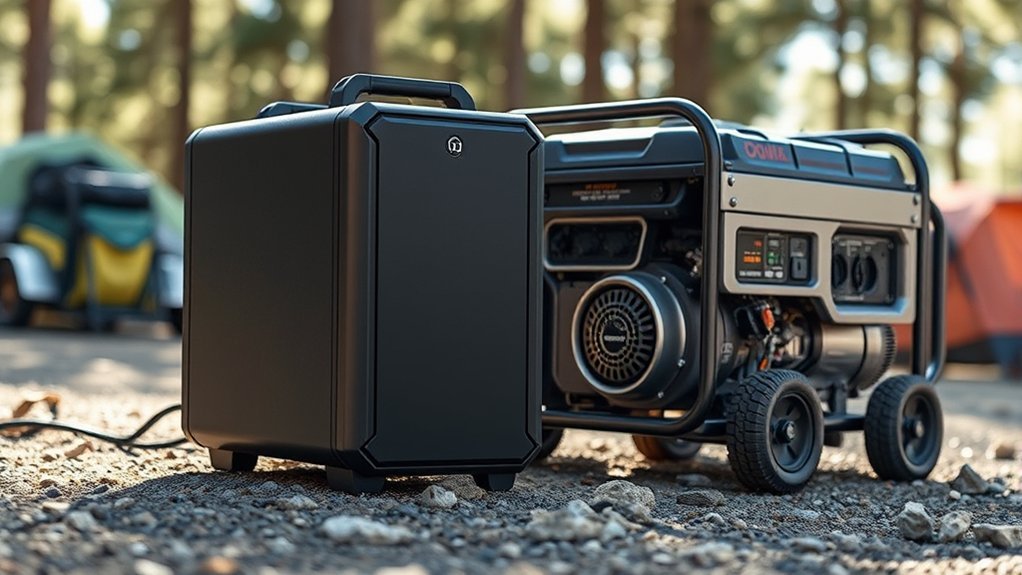
Dual fuel generators are versatile power sources engineered to operate on two different types of fuel, typically gasoline and propane. This flexibility allows for strategic fuel management, especially in emergency or remote scenarios. By integrating these units with renewable energy systems, users can enhance overall energy resilience while reducing reliance on fossil fuels. Safety considerations are paramount, as dual fuel systems require proper ventilation and secure fuel storage to prevent hazards. Their ability to switch fuels seamlessly makes them suitable for various applications, from backup power to off-grid use. This adaptability not only improves operational efficiency but also supports sustainable energy strategies. Overall, dual fuel generators offer a robust, flexible solution for those seeking reliable power with an eye toward safety and renewable integration.
Comparing Power Capacity and Runtime: Which Device Fits Your Power Needs?
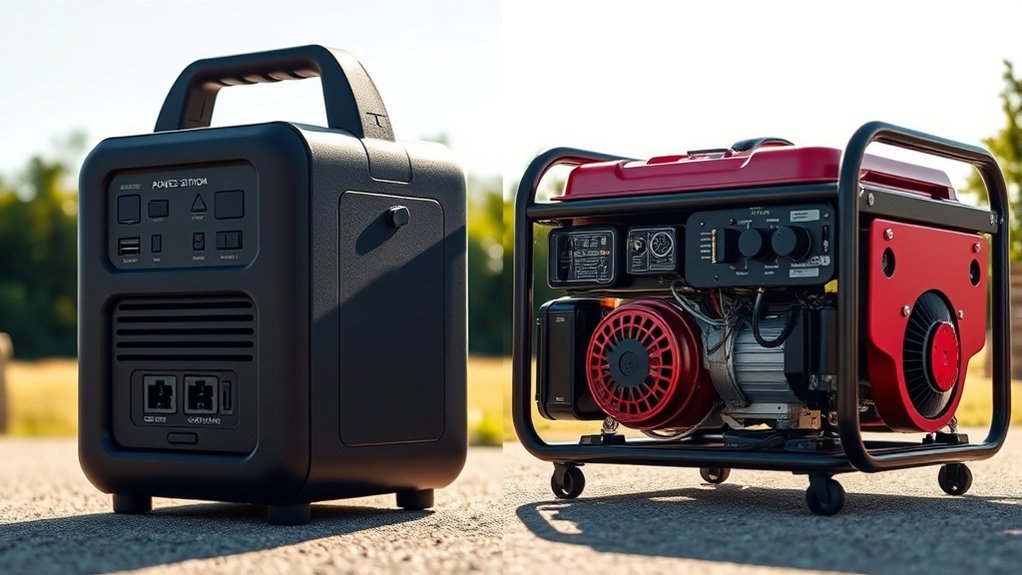
When selecting a portable power solution, understanding the differences in power capacity and runtime is essential to meeting your specific needs. Portable power stations generally offer consistent, renewable energy output, with capacities ranging from a few hundred to several thousand watt-hours, and their runtime depends on battery capacity and load. Dual fuel generators, on the other hand, provide higher power outputs but rely on fuel consumption, which affects their runtime and maintenance requirements. Battery lifespan impacts long-term reliability for power stations, while generators require regular maintenance, such as oil changes and fuel management. Ultimately, choosing the right device depends on your power demands; for prolonged, steady use, a power station might be more efficient, whereas a dual fuel generator suits high-demand, mobile applications with quick refueling needs.
Assessing Portability, Noise Levels, and Ease of Use for Both Options
When evaluating portability, we consider how easily each device can be transported and handled in various environments. Noise levels directly impact user comfort and suitability for different settings, while ease of use affects setup time and operational simplicity. Analyzing these factors helps determine which option best aligns with practical deployment and user preferences.
Portability and Transportation Ease
Evaluating portability and transportation ease reveals notable differences between portable power stations and dual fuel generators. Portable power stations excel in this area due to their compact design, lightweight construction, and integrated handles, making them highly mobile. Advances in battery technology enable these units to be easily carried or transported alongside other gear. Their solar compatibility further enhances portability by allowing recharging via portable solar panels, reducing dependency on fuel sources. Conversely, dual fuel generators tend to be heavier and bulkier, often requiring wheeled carts or handles for movement, which limits their ease of transport. While they offer longer run times and fuel flexibility, their size and weight make them less suited for quick relocation. Overall, portable power stations provide superior ease of transportation, especially when mobility is a priority.
Noise Levels and User Comfort
Noise levels and user comfort considerably influence the practicality of portable power solutions, as they directly affect usability in various environments. Dual fuel generators typically produce higher noise levels due to engine operation, impacting nearby comfort and environmental suitability. Conversely, portable power stations operate quietly, enhancing user experience and allowing for discreet use. When evaluating these options, consider:
- Battery efficiency’s role in reducing overall noise by minimizing power consumption
- Power consumption’s impact on noise output, especially in generator models
- Suitability for sensitive environments, such as camping or medical settings
- Ease of use, including noise management features and ergonomic design
Lower noise levels in power stations contribute to greater user comfort, while dual fuel generators may require additional soundproofing. Both factors are essential in determining overall usability and environmental compatibility.
Which Is More Cost-Effective in the Long Run: Portable Power Stations or Dual Fuel Generators?
Determining which power solution offers better long-term value involves analyzing initial costs, maintenance expenses, fuel consumption, and lifespan. Portable power stations typically have higher upfront costs but benefit from minimal maintenance costs due to fewer moving parts. Their battery longevity is critical; over time, battery degradation reduces capacity, impacting overall value. Dual fuel generators usually have lower initial costs but incur ongoing fuel expenses and more frequent maintenance, such as oil changes and engine repairs. While fuel costs can fluctuate, the durability of generator components influences total lifespan. Ultimately, portable power stations may prove more economical long-term if battery replacement costs are manageable, whereas dual fuel generators can become more costly due to sustained fuel and maintenance needs.
Deciding Between Quiet, Clean Energy and Flexible Fuel Options: Which Suits Your Lifestyle?
When choosing between quiet, clean energy sources and flexible fuel options, we must consider how noise levels and environmental impact align with our priorities. Fuel flexibility offers convenience for extended use, while clean energy solutions minimize emissions and noise pollution. Evaluating these factors helps determine which option best supports our lifestyle and operational needs.
Noise Levels and Environmental Impact
Choosing between a portable power station and a dual fuel generator often hinges on their environmental footprints and operational noise levels. Power stations generally operate quietly, making them ideal for noise-sensitive environments, and often feature solar compatibility, promoting clean energy use with minimal emissions. Conversely, dual fuel generators tend to produce more noise and emissions, impacting their environmental footprint but offering fuel flexibility. Key considerations include:
- Power stations typically have lower maintenance requirements due to fewer moving parts.
- Dual fuel generators can emit higher noise levels, affecting nearby ecosystems.
- Solar compatibility enhances the eco-friendly profile of power stations.
- Fuel flexibility in generators allows for adaptable energy solutions but often increases environmental impact.
This analysis underscores the importance of noise and environmental considerations in selecting the appropriate power source for sustainable use.
Fuel Flexibility and Usage Convenience
Fuel flexibility and convenience substantially influence how users select between a portable power station and a dual fuel generator. Portable power stations leverage advanced battery technology, offering clean, quiet energy with minimal maintenance. In contrast, dual fuel generators provide fuel efficiency and versatility by running on gasoline or propane, suitable for extended use. The choice hinges on lifestyle needs: stationary, eco-friendly power versus flexible, long-duration energy. Consider the table below:
| Feature | Portable Power Station | Dual Fuel Generator |
|---|---|---|
| Fuel Source | Electricity from batteries | Gasoline, propane |
| Fuel Efficiency | Dependent on battery tech | High, with multiple fuel options |
| Usage Convenience | Quiet, portable, minimal setup | Flexible, requires refueling |
| Battery Technology Impact | Critical for performance | Less relevant |
This comparison clarifies the trade-offs in fuel flexibility and convenience.
Frequently Asked Questions
How Do Maintenance Requirements Differ Between Portable Power Stations and Dual Fuel Generators?
We find that portable power stations require minimal maintenance, mainly battery lifespan checks, while dual fuel generators demand regular fuel efficiency assessments, oil changes, and spark plug replacements, making their upkeep more involved and technically demanding.
Are Portable Power Stations More Environmentally Friendly Than Dual Fuel Generators?
We find portable power stations more eco-friendly than dual fuel generators due to their lower emissions and compatibility with renewable energy options like solar. Their design promotes sustainable energy use, making them a smarter choice environmentally.
Can Portable Power Stations Be Recharged Using Renewable Energy Sources?
Yes, portable power stations can be recharged via renewable integration, such as solar panels, enhancing overall energy efficiency. This allows us to reduce reliance on fossil fuels and optimize sustainable energy use in various applications.
What Safety Precautions Should I Take With Each Device During Operation?
Think of safe operation as steering a delicate dance. We guarantee fuel efficiency and control noise levels by following manufacturer guidelines, avoiding overloading, and maintaining proper ventilation, which minimizes risks during device use.
How Do Storage Requirements Compare for Portable Power Stations and Dual Fuel Generators?
We find portable power stations require minimal storage space due to their compact design and battery capacity, while dual fuel generators need more room for fuel and proper ventilation, considering fuel efficiency and safety storage protocols.
Conclusion
Ultimately, choosing between a portable power station and a dual fuel generator hinges on our specific needs—quiet convenience versus robust power. While one offers silent, eco-friendly operation, the other provides fuel flexibility and extended runtime. It’s a question of balancing our priorities—do we value the serenity of clean energy or the reliability of traditional fuel? Like a well-calibrated instrument, our decision should harmonize with our lifestyle and energy demands.