Ad Blocker Detected
Our website is made possible by displaying online advertisements to our visitors. Please consider supporting us by disabling your ad blocker.
Did you know that the efficiency of solar charging for portable power stations varies considerably depending on panel quality and weather conditions? While wall charging offers speed and reliability, solar power provides a sustainable alternative that’s highly dependent on environmental factors. Understanding these differences is essential for maximum use, especially in vital situations. Exploring the technical distinctions and practical implications can help you decide which method aligns best with your needs, but the key considerations might surprise you.
Key Takeaways
- Wall charging provides faster, more reliable power replenishment, ideal for immediate needs and frequent use.
- Solar charging is slower and weather-dependent but offers a renewable, off-grid energy source.
- Wall charging is cost-effective upfront but may accelerate battery wear due to rapid cycles.
- Solar charging supports outdoor, remote, and sustainable use but has variable efficiency and longer charging times.
- Combining both methods offers flexibility for different scenarios and extended power availability.
How Do Solar and Wall Charging Work for Portable Power Stations?
Although both solar and wall charging methods serve to replenish portable power stations, they operate through fundamentally different mechanisms. Solar charging relies on photovoltaic cells that convert sunlight into electrical energy, directly influencing the battery technology by providing a renewable, sustainable source. This process minimizes environmental impact by reducing reliance on fossil fuels and decreasing carbon emissions. Wall charging, on the other hand, utilizes an AC power source to deliver electricity via an internal power supply, often involving conversion stages that may generate heat and energy loss. While wall charging offers consistent, rapid power replenishment, solar charging emphasizes sustainability and lower environmental footprint. Understanding these mechanisms helps us evaluate how each method aligns with the goals of efficiency, environmental responsibility, and effective battery technology management.
Comparing Charging Speeds and Efficiency of Solar vs Wall Charging
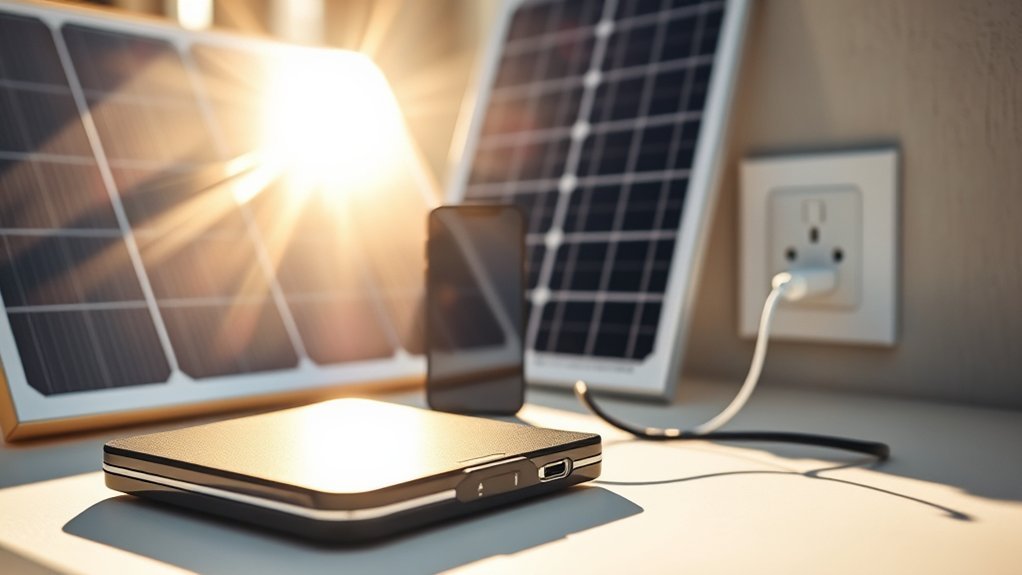
When comparing the charging speeds and efficiency of solar versus wall charging, it becomes clear that each method exhibits unique performance traits shaped by environmental and technical factors. Wall charging typically offers faster, more consistent power delivery, minimizing impacts on battery longevity and maximizing charge cycles. Solar charging, however, tends to be slower and less predictable due to weather variability, but it enhances cost efficiency over time by reducing energy costs. The table below summarizes key differences:
| Aspect | Solar Charging | Wall Charging |
|---|---|---|
| Speed | Slower, weather-dependent | Faster, stable power supply |
| Efficiency | Variable, affected by sunlight | Consistent, high efficiency |
| Battery Longevity | Less stress, gradual charging | Potential for faster wear |
| Cost Efficiency | Lower initial, higher long-term | Higher upfront, consistent |
| Environmental Impact | Low, renewable energy | Higher, grid-dependent |
Pros and Cons of Solar Charging for Portable Power Stations
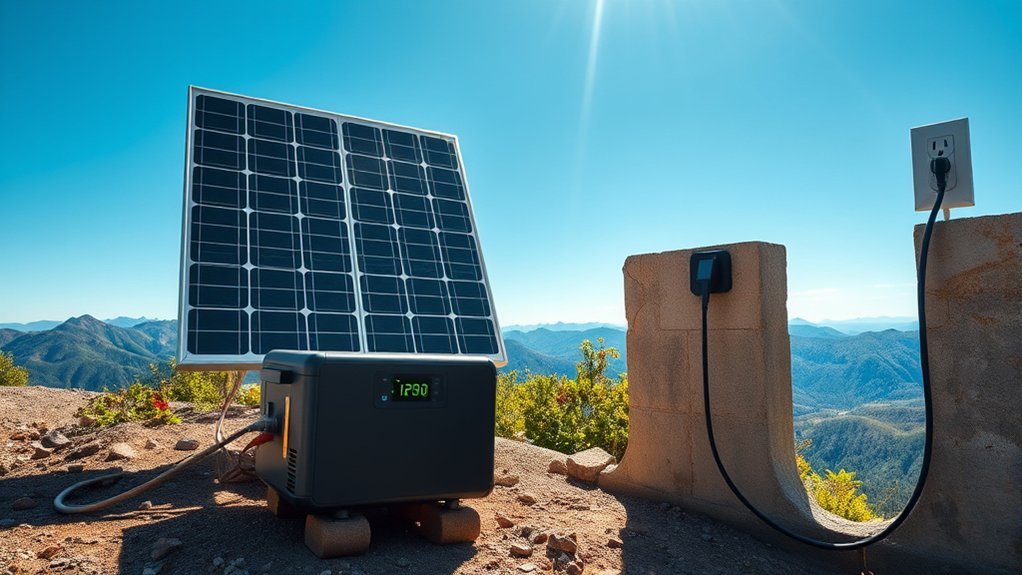
Solar charging offers several advantages for portable power stations, primarily due to its renewable nature and low environmental impact. It enables off-grid power solutions and reduces reliance on grid infrastructure. However, the effectiveness depends on factors like solar panel durability, which impacts longevity and consistent performance in various weather conditions. Additionally, solar panels require sufficient sunlight exposure, making charging times variable and sometimes slower compared to traditional wall outlet compatibility. The portability of solar panels can be limited by size and weight, affecting ease of transport. Despite these limitations, advancements in solar panel technology continue to improve durability and efficiency, making solar charging a sustainable option. Yet, it may not always be practical as the primary charging method, especially in low-light environments or for urgent power needs.
Advantages and Drawbacks of Wall Charging for Portable Power Stations
Wall charging remains a widely used method for powering portable stations due to its reliability and speed. It guarantees rapid recharge times, which is crucial for maintaining continuous power supply during critical operations. From a technical perspective, frequent wall charging can influence battery longevity, as rapid cycles may accelerate degradation over time. Cost considerations also play a significant role; while initial setup costs are typically lower, ongoing electricity expenses can accumulate. Additionally, wall charging is often constrained by the availability of power outlets, limiting portability in remote scenarios. Despite these drawbacks, its efficiency and consistency make it a preferred choice for everyday use. Ultimately, understanding the trade-offs between speed, battery health, and operational costs is essential for optimizing portable power station performance.
Which Charging Method Fits Different Outdoor and Emergency Scenarios?
Choosing the appropriate charging method depends heavily on the specific demands of outdoor and emergency scenarios. For emergency preparedness, wall charging offers rapid, reliable power replenishment, critical during prolonged outages. Conversely, solar charging provides sustainability and environmental benefits, especially in remote or off-grid locations. When evaluating scenarios, consider:
- Remote outdoor activities: Solar charging minimizes environmental impact and ensures continuous power without grid access.
- Disaster response: Wall charging offers speed and dependability for critical devices, but solar can be essential when infrastructure is compromised.
- Extended power outages: A hybrid approach maximizes flexibility, balancing environmental considerations with urgent power needs.
Understanding these factors helps optimize power station usage aligned with scenario-specific demands and sustainability goals.
How to Choose the Best Charging Method Based on Your Lifestyle and Needs
Selecting the appropriate charging method hinges on evaluating your specific lifestyle, usage patterns, and environmental considerations. To optimize efficiency, consider battery capacity requirements and portability considerations. For instance, high-capacity batteries are essential for extended outdoor use, favoring solar charging when sustainability and independence are priorities. Conversely, wall charging offers rapid, consistent power replenishment suitable for stationary setups.
| Scenario | Recommended Method |
|---|---|
| Frequent outdoor use | Solar charging |
| Urban daily commute | Wall charging |
| Emergency preparedness | Both methods as needed |
| Long-term remote living | Solar with backup options |
Frequently Asked Questions
What Are the Long-Term Costs of Solar Vs Wall Charging?
Long-term costs favor solar charging due to lower installation costs and extended battery lifespan, reducing replacement frequency, while wall charging incurs ongoing energy expenses and higher maintenance, making solar more cost-effective over time for portable power stations.
How Do Weather Conditions Affect Solar Charging Efficiency?
Weather impact markedly reduces solar charging efficiency; studies show over 25% loss in overcast conditions. Solar shading from nearby objects further diminishes output, emphasizing the need for ideal placement and weather considerations for reliable solar power.
Are There Safety Risks With Solar or Wall Charging?
We find that both solar and wall charging pose minimal safety risks, but improper handling can affect battery lifespan and charging speed. Ensuring correct setup and avoiding overcharging are essential to maintaining ideal performance and safety.
Can Solar Charging Fully Replace Wall Charging?
We believe solar charging can nearly replace wall charging, as solar panel durability improves and technology advances. However, limited wall outlet compatibility and fluctuating sunlight mean solar alone often isn’t sufficient for consistent power needs.
How Portable Are Portable Power Stations With Solar Panels?
We find portable power stations with solar panels highly portable, maintaining a compact design. Their battery lifespan varies, and while solar charging can be slower, they offer efficient energy, especially when paired with fast-charging capabilities, enhancing overall usability.
Conclusion
In steering the landscape of portable power, the choice between solar and wall charging isn’t just a matter of preference—it’s a strategic decision. Like choosing between the steady heartbeat of a wall outlet or the unpredictable rhythm of sunlight, each method aligns with different needs and scenarios. By understanding their strengths and limitations, we can optimize our power solutions, ensuring resilience and efficiency. After all, the right charge method is the cornerstone of reliable outdoor and emergency readiness.