Ad Blocker Detected
Our website is made possible by displaying online advertisements to our visitors. Please consider supporting us by disabling your ad blocker.
As we explore the differences between portable power stations and UPS battery backups, it becomes clear that each solution is tailored to distinct needs, yet understanding their core functionalities is essential for making an informed choice. While both provide backup energy, their design, capacity, and ideal applications vary considerably. To determine which best aligns with your requirements, we need to analyze their mechanisms, advantages, and limitations—a process that can be more complex than it initially appears.
Key Takeaways
- Portable power stations provide longer-lasting, versatile backup power suitable for outdoor and mobile use; UPS systems offer rapid, short-term backup mainly for indoor, critical devices.
- Power stations support multiple charging methods (solar, AC, car), while UPS units primarily connect to AC power for immediate backup.
- UPS systems are designed for quick response during outages with limited runtime; power stations can sustain devices for extended periods.
- Portable power stations generally have higher capacity and longer lifespan, but are more expensive initially than UPS systems.
- Both options impact the environment; lithium-ion batteries in power stations are more sustainable long-term, but recycling remains a concern.
What Are Portable Power Stations and UPS Batteries?
While both portable power stations and UPS batteries serve as backup power sources, they are designed for distinct applications and operate through different mechanisms. Portable power stations utilize advanced battery technology, often lithium-ion, to store substantial energy, making them suitable for outdoor activities or emergency scenarios. They can incorporate renewable energy inputs like solar panels, enhancing sustainability and off-grid functionality. UPS batteries, on the other hand, primarily provide immediate, short-term backup for critical systems, relying on sealed lead-acid or lithium-ion batteries optimized for rapid response. Their primary focus is ensuring power continuity during outages, not extended operation. The underlying technology differences reflect their specific roles: portable stations emphasize capacity and renewable integration, while UPS batteries prioritize reliability and rapid response in critical environments.
How Do Portable Power Stations Work? Key Features Explained
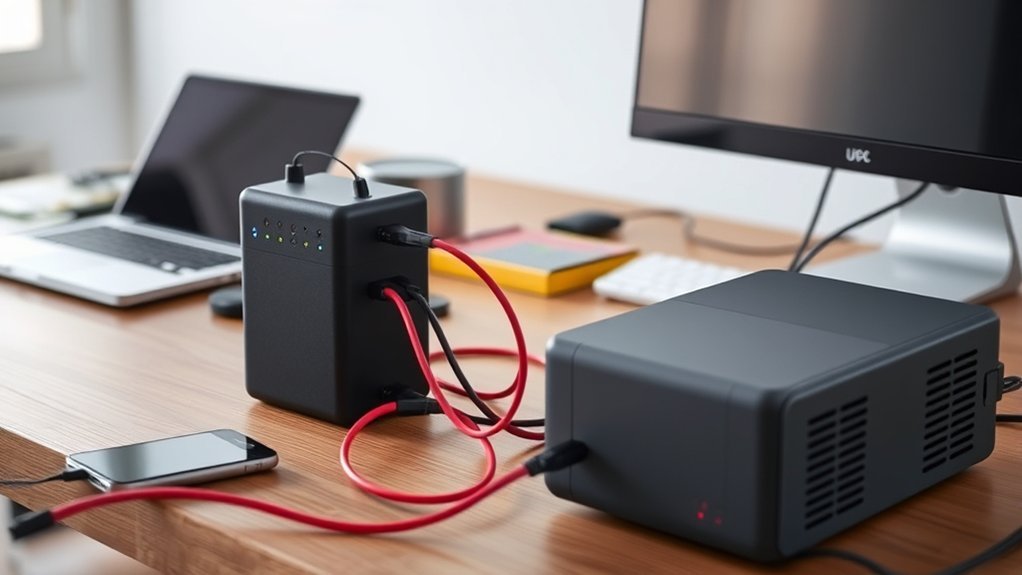
Portable power stations operate by converting stored electrical energy into usable AC or DC power through integrated inverter systems. The core of this process hinges on battery chemistry, which influences energy density, lifespan, and safety. Lithium-ion batteries are most common due to their high energy density and stability, while lithium polymer and other chemistries offer different benefits. Charging methods vary, including AC wall outlets, solar panels, and car adapters, enabling flexible recharging options. Advanced inverter technology ensures stable power output, suitable for sensitive electronics. These key features—battery chemistry, versatile charging methods, and reliable inverters—work together to provide efficient, portable power for diverse applications, making power stations an adaptable alternative to traditional backup power solutions.
What Is a UPS Battery Backup? Core Functions and Benefits

A UPS (Uninterruptible Power Supply) battery backup provides immediate power support during outages by continuously supplying energy to connected devices through stored battery energy. Its core functions include maintaining a stable power supply, preventing data loss, and protecting sensitive electronics from voltage fluctuations. The effectiveness of a UPS depends on battery chemistry—commonly lithium-ion or sealed lead-acid—which influences lifespan, efficiency, and maintenance needs. Proper warranty coverage guarantees reliability and support over the device’s operational life, safeguarding against early failure. The UPS’s ability to deliver instant backup power is critical for mission-critical applications, making it a crucial component for safeguarding electronics. Its core benefits include seamless power transition, enhanced equipment longevity, and peace of mind during unexpected outages.
Comparing Power Capacity and Runtime: Which One Lasts Longer?
Understanding the differences in power capacity and runtime between portable power stations and UPS battery backups is essential for selecting the right device for specific needs. Portable power stations typically offer higher capacity and longer runtime, but their battery longevity depends on usage patterns and charging efficiency. UPS backups, designed for short-term power support, have limited runtime but prioritize rapid recharge cycles, impacting overall battery longevity.
Portable power stations offer longer runtimes, while UPS backups excel in quick recharging for short-term power support.
Key factors include:
- Battery capacity: Power stations generally have larger capacity, providing extended runtime.
- Charging efficiency: Higher efficiency in power stations allows quicker recharging and longer operational periods.
- Runtime duration: Power stations sustain devices longer, while UPS units are optimized for brief outages.
- Battery lifespan: Charging cycles and depth of discharge influence overall battery longevity in both devices.
Portability and Use Cases: When to Choose a Power Station vs. UPS
Understanding the mobility and convenience of power solutions is essential for matching devices to their environments. We consider power needs and runtime requirements to determine whether a portable station or UPS is ideal. Analyzing typical usage environments helps clarify which system offers the appropriate combination of portability, reliability, and capacity.
Mobility and Convenience
When evaluating the mobility and convenience of portable power solutions, it is crucial to distinguish between power stations and UPS battery backups based on their design intent and typical use cases. Power stations excel in versatility, offering longer battery longevity, multiple charging methods, and lightweight portability, ideal for outdoor activities or emergency scenarios. Conversely, UPS systems prioritize immediate, reliable backup for critical equipment, often with limited mobility due to their size and fixed installation.
- Power stations feature rechargeable batteries with diverse charging options like solar, AC, or car adapters.
- UPS systems generally rely on direct AC power, with limited portability.
- Power stations are designed for frequent movement, supporting varied use cases.
- UPS backups focus on rapid response rather than mobility, suited for stationary setups.
Power Needs and Duration
Choosing between a power station and a UPS battery backup hinges on the specific power requirements and expected duration of use. Power stations typically support higher wattage loads for extended periods, making them suitable for longer-term needs, while UPS units excel in short-term surge protection and immediate backup. Battery chemistry affects lifespan and efficiency—lithium-ion offers faster charging speeds and durability, essential for quick recharges during frequent use. To clarify, consider this comparison:
| Feature | Power Station | UPS Battery Backup |
|---|---|---|
| Power Capacity | Higher, suitable for prolonged use | Lower, designed for short bursts |
| Battery Chemistry | Lithium-ion for quick charging | Lead-acid or lithium-ion |
| Usage Duration | Longer, hours depending on load | Seconds to minutes |
| Charging Speed | Fast, often within hours | Moderate, often minutes |
This analysis helps determine the most suitable choice based on power needs and duration.
Typical Usage Environments
The selection between a power station and a UPS battery backup largely depends on the specific environment and use case. For portable, outdoor, or remote applications, a power station offers higher mobility, extended runtime, and the ability to power multiple devices simultaneously, with careful consideration of battery longevity and environmental impact. Conversely, in static, indoor environments where immediate power protection is critical, a UPS provides rapid response and consistent backup for sensitive electronics.
- Outdoor construction sites requiring portable power solutions
- Home offices needing seamless, short-term power during outages
- Field research environments demanding durability and extended runtime
- Data centers prioritizing rapid switching and minimal environmental footprint
Choosing the right device hinges on balancing portability, environmental impact, and application-specific power demands.
Installation, Setup, and Ease of Use: What’s Involved?
Installing and setting up portable power stations and UPS battery backups involve distinct processes that reflect their design complexity and intended use. Portable power stations typically require straightforward setup—simply charging the unit and connecting devices via multiple outlets—making them user-friendly but requiring periodic recharging to maintain battery longevity. Conversely, UPS systems demand more technical installation, often involving hardwired connections to power sources and careful configuration to guarantee seamless backup during outages. Regarding ease of use, portable units excel with mobility and quick deployment, while UPS devices prioritize stability and reliability. Both options impact environmental sustainability; portable power stations often have a lower environmental impact over their lifespan due to rechargeable batteries designed for longevity, reducing waste and disposal concerns.
Cost and Value: Which Option Offers Better Investment?
When evaluating cost and value, we consider initial purchase prices, long-term savings, and overall return on investment. While portable power stations often have higher upfront costs, their versatility may lead to greater savings over time. Conversely, UPS battery backups typically entail lower initial expenses but may lack the long-term adaptability of portable units.
Initial Purchase Cost
Evaluating initial purchase costs reveals significant differences between portable power stations and UPS battery backups, impacting their overall value proposition. Portable power stations tend to have higher upfront costs due to advanced battery chemistry and versatile charging methods, which support rapid charging and longer cycles. Conversely, UPS backups generally feature lower initial prices but rely on simpler battery chemistry, often lead-acid or lithium-ion, with limited charging options.
- Portable power stations often incorporate lithium-ion batteries, increasing initial investment but offering higher capacity and longevity.
- UPS systems frequently use cost-effective lead-acid batteries, reducing initial costs but possibly requiring replacements sooner.
- Charging methods vary: portable stations support fast, multiple-source charging, while UPS units primarily connect to AC power.
- Overall, the choice hinges on balancing initial costs against technical features and expected lifespan.
Long-Term Savings Potential
Over the long term, portable power stations often provide greater cost efficiency despite their higher upfront expense, primarily due to their superior battery lifespan and versatile charging options. Their longer-lasting batteries typically endure more charge-discharge cycles, reducing replacement frequency and associated costs. Additionally, enhanced charging efficiency minimizes energy loss during recharging, lowering operational expenses over time. In contrast, UPS battery backups usually have shorter battery lifespans, necessitating more frequent replacements that accumulate costs. The flexibility in charging portable stations—via solar, AC, or vehicle power—further improves their economic viability, especially in remote or off-grid scenarios. Overall, when considering long-term savings, the investment in a portable power station can offer better value, driven by durability and efficient energy management.
Overall Value Proposition
While long-term operational costs are a key factor, evaluating the overall value proposition requires examining both initial investment and ongoing expenses relative to performance and versatility. Portable power stations typically have higher upfront costs but offer superior energy storage capacity and portability, reducing the need for multiple devices. Conversely, UPS battery backups are more affordable initially but limited in energy storage, impacting their versatility during extended outages. When considering environmental impact, portable stations often use advanced lithium-ion batteries with better sustainability profiles, whereas traditional UPS units may rely on less eco-friendly components. To assess overall value, consider these factors:
- Initial purchase price versus long-term operational costs
- Energy storage capacity and scalability
- Environmental impact of battery technology
- Versatility across applications and emergency scenarios
Limitations and Drawbacks of Portable Power Stations and UPS Backups
Despite their advantages, portable power stations and UPS backups each have notable limitations that can impact their effectiveness in critical situations. Portable power stations often rely on lithium-ion batteries, which pose challenges for battery recycling due to environmental concerns and limited recycling infrastructure. Their capacity and runtime may also fall short during extended outages. UPS systems, typically designed for short-term backup, can struggle with renewable integration, especially when interfacing with solar or wind sources, leading to stability issues. Both solutions may exhibit reduced performance over time as batteries degrade, increasing maintenance needs. Additionally, the environmental impact of battery disposal underscores the importance of sustainable recycling practices. These factors highlight the need for careful consideration of long-term reliability, environmental footprint, and integration capabilities when choosing between these power options.
Which Power Solution Fits Your Needs Best? Final Tips for Choosing
Choosing the right power solution depends on a clear understanding of your specific energy needs, usage environment, and long-term sustainability goals. To determine the best fit, consider these factors:
- Battery longevity: Evaluate how many charge cycles each option offers and how it impacts overall lifespan.
- Charging methods: Assess whether the solution supports fast, versatile, or renewable charging options that align with your setup.
- Power capacity and runtime: Match the device’s energy requirements with the available capacity, ensuring sufficient backup time.
- Portability vs. stability: Decide if mobility or consistent power delivery is more critical for your application.
Frequently Asked Questions
Can Portable Power Stations Charge Multiple Devices Simultaneously?
Yes, portable power stations can charge multiple devices simultaneously, considering their solar compatibility and multiple output ports. We analyze weight and portability to guarantee ease of transport, optimizing for efficient, versatile power solutions without sacrificing convenience or performance.
How Long Do UPS Batteries Typically Last Before Replacement?
Like clocks ticking away, UPS batteries typically last 3 to 5 years, influenced by usage and maintenance. Their battery lifespan determines the replacement timeline, ensuring uninterrupted power, so monitoring performance helps prevent unexpected outages.
Are Portable Power Stations Safe for Outdoor and Rugged Use?
We believe portable power stations are safe for outdoor use, especially for emergency preparedness, thanks to their rugged designs and solar compatibility. Their durability and renewable energy options make them reliable in challenging environments.
Do UPS Backups Provide Surge Protection for Sensitive Electronics?
Ups backups do provide surge protection, enhancing electronic safety by shielding sensitive devices from voltage spikes. We analyze their capabilities and limitations, emphasizing their role in maintaining system stability and preventing damage during power fluctuations.
Which Option Is More Environmentally Friendly Over Its Lifespan?
Like a steady river carving its path, rechargeable power sources gradually reduce our carbon footprint. Over their lifespan, portable power stations often harness renewable energy more efficiently, making them generally more environmentally friendly than UPS backups.
Conclusion
Choosing between a portable power station and a UPS is like selecting a vehicle for different journeys—one’s built for versatile, off-road adventures, while the other’s designed for quick city commutes. By analyzing your power needs, environment, and budget, we can steer you toward the right solution. Think of it as maneuvering a complex landscape: knowing your destination and terrain guarantees you arrive prepared, efficiently, and with confidence in your chosen power companion.