Ad Blocker Detected
Our website is made possible by displaying online advertisements to our visitors. Please consider supporting us by disabling your ad blocker.
When considering backup power options for the home, we recognize the importance of balancing performance, environmental impact, and convenience. Portable power stations and gas generators each have distinct operational profiles, advantages, and limitations that influence their suitability. Understanding these differences is essential for making an informed decision aligned with your specific needs—whether short-term outages or extended power disruptions—and warrants a closer examination of their technical characteristics and practical implications.
Key Takeaways
- Portable power stations offer silent operation and zero emissions, ideal for noise-sensitive environments and eco-friendly backup.
- Gas generators provide higher power output suitable for large, sustained loads during extended outages.
- Power stations have higher initial costs but lower ongoing expenses, while gas generators are cheaper upfront but require regular maintenance.
- Gas generators produce noise and emissions, making them less suitable for indoor or quiet areas.
- Portable power stations are lightweight and easy to set up, whereas gas generators are bulkier and need space and maintenance.
Understanding the Key Differences Between Power Stations and Gas Generators
While both portable power stations and gas generators serve the purpose of providing electrical power in off-grid or emergency situations, they differ considerably in design, operation, and application. Power stations utilize advanced battery technology, such as lithium-ion cells, ensuring silent operation and minimal maintenance. Their reliance on stored electrical energy makes them highly efficient for short-term use, with no fuel consumption during operation. In contrast, gas generators operate on fuel combustion, typically gasoline or propane, which affects fuel efficiency and leads to emissions. Gas generators require refueling to sustain power output, making them more suitable for extended use but less efficient overall. These fundamental differences influence their suitability depending on energy needs, environmental considerations, and operational duration.
How Portable Power Stations Work and Their Main Benefits
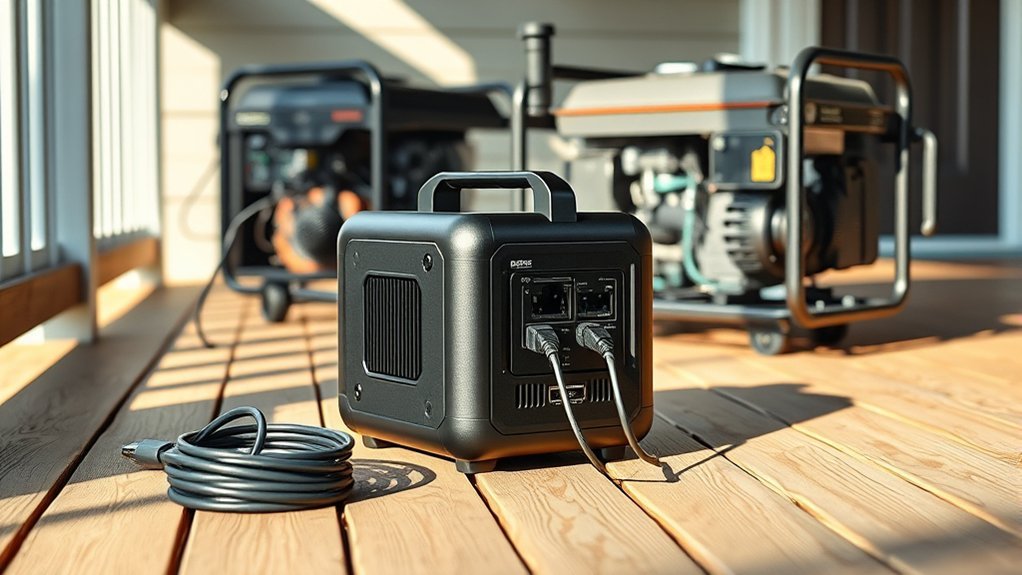
Portable power stations operate by storing electrical energy in high-capacity batteries, typically lithium-ion, which can then be discharged to power various devices. This energy storage capability allows for reliable, on-demand power without fuel dependence. The efficiency of energy transfer depends on the battery’s design and capacity, directly influencing overall performance. A key factor is battery lifespan, which determines how many charge-discharge cycles the unit can sustain before capacity diminishes. Advances in battery technology have extended these lifespans, improving durability and cost-effectiveness. The design also emphasizes safety features and thermal management to optimize energy storage and prolong battery health. Overall, portable power stations provide a compact, maintenance-free alternative for backup power, with benefits rooted in their efficient energy storage and robust battery lifespan.
The Advantages and Limitations of Gas Generators for Home Backup
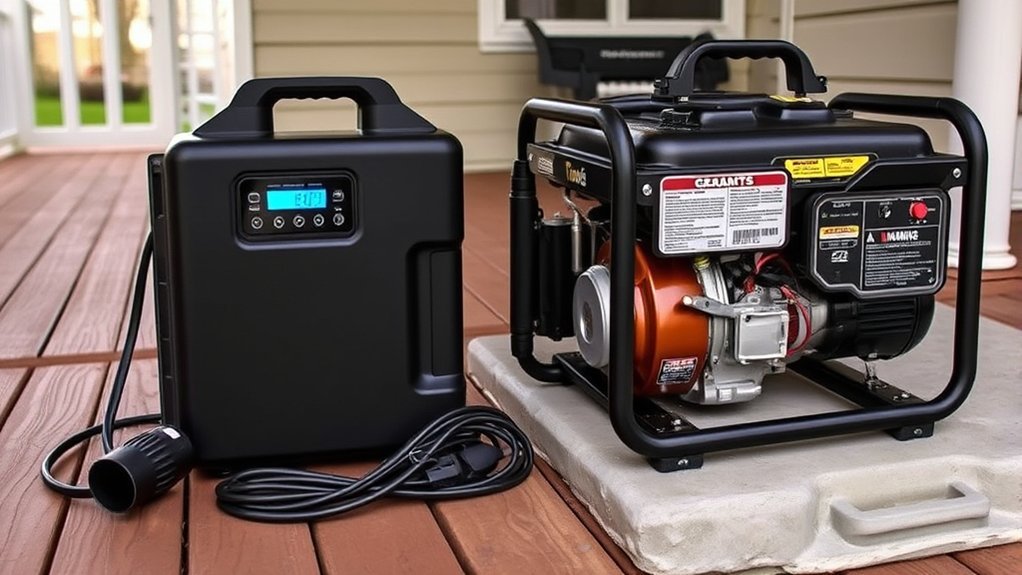
Gas generators offer a reliable power source for home backup, especially during extended outages, because they can produce sustained electricity by burning fuel. Their fuel efficiency varies depending on load demands and generator design, impacting operational costs. While they provide consistent power, they also come with notable maintenance requirements, including regular oil changes, filter replacements, and system inspections to guarantee peak performance and longevity. These maintenance tasks can be time-consuming and costly, especially if neglected. Despite their ability to supply high wattage levels, gas generators tend to be less efficient for intermittent or smaller loads compared to alternative solutions. Overall, their dependability hinges on careful maintenance and fuel management, which are essential to maximize efficiency and ensure readiness during power outages.
Comparing Power Output: Which Is Better for Large or Small Loads?
Power output capacity plays a pivotal role in determining whether a portable power station or a gas generator is better suited for specific load demands. For large loads, gas generators excel due to their high fuel capacity and ability to sustain extended operation, even under continuous heavy use. Conversely, portable power stations typically provide lower wattage but feature high battery efficiency, making them ideal for small, intermittent loads. The following table compares key attributes:
| Feature | Gas Generator | Portable Power Station | Suitability |
|---|---|---|---|
| Power Output | High (up to several kW) | Moderate (up to a few kW) | Large loads |
| Fuel Capacity | Large, long runtime | N/A | Continuous operation |
| Battery Efficiency | N/A | High, quick recharge | Small, frequent use |
This comparison clarifies which system fits specific load demands based on capacity, efficiency, and runtime.
Assessing Noise Levels, Emissions, and Environmental Impact
When evaluating portable power sources, understanding noise pollution levels is vital for both safety and comfort, especially in sensitive environments. We also compare emissions and eco-friendliness, considering how each option impacts air quality and overall sustainability. Analyzing these factors helps identify the most environmentally responsible choice for different applications.
Noise Pollution Comparison
While portable power stations and gas generators both serve to supply energy in remote or emergency situations, their noise emissions differ considerably, impacting environmental and user comfort. Portable power stations operate silently or with minimal noise, often below 60 decibels, making them suitable for noise-sensitive environments. Conversely, gas generators typically produce noise levels exceeding 70 decibels, which can be disruptive.
Key factors influencing noise pollution include:
- Emission sources: Mechanical combustion in gas generators generates more noise than the electric components of power stations.
- Installation complexity: Gas generators often require soundproof enclosures, increasing installation complexity.
- Solar compatibility: Power stations with solar integration operate quietly, further reducing noise impact.
- Environmental impact: Noise pollution correlates with emissions, with gas generators contributing more to environmental disturbance.
This analysis underscores the superior noise profile of portable power stations.
Emissions and Eco-Friendliness
Evaluating the emissions and eco-friendliness of portable power stations and gas generators reveals significant differences in their environmental impacts. Gas generators emit carbon monoxide, nitrogen oxides, and particulate matter, contributing to air pollution and climate change. In contrast, portable power stations utilize advanced battery technology, producing zero tailpipe emissions, making them inherently cleaner. Renewable options, such as solar-powered stations, further enhance eco-friendliness by harnessing sustainable energy sources. This shift reduces reliance on fossil fuels and minimizes greenhouse gas contributions. The environmental footprint of battery technology has improved with innovations in materials and recycling, decreasing ecological impact. Overall, portable power stations, especially those integrating renewable options, offer a more sustainable and environmentally responsible solution for backup power needs.
Cost Considerations: Initial Investment, Operating Expenses, and Maintenance
When comparing portable power stations and gas generators, the initial purchase cost is a key factor, with stations generally requiring a higher upfront investment. Operational expenses, including fuel and maintenance, substantially influence long-term affordability, often favoring power stations for their lower ongoing costs. Analyzing these cost components enables a precise assessment of total ownership expenses over the equipment’s lifespan.
Upfront Purchase Costs
The initial purchase cost of portable power stations and gas generators considerably influences their overall affordability and suitability for different applications. When evaluating upfront costs, we consider factors such as:
- Initial Investment – Portable power stations typically have a higher initial price due to advanced battery technology but offer superior battery life. Gas generators often have lower upfront costs but may require more frequent refueling.
- Fuel Efficiency – Gas generators’ operating cost depends heavily on fuel consumption, which impacts long-term expenses.
- Battery Life – The lifespan of power station batteries affects long-term value, often justifying higher initial costs with durability.
- Maintenance Costs – Gas generators tend to incur higher maintenance expenses over time, adding to the initial investment’s impact.
Ongoing Operational Expenses
Have you considered how ongoing operational expenses influence the long-term cost-effectiveness of portable power stations versus gas generators? Portable units generally excel in fuel efficiency, utilizing stored energy that minimizes recurring costs, but battery longevity becomes a critical factor. Over time, battery degradation increases replacement expenses and reduces overall efficiency. Conversely, gas generators rely on fuel consumption, which can fluctuate in price, impacting operational costs. While initial investments may be higher for portable stations, their lower maintenance needs and predictable energy costs often offset upfront costs. Gas generators require regular maintenance, oil changes, and parts replacement, adding to ongoing expenses. Evaluating these factors highlights that operational costs hinge on fuel efficiency and battery longevity, influencing each system’s economic viability over the long term.
Ease of Use, Mobility, and Setup for Emergency Preparedness
How do portable power stations and gas generators compare in aspects of ease of use, mobility, and setup for emergency preparedness? Portable power stations excel in straightforward operation, often featuring intuitive interfaces and minimal setup time, with no need for fuel refilling. Their battery lifespan influences long-term usability, especially during extended outages. Gas generators, while requiring more effort for startup—such as pulling cords or switching on switches—offer higher fuel efficiency, making them suitable for prolonged use. In terms of mobility, portable power stations are lightweight and easily transported, whereas gas generators are bulkier and heavier. Setup for emergency scenarios favors power stations due to their plug-and-play nature, while gas generators demand more space and maintenance considerations. Both options’ ease of use hinges on operational complexity and logistical factors.
Safety Tips and Best Practices for Using Backup Power at Home
When operating backup power sources at home, adhering to strict safety protocols is essential to prevent accidents and guarantee reliable power delivery. Proper ventilation is critical, especially with gas generators, to avoid carbon monoxide buildup. For solar integration systems, regular inspection secures connections remain secure, protecting battery lifespan and system efficiency. Avoid overloading circuits, which can cause overheating or equipment failure. Use appropriate transfer switches and disconnect power sources during maintenance to prevent back-feeding into the grid. Handling fuel and batteries with care minimizes risks of leaks or fires. Additionally, following manufacturer guidelines and local codes assures safe operation. Consistent safety practices not only reduce hazards but also optimize system longevity and performance, safeguarding your home and loved ones during power outages.
Which Backup Power Solution Is Right for Your Home? Key Factors to Decide
Choosing the right backup power solution depends on a careful assessment of your home’s energy needs, budget, and operational preferences. Key factors include:
- Energy demands: Higher power requirements may favor a gas generator for immediate, robust output, while lower demands suit portable power stations with sufficient battery capacity.
- Solar integration potential: If renewable energy is prioritized, systems with solar compatibility enable sustainable, off-grid operation.
- Battery capacity: Essential in portable stations; larger capacities support longer backup periods, reducing reliance on external fuel.
- Operational preferences: Quiet, emission-free operation favors portable stations, whereas continuous, high-power output may necessitate a gas generator.
Evaluating these factors guarantees an ideal, tailored backup solution aligned with your home’s specific energy profile and sustainability goals.
Frequently Asked Questions
How Long Can a Portable Power Station Run During an Outage?
A portable power station typically lasts several hours, depending on battery capacity and power draw, while fuel efficiency influences gas generator runtime. We analyze these factors to predict outage durations and guarantee reliable, resilient home backup power solutions.
What Is the Typical Lifespan of Gas Generators Versus Power Stations?
Gas generators typically last 10-20 years, depending on fuel efficiency and maintenance, while power stations often have a 5-15 year lifespan with minimal upkeep; maintenance requirements considerably influence overall longevity for both options.
Are There Any Safety Risks Associated With Using Gas Generators Indoors?
Is indoor safety compromised by gas generators? Absolutely, due to fumes risk, they emit dangerous gases, making indoor use highly unsafe. Power stations eliminate this risk, ensuring safer, cleaner backup power during outages.
Can Portable Power Stations Be Recharged With Solar Panels?
Yes, portable power stations can be solar charged, leveraging their battery capacity to harness renewable energy efficiently. This method enhances sustainability, extends runtime, and reduces reliance on traditional power sources, making them a versatile backup option.
Which Backup Option Is More Cost-Effective Over Five Years?
Over five years, a portable power station often proves more cost-effective due to lower maintenance requirements and initial investment. Gas generators, while initially cheaper, accrue higher ongoing costs and potential repairs, making the true cost comparison more nuanced than it appears.
Conclusion
Choosing between a portable power station and a gas generator is like selecting the right tool for a specific job—we need the right power source for our unique needs. We’ve seen how power stations excel in quiet, eco-friendly operation for short-term use, while gas generators provide sustained, high-capacity output for longer outages. By analyzing our energy demands, environmental considerations, and budget, we can make a data-driven decision that guarantees reliable, safe backup power when it matters most.