Ad Blocker Detected
Our website is made possible by displaying online advertisements to our visitors. Please consider supporting us by disabling your ad blocker.
Understanding the runtime of a CPAP machine on a power station is essential for ensuring continuous therapy during outages. Several variables, such as watt-hour capacity and device power consumption, influence how long your device can operate on backup power. Accurately estimating this duration requires a careful analysis of these factors, alongside considerations like device features and usage patterns. Exploring these elements further can help you make informed decisions to optimize your sleep support system.
Key Takeaways
- The power station’s watt-hour capacity directly determines how long it can run a CPAP device.
- CPAP power consumption varies based on pressure settings, device features, and accessories like humidifiers.
- Measuring actual device wattage helps estimate runtime accurately.
- Using higher capacity batteries extends CPAP operation during outages.
- Proper power management and device adjustments can maximize CPAP runtime on a power station.
How Does CPAP Runtime Depend on Power Station Capacity?
The runtime of a CPAP device on a power station directly correlates with the station’s capacity, as the latter determines the total energy available for prolonged operation. A higher-capacity station supplies more watt-hours, enabling longer sleep environments without interruption. This directly influences noise levels, as longer runtimes can reduce the need for frequent power recharges, minimizing disturbances. Conversely, limited capacity shortens operational time, risking interruptions that compromise sleep quality. To optimize sleep environments, selecting a power station with sufficient capacity guarantees stable operation and consistent noise levels, creating a quieter, more comfortable sleeping space. The capacity not only governs device runtime but also impacts the overall stability of the sleep environment, emphasizing the importance of matching power station capacity to CPAP energy demands for uninterrupted therapy.
Key Factors That Influence CPAP Battery Life During Power Outages
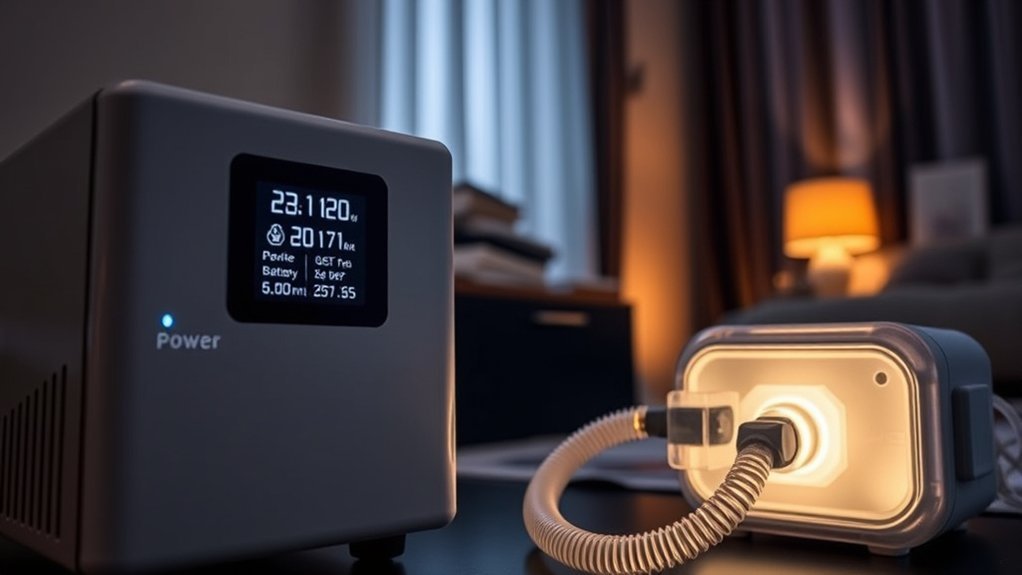
Battery capacity and size directly determine how long a power station can sustain CPAP operation during outages. Additionally, the device’s power consumption and user-selected settings considerably impact overall runtime. Analyzing these factors allows for more accurate predictions of battery life in practical scenarios.
Battery Capacity and Size
A higher capacity generally translates to longer operation times for CPAP devices during power outages, making it a critical factor in selecting the appropriate power station. Larger batteries provide extended runtime but may require more frequent battery maintenance to guarantee peak performance. Size influences portability; bigger batteries tend to be heavier, impacting mobility. To maximize efficiency, consider compatibility with portable solar options for recharging, especially in prolonged outages. Battery capacity directly affects how long your CPAP can operate without external power, while size impacts ease of transport and setup. Balancing capacity and size is essential for tailored solutions that meet your needs, especially in remote locations or emergency situations. Proper consideration of these factors ensures reliable sleep therapy and sustainable energy management.
- Impact on runtime and device performance
- Weight and portability considerations
- Compatibility with portable solar recharging
- Effects on battery maintenance frequency
- Suitability for various environments
CPAP Power Consumption
Understanding the power consumption of CPAP devices is fundamental when estimating how long they can operate on a given power station during outages. CPAP power consumption varies based on device specifications, pressure settings, and usage patterns. Precise knowledge of these factors is essential for accurate runtime calculations. Regular CPAP maintenance guarantees maximum efficiency, reducing unnecessary power draw caused by leaks or malfunctions. Additionally, sleep therapy accessories like heated humidifiers or specialized masks can considerably increase energy demands, consequently impacting battery life. By analyzing these components, we can assess the device’s true power requirements. Recognizing how each element contributes to overall consumption helps optimize battery capacity and ensures uninterrupted therapy during outages, making it critical for effective power station planning and reliable sleep management.
Usage Duration and Settings
The duration a CPAP device can operate on a power station largely depends on its usage settings and the specific therapy parameters selected. Higher pressure settings or continuous modes increase power consumption, reducing runtime. Conversely, adjustable features like ramp time or lower pressure settings extend battery life. Sleep hygiene practices, such as optimizing mask fit, minimize leaks and conserve energy, while mindful dream analysis can influence sleep patterns, indirectly affecting device usage. To maximize runtime, users should consider setting the device to the lowest effective pressure and disabling non-essential features. Regular maintenance and firmware updates can improve efficiency. Understanding these factors helps optimize power station capacity, ensuring uninterrupted therapy during outages. Properly managing settings directly correlates with longer-lasting, reliable CPAP operation.
How to Calculate Your CPAP’s Expected Runtime on a Power Station
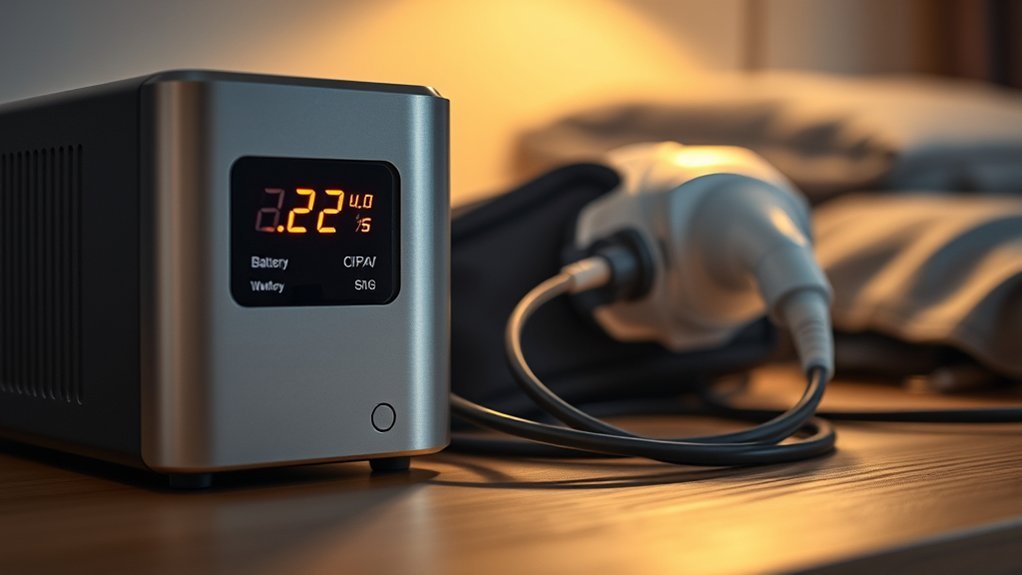
To accurately determine your CPAP’s runtime on a power station, we start by measuring its power consumption in watts. Next, we assess the capacity of your power station in watt-hours, then divide the capacity by the CPAP’s consumption to estimate duration. This process enables precise calculations essential for reliable power management during outages.
Measure Power Consumption
How can we accurately determine the power consumption of your CPAP device to estimate its runtime on a power station? Precise measurement involves analyzing the device’s power draw during typical operation, considering variables like air quality and noise levels, which can influence power efficiency. To achieve this, you should:
- Use a watt-meter to record actual power consumption over a standard sleep cycle
- Note the device’s rated power (watts) from the user manual
- Monitor fluctuations caused by air quality or environmental conditions
- Measure current draw at different settings or pressure levels
- Record the average power to improve runtime estimations
These measurements provide a technical foundation for calculating expected runtime, ensuring reliable operation during power interruptions.
Calculate Power Station Capacity
Calculating the expected runtime of your CPAP on a power station involves determining the total energy capacity and aligning it with the device’s power consumption. To do this accurately, consider the battery maintenance aspects, such as maintaining ideal charge levels and avoiding deep discharges, which can affect overall capacity. Assess the battery’s nominal capacity, typically given in watt-hours (Wh), and factor in the number of charging cycles it has undergone, as repeated cycles can diminish capacity over time. A higher number of cycles may reduce effective runtime. By understanding these variables, you can estimate how long your power station can support your CPAP, ensuring reliable operation during power outages or remote use. Proper battery maintenance ultimately preserves capacity and prolongs runtime efficiency.
Estimate Runtime Duration
Estimating the runtime duration of your CPAP on a power station involves precise calculations based on the device’s power consumption and the battery’s available energy. To accurately project runtime, consider factors such as the CPAP’s average wattage, the battery’s capacity in watt-hours, and the impact of sleep hygiene on device settings. Noise reduction features may influence power use, so account for increased energy consumption during quieter operation modes.
- Measure your CPAP’s average power draw in watts
- Determine the power station’s total capacity in watt-hours
- Adjust for sleep hygiene practices that affect device settings
- Factor in noise reduction features that may increase energy use
- Use the formula: Runtime = Battery Capacity / Power Consumption
Tips for Extending CPAP Runtime When Using a Portable Power Station
To maximize your CPAP’s runtime on a portable power station, it’s essential to optimize both device settings and power management strategies. Prioritizing battery maintenance ensures consistent performance; regularly inspecting and calibrating batteries prolongs their lifespan and efficiency. Using portable chargers with high energy density can greatly extend runtime, especially during extended trips. Additionally, consider adjusting CPAP settings—reducing pressure or switching to a lower power mode—without compromising therapy effectiveness. Implementing sleep mode or auto-shutdown features can prevent unnecessary power drain during inactivity. Efficient power management also involves minimizing energy loss through proper cable connections and avoiding unnecessary device accessories. Combining diligent battery maintenance with strategic device adjustments optimizes overall power consumption, enabling longer CPAP operation without frequent recharging.
Comparing Different Power Stations for Reliable CPAP Support
When selecting a power station for reliable CPAP support, it’s important to compare key specifications that directly impact performance and longevity. Device compatibility ensures the station can handle your CPAP model’s power requirements without issues. Additionally, understanding charging methods—such as AC wall outlets, solar panels, or car adapters—affects flexibility and convenience during travel or extended use.
Key factors include:
- Power capacity (Wh) and continuous output
- Compatibility with your CPAP device’s power specifications
- Availability of multiple charging options
- Battery lifespan and cycle durability
- Stability of power output to prevent device interruptions
Evaluating these specifications helps ensure consistent, safe operation and aligns with your specific needs for reliable CPAP support.
What Features Should You Look for in a Portable Power Source for CPAP?
Selecting the right portable power source for your CPAP device requires careful consideration of specific features that guarantee reliable performance and safety. Battery safety is paramount; confirm the power station has built-in protection against overcharging, overheating, and short circuits to prevent hazards. Additionally, solar compatibility is increasingly important for off-grid use, enabling recharging via solar panels, which enhances sustainability and independence. A power station with a robust battery management system (BMS) ensures maximum safety and longevity. Precise voltage regulation and sufficient capacity are essential for consistent operation, especially during extended use. By prioritizing these features—battery safety, solar compatibility, proper capacity, and advanced BMS—you can select a dependable, safe, and versatile power source tailored to your CPAP needs.
Troubleshooting Common Issues That Affect CPAP Runtime on Power Stations
Despite careful selection of a power station, various issues can still compromise CPAP runtime, affecting both device performance and user safety. Common problems often stem from inadequate battery maintenance, such as neglecting regular charging cycles, which diminish overall capacity. Additionally, improper charging practices can lead to decreased efficiency and shortened runtime. Other issues include voltage inconsistencies, thermal management failures, and deep discharge events that impair battery health. Troubleshooting these problems requires precise monitoring of battery health, verifying charging cycles, and ensuring proper device calibration. Addressing these factors helps maintain *ideal* performance and prolongs runtime.
- Neglecting regular battery maintenance and charging cycles
- Using incompatible or damaged charging cables
- Over-discharging the power station
- Ignoring temperature or voltage fluctuations
- Failing to perform routine system checks
Making the Right Choice: Selecting a Power Station for Your Sleep Therapy Needs
How do we guarantee we choose the most suitable power station to meet our sleep therapy needs? We evaluate technical specifications like capacity and runtime to assure consistent operation without interruptions, directly impacting sleep quality. Noise levels are equally critical; a quieter power station minimizes disturbances, preserving restful sleep. We analyze efficiency ratings and battery chemistry to predict reliability over extended periods, considering factors like recharge cycles and durability. Portability and safety features also influence our choice, ensuring ease of use and protection during sleep. Ultimately, selecting a power station involves balancing capacity, noise levels, and safety to optimize both sleep quality and device performance. This analytical approach helps us make informed decisions tailored to individual sleep therapy requirements.
Frequently Asked Questions
Can You Use a Backup Battery With Your Power Station for Extended Runtime?
Yes, you can extend your power station’s runtime for your CPAP by using a backup battery, provided it matches the battery capacity and power compatibility specifications. Always verify technical details to guarantee safe, efficient operation.
How Do Temperature Extremes Affect CPAP Battery Performance?
Temperature extremes negatively impact battery longevity and amplify temperature effects, causing faster degradation and reduced capacity. We observe that high or low temperatures stress batteries, diminishing performance, lifespan, and reliability, emphasizing the importance of ideal operating conditions for consistent CPAP power.
Is It Safe to Run CPAP on a Solar-Powered Station Long-Term?
Running a CPAP on a solar-powered station is safe long-term if we optimize battery lifespan and power efficiency, ensuring stable energy flow, regular maintenance, and suitable battery management, which prolongs device reliability and performance over extended periods.
What Maintenance Is Required for Portable Power Stations Used With CPAP?
We routinely check battery longevity and follow specific charging protocols, ensuring proper maintenance of portable power stations used with CPAPs. Regular calibration and avoiding deep discharges help optimize performance and extend the lifespan of the power station’s battery.
How Does Altitude Impact the Runtime of CPAP Devices on Power Stations?
Altitude effects reduce power efficiency, decreasing CPAP runtime on power stations at higher elevations. We analyze how thinner air impacts device performance, ensuring ideal operation and planning for altitude-related power management adjustments in portable power solutions.
Conclusion
In summary, understanding your power station’s capacity and your CPAP’s power demands is vital for ensuring reliable sleep therapy during outages. By calculating expected runtimes and choosing a station with appropriate features, we can optimize performance much like a well-tuned steam engine. Regular maintenance and mindful usage extend device longevity, preventing unwelcome surprises. Staying informed and prepared helps us maintain uninterrupted sleep, even in a world increasingly dependent on modern technology.