Ad Blocker Detected
Our website is made possible by displaying online advertisements to our visitors. Please consider supporting us by disabling your ad blocker.
There’s a common misconception that the power rating of a portable generator, usually expressed in watts, fully captures its capacity to sustain devices over time. In reality, understanding the role of kWh reveals a more precise picture of how long a generator can reliably operate before needing refueling or recharging. By examining what kWh truly measures and how it interacts with other specifications, we can better evaluate a generator’s overall utility—an insight that could influence your choice considerably.
Key Takeaways
- kWh measures the total energy capacity of a generator’s battery or stored energy over time, indicating runtime before recharging.
- Larger kWh ratings generally mean longer operation and better suitability for powering multiple devices or off-grid use.
- kWh differs from power ratings (watts/kW), which indicate immediate power output capacity, not overall energy storage.
- Proper generator sizing requires matching its kWh capacity with your total energy consumption needs.
- Optimizing performance involves managing load, using renewable sources, and maintaining the generator for efficiency.
What Does kWh Mean in Portable Generators?
What does kWh mean in portable generators, and why is it important to comprehend? Kilowatt-hours (kWh) quantify energy storage or consumption over time, directly impacting a generator’s performance. In portable units, this measurement reflects battery capacity, indicating how long the generator can supply power before recharging. A higher kWh rating typically means extended runtime, especially when paired with solar compatibility, enabling renewable energy integration. Understanding kWh helps us evaluate whether a generator suits specific needs, such as powering appliances or supporting off-grid setups. It also clarifies compatibility with solar panels, which can recharge the battery efficiently if the system’s solar input aligns with the generator’s energy capacity. Overall, grasping the kWh metric ensures informed decisions about generator efficiency and sustainability.
How kWh Reflects a Generator’s Energy Capacity
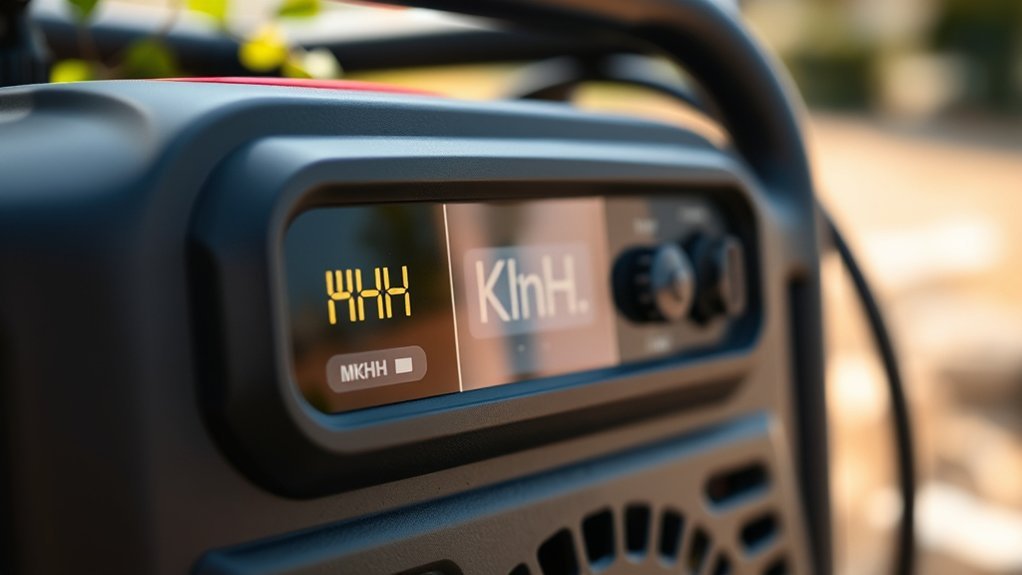
How does the kWh rating directly indicate a portable generator’s energy capacity? It measures the total energy stored or deliverable over time, reflecting its ability to sustain load. A higher kWh rating signifies a larger energy reserve, enabling longer operation or powering more devices simultaneously. Fuel types influence this capacity, as diesel, gasoline, or propane generators have varying efficiencies and energy densities. Noise levels often correlate with generator size and fuel combustion intensity, impacting usability in noise-sensitive environments.
| Fuel Type | Typical Energy Density (kWh per gallon) |
|---|---|
| Gasoline | 8.8 |
| Diesel | 10.8 |
| Propane | 2.4 |
| Effect on Noise | Higher capacity often increases noise levels |
This table demonstrates how fuel types directly relate to energy capacity and noise considerations.
Differences Between kWh and Power Ratings (Watts)
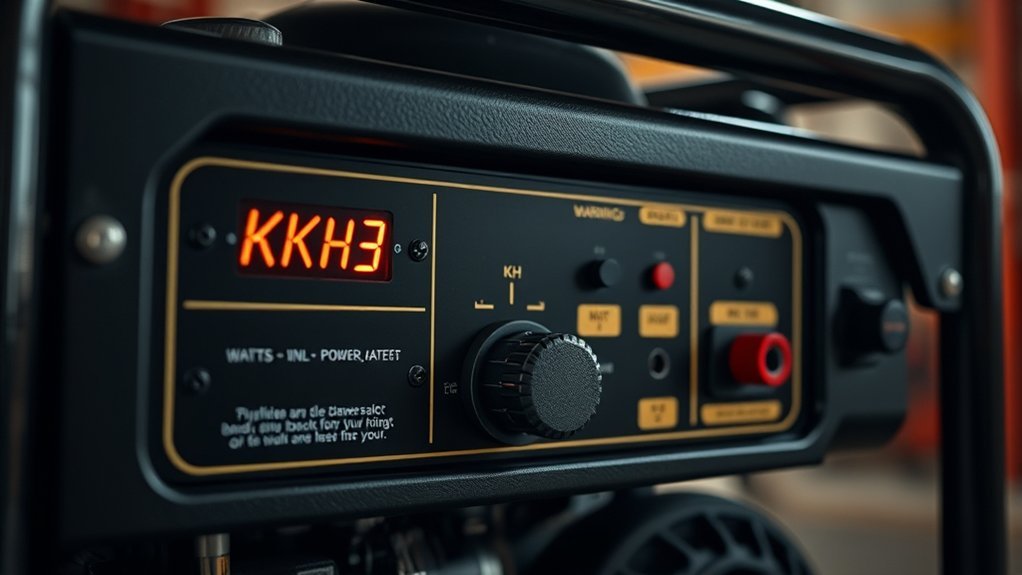
While both kWh and watts are essential metrics for understanding a generator’s capabilities, they serve different purposes and provide distinct insights. Watts measure the instantaneous power output, critical for evaluating a generator’s ability to handle specific loads during operation. In contrast, kWh reflects total energy consumption over time, which is crucial for evaluating long-term performance. Understanding this distinction informs generator maintenance schedules and fuel types, as continuous operation at higher wattages increases wear and fuel consumption. Different fuel types impact efficiency and runtime but don’t alter the fundamental difference between power ratings and energy capacity. Recognizing these differences allows users to select appropriate generators, optimize maintenance routines, and ensure reliable power supply tailored to their specific needs.
How to Calculate Your Power Needs Using kWh
To accurately determine your power needs, we first estimate the total energy consumption of your devices in kilowatt-hours. We then convert this energy requirement into practical usage durations, ensuring the generator’s capacity aligns with your needs. This process enables precise calculation of power requirements based on actual consumption patterns.
Estimating Total Energy Consumption
Estimating your total energy consumption is a critical step in selecting the appropriate portable generator, as it guarantees your power needs are met without overloading the system. To do this accurately, we analyze battery capacity for backup or renewable energy systems, calculating the total kWh required over a specific period. This involves summing the energy demands of all devices, considering their power ratings and usage durations. For renewable energy setups, understanding the daily kWh output helps match generation capacity with consumption. By precisely estimating total energy needs, we ensure that the generator’s rated kWh capacity aligns with actual demand, preventing inefficiencies or shortages. This analytical approach supports ideal system design, maximizing reliability and sustainability in power delivery.
Converting Power to Usage
Converting power to usage involves translating device power ratings into measurable energy consumption over time, typically expressed in kilowatt-hours (kWh). To accurately determine your energy needs, consider these factors:
- Identify device wattage—for example, a battery backup system or renewable energy setup.
- Estimate daily operating hours—how long each device runs daily.
- Calculate energy per device—multiply wattage by hours, then convert to kWh.
- Sum total energy consumption—adding all devices’ kWh to gauge overall needs.
This calculation helps optimize portable generator size, especially when integrating renewable energy sources or ensuring sufficient capacity for battery backup systems, minimizing waste and maximizing efficiency.
Why kWh Matters for Choosing the Right Generator Size
Understanding why kWh matters when selecting a portable generator is essential for guaranteeing it meets your energy demands without overloading or underperforming. Proper sizing hinges on evaluating energy storage needs and battery capacity, which directly influence a generator’s ability to supply consistent power. An undersized generator may lack the capacity to handle peak loads, risking damage or failure. Conversely, an oversized unit can lead to unnecessary fuel consumption and cost.
| Energy Storage Needs | Battery Capacity | Generator Size |
|---|---|---|
| Critical for backup | Determines runtime | Ensures efficiency |
| Affects reliability | Influences load capacity | Prevents overload |
| Impacts cost | Affects portability | Optimizes performance |
Understanding Run Time and Fuel Consumption in kWh
Understanding how fuel efficiency metrics influence runtime and fuel consumption is essential for maximizing generator performance in kWh. By accurately calculating runtime duration, we can better predict operational costs and efficiency. This approach enables precise power output management, ensuring ideal fuel use and sustained energy delivery.
Fuel Efficiency Metrics
How do we accurately assess a portable generator’s fuel efficiency concerning kilowatt-hours (kWh)? We evaluate this through metrics that quantify fuel consumption relative to energy output, considering factors like battery storage and renewable integration. Key indicators include:
- Fuel consumption rate (liters or gallons per hour at a given load)
- Energy output efficiency (kWh generated per unit of fuel)
- Run time per tank (hours of operation at specific loads)
- Cost per kWh (fuel expense divided by energy produced)
These metrics help us understand how effectively a generator converts fuel into usable energy, especially when considering hybrid systems with battery storage or renewable sources. Precise measurement ensures maximum performance, cost efficiency, and integration with sustainable energy systems.
Calculating Runtime Duration
To accurately determine a portable generator’s runtime, we must analyze the relationship between fuel consumption and energy output in kilowatt-hours (kWh). This involves calculating how long the generator can sustain a given load before fuel depletion. By understanding the generator’s fuel consumption rate alongside its kWh output, we can estimate operational duration precisely. Incorporating concepts like battery storage and renewable integration allows for optimized runtime, especially when supplementing fuel-based power with stored energy. This hybrid approach enhances efficiency, reduces fuel dependency, and provides a clearer picture of total energy management. Precise calculations require detailed data on fuel consumption per kWh and load conditions, which are essential for planning sustainable and reliable power solutions in various applications.
Power Output Optimization
What strategies can we employ to optimize a portable generator’s power output while accurately managing its runtime and fuel consumption in kilowatt-hours? First, integrating battery storage systems can smooth fluctuations in power demand, reducing fuel load and enhancing efficiency. Second, prioritizing loads based on criticality minimizes unnecessary fuel use, extending runtime. Third, utilizing renewable energy sources, like solar panels, can supplement generator output, decreasing fuel dependency. Fourth, selecting generators with adjustable output settings allows for fine-tuning performance:
- Use battery storage for peak shaving and energy smoothing
- Schedule loads to match the generator’s ideal capacity
- Incorporate renewable energy to offset fuel consumption
- Adjust power output based on real-time demand for maximum efficiency. These strategies collectively improve operational efficiency, reduce fuel consumption, and better manage runtime in kilowatt-hours.
Comparing Portable Generators: Why kWh Is Key
When evaluating portable generators, understanding the significance of kilowatt-hours (kWh) is essential for making informed comparisons. kWh provides a clear measure of energy capacity over time, critical when *judging* features like battery backup and solar integration. Generators with higher kWh ratings typically support longer operation, which is *crucial* during power outages or remote work. For portable units with battery backup, kWh indicates how much stored energy is available, directly affecting runtime. Solar integration benefits from accurate kWh measurements, as it determines how effectively a generator can complement renewable sources and store excess solar energy. Comparing generators solely by wattage can be misleading; instead, focusing on kWh enables a precise understanding of overall energy availability, efficiency, and suitability for specific needs.
Common Misconceptions About kWh and Generator Performance
Many users misinterpret power ratings, assuming higher kWh capacities automatically translate to longer run times without considering actual energy consumption. Overestimating run time often results from neglecting efficiency factors and real-world load variations. Ignoring these elements can lead to inaccurate performance expectations and suboptimal generator utilization.
Misinterpreting Power Ratings
Misinterpreting power ratings remains a common pitfall when evaluating portable generators, primarily because consumers often conflate kilowatt-hours (kWh) with the instantaneous power output. This confusion can lead to overestimating a generator’s capabilities, especially for applications like battery storage or renewable integration. To clarify:
- Power ratings (kW) reflect the maximum load the generator can sustain at a given moment.
- Energy ratings (kWh) indicate total energy produced over time, relevant for storage or long-term use.
- A high kW rating doesn’t necessarily mean extended run time, only peak output.
- Proper understanding ensures accurate assessment of a generator’s suitability for integrating renewable sources or supporting battery storage systems.
Recognizing these differences prevents misjudging performance and optimizes usage strategies.
Overestimating Run Time
Assuming that a high kWh rating guarantees prolonged runtime is a common misconception that can lead to critical planning errors. While a higher kWh suggests greater energy capacity, actual runtime depends on factors like fuel storage capacity and consumption rate. Overestimating run time ignores the impact of fuel efficiency, which varies with load demand and generator design. Additionally, noise levels often correlate with engine size and operation duration; larger, louder units may appear to offer longer operation but can be less efficient. Relying solely on kWh ratings without considering these variables risks underestimating fuel needs and misjudging the generator’s true endurance. Accurate planning requires a holistic view that accounts for fuel management and operational noise, not just energy output figures.
Ignoring Energy Efficiency
While a high kWh rating indicates substantial energy capacity, it doesn’t automatically translate into ideal performance if energy efficiency isn’t considered. Ignoring energy efficiency can lead to increased fuel consumption and unnecessary environmental impact. To maximize generator performance, consider these factors:
- Load management: Operating near capacity reduces efficiency; optimal loads improve energy conservation.
- Engine design: More efficient engines convert fuel to electricity with less waste.
- Power quality: Stable voltage and frequency reduce energy loss and equipment wear.
- Maintenance: Regular upkeep ensures the generator operates at peak efficiency, lowering emissions.
Focusing on energy conservation strategies directly reduces environmental impact and prolongs the generator’s lifespan, making efficiency a critical component beyond raw kWh capacity.
Tips for Selecting a Generator Based on Your Energy Needs
Selecting the right portable generator requires a clear understanding of your specific energy demands. We analyze your essential load requirements, considering whether you need continuous power or occasional backup, like battery backup systems. For critical applications, a generator with sufficient wattage capacity to support renewable sources, such as solar or wind, is advisable, guaranteeing seamless integration and sustainability. Determine whether your load includes sensitive electronics, which demand stable, clean power, or heavy machinery requiring higher starting wattages. Matching generator capacity to your peak load prevents overloads and inefficiencies. By accurately evaluating these factors, you optimize performance and longevity, avoiding undersized units that strain or oversized units that waste fuel. Proper selection ensures reliable, efficient power tailored to your specific energy profile.
How to Read and Interpret Generator Labels and Specifications
Understanding how to read and interpret generator labels and specifications is essential for selecting a unit that meets your power needs accurately. Labels typically display critical data, including:
Knowing how to read generator labels ensures you choose the right unit for your power requirements.
- Rated Power Output – indicates maximum continuous power in kW or kVA.
- Fuel Types – specifies compatible fuels like gasoline, propane, or diesel, affecting operation and convenience.
- Noise Levels – measured in decibels (dB), helps assess environmental impact and suitability for quiet operation.
- Additional Specs – such as voltage, amperage, and runtime, guide compatibility with your devices.
Frequently Asked Questions
How Does kWh Impact the Overall Efficiency of a Portable Generator?
Kwh directly influences a portable generator’s efficiency by indicating energy output over time; optimizing fuel efficiency and following proper maintenance tips enhance performance, reducing fuel consumption and ensuring consistent power delivery for maximum operational effectiveness.
Can Two Generators With the Same kWh Have Different Performances?
Yes, two generators with the same kWh can differ in performance due to fuel efficiency and noise levels, affecting operational costs and user experience. We analyze these factors to determine true efficiency and suitability for specific needs.
Is kWh More Important Than Wattage for Short-Term Power Needs?
Like a sprint versus a marathon, wattage is vital for quick power, but KWh reflects overall capacity, impacting fuel consumption and battery life. For short-term needs, wattage’s importance outweighs KWh’s, ensuring immediate, reliable power.
How Does Altitude Affect a Generator’s kWh Output?
Altitude effects can reduce generator performance, decreasing its kWh output due to thinner air causing less efficient combustion and cooling. We analyze these impacts to optimize generator operation at high elevations for consistent power delivery.
Are There Safety Considerations Related to Higher kWh Ratings?
Higher kwh ratings can raise safety concerns, affecting fuel efficiency and noise levels, so we recommend careful load management, proper ventilation, and regular maintenance to prevent overheating, reduce noise, and guarantee safe generator operation.
Conclusion
In summary, understanding kWh is like having a detailed map for your energy journey, guiding you to the right portable generator. It’s essential for accurately evaluating capacity, ensuring your power needs are met without surprises. By analyzing kWh alongside other specifications, we can make informed decisions—like tuning a finely crafted instrument—to optimize performance and efficiency. Mastering these details empowers us to select the perfect generator, ensuring reliable energy flow when it matters most.