Ad Blocker Detected
Our website is made possible by displaying online advertisements to our visitors. Please consider supporting us by disabling your ad blocker.
Studies show that lithium-ion batteries typically endure between 300 and 500 full charge-discharge cycles before experiencing significant capacity loss, which prompts questions about their longevity. For a 500Wh power station, understanding how usage patterns, device demands, and maintenance influence lifespan is essential. As we analyze these factors, it becomes clear that maximizing operational years depends on strategic management—something worth examining if you’re relying on such a station for extended periods.
Key Takeaways
- Runtime depends on the device’s wattage; lower wattage devices last longer on a 500Wh capacity.
- Efficient usage and avoiding deep discharges can maximize the power station’s operational lifespan.
- High power devices or frequent use shorten the overall runtime per charge.
- Proper charging habits and storage conditions help maintain capacity and extend usable life.
- Estimated runtime ranges from a few hours for high-wattage devices to over 10 hours for low-power devices.
How Does a 500Wh Power Station Work and What Does It Power?
A 500Wh power station operates as a portable energy storage device that converts stored electrical energy into usable power through integrated inverter systems. Its core function depends on a lithium-ion battery, which supplies energy while undergoing gradual battery degradation over time, affecting overall capacity and longevity. Effective power management is vital to optimize performance, regulating charge and discharge cycles to minimize stress on the battery and preserve its health. This guarantees consistent output and prolongs operational lifespan. The inverter converts the DC stored energy into AC power, enabling the station to power various devices. Understanding how battery degradation impacts capacity and how power management strategies mitigate wear is essential for maximizing the station’s efficiency and operational duration.
What Factors Affect How Long a 500Wh Power Station Can Last?

The lifespan of a 500Wh power station primarily depends on several interconnected factors that influence its efficiency and battery health. Key among these are battery chemistry and storage conditions. Different chemistries, such as lithium-ion or lithium-polymer, have distinct cycle lives and susceptibility to degradation, directly affecting longevity. Proper storage conditions, including temperature and humidity control, are essential to preserve battery capacity over time. High temperatures accelerate chemical degradation, while cold environments can impair performance. Additionally, frequent deep discharges or overcharging can hasten capacity loss. Consequently, understanding these factors helps optimize the power station’s lifespan, ensuring it maintains functionality and efficiency over its intended operational period.
How to Calculate Estimated Runtime for Your Devices?
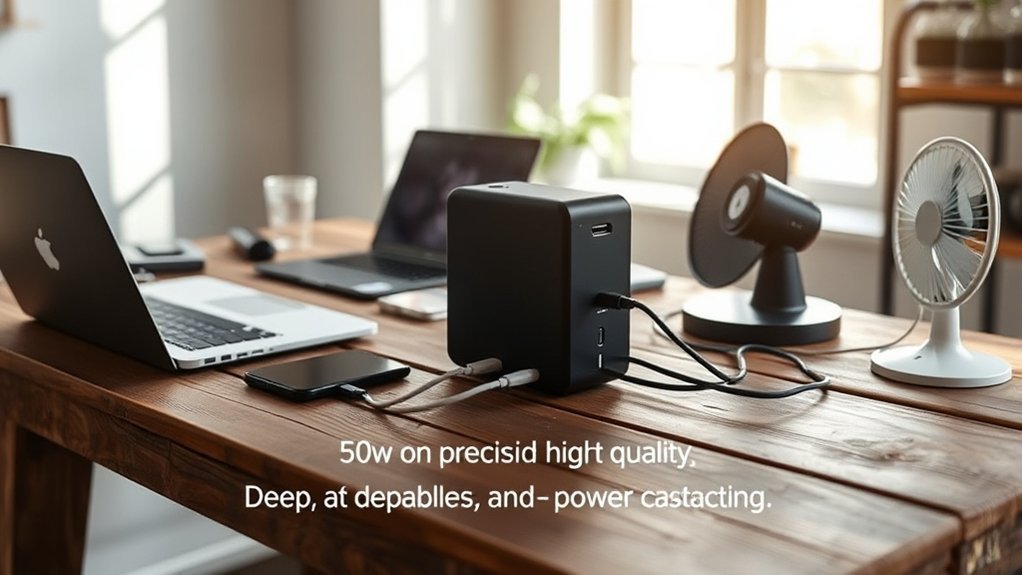
Calculating the estimated runtime for your devices involves understanding their power consumption and the capacity of your power station. First, determine the device’s power draw in watts (W), which reflects its energy use per hour. Second, consider the battery chemistry, as different chemistries impact overall efficiency and discharge rates. Third, evaluate the device’s power efficiency, since higher efficiency reduces energy waste. To estimate runtime, divide the power station’s capacity (500Wh) by your device’s wattage. For example:
- Record device wattage.
- Adjust for battery chemistry-related efficiency variations.
- Calculate runtime by dividing 500Wh by the adjusted wattage.
This approach offers a precise estimate, enabling informed decisions on device operation duration and power station utilization.
Which Devices Consume the Most Power and Drain the Battery Faster?
Devices with high power demands considerably impact the longevity of a power station, as their energy consumption exceeds that of more efficient alternatives. These devices rapidly drain the battery, reducing overall runtime. Key factors include power efficiency and usage patterns. For instance, high-wattage appliances like portable heaters or microwave ovens consume markedly more power than LED lights or smartphones. Proper battery maintenance can help optimize power efficiency and prolong device operation. To illustrate, consider this comparison:
| Device Type | Power Consumption (W) | Estimated Runtime (hours) |
|---|---|---|
| LED Light | 10 | 50 |
| Smartphone Charger | 15 | 33 |
| Portable Heater | 100 | 5 |
| Microwave Oven | 600 | 0.8 |
Understanding which devices drain power fastest informs better energy management.
How to Maximize Battery Life During Outdoor Adventures?
To extend battery life during outdoor adventures, we focus on optimizing charging practices and managing power consumption efficiently. Properly timing recharges and avoiding deep discharges can substantially preserve capacity, while limiting high-power device use reduces drain rates. Implementing these strategies guarantees the power station sustains critical devices longer in the field.
Optimize Charging Practices
Maximizing battery life during outdoor adventures hinges on adopting ideal charging practices that preserve cell health and efficiency. Proper Battery Maintenance prevents capacity fade and extends usable lifespan. To optimize charging:
- Keep the power station within 20-80% charge levels, avoiding deep discharges and overcharging, which stress cells.
- Use renewable sources for charging when possible, integrating solar panels to reduce reliance on grid power and enhance sustainability.
- Minimize exposure to extreme temperatures during charging, as heat accelerates degradation and cold hampers capacity recovery.
Implementing these practices ensures consistent performance, prolongs cycle life, and supports renewable integration efforts. Careful monitoring and controlled charging cycles are essential for maintaining optimal battery health, especially in remote outdoor environments where reliability is critical.
Manage Power Consumption
Effective management of power consumption is essential to extend the operational life of a 500Wh power station during outdoor excursions. Prioritizing power efficiency involves minimizing energy drain by selectively powering only necessary devices and disabling non-essential functions. Regular battery maintenance, such as avoiding deep discharges and maintaining ideal operating temperatures, helps preserve capacity and prevents premature degradation. Using energy-efficient devices reduces load, conserving battery life. Implementing standby modes and turning off unused outlets further enhances efficiency. Monitoring usage with real-time data allows us to adjust consumption proactively. By adopting these strategies, we maximize the station’s runtime, ensuring reliable power supply throughout outdoor activities. Precise power management, combined with proper battery maintenance, is key to maximizing the longevity and performance of your portable power station.
What Are Practical Tips for Conserving Power When Using a 500Wh Station?
When using a 500Wh power station, conserving energy becomes essential to extend its operational lifespan, especially during extended outdoor activities or emergencies. Effective power efficiency relies on strategic usage and proper battery maintenance.
To optimize performance:
- Minimize device demands by prioritizing essential functions and disconnecting unnecessary appliances, reducing load and conserving battery capacity.
- Use energy-efficient devices with low power consumption, which decreases strain on the power station and prolongs runtime.
- Regularly monitor and maintain the battery, ensuring proper calibration and avoiding deep discharges that impair battery health and reduce overall power efficiency.
Implementing these practices helps maximize power station longevity and reliability, ensuring sustained operation when needed most.
How Does Usage Pattern Impact the Longevity of Your Power Station?
Our analysis shows that the frequency of use and charging habits directly influence a power station’s lifespan. Frequent cycling accelerates battery degradation, especially if charging is inconsistent or occurs at high SOC levels. Understanding these patterns helps optimize usage to extend the station’s operational life.
Frequency of Use
Frequent cycling of a 500Wh power station accelerates its wear and reduces overall lifespan, as each discharge and recharge cycle contributes to battery degradation. High usage frequency impacts device compatibility and power efficiency, making it essential to optimize operation. Specifically:
- Repeated discharges strain the battery, diminishing capacity over time.
- Frequent use can cause thermal stress, affecting internal components and reducing efficiency.
- High cycling rates may lead to voltage inconsistencies, impairing device compatibility and overall performance.
Therefore, balancing usage frequency with the power station’s capacity is vital. Minimizing unnecessary cycles preserves battery health, maintains device compatibility, and sustains power efficiency, extending the station’s functional life.
Charging Habits
Proper charging habits play a crucial role in determining the lifespan of a 500Wh power station. Consistent battery maintenance, such as avoiding deep discharges and maintaining ideal charge levels, minimizes stress on the battery cells, extending their longevity. Additionally, adhering to storage precautions—like keeping the station in a cool, dry environment and not leaving it fully charged or discharged for extended periods—reduces capacity loss over time. Frequent, partial charges are preferable to full cycles, which accelerate wear. Proper usage patterns prevent unnecessary strain on internal components, ensuring consistent performance. By following these guidelines, users can maximize the number of charge cycles and preserve the power station’s overall health, ultimately prolonging its effective operational life.
When Should You Consider Recharging or Upgrading Your Power Station?
When evaluating whether to recharge or upgrade your 500Wh power station, it’s essential to monitor its performance metrics and usage patterns closely. Pay attention to indicators like declining battery capacity, reduced power efficiency, and increased charging times, which signal battery degradation.
Monitor performance and usage patterns to determine when recharging or upgrading your power station is needed.
Consider these key points:
- If battery maintenance reveals significant capacity loss or uneven charge cycles, recharging or replacing the battery becomes necessary.
- A consistent drop in power efficiency suggests internal component aging, justifying an upgrade.
- Longer recharge times and diminished runtime indicate the need for a more robust power solution, especially if usage demands increase.
Regularly appraising these factors ensures peak performance and prolongs the lifespan of your power station.
How Do Different Devices and Their Power Ratings Influence Runtime?
The power ratings of devices directly impact the runtime you can expect from your 500Wh power station, as higher wattage devices draw more current and deplete the battery faster. Devices with higher power ratings increase current demand, reducing overall runtime. Battery chemistry influences how efficiently energy is stored and discharged; for example, lithium-ion batteries offer high power efficiency and stable performance, extending usable time. Conversely, devices with lower power ratings consume less energy, resulting in longer operation periods. Power efficiency varies among devices, affecting how effectively the power station’s stored energy is utilized. Understanding these factors helps optimize runtime, as selecting devices with lower wattage and higher efficiency maximizes the available energy from your power station.
What Are Common Mistakes That Shorten Your Power Station’s Lifespan?
Ignoring manufacturer guidelines and pushing the power station beyond its recommended operational limits can substantially accelerate battery degradation and reduce overall lifespan. Key mistakes include neglecting proper storage conditions, which can lead to capacity loss over time. Additionally, improper management of battery chemistry—such as frequent deep discharges—accelerates chemical wear and diminishes cycle life. Finally, exposure to extreme temperatures or humidity accelerates degradation, especially if storage conditions are not ideal.
To maximize lifespan:
- Maintain best storage conditions, avoiding high heat or moisture.
- Follow recommended charging and discharging protocols aligned with battery chemistry.
- Prevent deep discharges and avoid overloading the power station beyond its rated capacity.
Adhering to these practices preserves battery health and extends operational life.
Frequently Asked Questions
Can a 500WH Power Station Run Continuously Without Recharging?
A 500WH power station can’t run continuously without recharging due to battery lifespan limitations and power efficiency factors. Over time, battery capacity diminishes, and efficiency drops, making consistent operation without recharging technically unfeasible.
How Does Temperature Affect a 500WH Power Station’s Performance?
Temperature considerably impacts a 500Wh power station’s performance by affecting battery lifespan and efficiency. Proper temperature regulation minimizes degradation, ensuring ideal operation and longevity, especially in extreme cold or heat conditions, thereby maintaining consistent power output.
Is a 500WH Power Station Suitable for Emergency Backup?
A 500Wh power station is suitable for emergency backup due to its battery capacity and power efficiency, providing reliable short-term power during outages. Its capacity supports essential devices, ensuring functionality until mains power is restored.
How Long Does It Take to Fully Recharge a 500WH Station?
It typically takes 4-6 hours to fully recharge a 500Wh power station, considering battery lifespan and charging efficiency. We analyze power input, optimizing for minimal loss, ensuring reliable backup while avoiding the pitfalls of overcharging or underperformance.
Can Multiple Devices Be Safely Charged Simultaneously From a 500WH Station?
Yes, multiple devices can be safely charged simultaneously from a 500Wh power station if total power draw stays within its battery capacity and charging safety guidelines, ensuring no overload occurs and device connections are properly managed.
Conclusion
In summary, understanding the factors influencing a 500Wh power station’s lifespan helps us optimize its use and prolong its operational life. Given that lithium-ion batteries typically endure 300 to 500 full cycles, this equates to roughly 3 to 5 years of reliable service under moderate use. By managing discharge levels and temperature, we can maximize longevity, ensuring our investment remains functional and efficient over time—highlighting the importance of strategic usage in extending battery lifespan.