Ad Blocker Detected
Our website is made possible by displaying online advertisements to our visitors. Please consider supporting us by disabling your ad blocker.
Is it possible to effectively juggle power and performance without risking damage? We often ask whether a power station can be charged while in use, knowing that each action influences the other. Advanced battery management systems support simultaneous charging and discharging, but this balance isn’t without potential downsides. To understand the implications fully, we need to explore how manufacturers design these systems and what precautions can be taken to guarantee safety and longevity.
Key Takeaways
- Most modern power stations support simultaneous charging and usage with appropriate safety features.
- Using certified cables and following manufacturer guidelines reduces risks during concurrent charging and operation.
- Thermal management and power flow regulation prevent overheating and ensure stable performance during dual use.
- High device power consumption can decrease charging efficiency and accelerate battery wear.
- Regular maintenance and avoiding continuous high-demand use during charging help extend the power station’s lifespan.
Can You Safely Charge Your Power Station While Using It?
Charging a power station while it’s actively in use is generally safe when following manufacturer guidelines and using appropriate equipment. Concerning emergency preparedness, this approach ensures continuous power supply during outages or critical situations, reducing downtime. When integrating renewable energy sources like solar panels, simultaneous charging and usage can optimize energy efficiency and reduce reliance on grid power. Modern power stations are designed with advanced safety features, such as overload protection and temperature regulation, making in-use charging safe if properly monitored. Proper equipment, such as certified chargers and compatible cables, minimizes risks like overheating or electrical faults. Adhering to manufacturer instructions ensures safe operation, even during simultaneous charging and discharging, supporting both emergency needs and renewable integration efforts effectively.
How Do Power Stations Handle Simultaneous Charging and Discharging?
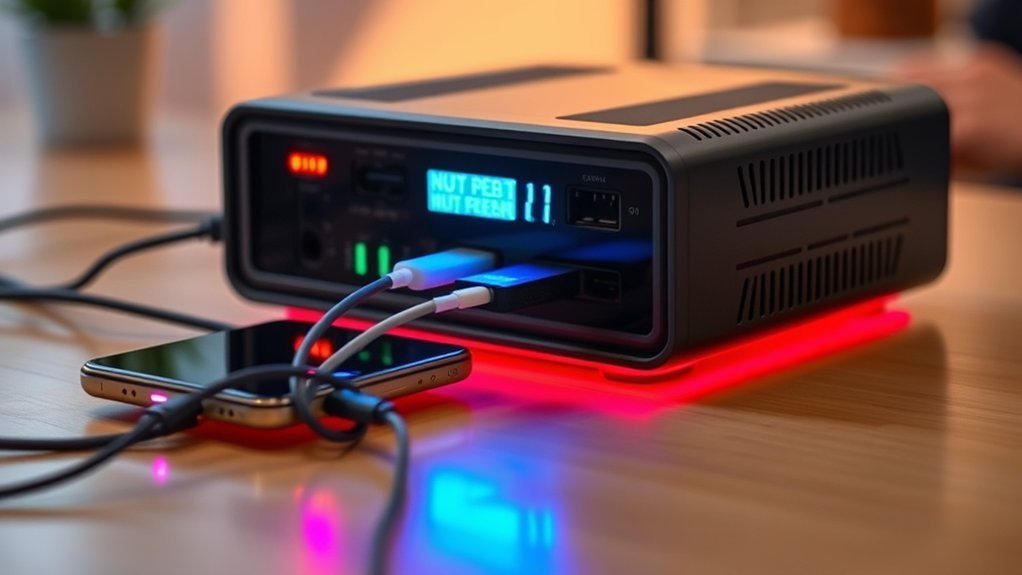
Power stations manage simultaneous charging and discharging through advanced Battery Management Systems that monitor cell health and balance. They also regulate power flow with sophisticated converters to guarantee stable energy transfer without overloading components. Thermal management strategies are employed to maintain ideal operating temperatures, preventing overheating during concurrent charging and discharging processes.
Battery Management Systems
Battery management systems (BMS) are essential for maintaining the safety and efficiency of power stations that simultaneously charge and discharge. They monitor individual cell voltages, temperatures, and overall pack health to optimize battery longevity and prevent overcharging or deep discharging. By precisely controlling charge and discharge cycles, BMS guarantees consistent charging speed without compromising safety or performance. This regulation minimizes stress on the battery, reducing degradation and extending its operational lifespan. The BMS dynamically adjusts current flow, balancing cell capacities during simultaneous charging and discharging, which helps maintain stable voltage levels. Consequently, the system preserves battery integrity, allowing power stations to operate efficiently while safely handling concurrent charging and discharging processes.
Power Flow Regulation
To effectively manage simultaneous charging and discharging, power stations utilize advanced power flow regulation systems that precisely control current distribution between sources and loads. These systems employ sophisticated algorithms to optimize power routing, ensuring minimal losses and maintaining high power efficiency. By dynamically balancing the flow, they prevent overloading and reduce stress on batteries, which is vital for battery longevity. Precise regulation also minimizes fluctuations that can degrade battery cells over time. This control enhances the overall stability of the power station, allowing charging and discharging to occur concurrently without compromising system integrity. Consequently, power flow regulation not only supports efficient energy transfer but also extends battery lifespan, making simultaneous use of power stations both practical and sustainable.
Thermal Management Strategies
Effective thermal management is vital when operating power stations that simultaneously handle charging and discharging. These systems generate significant heat, requiring optimized thermal regulation to prevent component failure. Ventilation design plays a key role, facilitating efficient heat dissipation through airflow pathways that guarantee uniform temperature distribution. Proper ventilation design minimizes hot spots and maintains operational safety during high load conditions.
| Component | Function |
|---|---|
| Heat sinks | Dissipate heat from power modules |
| Forced airflow fans | Enhance airflow for thermal regulation |
| Ventilation ducts | Guide heat away from critical components |
| Temperature sensors | Monitor thermal status to adjust cooling |
Factors That Influence Charging While Power Station Is in Use
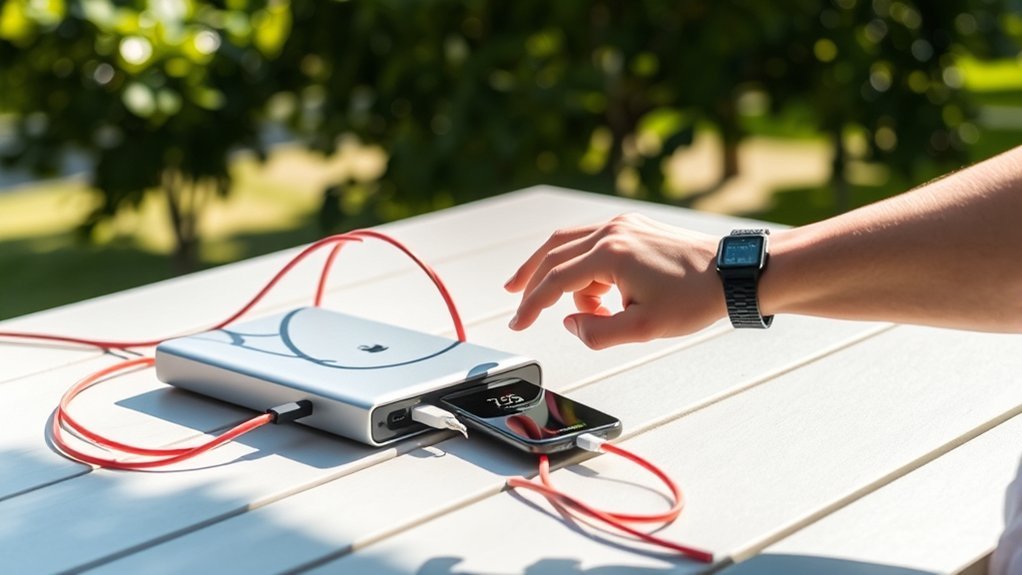
The capacity of a power station directly impacts its ability to simultaneously charge and operate connected devices. Additionally, the power draw of each device influences charging efficiency and stability. The chosen charging method also affects the overall effectiveness of maintaining charge during use.
Power Station Capacity
- Deteriorating battery health limits power output
- Inefficient circuitry causes energy losses
- External temperatures accelerate battery degradation
- Advanced power management improves capacity stability
Connected Device Power Draw
When a power station is actively supplying energy to connected devices, their power draw directly impacts the station’s ability to continue charging or powering other equipment. High power consumption from connected devices, especially those with wireless connectivity, increases the load on the station, reducing available power for charging itself. Devices that draw substantial current can accelerate battery degradation, impacting overall battery lifespan. Conversely, low-power devices help maintain a balanced load, allowing the station to sustain its charging function longer. Managing connected device power draw is essential for optimizing station performance and longevity. Understanding each device’s energy requirements enables users to prevent overloading the system, ensuring consistent power supply and preserving the battery lifespan over time.
Charging Method Used
Charging methods markedly influence a power station’s ability to replenish its energy while actively powering devices. The chosen method affects both charging speed and battery longevity, which are critical for peak performance. Fast charging techniques deliver higher currents, increasing charging speed but potentially stressing the battery, leading to reduced longevity over time. Conversely, slower, regulated charging preserves battery health but extends the recharge cycle. The type of charger—AC wall outlet, solar, or USB—also impacts efficiency and safety. Proper selection guarantees balanced performance, minimizing wear and maximizing lifespan.
- Experience the rush of quick power restoration, knowing it can impact long-term battery health.
- Feel the confidence of a safe, stable charge, protecting your investment.
- Witness the delicate balance between rapid charging and preserving battery longevity.
- Embrace smarter charging choices for sustained device performance.
Risks and Precautions for Charging During Operation
While actively using a power station during charging, users must be aware of potential electrical hazards and system instability. Ensuring proper charging safety involves verifying power station compatibility with your device and power source. Incompatible systems can lead to overheating, voltage fluctuations, or electrical surges, increasing risk of damage or fire. It’s vital to use certified cables and connectors designed for your specific power station model. Avoid overloading outlets or extension cords, as this can compromise safety and charging efficiency. Regularly inspect for signs of wear or damage, and adhere to manufacturer guidelines regarding simultaneous operation and charging. By maintaining awareness of these risks and following proper precautions, users can safely operate their power stations during charging without compromising system integrity or safety.
Best Practices for Charging and Using Your Power Station Safely
To guarantee safety during simultaneous operation and charging, we must adopt established best practices that minimize risks and maximize performance. Proper procedures safeguard battery lifespan and maintain peak charging speed, ensuring longevity and efficiency. Always use the manufacturer-recommended charger and avoid excessive power draw to prevent overheating and damage. Keep the power station in a well-ventilated area to dissipate heat effectively. Monitor voltage and current levels to avoid overcharging, which can degrade the battery over time. Regularly inspect cables and connectors for wear or damage. Employ a regulated power source for consistent charging conditions, reducing the risk of sudden surges.
- Ensure proper ventilation to prevent overheating and prolong battery lifespan
- Use only certified chargers to maintain peak charging speed
- Avoid prolonged charging sessions once full capacity is reached
- Regularly check for damage to cables and ports
How Charging While Using Affects Power Station Performance
When a power station is actively being used and charged simultaneously, its performance can be affected due to thermal and electrical stress. This dual activity increases internal temperature, accelerating thermal degradation and potentially reducing battery longevity over time. Additionally, simultaneous charging and discharging can lower charging efficiency, as energy transfer becomes less efficient under load. Elevated temperatures may trigger protective mechanisms, limiting output capacity or slowing charging rates, which impacts overall performance. Consistent stress can lead to faster capacity fade, diminishing the power station’s operational lifespan. For ideal performance and longevity, it’s advisable to minimize concurrent use and charging whenever possible, allowing the device to operate within ideal thermal and electrical parameters.
What Features to Look for in Power Stations That Support Simultaneous Charging
Selecting a power station equipped with specific features can substantially improve its ability to support simultaneous charging and usage without compromising performance. Key features include multiple high-current input ports, which facilitate faster charging speed and reduce downtime. Prioritize stations with advanced battery management systems that enhance battery durability, allowing for consistent performance over prolonged use. Look for units with dedicated output ports designed for high-power devices, ensuring stable power delivery during concurrent operations. Additionally, integrated display panels providing real-time metrics on charging status and power consumption help optimize usage efficiency. These features collectively guarantee the power station maintains reliable performance, supports rapid recharging, and preserves battery health, making it suitable for demanding applications where continuous power and fast charging are essential.
Troubleshooting Common Issues When Charging and Using at the Same Time
Charging and using a power station simultaneously can sometimes lead to performance issues if not properly managed. One common problem is reduced charging speed, which may result from high energy demands during operation. This can cause the battery to experience increased stress, accelerating battery degradation over time. To troubleshoot, verify you’re using a compatible charger with sufficient power output, as underpowered chargers slow charging rates and impact performance. Additionally, monitor the power station’s temperature; excessive heat can impair charging efficiency and contribute to battery wear. If you notice sluggish charging or overheating, pause usage briefly to allow cooling. Proper management of load and avoiding continuous high-demand use during charging can mitigate these issues, preserving the power station’s longevity and maintaining ideal charging speeds.
Final Tips to Maximize Your Power Station’s Lifespan and Efficiency
To maximize your power station’s lifespan and efficiency, it’s essential to implement proper maintenance and operational practices consistently. Enhancing battery longevity and charging speed depends on regular calibration, avoiding deep discharges, and maintaining ideal temperature conditions. Properly managing these factors reduces wear and prevents capacity loss over time. Additionally, using compatible chargers and avoiding overcharging can greatly extend device life.
- Regularly monitor battery health to detect early signs of degradation and prevent unexpected failure.
- Maintain a moderate charge level—avoid full discharges or constant top-ups for better battery longevity.
- Store in a cool, dry environment to prevent overheating and thermal stress.
- Prioritize efficient charging practices to ensure rapid charging without compromising long-term performance.
Frequently Asked Questions
Can Charging While Using Damage the Power Station’s Battery?
Charging while using our power station doesn’t damage the battery if it’s designed for simultaneous use. However, it may cause battery overheating or power surge risks, so always follow manufacturer instructions for safe operation and avoid prolonged simultaneous charging and use.
How Long Does It Take to Charge a Power Station While in Use?
Charging while in use typically takes 3-5 hours, depending on battery efficiency and charging frequency. We find that multitasking with power stations is efficient if you’re patient, though frequent charges may slightly extend overall recharge time.
Are There Specific Types of Chargers Compatible With Simultaneous Use?
Yes, specific chargers compatible with your power station guarantee safe, efficient charging during use. Always prioritize charging safety and verify power station compatibility to prevent circuit overloads, damage, or safety hazards while operating and charging simultaneously.
Does Charging During Use Decrease the Power Station’s Overall Lifespan?
Charging during use can slightly impact battery efficiency and may affect lifespan over time, but with proper charging safety protocols, the effect is minimal. We recommend monitoring temperature and avoiding overcharging to preserve your power station’s longevity.
Can Multiple Devices Be Charged While the Power Station Is in Use?
Yes, we can charge multiple devices simultaneously during use, including wireless charging and portable solar inputs, but efficiency may decrease. Overloading can strain the power station, so monitoring output guarantees ideal performance and longevity.
Conclusion
In summary, charging your power station while in use is feasible and supported by modern battery management systems, but it’s not without risks. While it can boost convenience, it also introduces potential strain and heat that could affect longevity. By following best practices and understanding the nuances of your device’s features, you can optimize performance. Yet, the question remains: are you prepared to balance immediate needs with long-term reliability? The choice is yours—proceed with caution.