Ad Blocker Detected
Our website is made possible by displaying online advertisements to our visitors. Please consider supporting us by disabling your ad blocker.
Ensuring safe operation of power stations during charging is critical to prevent hazards like fires or electrical damage. Proper equipment selection, correct connection methods, and vigilant monitoring are essential components of safety protocols. As technology evolves, understanding best practices becomes increasingly important. We’ll explore key safety tips and procedures that help maximize device lifespan and minimize risks, providing a thorough guide to responsible charging practices—details that are crucial to maintaining both safety and efficiency.
Key Takeaways
- Use compatible, high-quality chargers with automatic shutoff features to prevent overcharging and thermal damage.
- Ensure proper, secure connections and inspect cables regularly for damage before charging.
- Charge in well-ventilated, shaded areas away from flammable materials to reduce fire risks.
- Follow manufacturer guidelines for grounding, storage, and maintenance to prolong battery life and safety.
- Monitor charging processes closely and respond promptly to safety alerts or abnormal temperature increases.
How to Safely Connect Your Power Station to Power Sources
Connecting your power station to a power source requires careful attention to safety protocols to prevent electrical hazards. When establishing a connection, verify compatibility with wireless charging capabilities if applicable, making sure the station supports wireless transfer methods. For solar panel compatibility, confirm the voltage and wattage ratings match the station’s input specifications to avoid overloading. Use proper connectors and secure all connections tightly to prevent arcing or disconnections during operation. Always inspect cables and adapters for damage before use. Implement grounding procedures as recommended by the manufacturer. If integrating solar panels, ensure the panels are rated for outdoor conditions and are compatible with your station’s input ports. Following these precise steps minimizes risks and guarantees a safe, reliable power connection.
Choosing the Right Charging Equipment for Safety
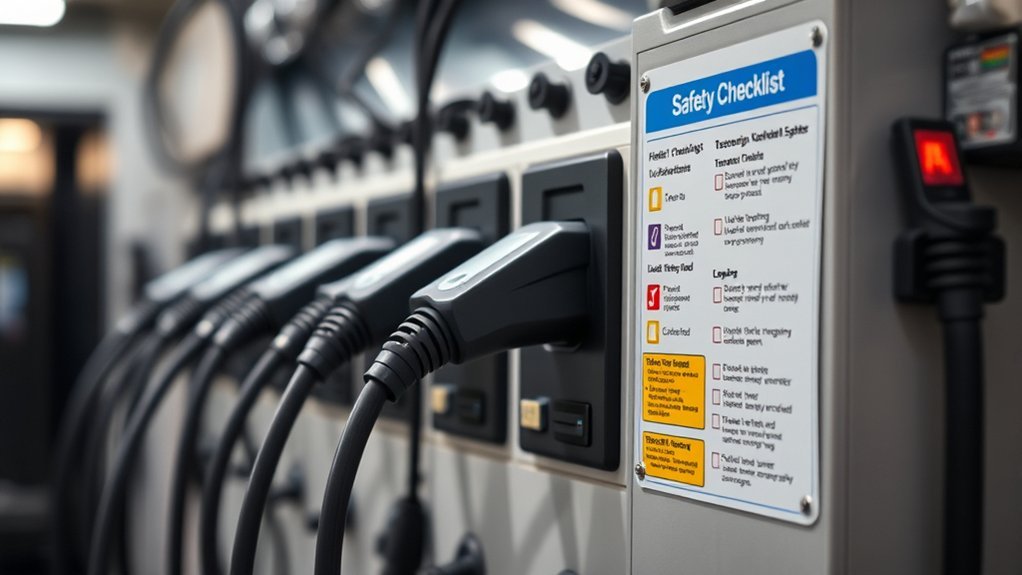
Selecting appropriate charging equipment is vital to guarantee safety and ideal performance of your power station. Using the correct charger ensures maximum charging speed, minimizing heat buildup and reducing the risk of thermal damage. Compatibility between the charger and power station is essential to prevent voltage mismatches that could compromise battery lifespan. High-quality, certified chargers maintain stable current flow, promoting consistent charging cycles and extending battery health. Avoiding overpowered or underpowered chargers prevents undue stress on internal components, which can degrade performance over time. Precise control of charging parameters also reduces the likelihood of electrical faults. Overall, choosing equipment designed specifically for your power station enhances safety, preserves battery longevity, and guarantees reliable operation during critical moments.
Best Practices for Charging Your Power Station at Home and Outdoors
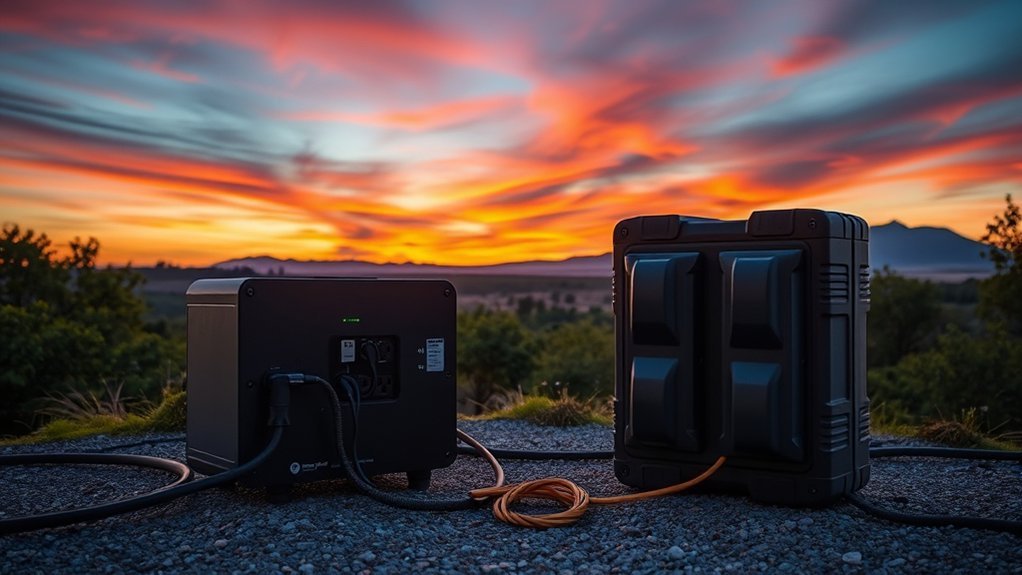
When charging your power station at home or outdoors, it’s essential to use only approved charging cables to guarantee safety and compatibility. Charging should occur in well-ventilated areas to prevent heat buildup and reduce the risk of fire, while monitoring the process helps avoid overcharging and battery damage. Adhering to these best practices optimizes performance and maintains safety during operation.
Use Approved Charging Cables
Using only approved charging cables is essential for ensuring safety and ideal performance when powering your station at home or outdoors. Approved cables are specifically designed to meet the power station’s specifications, minimizing risks such as overheating or short circuits. Proper cables help maintain best charging speed, ensuring efficient energy transfer and reducing strain on the battery. Using incompatible cables can accelerate battery degradation, thereby shortening overall lifespan. To maximize safety and performance, consider these key points:
- Verify cable ratings match the power station’s voltage and current requirements
- Use cables from reputable manufacturers with certified safety standards
- Avoid makeshift or damaged cables to prevent voltage fluctuations and potential hazards
Adhering to these practices preserves battery lifespan and guarantees consistent charging efficiency.
Charge in Ventilated Areas
Charging your power station in well-ventilated areas is essential for maintaining safety and preventing overheating. Proper airflow dissipates heat generated during high current draw, especially when using wireless charging or solar panel compatibility features. When charging indoors, confirm the area is free from obstructions that restrict airflow, and avoid enclosed spaces that trap heat. Outdoors, select shaded, open locations to prevent heat buildup from direct sunlight. Adequate ventilation reduces thermal stress on internal components, prolonging device lifespan. Additionally, monitor temperature during solar panel charging systems, as heat accumulation can impair efficiency. Proper ventilation is particularly critical when utilizing high-power wireless charging pads or integrating solar panels, as these methods can generate additional heat. Consistent airflow ensures safe, efficient charging across all power station applications.
Avoid Overcharging Batteries
Overcharging your power station’s batteries can lead to reduced lifespan, thermal stress, and potential safety hazards. To preserve battery longevity and optimize charging cycles, it’s crucial to prevent overcharging. Modern power stations often include built-in safeguards, but users should also monitor charging status actively.
Key best practices include:
- Disconnecting the charger once the battery reaches full capacity
- Using chargers with automatic shutoff features
- Avoiding prolonged charging beyond 100%
Implementing these measures minimizes thermal stress and prevents unnecessary wear on the batteries. Properly managing charging cycles ensures the longevity of your power station, maintaining peak performance over time. Ultimately, controlling overcharging is indispensable for safe operation and extending the functional lifespan of your device.
Common Charging Mistakes and How to Avoid Them
Common charging mistakes, such as overloading ports, using damaged cables, or charging in flammable areas, can compromise safety and device integrity. We must guarantee ports are not overloaded, inspect cables regularly for damage, and avoid charging near combustible materials. Addressing these issues prevents hazards and extends the lifespan of your power station.
Overloading Charging Ports
Many users mistakenly connect multiple devices to a single charging port, risking overload and potential damage. Overloading can lead to charging port overheating, which compromises safety and device longevity. To prevent this, avoid exceeding the recommended device capacity for each port. Use power strips with built-in overload protection to enhance power surge prevention, and distribute devices among multiple ports when possible. Key precautions include:
- Limiting the number of devices per port according to manufacturer specifications
- Using power stations with designated overload protection features
- Monitoring device charging to prevent sustained high current flow
Implementing these measures reduces the risk of power surge incidents and prolongs the lifespan of your power station and connected devices. Proper load management is essential for safe, reliable charging.
Using Damaged Cables
Using damaged cables poses a significant safety risk during charging because compromised insulation or exposed wires can cause short circuits, electrical sparks, or fires. Damaged cables, if ignored, can lead to failure of the power station’s safety features. Regular inspection is essential; look for frayed insulation, exposed conductors, or bent connectors. When damage is detected, cable replacement is essential to maintain safety and system integrity. Below is a quick reference:
| Damage Type | Recommended Action |
|---|---|
| Frayed insulation | Replace cable immediately |
| Exposed wires | Discontinue use and replace |
| Bent connectors | Inspect and replace if damaged |
Always prioritize cable integrity to prevent hazardous incidents during charging.
Charging in Flammable Areas
Charging power stations in flammable areas markedly increases the risk of fire or explosion if proper precautions are not observed. Flammable materials and fire hazards require strict control during charging operations. To mitigate risks, avoid placing charging equipment near combustible substances, ensure proper ventilation, and use certified equipment designed for hazardous environments.
Key precautions include:
- Using explosion-proof enclosures and connectors
- Maintaining a safe distance from flammable materials
- Regularly inspecting for leaks, sparks, or damage
Adhering to these safety measures minimizes the chance of igniting fire hazards. Proper planning and awareness are essential when charging in these environments to prevent catastrophic accidents and ensure personnel safety.
Recognizing and Responding to Charging Safety Alerts
When a power station displays a charging safety alert, it signals that immediate attention is required to prevent potential hazards. These alerts often indicate issues related to battery chemistry, such as thermal instability or abnormal voltage levels, which could lead to overheating or failure. Recognizing the alert involves monitoring specific indicators, including temperature spikes or irregular charging rates. Responding promptly involves halting charging and inspecting the system, particularly the charging algorithms managing current flow. Modern power stations utilize advanced algorithms to optimize safe charging, but alerts may still occur if the system detects deviations from expected parameters. Proper recognition and response guarantee the integrity of battery chemistry and prevent damage, reducing the risk of fire or electrical failure.
Maintaining and Inspecting Your Power Station’s Charging Ports
Regularly inspecting and maintaining your power station’s charging ports is essential to guarantee safe and efficient operation. Proper maintenance ensures the best charging speed and prolongs battery lifespan by preventing corrosion, debris buildup, and connector damage.
Regular port maintenance ensures safe, efficient operation and extends your power station’s lifespan.
Key actions include:
- Cleaning ports with a soft, dry cloth to remove dust and oxidation
- Checking for signs of corrosion or loose connections
- Ensuring port alignment and securing connectors properly
Consistent inspection minimizes potential charging delays caused by poor contact or damaged ports. It also reduces the risk of electrical faults, protecting the internal circuitry and extending overall device longevity. Maintaining clean, well-maintained ports ensures consistent charging speed and preserves your power station’s performance over time.
How to Store Your Power Station When Not in Use
Proper storage of your power station when not in use is essential to preserving its battery health and ensuring safety. Indoor storage is recommended to protect the device from environmental fluctuations and physical damage. Maintain a stable environment with controlled temperature, ideally between 15°C and 25°C (59°F to 77°F), to prevent battery degradation caused by heat or cold. Avoid exposing the power station to high humidity, direct sunlight, or extreme temperatures, which can compromise internal components and reduce overall lifespan. Before storing, confirm the power station is partially charged to around 50-70%, as storing a fully depleted or overcharged battery can harm its capacity. Regularly check storage conditions and recharge periodically if stored for extended periods to maximize performance.
Troubleshooting Charging Issues Safely
If your power station isn’t charging properly, it’s essential to troubleshoot the issue carefully to prevent further damage or safety hazards. Begin by verifying the power source’s stability and ensuring the input voltage matches the manufacturer’s specifications. Next, assess the battery capacity; a reduced capacity can hinder charging speed, indicating potential degradation or a need for replacement. Finally, examine the charging cable and port for damage or debris, as poor connections can impede charging efficiency.
- Confirm power source stability and voltage compatibility
- Check battery capacity and overall health status
- Inspect cables and ports for damage or obstructions
Frequently Asked Questions
Can I Charge My Power Station With a Solar Panel Safely?
Yes, we can safely charge our power station with a solar panel by ensuring proper solar panel maintenance and verifying charging cable compatibility. These steps prevent electrical issues and optimize energy transfer, maintaining system safety and efficiency during solar charging.
Are There Specific Safety Certifications to Look for in Charging Equipment?
We look for certification standards like UL, CE, or FCC, ensuring compliance with safety labels and regulations. These certifications verify electrical safety, quality, and reliability, helping us select charging equipment that minimizes risks and guarantees safe operation.
How Long Is the Typical Lifespan of a Power Station’s Charging Port?
Our charging ports typically last a decade, but diligent maintenance can extend this. Regular cleaning, avoiding moisture, and applying lifespan extension techniques are essential to prevent deterioration and guarantee peak performance over years.
Can External Weather Conditions Affect Charging Safety?
External weather conditions can considerably affect charging safety, as weather hazards like rain or snow increase risk of electrical shock, while temperature effects may impair device performance or cause overheating, emphasizing the need for weatherproofing and proper environmental controls during charging.
Is It Safe to Leave My Power Station Charging Overnight?
We advise against leaving your power station charging overnight due to overcharge risks and fluctuating charging temperature, which can lead to overheating or damage. Always monitor charging and unplug once fully charged to guarantee safety and device longevity.
Conclusion
By following these safety tips, we can guarantee our power stations operate reliably and securely. Vigilance in equipment selection, connection practices, and regular maintenance minimizes risks and prolongs device lifespan. But the key to true safety lies in staying alert to alerts and addressing issues immediately. Ignoring even minor signs can lead to serious hazards. Stay proactive, and the power of your station will remain a trusted resource—ready for anything, but only if we’re prepared to act promptly.