Ad Blocker Detected
Our website is made possible by displaying online advertisements to our visitors. Please consider supporting us by disabling your ad blocker.
When evaluating portable power stations, understanding charging efficiency is essential for optimizing performance and longevity. It involves complex interactions between battery chemistry, power management systems, and input sources. Improving these factors can considerably reduce energy loss and heat, but many users underestimate how vital efficient charging protocols are. Exploring these technical details reveals the underlying mechanisms that influence overall device reliability, prompting further examination of how these systems can be fine-tuned for better long-term results.
Key Takeaways
- Using high-quality, compatible chargers and power sources enhances charging efficiency and reduces energy loss.
- Maintaining optimal temperature during charging prevents thermal stress, preserving battery health and efficiency.
- Selecting appropriate charging methods (solar, AC, car) based on operational needs impacts overall efficiency.
- Proper battery management, including avoiding deep discharges and partial charges, prolongs lifespan and maintains efficiency.
- Advanced charging protocols and future technologies aim to minimize energy loss and improve long-term performance of portable power stations.
How Charging Efficiency Affects Portable Power Station Performance
Since charging efficiency directly influences the overall performance of portable power stations, understanding its impact is critical for optimizing their functionality. High charging efficiency minimizes energy loss during power storage, which directly enhances battery longevity by reducing stress on the cells. Efficient charging ensures that more energy from the source is retained within the battery, extending its usable lifespan and maintaining consistent output capacity over time. Conversely, poor efficiency results in increased heat generation and energy dissipation, accelerating battery degradation. This diminishes power storage capacity and shortens operational life. Consequently, optimizing charging efficiency is essential not only for maximizing immediate performance but also for preserving the long-term durability and reliability of portable power stations.
Understanding Different Types of Power Station Batteries and Their Impact on Charging
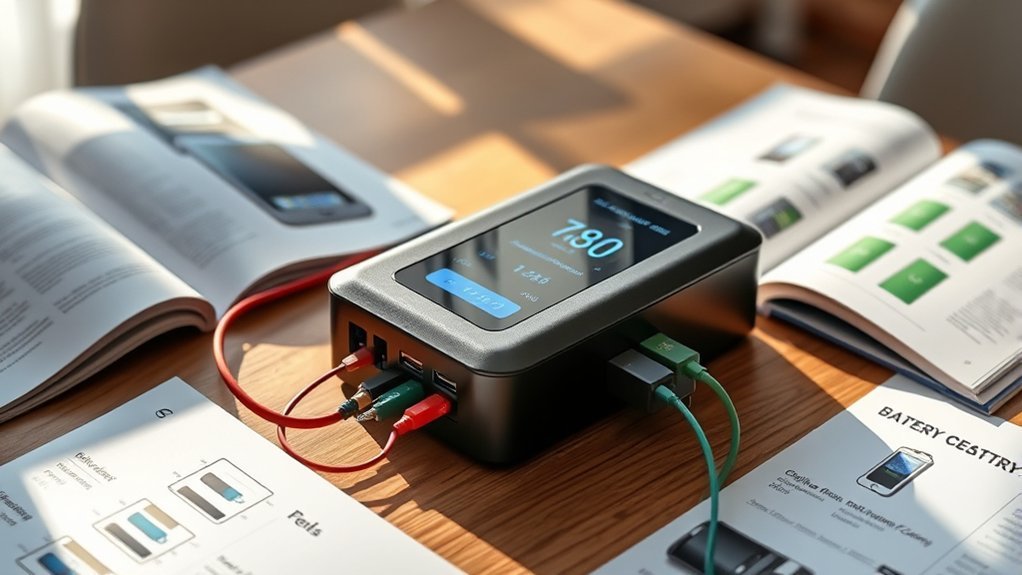
Different types of batteries used in portable power stations considerably influence their charging characteristics and overall efficiency. Battery chemistry determines charge cycles, energy density, and longevity, directly affecting performance. Lithium-ion batteries dominate due to their high energy density and thermal management capabilities, which mitigate overheating risks. Conversely, lead-acid batteries offer lower cost but require longer charging times and better thermal regulation to prevent damage.
| Battery Type | Key Characteristics | Impact on Charging Efficiency |
|---|---|---|
| Lithium-ion | High energy density, excellent thermal management | Faster charging, longer cycle life |
| Lead-acid | Lower cost, slower charge, requires cooling | Reduced efficiency, higher maintenance |
| Lithium-polymer | Flexible form factor, similar to lithium-ion | Efficient, but sensitive to thermal fluctuations |
Understanding these differences helps optimize charging strategies for various power station applications.
Factors That Influence Charging Efficiency in Portable Power Stations
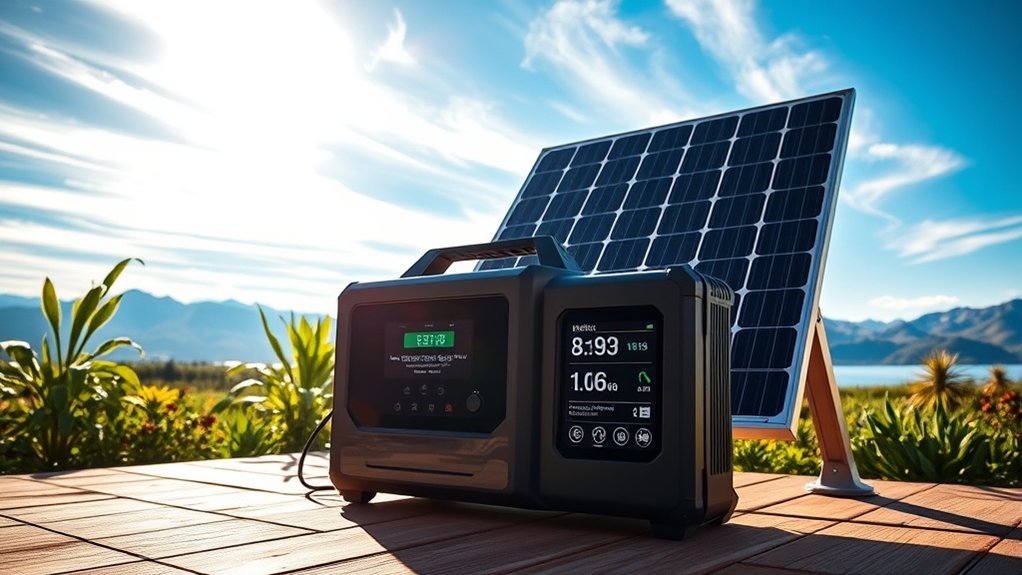
Several factors directly impact the charging efficiency of portable power stations, requiring careful consideration to maximize performance. One key aspect is battery lifespan; as batteries age, their ability to accept charge diminishes, leading to reduced efficiency over time. Ensuring proper maintenance and avoiding deep discharges can prolong lifespan, maintaining ideal charging rates. Power compatibility also plays an essential role; mismatched input voltages or incompatible charging sources can cause energy losses and slower charging times. Additionally, the design of the charging circuitry influences efficiency by minimizing resistive losses and heat generation. External factors such as ambient temperature and input power stability further affect performance. Understanding these elements allows us to enhance overall charging efficiency, ensuring the power station operates reliably and with minimal energy waste.
How to Choose a Power Station With Optimal Charging Efficiency for Your Needs
Selecting a power station with ideal charging efficiency requires analyzing key factors such as battery capacity and runtime, which determine overall usability. Compatibility with various charging methods influences how effectively the station can be recharged in different scenarios, while power conversion efficiency affects the amount of energy retained during use. By systematically evaluating these points, we can identify models that meet specific energy management needs efficiently.
Battery Capacity and Runtime
Choosing the right battery capacity is essential for optimizing charging efficiency because it directly impacts how long a power station can supply power before needing recharging. A larger capacity extends runtime but may compromise battery longevity if not managed properly. To balance power scaling and efficiency, consider these factors:
- Energy Needs: Match capacity to your typical usage to prevent over- or under-utilization.
- Cycle Life: Higher capacity batteries often have more charge-discharge cycles, influencing longevity.
- Runtime Expectations: Assess whether extended runtime outweighs potential increases in charging time and efficiency loss.
Charging Method Compatibility
How do you determine the most compatible charging method to maximize efficiency in a portable power station? It starts with understanding the device’s charging protocols and how they influence battery durability. Different protocols, such as fast charging or trickle charging, impact not only charge time but also long-term battery health. Selecting a power station that supports adaptable charging methods guarantees best energy transfer while preserving battery lifespan. Compatibility with multiple charging sources—AC, DC, or solar—can enhance efficiency by allowing flexible, context-specific protocols. Evaluating these options carefully minimizes thermal stress and degradation, directly supporting battery durability. Ultimately, choosing a device with advanced, well-supported charging protocols ensures efficient, safe, and sustainable power management tailored to your specific needs.
Power Conversion Efficiency
Have you ever considered how much energy is lost during the conversion process when charging a portable power station? Power conversion efficiency directly impacts overall system performance. Higher efficiency minimizes energy waste, resulting in faster charging and longer battery life. To select an ideal station, focus on these factors:
- Charging technology: Devices supporting wireless charging often have improved conversion efficiencies but may introduce additional energy losses if not optimized.
- Battery management: Advanced systems facilitate battery recycling, reducing degradation and maximizing retained capacity over multiple cycles.
- Power electronics: Quality inverters and rectifiers reduce conversion losses, ensuring more of the input energy reaches the battery with minimal heat dissipation.
Prioritizing these elements ensures you choose a power station that delivers maximum efficiency and longevity.
Tips to Maximize Charging Efficiency and Battery Life in Portable Power Stations
To maximize charging efficiency and extend battery life, we need to focus on optimizing charging conditions, such as maintaining stable temperature and avoiding extreme environments. Managing charging cycles by limiting full discharges and overcharging helps preserve battery health over time. Additionally, selecting compatible and high-quality power sources guarantees efficient energy transfer and reduces wear on the power station’s components.
Optimize Charging Conditions
Optimizing charging conditions is essential for maximizing both the efficiency and lifespan of portable power stations. Proper conditions support battery preservation and guarantee charging safety, preventing overheating and overvoltage damage. To enhance these factors, consider these key practices:
- Maintain ideal temperature: Charge within recommended ambient temperatures to avoid thermal stress that accelerates battery degradation.
- Use appropriate chargers: Employ manufacturer-approved chargers with proper voltage and current ratings to prevent overcurrent, which risks safety hazards and reduces battery longevity.
- Avoid partial charges: Aim for full, but not deep, discharge cycles and avoid frequent shallow charges to preserve battery capacity over time.
Manage Charging Cycles
Effective management of charging cycles is essential for maximizing both the efficiency and lifespan of portable power stations. Proper battery management involves adhering to optimized charging protocols, which prevent overcharging and deep discharges that degrade battery health. Regularly monitoring charge levels and avoiding frequent partial charges can preserve capacity and extend operational life. Implementing a cycle schedule aligned with manufacturer recommendations guarantees the battery’s longevity. Consider the following emotional impact:
| Confidence | Security | Longevity |
|---|---|---|
| Consistent performance | Reliable power when needed | Extended battery life |
Use Compatible Power Sources
Selecting the appropriate power sources is essential for maximizing charging efficiency and prolonging the battery life of portable power stations. Ensuring charging compatibility between the station and power sources optimizes energy transfer and reduces wear. To enhance performance, consider these factors:
- Assess Power Source Diversity: Utilize multiple sources like AC outlets, solar panels, or vehicle chargers to prevent over-reliance on a single source, which can strain the battery.
- Match Voltage and Current Specifications: Confirm that the power source’s voltage and current align with the station’s specifications to avoid inefficient charging or damage.
- Prioritize High-Quality Sources: Use certified, high-quality chargers and panels to maintain stable power delivery, improving charging efficiency and battery longevity.
Common Misconceptions About Charging Speed and Efficiency
Many people assume that faster charging always equates to higher efficiency, but this is a misconception rooted in oversimplified metrics. Rapid charging techniques, such as high-current or high-voltage methods, can reduce charging time but often introduce increased heat and stress on the power station’s battery, potentially decreasing long-term efficiency. Similarly, wireless charging may seem convenient, yet it typically offers lower energy transfer efficiency compared to wired methods due to energy loss during electromagnetic coupling. Faster charging doesn’t necessarily mean the power station is more efficient; it can lead to higher energy losses and faster battery degradation over time. Understanding these nuances helps us optimize charging strategies for better overall performance and longevity of portable power stations.
Comparing Charging Methods: Solar, AC, and Car Charging for Power Stations
When choosing a charging method for portable power stations, it’s essential to understand the advantages and limitations of solar, AC, and car charging. Solar charging offers renewable energy benefits, but its dependence on sunlight can affect charging speed and consistency, impacting battery longevity. AC charging provides rapid, stable power, supported by established charging infrastructure, but may reduce battery lifespan if used excessively. Car charging leverages existing vehicle power systems, making it convenient during travel, though it often results in slower charging rates and potential wear over time.
Choosing the right charging method balances speed, convenience, and battery health for your portable power station.
- Solar charging is eco-friendly but variable, affecting efficiency and battery health.
- AC charging is fast and reliable, ideal for regular use.
- Car charging offers portability but can compromise battery longevity due to slower speeds.
What to Expect in Future Advances in Charging Efficiency for Portable Power Stations
Advancements in charging technology are poised to substantially enhance the efficiency of portable power stations in the coming years. Wireless charging is expected to evolve with higher transfer efficiencies and broader compatibility, reducing energy losses during transfer and simplifying user experience. Concurrently, innovations in battery recycling will improve overall system sustainability, ensuring that materials from depleted batteries are reclaimed efficiently, reducing waste and manufacturing costs. These improvements will likely lead to smarter charging protocols that optimize power flow based on device needs and environmental conditions. As these technologies mature, we can anticipate more integrated, eco-friendly solutions that minimize energy loss and extend the lifespan of batteries, ultimately making portable power stations more reliable, efficient, and sustainable in diverse applications.
Frequently Asked Questions
How Does Ambient Temperature Affect Portable Power Station Charging Efficiency?
Ambient temperature influences portable power station charging efficiency due to temperature sensitivity affecting energy transfer; ideal temperatures enable more efficient energy flow, while extreme heat or cold hampers charging performance, highlighting the importance of maintaining suitable environmental conditions for optimum operation.
Can Simultaneous Device Charging Impact Overall Station Charging Performance?
Simultaneous device charging can dramatically affect station performance due to device synchronization and power management limits. Overloading strains the system, causing efficiency drops; careful management guarantees ideal charging performance and prevents system overloads, maintaining overall station efficiency.
What Maintenance Routines Improve Charging Efficiency Over Time?
We improve charging efficiency by regularly calibrating the battery to maintain accurate capacity readings and ensuring connector cleanliness to prevent resistance buildup, both of which maximize power transfer and prolong the station’s peak performance over time.
Are There Specific Brands Known for Higher Charging Efficiency?
We’ve found brands like Goal Zero and Jackery excel in charging efficiency, often due to superior battery calibration and power management systems, which optimize charge cycles and reduce energy loss, ensuring consistent performance over time for portable power stations.
How Does Charging Speed Influence Battery Lifespan?
Charging speed impacts battery lifespan, as rapid charging accelerates charging cycles, increasing battery degradation over time. We observe that faster charging can shorten overall battery health, highlighting a trade-off between convenience and longevity in power station usage.
Conclusion
In the evolving landscape of portable power stations, optimizing charging efficiency is like fine-tuning a complex engine—each component and protocol must harmonize for peak performance. As technology advances, we’re charting a course toward smarter, more sustainable energy management that fuels our devices with precision and reliability. Embracing these innovations guarantees our power sources remain resilient, efficient, and ready to meet future demands—transforming energy from a simple necessity into a finely crafted symphony of efficiency.