Ad Blocker Detected
Our website is made possible by displaying online advertisements to our visitors. Please consider supporting us by disabling your ad blocker.
Like a seasoned navigator facing uncharted waters, we recognize that cold weather presents unique challenges for maintaining ideal performance of your power station. Temperature fluctuations can markedly impact battery efficiency and longevity, making proper management vital. As we explore the intricacies of charging in freezing conditions, it’s essential to identify strategies that safeguard your equipment while ensuring reliable power supply. The key lies in understanding the nuances of thermal regulation and insulation—let’s examine how to navigate these icy obstacles effectively.
Key Takeaways
- Pre-warm the power station and use insulated cables to improve charging efficiency in cold weather.
- Select chargers with thermal regulation features suitable for low temperatures.
- Monitor battery temperature continuously and adjust charging speed or halt if temperatures drop below safe thresholds.
- Store the power station indoors or in temperature-controlled environments to prevent capacity loss.
- Regularly check battery health indicators like voltage and internal resistance to detect early cold-related stress.
How Cold Temperatures Affect Your Power Station’s Battery Performance
Cold temperatures greatly impact the performance of a power station’s battery by reducing its chemical activity and overall efficiency. This decline is primarily due to slowed electrochemical reactions, which hinder ion mobility within the battery. As a result, capacity diminishes, and the risk of battery degradation increases over time. Cold resilience varies among different battery chemistries, with some designed to withstand low temperatures better. However, even resilient batteries experience decreased output and efficiency in freezing conditions. Understanding this relationship helps us optimize usage and maintenance strategies. By acknowledging how cold affects chemical processes, we can implement measures to mitigate performance loss and prolong battery lifespan despite challenging weather conditions.
The Best Practices for Charging Your Power Station in Freezing Weather
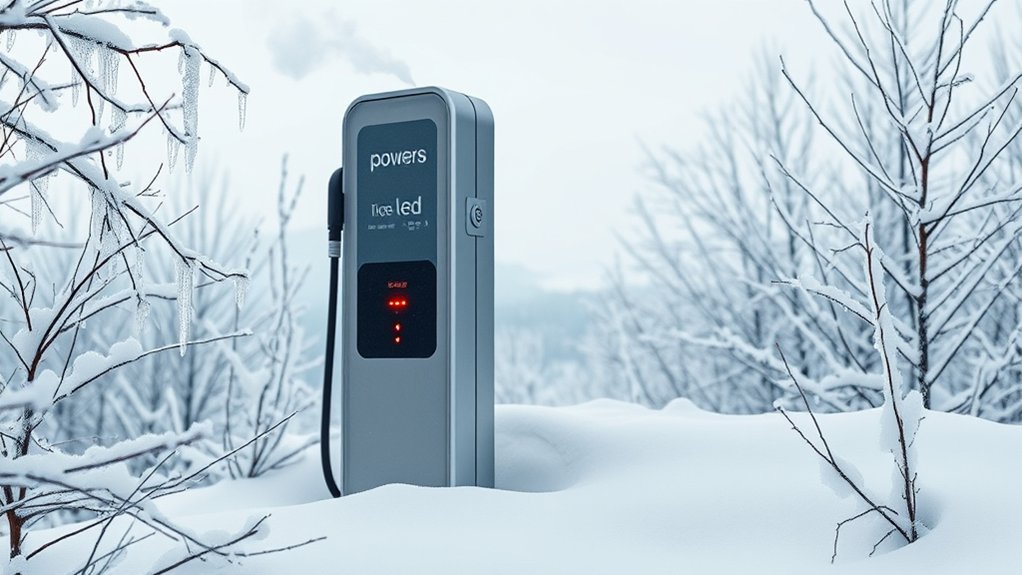
To optimize charging in freezing conditions, we recommend pre-warming the power station to maintain battery efficiency. Using insulated charging cables helps reduce heat loss during transfer, while storing the station in a warm environment guarantees consistent performance. Implementing these practices minimizes cold-related stress on the system and enhances overall charging reliability.
Pre-Warm the Power Station
Have you considered how pre-warming your power station can enhance charging efficiency in freezing weather? Cold temperatures markedly reduce battery capacity, leading to decreased overall performance. Pre-warming helps elevate the battery temperature to a suitable range, improving chemical reactions within the cells. This process preserves battery capacity and minimizes energy loss during charging. When the power station is warm, charging efficiency increases because the internal resistance drops, allowing for faster and more complete charging cycles. Additionally, pre-warming reduces the risk of battery damage caused by cold-induced stress. Implementing a pre-warming routine ensures the power station operates within its ideal temperature window, maximizing battery capacity utilization and enhancing overall charging performance in freezing conditions.
Use Insulated Charging Cables
Using insulated charging cables is essential when charging your power station in freezing weather, as they help maintain stable current flow by minimizing heat loss along the connection. Proper cable insulation, composed of high-quality insulation materials, prevents cold-induced resistance increases and reduces voltage drops. To guarantee maximum performance:
- Select cables with thick, durable insulation materials rated for low temperatures.
- Verify cable insulation integrity, avoiding cracks or wear that compromise insulation properties.
- Use cables with proper shielding to prevent electromagnetic interference, which can be exacerbated in cold environments.
- Keep cable insulation dry and free from moisture, as moisture can impair insulation effectiveness and lead to short circuits.
Adhering to these practices ensures efficient power transfer and protects the system from cold-related electrical issues.
Store in Warm Environment
Ever wondered how temperature fluctuations impact the longevity and performance of your power station? Storing it in a warm environment, preferably indoors, minimizes thermal stress and prevents battery degradation caused by freezing temperatures. An indoor storage setting maintains a consistent temperature, reducing the risk of condensation and moisture buildup that can damage internal components. A warm environment guarantees that the power station’s chemistry remains stable, preserving its capacity and extending overall lifespan. Proper storage in a climate-controlled space also facilitates easier maintenance and inspection, allowing us to identify potential issues early. In freezing weather, avoiding exposure to cold outdoor conditions by opting for an indoor, warm environment becomes essential for safeguarding the device’s operational integrity and ensuring reliable performance when needed most.
How to Prepare Your Power Station Before Cold Weather Hits
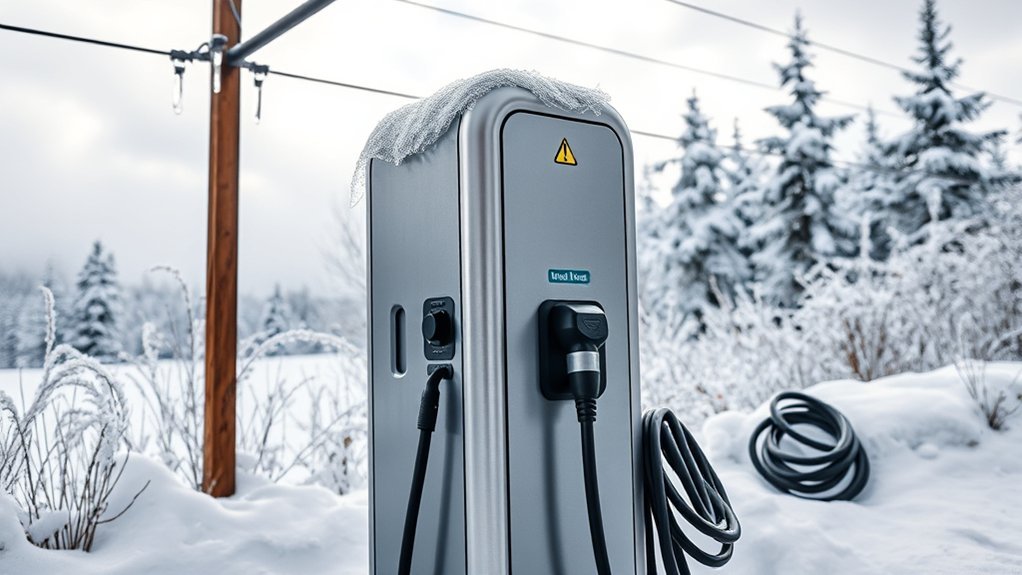
Preparing your power station before cold weather arrives is essential to guarantee reliable performance and prevent damage. Proper pre-season steps enhance battery longevity and optimize cold insulation, safeguarding internal components.
- Conduct a full charge cycle to ensure maximum capacity, reducing the risk of capacity loss during low temperatures.
- Inspect and replace any worn or damaged insulation to improve cold insulation, minimizing thermal transfer and protecting internal electronics.
- Store the power station indoors or in a temperature-controlled environment whenever possible, preventing exposure to extreme cold.
- Perform a system diagnostic to identify potential vulnerabilities that could be exacerbated by cold conditions, enabling targeted maintenance.
Implementing these steps guarantees the power station remains functional and efficient, even in frigid environments.
Tips for Maintaining Battery Health During Cold Conditions
Maintaining ideal battery health in cold weather requires careful attention to operational practices and monitoring. Cold temperatures accelerate battery degradation, making regular health assessments essential. Implementing timely power station upgrades can enhance thermal management systems, preventing capacity loss and extending lifespan. Prioritizing battery recycling practices ensures that degraded cells are responsibly replaced, reducing environmental impact and maintaining system efficiency. Monitoring voltage and internal resistance provides early detection of performance decline, enabling targeted interventions. Proper insulation and heating strategies maintain optimal operating temperatures, mitigating cold-induced stress. Consistent maintenance of cooling systems and adherence to manufacturer guidelines are critical for preserving battery integrity. By integrating these practices, operators can guarantee reliable power station performance despite harsh cold conditions.
Choosing the Right Charging Equipment for Cold Environments
Selecting appropriate charging equipment for cold environments is crucial to guarantee reliable battery performance and longevity. When choosing devices, consider these key factors:
- Cold-Weather Rated Chargers: Devices with built-in insulation or thermal regulation ensure stable operation despite low temperatures.
- Wireless Charging Compatibility: Opt for wireless systems that maintain efficiency in cold conditions, reducing physical contact issues and wear.
- Solar Compatibility: Select chargers designed for solar input, especially those with high conversion efficiency in low-light, cold environments.
- Durability and Insulation: Equipment must withstand low temperatures and moisture exposure, ensuring consistent power delivery without damage.
Prioritizing these features helps maintain peak charging performance, leveraging advanced technologies like wireless charging and solar compatibility for resilient cold-weather operation.
Safety Precautions When Charging Power Stations in Cold Weather
When charging power stations in cold weather, proper equipment handling is essential to prevent damage and guarantee safety. We must closely monitor battery temperature to avoid thermal stress or potential failures. Implementing these precautions minimizes risks and maintains ideal performance under low-temperature conditions.
Proper Equipment Handling
Handling charging equipment properly in cold weather is critical to guaranteeing safety and preserving the device’s integrity. Cold insulation is essential to prevent rapid temperature drops that could damage battery capacity. To optimize handling:
- Ensure connectors are free of moisture and debris before connecting to avoid shorts.
- Use insulated gloves to prevent static buildup and accidental shocks.
- Verify the equipment’s cold insulation features to maintain stable internal temperatures.
- Store and transport components in temperature-controlled environments to prevent thermal stress.
This approach minimizes thermal fluctuations that impact battery capacity and guarantees safe operation. Proper handling reduces the risk of equipment failure due to cold-induced material brittleness or condensation, maintaining operational reliability and prolonging the lifespan of the power station’s components.
Monitoring Battery Temperature
How can we guarantee safety while monitoring battery temperature during cold weather charging? Continuous temperature monitoring is essential to prevent thermal stress that can impair battery capacity and reduce charging speed. Maintaining ideal temperature ranges avoids risks like thermal runaway or capacity degradation. We utilize real-time sensors and data analysis to track battery core temperature, adjusting charging parameters accordingly. To illustrate, consider the following:
| Temperature Range | Action Required | Impact on Battery |
|---|---|---|
| Below 0°C | Reduce charging speed | Minimize capacity loss |
| 0°C to 10°C | Moderate charging adjustments | Ensure safety |
| Above 10°C | Normal charging procedures | Maximize efficiency |
| Critical threshold | Halt charging immediately | Prevent damage |
Monitoring ensures safe operation, preserves capacity, and maximizes charging speed in cold environments.
Signs Your Power Station Is Struggling in the Cold and How to Fix It
Cold weather can considerably impair a power station’s performance, often revealing itself through specific operational signs. First, reduced charging efficiency occurs as battery chemistry slows down at low temperatures, indicating thermal management issues. Second, voltage drops under load, suggesting diminished capacity due to sluggish ion movement. Third, inconsistent power output signals internal stress, often caused by inadequate thermal regulation. Fourth, prolonged charging times or failure to reach full capacity highlight that the battery’s chemical reactions are hindered by cold conditions. Addressing these signs involves enhancing thermal management systems to maintain ideal battery temperature, ensuring consistent performance. Recognizing these indicators allows for timely intervention, preserving battery health and efficiency during cold weather.
How to Store Your Power Station During Extended Cold Periods
When storing your power station during extended cold periods, proper preparation is essential to prevent capacity loss and guarantee longevity. For outdoor adventures and travel essentials, maintaining optimal storage conditions minimizes degradation caused by prolonged low temperatures. We recommend storing the power station in a temperature-controlled environment, ideally between 10°C and 25°C, to prevent battery capacity reduction. Avoid leaving it outdoors or in uninsulated spaces, as extreme cold accelerates capacity loss and may damage internal components. Ensure the device is partially charged—around 50%—before storage, as fully depleted batteries are more vulnerable to cold damage. Additionally, storing in a dry, moisture-free location prevents corrosion. Regularly checking the stored power station during cold spells ensures early detection of potential issues, preserving its functionality for future outdoor and travel needs.
Troubleshooting Common Charging Issues in Freezing Temperatures
In freezing temperatures, we often see a decline in battery performance, which can lead to reduced charging efficiency. Malfunctions in charging equipment, such as frozen connectors or sensor errors, further complicate the process. Addressing these issues requires a systematic approach to diagnose and mitigate cold-related impacts on both batteries and hardware.
Battery Performance Decline
Have you noticed your charging station’s battery performance deteriorates in freezing temperatures? This decline mainly results from reduced cold resilience and accelerated battery degradation. Cold temperatures cause electrolyte viscosity to increase, impairing ion flow and decreasing capacity. Specifically:
- Electrochemical reactions slow, leading to reduced charge acceptance.
- Lithium plating risk rises, damaging battery health.
- Internal resistance increases, causing voltage drops.
- Capacity diminishes due to structural stress from thermal contraction.
These factors contribute to a noticeable decline in efficiency and reliability. To mitigate this, batteries should be designed with enhanced cold resilience; otherwise, performance deterioration accelerates. Understanding these mechanisms helps in troubleshooting and optimizing operation in cold environments, ensuring longevity despite temperature-induced challenges.
Charging Equipment Malfunctions
Why do charging stations often malfunction in freezing temperatures? Cold weather causes critical components to contract and become less responsive, leading to equipment malfunctions. Low temperatures increase internal resistance and can impair power electronics, reducing charging efficiency. Additionally, battery degradation accelerates under freezing conditions, affecting the station’s ability to manage power flow accurately. These factors can trigger sensor errors, communication failures, or protective shutdowns, disrupting service. Corrosion and moisture infiltration also exacerbate hardware issues, further decreasing reliability. To address these malfunctions, technicians must regularly inspect and maintain station components, ensuring proper insulation and moisture barriers. Recognizing how cold impacts battery performance and equipment resilience is key to minimizing downtime and ensuring consistent charging availability in winter conditions.
Expert Recommendations for Keeping Your Power Station Reliable in Winter
Cold weather poses significant challenges to maintaining the reliability of power stations, as low temperatures can impair battery performance, reduce charging efficiency, and increase the risk of mechanical failures. To counter these issues, we recommend:
- Regularly inspecting and replacing batteries through proper battery recycling practices to guarantee maximum capacity.
- Using insulated power station accessories like thermal wraps and enclosures to maintain stable internal temperatures.
- Implementing pre-warming procedures before charging to improve battery receptivity and efficiency.
- Conducting routine system diagnostics to detect mechanical or electronic faults early, preventing failures during critical periods.
These strategies help maintain operational stability, maximize battery lifespan, and ensure consistent performance in winter conditions. Proper maintenance and accessory upgrades are essential for winter resilience.
Frequently Asked Questions
Can Cold Weather Damage My Power Station Permanently?
Cold weather can cause battery degradation if thermal management isn’t effective, risking permanent damage. Proper thermal management minimizes this risk, ensuring the power station maintains performance and longevity even in low temperatures.
How Long Does It Take to Fully Charge in Freezing Temperatures?
Like a frozen river slow to flow, charging speed in freezing temps extends battery performance time, often doubling the usual duration. Cold weather hampers chemical reactions, so fully charging your station may take considerably longer, impacting efficiency and readiness.
Are There Specific Brands Better Suited for Cold Weather?
We find brands like Jackery and Goal Zero excel in cold weather, offering superior brand durability and optimized cold weather performance, ensuring reliable charging even in freezing conditions, making them ideal choices for harsh environments.
Does Using a Portable Heater Improve Charging Efficiency?
Using portable heating can improve charging efficiency by maintaining ideal battery insulation temperatures, reducing cold-related resistance. This method guarantees more consistent power flow, but must be carefully managed to prevent overheating or energy waste during cold weather conditions.
Can Cold Weather Cause Safety Hazards When Charging?
Cold weather can cause safety hazards when charging, as it reduces battery performance and increases the risk of thermal runaway. Proper insulation protection is essential to maintain safe operation and prevent hazards related to low temperatures.
Conclusion
By understanding the nuanced effects of cold on our power stations, we realize that meticulous preparation and monitoring are essential. It’s no coincidence that devices with thermal regulation and insulated cables perform best—these features are designed for such environments. When we prioritize proper handling and strategic storage, we not only extend battery life but guarantee consistent performance. Ultimately, integrating these practices allows us to navigate cold conditions with confidence, turning potential challenges into manageable operational realities.