Ad Blocker Detected
Our website is made possible by displaying online advertisements to our visitors. Please consider supporting us by disabling your ad blocker.
When we need to recharge our power station using a generator, understanding the proper setup and procedures is essential to guarantee safety and efficiency. For example, if a storm knocks out power, knowing how to connect and operate a generator correctly can make all the difference. However, many overlook critical details that could risk equipment damage or personal safety, prompting us to explore the precise steps and precautions necessary for a reliable charge.
Key Takeaways
- Ensure the generator’s output voltage and current match the power station’s input specifications before connecting.
- Use appropriate cables and connectors rated for the power station’s input to ensure safe transfer.
- Turn off the power station and generator before connecting to prevent power surges.
- Start the generator first, then connect it to the power station, and turn on the power station afterward.
- Monitor the charging process regularly and disconnect once the power station reaches full capacity.
Understanding How Generators Power Your Power Station
Although generators produce electrical power through mechanical energy conversion, understanding the specific process is essential for effectively charging your power station. Generators operate by combusting fuel types—such as gasoline, diesel, or propane—to drive an internal combustion engine. This engine turns a rotor within a magnetic field, inducing an alternating current (AC). To guarantee reliable operation, regular maintenance routines are critical; these include checking oil levels, replacing filters, and inspecting spark plugs or fuel lines. Different fuel types impact engine performance, emissions, and runtime, making fuel selection indispensable for efficiency. Proper maintenance not only extends generator lifespan but also guarantees stable power output, which is fundamental when charging sensitive electronics in your power station.
Choosing the Right Generator for Safe Charging
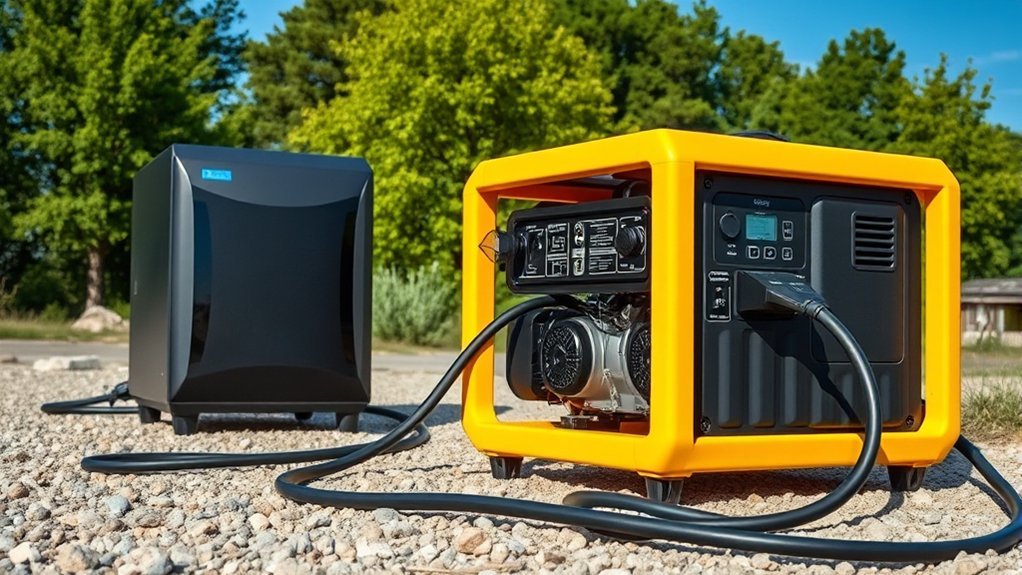
Selecting a generator requires ensuring its power output matches your power station’s charging requirements to prevent overloads. Noise levels are also critical, especially in sensitive environments, and must be considered alongside port availability for safe, efficient connections. Attention to these technical factors guarantees safe and reliable charging performance.
Power Output Compatibility
How do you guarantee your generator’s power output matches your power station’s requirements for safe and efficient charging? Confirming compatibility involves matching the generator’s power capacity with the power station’s input specifications. An underpowered generator risks incomplete charging and potential damage, reducing battery lifespan. Conversely, an overly powerful generator may cause voltage fluctuations, impacting device safety. To verify, check the power station’s input voltage, current, and wattage ratings. Use the following table to compare generators:
| Generator Model | Power Capacity (W) | Rated Voltage (V) |
|---|---|---|
| Model A | 2000 | 120 |
| Model B | 1500 | 110 |
| Model C | 3000 | 120 |
| Model D | 1000 | 110 |
| Model E | 2500 | 120 |
Matching these ensures maximum battery lifespan and safe charging.
Noise Level Considerations
When choosing a generator for charging your power station, considering noise levels is essential for safe and comfortable operation. Effective sound insulation and noise mitigation techniques reduce the generator’s operational sound output, minimizing disturbance. Select models with built-in noise reduction features, such as mufflers or enclosures designed for sound insulation. Additionally, evaluate the generator’s decibel ratings, aiming for units that operate below 60 dB during normal use. Proper placement also enhances noise mitigation; positioning the generator away from living or sensitive areas and using barriers or acoustic enclosures can further lower perceived noise. Prioritizing low-noise generators guarantees safe, continuous charging without creating unnecessary noise pollution or discomfort, particularly in residential or sensitive environments.
Port Availability and Safety
Ensuring the generator has the appropriate port availability is critical for safe and efficient charging of your power station. Adequate ports guarantee compatibility with your device’s battery capacity and prevent overloading. It’s essential to verify the presence of DC, AC, and USB outputs, matching the power station’s input requirements. Additionally, selecting a generator with high fuel efficiency minimizes operational costs and reduces emissions during prolonged use. Proper port configuration reduces the risk of electrical faults, ensuring safety during charging.
| Port Type | Compatibility | Safety Considerations |
|---|---|---|
| DC | Battery input | Overcurrent protection |
| AC | Power station | Grounding requirements |
| USB | Small devices | Proper insulation |
Preparing Your Power Station and Generator Setup
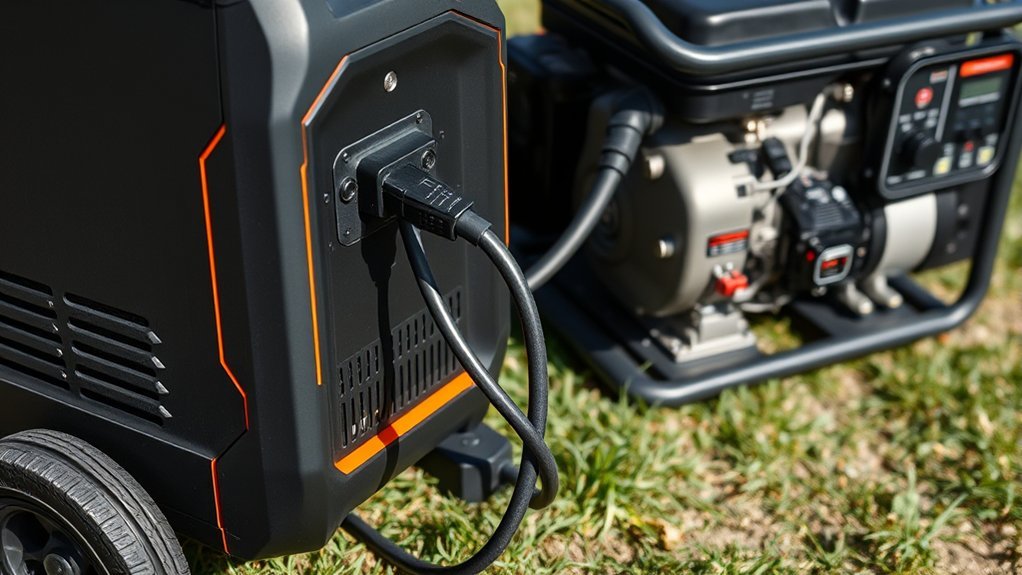
Before connecting your power station to a generator, it’s essential to verify that both devices are properly prepared and compatible. Start by reviewing the generator’s fuel types—whether gasoline, diesel, or propane—to confirm it matches your operational needs and availability. Confirm that the power station’s input specifications align with the generator’s output voltage and frequency. Additionally, perform routine maintenance routines on both units, such as inspecting fluid levels, checking for corrosion, and ensuring filters are clean. Proper maintenance guarantees peak performance and reduces the risk of malfunction during operation. This preparatory step guarantees safe, efficient charging and prolongs the lifespan of both the generator and the power station.
Connecting Your Generator to the Power Station Safely
To connect your generator to the power station safely, we must first turn off both devices and disconnect any power sources. Confirm the generator is on a stable surface and check fuel levels for peak fuel efficiency during operation. Before connecting, inspect power cables for damage and confirm proper grounding to prevent electrical hazards. Use appropriate connectors rated for your generator’s output. Prioritize adherence to maintenance routines, such as checking oil levels and air filters, to guarantee the generator runs smoothly and efficiently. Once connected, gradually start the generator, monitoring for abnormal vibrations or noise. Proper connection and routine maintenance minimize risks, maximize fuel efficiency, and ensure a safe, reliable transfer of power to your station.
Step-By-Step Guide to Charging Your Power Station With a Generator
Ready to start charging your power station with a generator? First, ensure the generator is on a stable surface and properly grounded to prevent electrical hazards. Next, connect the generator’s output port to the power station’s input port using a compatible, certified cable. Then, verify that the power station’s battery maintenance mode is disabled to allow charging. After that, start the generator and monitor the voltage and current output, ensuring they match the power station’s specifications. During the process, keep an eye on temperature and noise levels for safety and efficiency. This method guarantees reliable emergency preparedness, prolongs battery life, and maintains optimal performance during power outages. Following these steps ensures a safe, efficient charging process.
Tips for Maximizing Efficiency and Protecting Your Devices
Maximizing efficiency and safeguarding your devices during the charging process requires careful attention to operational parameters and proper handling. Consistently monitor your power station’s input to prevent overloading, which can reduce battery lifespan. Implement proper battery maintenance by avoiding deep discharges and ensuring regular charging cycles to preserve capacity. Weather protection is essential; shield your generator and power station from moisture, extreme temperatures, and direct sunlight to prevent damage and voltage fluctuations. Use surge protectors when possible to safeguard against power spikes. Maintaining ideal environmental conditions and adhering to recommended charging procedures enhance overall efficiency and prolong device longevity. By combining vigilant battery maintenance with weather protection strategies, you ensure your power station operates reliably and efficiently for extended periods.
Troubleshooting Common Issues During Generator Charging
Despite careful setup, issues can still arise during generator charging that disrupt the power station’s operation. Common problems often relate to battery management and fuel efficiency. First, inconsistent charging may occur if the generator’s output voltage fluctuates, risking improper battery management. Second, fuel inefficiency could result from a clogged air filter or incorrect throttle settings, reducing runtime. Third, overheating may happen if ventilation is blocked, threatening component safety. Fourth, low charge levels might stem from faulty wiring or worn-out connectors, impairing power transfer. Addressing these issues requires precise troubleshooting: verifying voltage stability, maintaining fuel system components, ensuring adequate ventilation, and inspecting wiring connections. Correctly managing these aspects improves overall efficiency and prolongs your generator’s lifespan during power station charging.
Frequently Asked Questions
Can I Charge My Power Station With Multiple Generators Simultaneously?
We can charge our power station with multiple generators simultaneously if they’re compatible and properly connected, ensuring peak charging efficiency. However, we must verify generator compatibility and avoid overloading to prevent damage and maximize charging performance.
How Long Does It Typically Take to Fully Charge a Power Station Using a Generator?
Charging a power station with a generator typically takes several hours, depending on battery capacity and charging efficiency; larger capacity batteries and lower efficiency extend the process, requiring us to monitor charging progress carefully for ideal results.
Is It Safe to Use a Portable Generator Indoors for Charging?
Using a portable generator indoors is unsafe due to carbon monoxide risks, making proper indoor safety and generator placement vital. Keep generators outside, away from windows and vents, ensuring proper ventilation to prevent hazardous buildup and protect your loved ones.
What Maintenance Is Required for the Generator During Frequent Power Station Charging?
We regularly check and replace generator oil, guarantee fuel quality remains high to prevent buildup, and perform routine inspections of spark plugs and filters. Proper maintenance guarantees reliable power station charging and extends the generator’s lifespan.
Can I Use a Solar Generator Instead of a Traditional Fuel-Powered Generator?
Sure, we can swap traditional fuel generators for solar generators, boosting solar compatibility and reducing environmental impact. It’s a technically savvy choice, emphasizing cleaner, quieter, and more sustainable power solutions, perfect for eco-conscious users.
Conclusion
By following these steps, we guarantee a safe, efficient connection—like a symphony where every instrument plays in harmony. Proper maintenance, precise setup, and vigilant monitoring are our conductors, guiding us through a seamless charging process. With attention to detail, we protect our devices and extend their lifespan, turning complex procedures into a well-orchestrated task. Trust in this method, and your power station will reliably serve you whenever you need it most.