Ad Blocker Detected
Our website is made possible by displaying online advertisements to our visitors. Please consider supporting us by disabling your ad blocker.
While the natural environment offers tranquility, powering your campsite electronics requires careful planning and precise knowledge of energy sources. We must select the right equipment—batteries, solar panels, or generators—based on specific needs and environmental constraints. Understanding how these systems work together guarantees safety, efficiency, and longevity of your devices. Exploring the technical details behind each option can prevent common issues and optimize your outdoor experience. Let’s examine the critical factors to keep your electronics running smoothly.
Key Takeaways
- Use portable batteries or power banks with sufficient capacity to charge devices during camping trips.
- Choose between solar panels or generators based on power needs, environmental impact, and duration of stay.
- Regularly inspect and properly manage electrical cords to ensure safety and prevent damage.
- Optimize battery life by conserving device usage and employing energy-efficient settings.
- Follow safety protocols, including weatherproof connections and proper setup, to prevent electrical hazards.
How Do Camping Power Sources Work?
Understanding how camping power sources work is essential for effectively powering your electronic devices in remote locations. Campfire electricity, generated through thermoelectric generators or piezoelectric devices, offers a basic, albeit limited, power source from the heat of a campfire. However, it’s generally insufficient for sustained device use. More reliable options involve batteries, which store electrical energy through chemical reactions. Battery conservation becomes critical here; by minimizing device usage and employing energy-efficient settings, we extend operational time. Portable power banks and deep-cycle batteries can supply consistent power, but their effectiveness depends on proper management of charge cycles and storage conditions. Recognizing the limitations and proper utilization of these sources guarantees efficient, safe, and sustainable power for your campsite electronics.
Choosing Between Portable Generators and Solar Panels
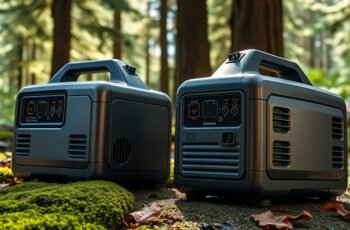
When choosing between portable generators and solar panels for campsite power, it’s essential to evaluate factors such as power output, portability, environmental impact, and operational costs. Portable generators typically rely on portable fuel, offering consistent power output and reliable energy for extended use. They excel in scenarios requiring high power levels and quick refueling but generate emissions and noise. Solar panels, on the other hand, harness sunlight, providing a clean, silent, and renewable energy source. They depend on efficient power storage systems, such as batteries, to supply power during low-light conditions. While solar panels have lower ongoing costs and reduced environmental impact, they generally have limited power output compared to generators. Considering your power needs and environmental priorities will guide the most suitable choice for your campsite setup.
Understanding Battery Types for Camping Electronics
Choosing the right battery type is vital for guaranteeing reliable power for camping electronics, especially when portability and efficiency are priorities. Different battery chemistries—such as lithium-ion, lead-acid, and lithium-polymer—offer distinct performance characteristics, affecting capacity, weight, and lifespan. Lithium-ion batteries provide high energy density, lightweight design, and extensive charging cycles, making them ideal for extended trips. Lead-acid batteries are more affordable but have fewer charging cycles and are heavier. Understanding charging cycles is important, as they determine battery longevity; lithium-based batteries typically support hundreds to thousands of cycles, whereas lead-acid batteries support fewer. Selecting the appropriate battery chemistry based on expected usage and lifespan guarantees consistent power delivery and durability in camping environments.
How to Select the Right Power Bank for Your Trip
Selecting the appropriate power bank for your trip requires careful consideration of your device power requirements, trip duration, and portability needs. Key factors include battery capacity, measured in milliampere-hours (mAh), which determines how much energy the power bank can store and how many devices it can charge. A higher capacity provides longer usage but increases size and weight. Charging speed is also critical; a power bank with fast-charging capabilities reduces downtime between charges, especially when time is limited. Confirm the power bank’s output matches your device’s charging specifications for maximum efficiency. Balancing battery capacity with charging speed allows for reliable, swift power replenishment during extended trips, ensuring your electronics stay operational without excessive bulk.
Tips for Efficiently Managing Your Campsite Power Usage
To maximize the efficiency of your campsite power resources, it’s essential to implement strategic management practices that minimize unnecessary consumption. Prioritize power conservation by turning off devices when not in use and avoiding continuous operation of high-energy appliances. Utilize wireless charging stations for compatible devices, reducing cable clutter and enhancing charging efficiency. Limit the use of multiple devices simultaneously to prevent overloads and unnecessary power drain. Regularly monitor power levels with a digital display or smart meter to identify consumption patterns. Employ energy-efficient settings on electronics, such as low-power modes. By focusing on power conservation and leveraging wireless charging where feasible, we guarantee the best use of limited power supplies, prolong device operation, and reduce the need for external power sources.
Setting Up and Maintaining Solar Charging Systems
Setting up a solar charging system at your campsite involves careful planning and precise installation to guarantee reliable power generation. First, select high-efficiency solar panels suited for outdoor conditions and guarantee ideal tilt and orientation for maximum sunlight exposure. Regular solar panel maintenance includes cleaning dust, dirt, and debris that can diminish output, and inspecting for physical damage or corrosion. Proper battery storage techniques are essential; use deep-cycle batteries with appropriate capacity and ensure they are correctly wired and ventilated to prevent overheating. Routine checks on connections, voltage levels, and charge cycles help maintain system efficiency. By adhering to these maintenance practices, you maximize energy capture and storage, ensuring your campsite electronics remain powered reliably throughout your stay.
Troubleshooting Common Power Issues at Campsites
Power issues at campsites often stem from simple, preventable causes such as loose connections, faulty wiring, or inadequate power sources. Wildlife interference can damage cords or connectors, disrupting power delivery. Weather impact, like rain or wind, may cause short circuits or corroded connections. To troubleshoot, systematically check connections, inspect wiring for damage, and verify power sources are sufficient. Consider environmental factors that might cause issues and address wildlife interference by securing cables and using protective covers. Use the following table to quickly identify common problems:
| Issue | Cause | Solution |
|---|---|---|
| Power Loss | Wildlife interference | Secure cables, install covers |
| Weather Damage | Moisture or wind | Weatherproof connectors |
| Inconsistent Power | Loose connections | Tighten connections |
| Faulty Wiring | Faulty wiring or damage | Replace damaged wiring |
| Power Fluctuations | Inadequate power source | Upgrade or supplement sources |
Budget-Friendly Ways to Power Your Devices
Finding affordable ways to keep your devices charged during camping trips is essential for convenience and safety. Many rely on camping power myths, such as believing portable solar panels are always inefficient or that small power banks can’t sustain multiple devices. In reality, affordable options like high-capacity power banks and portable solar chargers provide reliable emergency power backup without significant expense. These solutions are effective for basic device charging needs, especially when grid power isn’t accessible. To maximize efficiency, consider pairing solar chargers with traditional power banks for redundancy. Avoid misconceptions that budget equipment compromises safety; properly rated devices adhere to safety standards. By understanding the capabilities of economical power sources, campers can maintain device functionality without overspending, ensuring reliable communication and navigation when needed most.
Safety Tips for Using Electric Power Equipment Outdoors
When using electric power equipment outdoors, prioritizing safety is essential to prevent accidents and damage. Proper campfire safety remains critical; keep fires contained and maintain a safe distance from electrical cords and devices. Always inspect electrical cords for damage before use, verifying they are rated for outdoor exposure. Effective electrical cord management prevents tripping hazards and reduces strain on connections, minimizing the risk of shorts or sparks. Use grounded outlets and weatherproof connections to protect equipment from moisture. Keep cords elevated or secured away from high-traffic areas to prevent accidental disconnection or damage. Regularly monitor campfire activity and electrical setups to identify potential hazards early. Adhering to these safety protocols ensures a secure environment for all campsite electronics users.
Frequently Asked Questions
Can I Run High-Wattage Appliances at a Campsite?
Yes, you can run high-wattage appliances at a campsite using solar panels and portable generators, but guarantee your power source supplies sufficient wattage and stability, and verify compatibility to prevent overloads or damage to your electronics.
How Long Can a Typical Campsite Power Source Last?
A typical campsite power source lasts several hours to days, depending on battery maintenance and solar panel efficiency, which are vital for optimizing energy storage and replenishment, ensuring continuous power supply during extended stays.
Are There Eco-Friendly Ways to Power Multiple Devices?
They say “small steps lead to big change,” and using solar panels and wind turbines is the most eco-friendly way to power multiple devices, as these renewable sources provide sustainable, efficient energy for camping needs.
What’s the Best Way to Store Backup Power Supplies?
We store backup power supplies like battery banks and solar panels in a cool, dry, and ventilated space, ensuring they’re protected from extreme temperatures and moisture to maintain ideal efficiency and longevity during camping adventures.
How Do Weather Conditions Affect Campsite Power Options?
Weather conditions like rain or snow can turn our campsite’s power system into a delicate dance, affecting solar panels’ efficiency and battery storage. We adapt by shielding equipment and choosing weather-resistant solar and battery solutions to guarantee reliable power.
Conclusion
In summary, effective campsite power management hinges on careful planning, proper equipment selection, and diligent maintenance. By understanding your energy needs and choosing reliable sources like solar panels or batteries, we can guarantee a safe and sustainable power setup. Remember, “A stitch in time saves nine”—regular inspections and proactive maintenance prevent bigger issues down the road. With precise setup and responsible use, we can keep our electronics running smoothly, even in the great outdoors.