Ad Blocker Detected
Our website is made possible by displaying online advertisements to our visitors. Please consider supporting us by disabling your ad blocker.
Did you know that power stations and generators operate on fundamentally different principles, impacting their suitability for camping? While generators produce large amounts of power through fuel combustion, often with significant noise and emissions, power stations rely on batteries and inverter technology for cleaner, quieter output. Understanding these differences is vital for selecting the right option, especially as we consider factors like portability, efficiency, and safety—topics that are essential for making an informed choice in outdoor settings.
Key Takeaways
- Power stations are quieter, eco-friendly, and ideal for silent operation during camping, while generators are louder with emissions.
- They rely on batteries or solar power, offering longer, maintenance-free runtimes, unlike fuel-dependent generators.
- Power stations are more portable and easier to transport, suitable for lightweight camping setups.
- Generators provide higher power output for heavy-duty appliances but require refueling and proper ventilation.
- Choose a power station for eco-conscious, quiet, and safe camping, or a generator for high energy needs and larger appliances.
How Do Power Stations and Generators Differ in Design and Function?
While power stations and generators both supply electrical energy, they differ considerably in their design and function. Power stations typically utilize battery efficiency, storing energy in rechargeable batteries that provide clean, silent operation with minimal maintenance. Their core advantage lies in energy storage capacity and rapid power delivery, with fuel storage playing a minimal role, often limited to internal battery charging. Conversely, generators rely on fuel combustion—gasoline, diesel, or propane—to produce electricity via mechanical rotation of an engine. This design enables continuous power output as long as fuel is available, but it introduces noise, emissions, and maintenance requirements. The fundamental difference is that power stations emphasize energy storage and efficiency, while generators depend on fuel storage and combustion processes to generate electricity.
Which Is More Portable and Easy to Use for Camping?
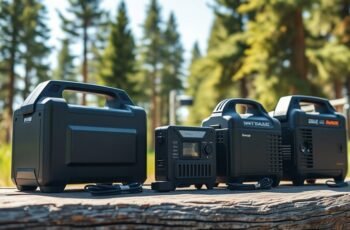
When comparing portability and ease of use for camping, power stations generally outperform traditional generators due to their compact design and lighter weight. Portable power devices are engineered for maximum convenience, featuring built-in handles and streamlined profiles that facilitate effortless transport. Their lightweight construction reduces physical strain and simplifies setups, making them ideal for frequent or short-term use. Additionally, power stations operate quietly, enhancing camping convenience by minimizing noise disturbances. They require minimal maintenance and are straightforward to operate, often with simple push-button controls. In contrast, traditional generators tend to be bulkier, heavier, and more cumbersome to move, limiting their practicality for casual camping trips. Overall, power stations provide a considerably more user-friendly and portable solution for outdoor power needs.
How Do Power Output and Runtime Compare Between Power Stations and Generators?
Power stations and traditional generators differ markedly in their power output capacities and runtime durations, which directly impact their suitability for various camping needs. Power stations utilize advanced battery technology, such as lithium-ion cells, providing consistent and adjustable power output with silent operation. Their runtime depends on battery capacity, typically measured in watt-hours, and is limited by charge levels, often from several hours to over a day. In contrast, generators rely on fuel types like gasoline, diesel, or propane, offering higher instantaneous power outputs suitable for larger appliances. Runtime for generators depends on fuel tank size and consumption rate, often spanning several hours. While power stations offer quiet, emission-free operation, generators provide more immediate, higher power capacity but require fuel refills for extended use.
What Are the Noise Levels and Environmental Impact of Each Option?
Power stations operate silently and produce zero emissions during use, making them considerably more environmentally friendly compared to traditional generators. In terms of noise levels comparison, power stations typically generate negligible sound, often below 50 decibels, whereas generators can exceed 70 decibels, causing disturbance. Regarding environmental impact assessment, power stations emit no greenhouse gases or pollutants during operation, reducing ecological footprint. Conversely, generators rely on combustion engines that release CO₂, nitrogen oxides, and particulate matter. The key distinctions are:
Power stations are quiet, emission-free, and eco-friendly, making them ideal for sustainable camping.
- Noise levels – power stations are markedly quieter.
- Emissions – power stations produce no direct emissions; generators do.
- Environmental footprint – power stations offer a cleaner, more sustainable option.
This comparison highlights the superior environmental profile of power stations for camping scenarios.
Which Option Offers Better Fuel Efficiency and Cost-Effectiveness?
We evaluate fuel consumption rates, initial purchase costs, and long-term operating expenses to determine overall cost-effectiveness. Power stations typically have higher upfront costs but lower fuel consumption, whereas generators often require less initial investment but incur higher ongoing fuel costs. Analyzing these factors enables a precise comparison of which option provides superior fuel efficiency and economic value over time.
Fuel Consumption Rates
When comparing fuel consumption rates between portable generators and power stations for camping, it’s essential to take into account their efficiency and operational costs. Power stations typically utilize advanced battery technology and sophisticated power management systems, resulting in lower operational fuel consumption. In contrast, portable generators rely on combustion engines, which consume fuel at higher rates. Key points include:
- Power stations’ battery technology enables higher energy conversion efficiency, reducing fuel use.
- Power management algorithms optimize energy output, minimizing waste and extending device runtime.
- Generators lack such efficiencies, often consuming fuel continuously, regardless of load demands.
Initial Purchase Costs
While operational fuel efficiency is vital for ongoing costs, initial purchase costs markedly impact overall affordability and value. Power stations generally have higher upfront prices due to advanced battery technology, which extends battery lifespan and guarantees longer-term reliability. Generator costs are often lower initially but include expenses related to fuel and maintenance over time. Warranty coverage varies; power stations frequently offer extensive warranties covering battery health and electronic components, adding to initial investment security. Conversely, generators may have limited coverage, leading to higher potential repair costs. When evaluating cost-effectiveness, consider not only purchase price but also warranty scope and expected battery lifespan, as these factors influence long-term value and reduce unexpected expenses.
Long-Term Operating Expenses
Operational fuel efficiency considerably influences the long-term cost-effectiveness of power sources for camping. Power stations typically have higher battery longevity and require minimal maintenance, reducing ongoing expenses. Conversely, generators often consume more fuel per operational hour and demand regular maintenance, increasing costs. Key factors include:
- Fuel consumption rate: Power stations are generally more efficient, using less fuel over time.
- Maintenance requirements: Generators need frequent oil changes, filter replacements, and repairs, raising expenses.
- Battery longevity: Power stations rely on rechargeable batteries with longer lifespans, decreasing replacement costs.
What Are the Safety Considerations for Using Power Stations and Generators?
Making certain proper ventilation is crucial when operating power stations and generators to prevent the buildup of hazardous gases. We must avoid enclosed or poorly ventilated spaces, as this considerably increases the risk of carbon monoxide poisoning. Following safety protocols minimizes health hazards and guarantees safe usage during camping activities.
Proper Ventilation Needed
Proper ventilation is essential when using power stations and generators to prevent the buildup of dangerous fumes, such as carbon monoxide. Adequate indoor ventilation ensures that exhaust gases are effectively dispersed, reducing health risks. Utilizing ventilation systems designed for safe operation is critical, especially in enclosed spaces.
Key considerations include:
- Guaranteeing continuous airflow by installing mechanical ventilation systems.
- Positioning generators outdoors or in well-ventilated areas to prevent fume accumulation.
- Regularly inspecting indoor ventilation setups for blockages or malfunctions.
Avoiding Carbon Monoxide Risks
Because carbon monoxide (CO) is a colorless, odorless gas that can cause severe health issues or death, safety considerations for using power stations and generators are paramount. When operating traditional generators, it’s critical to make sure they are used outdoors in well-ventilated areas to prevent CO buildup. Solar integration and advanced battery technology enable cleaner, quieter power sources that eliminate CO risks altogether. Power stations with integrated solar panels can recharge via renewable energy, reducing reliance on fossil fuel generators. Battery technology in portable units offers safe, emissions-free operation, especially in enclosed spaces. Nonetheless, if using fuel-powered generators, installing CO detectors and maintaining proper distance from living areas remain essential safety measures. Prioritizing these precautions minimizes CO exposure risks effectively.
Which Is the Better Choice for Different Camping Scenarios and User Needs?
Choosing between a power station and a generator depends heavily on the specific camping scenario and user requirements. For extended trips with minimal power demands, power stations excel due to their superior battery life and simplified power management. Conversely, generators are better suited for high power output needs or heavy-duty appliances. Key considerations include:
- Battery life: Power stations offer longer, more consistent operation without refueling.
- Power management: Power stations feature advanced circuitry for stable output, essential for sensitive electronics.
- User needs: For lightweight, quiet, and portable power, power stations are ideal; for high-energy requirements, generators are more appropriate.
Assessing these factors helps determine the most suitable choice tailored to specific camping scenarios.
Frequently Asked Questions
Can Power Stations Charge Devices Faster Than Generators?
Power stations generally charge devices faster than generators due to their higher charging speed and optimized battery capacity, providing more consistent, efficient power delivery; generators often have slower charging speeds, affected by engine operation and power fluctuations.
Are Power Stations Suitable for Powering High-Wattage Appliances?
Power stations are like reliable workhorses, but their battery capacity limits high-wattage appliance use. While charging speed is fast for small devices, they often can’t sustain high power demands, making generators more suitable for such needs.
How Do Weather Conditions Affect Generator and Power Station Performance?
Weather impact causes performance fluctuation in both generators and power stations; extreme cold reduces efficiency, while high temperatures may lead to overheating. Proper insulation and ventilation are essential to maintain ideal operation under varying weather conditions.
What Maintenance Is Required for Power Stations Compared to Generators?
We routinely review power station maintenance, focusing on battery lifespan and software updates, unlike generators that demand fuel checks, oil changes, and spark plug inspections, ensuring ideal efficiency, longevity, and reliable power delivery during camping adventures.
Are There Any Legal Restrictions on Using Generators in Camping Areas?
Legal regulations and noise restrictions often limit generator use in camping areas. We recommend checking local laws beforehand, as excessive noise or unauthorized operation can lead to fines or restrictions, ensuring compliance and respectful camping practices.
Conclusion
In our view, power stations excel in portability, silent operation, and eco-friendliness—ideal for casual camping and small device needs. Conversely, generators offer higher power output but sacrifice noise levels, fuel efficiency, and convenience. While generators suit large-scale needs, power stations prioritize safety and sustainability. Ultimately, selecting between the two hinges on your specific camping demands, balancing power requirements against environmental impact and ease of use for a more enjoyable outdoor experience.