Ad Blocker Detected
Our website is made possible by displaying online advertisements to our visitors. Please consider supporting us by disabling your ad blocker.
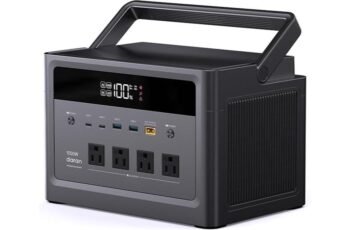
We find this 2400W portable power station delivers more appliance-ready output and longer runtime than smaller backup units, pairing an 1843.2Wh LiFePO4 battery with 4800W peak capacity. Four AC outlets and USB-C, USB, and DC ports can power or charge up to 11 devices, while 1200W AC input enables a full recharge in about 1.6–2 hours. At 55 pounds, it’s less convenient to carry. We’ll look more closely at its features, trade-offs, and best uses.
Key Takeaways
- The 2400W inverter and 4800W peak output can power many demanding appliances, subject to their startup and running requirements.
- Its 1843.2Wh LiFePO4 battery offers substantial backup capacity and is rated for more than 3,500 cycles.
- Four AC outlets and multiple USB and DC ports let it charge up to 11 devices simultaneously.
- A 1200W AC input recharges the station in about 1.6–2 hours; MPPT supports combined AC and solar charging.
- At 55 pounds, it’s a powerful, quiet backup for home or travel, but less convenient to carry than smaller units.
2400W Portable Power Station
The 2400W portable power station combines an 1843.2Wh LiFePO4 battery with a 2400W AC inverter and 4800W peak output, giving it more capacity for demanding appliances than smaller backup units. We can use it to run refrigerators, microwaves, heaters, or electric grills, subject to their power requirements.
Compared with lower-output models, its higher inverter rating accommodates more energy-intensive equipment, while its battery capacity supports longer operation between recharges. For Portable Charging, it offers a practical balance of output and stored energy for home backup or travel. This capacity also strengthens Outdoor Reliability when access to grid power is limited.
Detailed features
Beyond its 2400W output, this power station offers a broad set of ports for charging up to 11 devices at once: four AC outlets, two 100W USB-C ports, two QC 3.0 USB ports, two 18W DC USB ports, and a 12V/10A car outlet.
Its 1843.2Wh capacity and 4800W peak output support demanding appliances, while a 5W LED adds utility. For Charging Speed, we can use 1200W AC input for a full recharge in about 1.6–2 hours, or combine AC and solar.
LiFePO4 chemistry supports Battery Longevity, rated beyond 3500 cycles, and an LCD reports operating data.
Pros and Cons
We’ll weigh the 2400W station’s high output, fast charging, and long-life LiFePO4 battery against its 55-pound weight and other limitations.
This comparison will show where its capacity and backup features offer practical advantages. We’ll also note the trade-offs that may affect portability and value.
Pros
With 1843.2Wh of LiFePO4 capacity and a 2400W inverter, this power station can run demanding appliances while offering more output options than many portable units. We can power High Power Appliances such as refrigerators and microwaves, while four AC outlets and multiple USB and DC ports support up to 11 devices.
Its 100W USB-C ports also charge compatible laptops quickly. For Emergency Readiness, the 10ms UPS transfer helps protect supported equipment during outages.
We can recharge from AC in about two hours, or use solar input with MPPT for efficient off-grid charging. The LiFePO4 battery’s 3,500-plus-cycle rating supports long-term use.
Cons
Despite its high output, this power station weighs 55 pounds, making it less convenient to carry than smaller portable models. We’ll find that its handles help with transport, but they don’t eliminate the need for Heavy lifting, especially over stairs or uneven ground.
This Limited portability matters more for hikers and solo campers than for RV users or homeowners keeping the unit in place. Its 1843.2Wh capacity also makes it bulkier than compact backup batteries, while its 2400W output may exceed what light-duty users need.
We should weigh those trade-offs against its fast charging, broad outlet selection, and strong appliance support.
Concluding thoughts
Overall, this 2400W power station balances high output, broad device connectivity, and fast recharging in a portable package. Its 1843.2Wh LiFePO4 battery and 2400W inverter can handle more demanding loads than smaller units, while 11 output connections support several devices at once.
We can recharge it quickly from AC or combine AC and solar; MPPT charging also suits extended outdoor use. The 10-millisecond UPS transfer adds practical emergency preparedness, though its 55-pound weight limits easy carrying.
Compared with fuel generators, it runs quietly and without emissions, making it useful for off grid independence when you can manage its size and capacity limits.
Frequently Asked Questions
How Many Devices Can the Power Station Charge Simultaneously?
We can charge up to 11 devices simultaneously. Its Device Compatibility includes AC appliances, USB-C and USB devices, and 12V equipment; this Charging Capacity exceeds setups with fewer outlets, helping you power diverse gear together.
Is the Power Station Suitable for RV Trips and Camping?
Yes, we’d consider it suitable for RV trip essentials and camping power needs: its 1,843Wh capacity, 2,400W output, and quiet, emissions-free operation outperform smaller units, though its 55-pound weight limits portability.
Does It Produce Emissions While Charging?
No, it produces no emissions during charging. We can compare its charging environmental impact favorably with fuel-powered generators: it charges quietly and emission-free, though electricity sources and solar charging methods affect the overall footprint.
What Information Does the LCD Display Show?
The LCD shows real-time current, voltage, power, temperature, and charging status. We can monitor these Battery metrics alongside Display status, helping you compare energy use, charging progress, and operating conditions at a glance.
What Warranty Coverage Is Included?
We get a two-year manufacturer warranty—a safety net for your purchase. Warranty length is two years; Coverage exclusions aren’t specified in the provided information, so we can’t compare covered repairs or exceptions with confidence.
Conclusion
We see the Portable Power Station 2400W as a capable middle ground between compact power banks and bulky generators. Its 1843.2Wh LiFePO4 battery, 2400W output, and broad port selection can keep essential devices running, while fast AC and solar charging add flexibility. UPS backup offers a useful safety net, though 55 pounds limits easy carrying. For home outages, RV trips, or campsite use, it brings a substantial reserve—more workhorse than pocket companion.