Ad Blocker Detected
Our website is made possible by displaying online advertisements to our visitors. Please consider supporting us by disabling your ad blocker.
Imagine you’re planning a quiet weekend camping and need reliable power. We find ourselves comparing portable power stations and inverter generators, both popular choices but with distinct noise profiles. While power stations operate silently, inverter generators produce more noise, especially under load. Understanding the specific decibel levels and how they impact your environment is vital. Let’s examine these differences closely, as they could determine the best option for your outdoor needs.
Key Takeaways
- Portable power stations operate silently, producing negligible noise, while inverter generators typically emit 50-60 decibels, similar to conversation.
- Inverter generators have mufflers and enclosures that reduce noise, but still generate more sound than battery-powered stations.
- Noise levels depend on load, engine speed, and design; stations stay below 60dB, generators may reach 70dB during operation.
- For quiet outdoor use, portable power stations are ideal due to their silent operation; inverter generators are louder but offer higher power.
- Proper placement and maintenance can significantly reduce noise for both power sources during use.
How Do Portable Power Stations and Inverter Generators Compare in Noise Levels?
Although both portable power stations and inverter generators are designed to provide mobile power solutions, their noise levels can vary considerably due to inherent design differences. Portable power stations operate silently, relying on batteries with high efficiency, therefore eliminating fuel consumption and associated noise. In contrast, inverter generators use internal combustion engines, which generate noise proportional to engine speed. Their fuel consumption directly impacts operational noise levels; higher fuel use typically correlates with increased engine activity and sound output. Battery efficiency in power stations ensures minimal noise during discharge, whereas inverter generators’ noise output fluctuates with load demands and engine efficiency. Consequently, portable power stations offer quieter operation, while inverter generators produce varying noise levels influenced by fuel consumption and engine design.
Understanding the Noise Output of Portable Power Stations
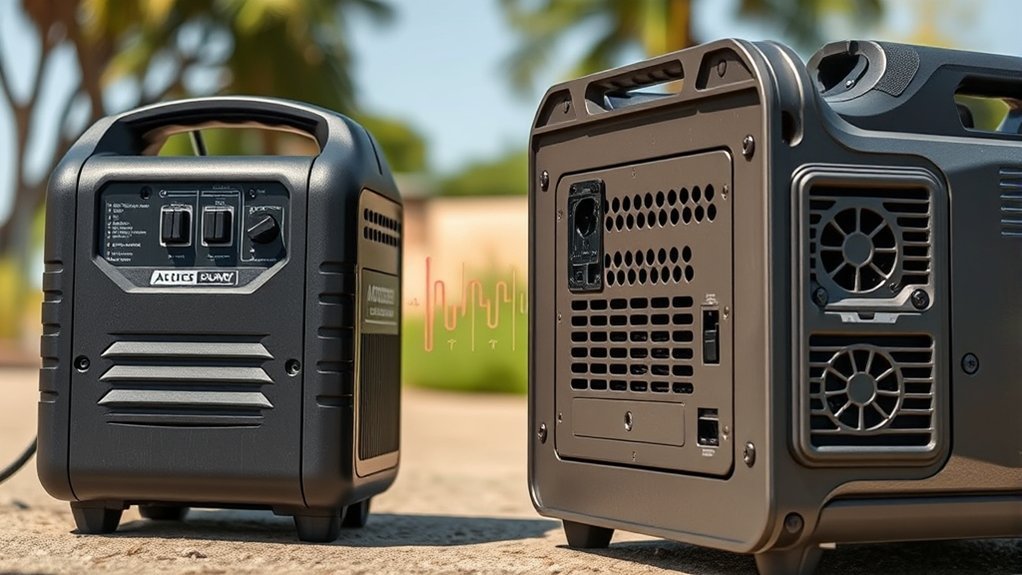
Portable power stations produce virtually no noise during operation because they rely solely on battery power, which eliminates mechanical components associated with sound generation. Their quiet operation results from the absence of internal combustion engines and moving parts.
Key factors influencing noise output include:
- Battery lifespan: Longer-lasting batteries maintain consistent performance without additional noise from internal degradation.
- Charging efficiency: High-efficiency chargers generate minimal heat and noise during recharging, maintaining overall quietness.
- Cooling systems: Many units utilize passive cooling, further reducing noise compared to active cooling methods.
- Operational modes: Low-power or standby modes generate negligible noise, as minimal energy is drawn from the battery.
This combination guarantees that portable power stations remain silent, making them ideal for noise-sensitive environments.
How Loud Are Inverter Generators in Real-World Use?
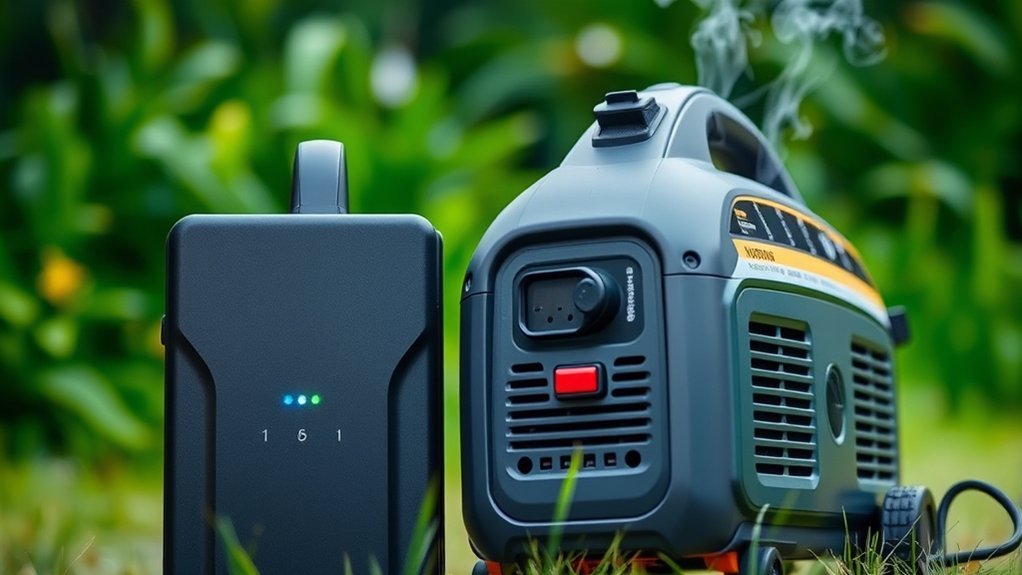
In real-world applications, inverter generators typically produce noise levels ranging from 50 to 60 decibels at a distance of 23 feet, which is comparable to a normal conversation or background ambient noise. This moderate sound level minimizes noise pollution, making them suitable for residential or outdoor environments. Their design incorporates sound attenuation features, such as mufflers and enclosure materials, to reduce acoustic emissions. Precise noise measurement at this distance provides an accurate assessment of their impact on surrounding environments. Understanding the actual noise levels in situ allows users to evaluate the suitability of inverter generators for specific applications, especially where minimizing sound pollution is critical. Overall, their inherent sound dampening capabilities contribute markedly to their quieter operation in practical settings.
Factors That Influence Noise Levels in Both Power Solutions
The noise levels of portable power stations and inverter generators are directly affected by their design and construction, which influence vibration and sound emission. Additionally, environmental factors such as ambient noise, temperature, and load conditions can alter perceived loudness during operation. Understanding these factors enables more accurate comparisons and informed choices between the two power solutions.
Power Source Design
Understanding the design of the power source is essential because it directly impacts noise levels in both portable power stations and inverter generators. Key factors include components that influence battery efficiency and fuel consumption, which affect operational smoothness and noise output. For example,:
- *Motor design and size*: Larger motors tend to generate more noise due to increased mechanical vibrations.
- *Inverter technology*: Advanced inverters produce less electrical noise, reducing overall sound levels.
- *Cooling systems*: Efficient cooling minimizes fan operation, lowering noise.
- *Power regulation methods*: Precise regulation reduces fluctuations that can cause noise spikes.
These design elements dictate how quietly each system operates, emphasizing the importance of optimized engineering for noise reduction in portable power solutions.
Operating Environment Factors
Environmental conditions profoundly influence the noise levels produced by both portable power stations and inverter generators. Temperature, humidity, and ambient noise can impact device efficiency and operational stability, affecting noise output. For example, extreme heat deteriorates battery lifespan and reduces charging efficiency, often causing increased fan activity and noise. Conversely, cold temperatures may lead to slower charging and less efficient cooling. Wind and terrain can amplify sound propagation, altering perceived noise levels. To visualize this, consider the following factors:
| Environmental Factor | Effect on Noise | Impact Details |
|---|---|---|
| Temperature | Alters cooling | Affects fan operation and battery health |
| Humidity | Affects components | May cause noise fluctuations |
| Wind | Amplifies sound | Propagates noise further |
| Terrain | Absorbs or reflects sound | Changes perceived volume |
| Ambient Noise | Masks or highlights noise | Influences perception |
Which Is Quieter for Camping and Outdoor Activities?
When choosing equipment for camping or outdoor activities, noise levels considerably impact the overall experience. Portable power stations tend to operate more quietly, with sound levels often below 60 decibels, making them suitable for serene environments. In contrast, inverter generators, while more efficient for continuous power, typically produce noise levels around 65-70 decibels, which can disrupt tranquility.
- Portable power stations excel in battery efficiency, providing silent operation with minimal noise.
- Their portability ease allows for discreet placement, reducing sound impact.
- Inverter generators, despite their noise, offer higher power output, which may be necessary for certain devices.
- The choice depends on balancing noise sensitivity with power needs, emphasizing that portable stations generally provide a quieter outdoor experience.
Tips for Minimizing Noise When Using Either Power Source
To effectively minimize noise when operating portable power stations or inverter generators, we should consider strategic placement and operational practices. Proper placement away from living or sleeping areas reduces noise impact and prevents sound reflection, enhancing overall quietness. Maintaining ideal load levels is vital; operating within recommended capacities improves battery efficiency and reduces unnecessary strain, leading to lower noise emissions. For inverter generators, managing fuel consumption through consistent operation and avoiding overloads minimizes engine noise. Additionally, regular maintenance—such as cleaning vents and tightening components—reduces mechanical noise sources. By focusing on these practices, we can enhance performance, conserve battery efficiency, and diminish noise levels, ensuring quieter operation without compromising power output or efficiency.
Frequently Asked Questions
How Does Ambient Noise Affect Perceived Power Station and Inverter Generator Noise?
Ambient sound influences perception accuracy of power station and inverter generator noise, making their actual sound levels seem louder or quieter depending on surrounding noise. We find that higher ambient noise can mask or distort perceived noise levels, affecting assessment.
Are Noise Levels Consistent Across Different Brands and Models?
Like tuning a vintage radio, noise levels vary; brand consistency isn’t guaranteed, and model variation considerably impacts sound output. We analyze specifications, but real-world testing remains essential for understanding precise noise profiles across different brands and models.
What Safety Precautions Are Necessary Due to Noise Levels?
We recommend hearing protection and noise mitigation strategies, like barriers or enclosures, to guarantee safety. Monitoring noise levels with a decibel meter helps prevent hearing damage, especially during prolonged exposure to high noise environments.
How Does Maintenance Impact Noise Reduction in These Devices?
Maintenance routines enhance noise insulation, reducing vibrations and mechanical wear that contribute to noise. Regular inspections and part upkeep guarantee quieter operation, akin to tuning a musical instrument for peak harmony and minimized disruptive sound.
Can Noise Levels Influence Battery or Fuel Efficiency?
Yes, higher noise levels can indicate increased mechanical strain, leading to reduced battery longevity and higher fuel consumption. Efficient, quieter devices optimize component performance, ultimately enhancing energy use and extending operational lifespan, making them more cost-effective and reliable.
Conclusion
In weighing our options, the quiet reliability of portable power stations often emerges as the clear choice for noise-sensitive environments. Yet, inverter generators’ higher output can be tempting for demanding needs. The decision hinges on our specific context—are we prioritizing silence or power? As we explore further into the technical nuances, one thing becomes certain: understanding these differences is essential. The true answer might just surprise you—stay tuned.