Ad Blocker Detected
Our website is made possible by displaying online advertisements to our visitors. Please consider supporting us by disabling your ad blocker.
When choosing a portable power station, understanding the differences between lithium and LiFePO4 batteries is essential. Both offer unique benefits and limitations that can markedly impact performance, safety, and cost over time. As we examine their compositions, cycle lives, and applications, it becomes clear that selecting the right type depends on specific needs and priorities. We invite you to reflect on how these factors influence your decision and what implications they hold for your usage scenarios.
Key Takeaways
- LiFePO4 batteries have a longer cycle life (2000-3000 cycles) than traditional lithium batteries (300-500 cycles).
- LiFePO4 offers superior thermal stability and safety, reducing fire and thermal runaway risks.
- Lithium batteries provide higher energy density and faster charging for portable, high-demand applications.
- LiFePO4 batteries are more environmentally friendly, easier to recycle, and have a lower ecological impact.
- Initial costs are higher for LiFePO4, but their durability lowers long-term replacement and maintenance expenses.
How Do Lithium and LiFePO4 Batteries Differ in Composition and Safety?
Although both lithium and LiFePO4 batteries are popular choices for portable power stations, they differ considerably in their chemical composition and safety profiles. Lithium-ion batteries typically use cobalt or nickel-based cathodes, which pose higher risks of thermal runaway and fires. In contrast, LiFePO4 batteries contain iron phosphate cathodes, offering enhanced thermal stability and reduced safety hazards. From an environmental perspective, LiFePO4 batteries have a lower ecological impact due to their non-toxic materials and safer disposal processes. Regarding battery recycling, LiFePO4’s composition simplifies recycling procedures, minimizing hazardous waste. While lithium batteries require careful handling to prevent safety issues and environmental harm, LiFePO4 batteries’ safer chemistry contributes to more sustainable lifecycle management and less environmental footprint.
Which Battery Type Offers Better Longevity and Cycle Life?
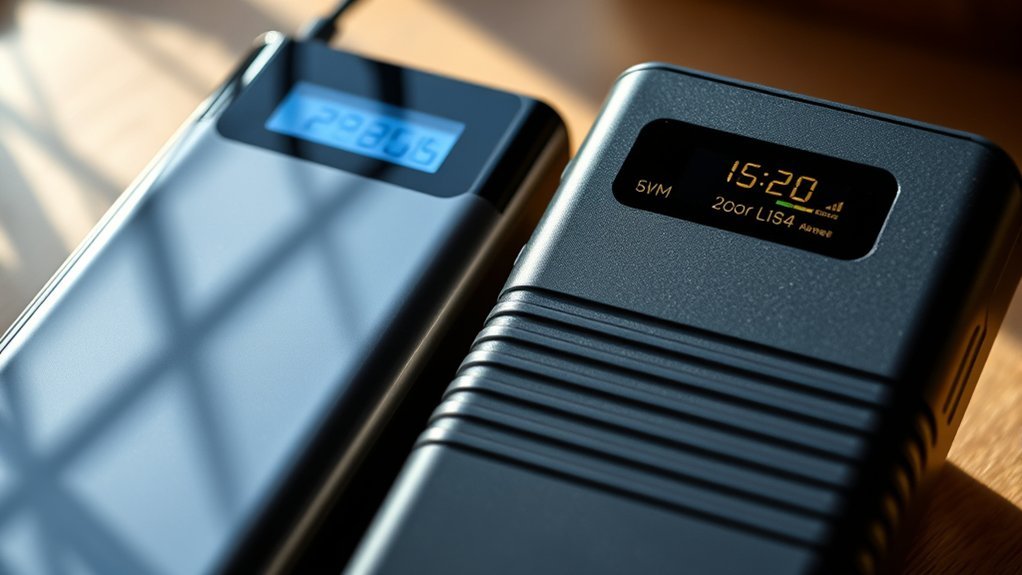
When comparing cycle durability, LiFePO4 batteries generally exhibit longer lifespans due to reduced degradation factors like thermal stability and chemical stability. Lithium batteries, while offering higher energy density, tend to degrade more quickly under repeated charging cycles. Analyzing these differences helps determine which battery type provides superior longevity for portable power applications.
Overall Cycle Durability
Lithium and LiFePO4 batteries differ considerably in their cycle durability, impacting overall longevity in portable power stations. Lithium batteries typically offer around 300-500 cycles, whereas LiFePO4 batteries excel with approximately 2,000-3,000 cycles, leading to longer service life. This durability influences not only device reliability but also environmental impact, as LiFePO4’s extended cycle life reduces battery waste and simplifies recycling processes.
| Battery Type | Approximate Cycles | Environmental Impact | Recycling Complexity | Longevity in Use |
|---|---|---|---|---|
| Lithium | 300-500 | Higher waste volume | More complex | Shorter lifespan |
| LiFePO4 | 2,000-3,000 | Lower waste volume | Easier to recycle | Longer lifespan |
Battery Degradation Factors
Battery degradation in portable power stations is influenced by multiple factors that affect each battery type’s cycle life and overall longevity. Environmental impact plays a critical role, as temperature fluctuations accelerate chemical breakdown. Manufacturing processes also impact durability, with higher quality procedures producing cells that resist degradation longer. Additionally, usage patterns, such as depth of discharge, directly influence cycle life.
Key degradation factors include:
- Temperature extremes: Elevated temperatures cause faster capacity loss due to accelerated chemical reactions.
- Environmental exposure: Humidity and contaminants increase corrosion, reducing lifespan.
- Manufacturing quality: Superior manufacturing results in cells with enhanced structural integrity and cycle stability.
LiFePO4 batteries generally exhibit better longevity due to their stable chemistry and resistance to environmental stressors, leading to fewer degradation issues over time.
How Do Performance and Charging Speed Compare Between Lithium and LiFePO4?
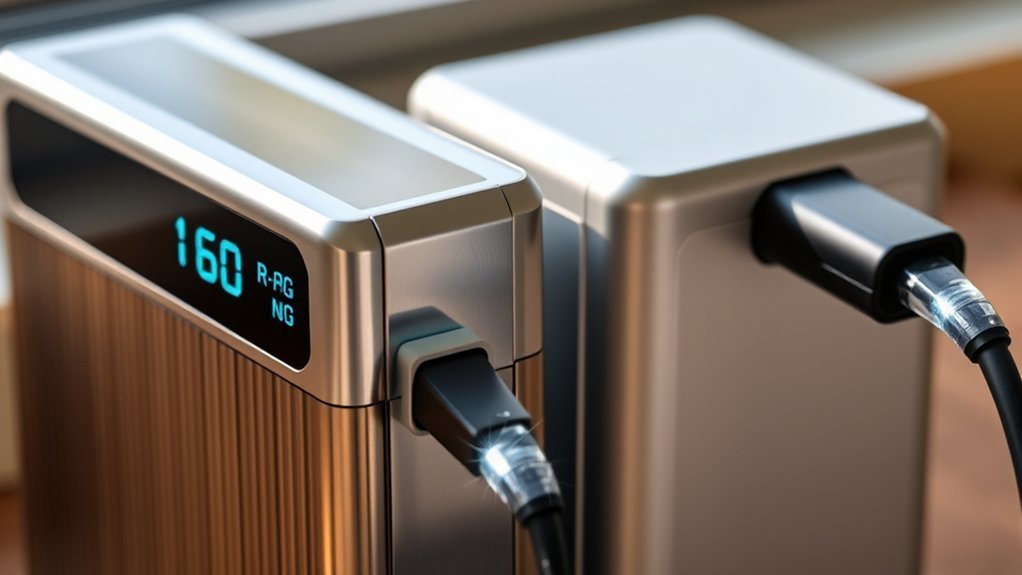
Lithium and LiFePO4 batteries differ in charging efficiency, with LiFePO4 typically exhibiting higher efficiency due to lower internal resistance. Power delivery speed varies, as LiFePO4 can sustain higher discharge rates, impacting performance during peak loads. Recharge times also differ, with LiFePO4 batteries generally recharging faster under similar conditions, influencing overall system responsiveness.
Charging Efficiency Differences
Have you ever wondered how quickly different portable power station batteries can recharge and how their performance compares under similar conditions? Lithium and LiFePO4 batteries exhibit distinct charging efficiencies due to their chemistry. Lithium batteries generally offer faster charge rates, often reaching 80% capacity within 1-2 hours, thanks to higher charge acceptance. In contrast, LiFePO4 batteries typically require around 2-3 hours for a similar charge level. The efficiency of these processes impacts not only operational performance but also battery recycling and environmental impact. For instance:
- Lithium batteries’ rapid charging accelerates usage cycles but may increase degradation.
- LiFePO4 batteries’ slower but gentler charge extends lifespan, aiding sustainable recycling.
- Both chemistries benefit from optimized charging protocols to minimize environmental impact during recycling.
Power Delivery Speed
While both lithium and LiFePO4 batteries deliver comparable power outputs, their performance during charging and discharging cycles differs remarkably. Lithium batteries generally offer higher power delivery speeds, enabling rapid discharges suitable for high-demand devices. LiFePO4 batteries, however, tend to have more stable power delivery over longer periods, though at slightly slower rates. Battery weight also influences power delivery; lithium batteries are typically lighter, facilitating faster power transfer and easier handling. Additionally, the environmental impact affects the sustainability of power performance; LiFePO4 batteries are more environmentally friendly, influencing manufacturing and disposal considerations. Overall, lithium batteries excel in quick power delivery, but LiFePO4’s stable, environmentally conscious design offers a balanced approach to performance and sustainability.
Recharge Time Variations
When comparing recharge times, it becomes evident that lithium batteries typically charge faster than LiFePO4 counterparts under similar conditions. Lithium cells generally allow for higher charge rates, reducing charging duration. Factors influencing recharge time include:
- Battery weight: Lithium batteries are lighter, enabling quicker heat dissipation and faster charging cycles.
- Charging protocols: Lithium batteries support higher current rates without compromising longevity, speeding up recharging.
- Environmental impact: Lithium batteries tend to have a lower environmental footprint during manufacturing, but faster charging may increase energy consumption temporarily.
While LiFePO4 batteries have longer recharge times due to their chemistry, they offer enhanced safety and longevity, which can offset the time difference over extended use.
What Are the Cost Implications of Choosing Lithium vs. LiFePO4?
Choosing between lithium-ion and LiFePO4 batteries for portable power stations involves examining their initial costs and long-term value. Lithium-ion batteries typically have lower upfront prices, but LiFePO4 offers superior longevity and safety, reducing replacement frequency. Market trends indicate increasing adoption of LiFePO4 due to its environmental impact, as it produces fewer hazardous materials. Over time, the higher initial investment in LiFePO4 can be offset by lower maintenance and replacement costs, making it economically advantageous. The table below summarizes these implications:
| Aspect | Lithium-ion | LiFePO4 |
|---|---|---|
| Initial Cost | Lower | Higher |
| Longevity | Moderate | Longer |
| Environmental Impact | Higher disposal concerns | Safer, more eco-friendly |
| Maintenance Costs | Higher over lifespan | Lower over lifespan |
| Market Trends | Growing but competitive | Increasing dominance due to sustainability |
Which Battery Is More Suitable for Different Portable Power Station Uses?
Selecting the appropriate battery type depends on the specific application and operational requirements of the portable power station. Lithium batteries offer higher storage capacity and lighter battery weight, making them suitable for high-capacity, mobile applications. Conversely, LiFePO4 batteries provide increased safety, longer cycle life, and are often heavier, which may impact portability but benefit stationary or semi-permanent setups. To clarify:
- For lightweight, high-capacity needs, lithium batteries excel, enabling extended use without adding significant weight.
- For applications prioritizing safety and longevity over weight, LiFePO4 batteries are more appropriate.
- When space and weight constraints are critical, lithium’s lower weight and compact design make it the most suitable choice.
Choosing the correct battery depends on balancing storage capacity, weight, and safety considerations for each specific use case.
What Factors Should You Consider When Deciding Between Lithium and LiFePO4?
Deciding between lithium and LiFePO4 batteries requires careful evaluation of multiple technical and practical factors. Key considerations include cycle life, safety, and charge efficiency. Lithium batteries generally offer higher energy density, but LiFePO4 batteries excel in thermal stability and longevity. Environmental impact is essential; LiFePO4 batteries typically have a lower environmental footprint and are easier to recycle, supporting sustainable practices. Battery recycling processes vary between chemistries, affecting disposal and reuse strategies. Cost is also a factor—initial investment versus long-term durability. Additionally, safety features like thermal runaway resistance make LiFePO4 preferable in certain applications. Ultimately, your choice depends on balancing these factors against your power needs, sustainability goals, and budget constraints.
Frequently Asked Questions
Are Lithium and Lifepo4 Batteries Environmentally Friendly?
Battery chemistries like lithium and lifepo4 are relatively environmentally friendly due to their rechargeability benefits, reducing waste and resource consumption. However, responsible recycling and manufacturing practices are essential to minimize environmental impact across their lifecycle.
How Do Temperature Ranges Affect Battery Performance?
Did you know that lithium batteries operate ideally between 0°C and 45°C, while lifepo4 batteries handle wider ranges? Thermal stability and temperature sensitivity directly impact performance, with extreme temps risking capacity loss and reduced lifespan in both types.
Can Lithium and Lifepo4 Batteries Be Recycled Easily?
We find that lithium and LiFePO4 batteries can be recycled, but battery disposal faces recycling challenges due to complex chemical compositions. Effective recycling requires specialized processes, making sustainable disposal essential to mitigate environmental impacts and recover valuable materials.
What Are the Weight Differences Between the Two Battery Types?
We find lithium batteries considerably lighter—up to 50%—than LiFePO4 counterparts, impacting portability. Despite similar capacities, lithium’s superior charging speed further enhances operational efficiency, making it the powerhouse choice for weight-conscious applications.
How Do Warranty Periods Compare for Lithium vs. Lifepo4 Batteries?
We find that lithium batteries typically offer shorter warranty periods, around 2-3 years, compared to lifepo4 batteries’ 5-10 years, reflecting differences in battery lifespan and charging efficiency, which influence warranty coverage and long-term reliability.
Conclusion
In essence, selecting between lithium and LiFePO4 batteries depends on your specific needs. Lithium offers higher energy density and faster charging, ideal for portable, high-demand applications. LiFePO4, with its superior safety and longevity, suits long-term, stationary setups. As we’ve seen, making an informed choice is akin to choosing between a chariot and a steam engine—each excels in different spheres. Ultimately, understanding these nuances guarantees ideal performance and safety for your portable power station.