Ad Blocker Detected
Our website is made possible by displaying online advertisements to our visitors. Please consider supporting us by disabling your ad blocker.
When planning for a camping trip, having a reliable power station can make a significant difference in ensuring all your devices stay charged and functional. To achieve this, you need a detailed checklist that covers everything from capacity considerations to safety practices. Without proper planning, you risk power outages or equipment damage, which can disrupt your outdoor experience. Let’s explore the essential components and strategies to select, organize, and operate a camping power station effectively.
Key Takeaways
- Select a power station with sufficient capacity, solar compatibility, and fast-charging features based on device needs and trip duration.
- Pack essential devices, cables, adapters, and safety accessories to ensure reliable and safe power management.
- Optimize power usage by prioritizing essential devices, monitoring battery levels, and positioning solar panels for maximum sun exposure.
- Follow safety practices such as stable placement, water protection, and proper ventilation to prevent accidents and equipment damage.
- Regularly inspect, maintain, and store the power station and accessories to ensure longevity and dependable performance during extended trips.
What Is a Camping Power Station and Why Do You Need One?
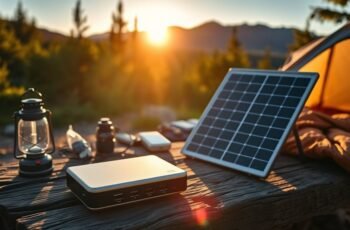
A camping power station is a portable, rechargeable device designed to provide reliable electricity in outdoor environments where traditional power sources are unavailable. It guarantees we can keep essential devices charged, like GPS units, lights, or small appliances, without disrupting campground etiquette. When it comes to outdoor cooking, having a power station allows us to operate portable grills or electric cookers efficiently, reducing noise and smoke that can disturb others. Its practical design makes it easy to transport and set up, guaranteeing we don’t rely solely on campfire cooking. By managing power effectively, we can maintain a respectful presence at the campsite while enjoying modern comforts. A camping power station becomes an indispensable tool for balancing outdoor living with the convenience of electricity.
Essential Features to Look for in a Camping Power Station
Selecting the right camping power station involves carefully evaluating specific features that guarantee reliable performance and user convenience. Key considerations include battery longevity, which determines how long the station can power devices without frequent recharges, and is essential for extended trips. We also look at solar compatibility, enabling recharging via solar panels, making it ideal for off-grid use and sustainable energy. A durable, high-capacity battery ensures consistent power, while solar compatibility offers flexibility and independence from traditional power sources. Additionally, fast-charging capabilities and multiple output ports enhance usability. These features collectively ensure the power station remains dependable throughout your trip, reducing worries about power loss and increasing overall convenience. Prioritizing these aspects helps us select equipment that’s both efficient and practical for outdoor adventures.
How to Choose the Right Capacity for Your Trip
To determine the right capacity, we need to accurately estimate our power needs based on the devices we plan to run and their consumption rates. Planning trip duration helps us decide whether a larger capacity is necessary to avoid running out of power mid-adventure. By combining these factors, we can select a power station that reliably supports our specific camping activities without excess or shortfall.
Power Needs Estimation
Estimating your power needs is essential for choosing the right camping power station, and it requires a detailed assessment of all devices you’ll use during your trip. We start by listing each device’s wattage and estimated daily usage, including lights, phones, and small appliances. Next, consider the power source, such as solar panels, which can supplement the station’s capacity and extend battery lifespan through efficient energy collection. It’s vital to calculate not only total watt-hours but also the peak power demand, ensuring the station can handle simultaneous device startup. By analyzing these factors, we can select a capacity that balances immediate energy requirements with long-term battery health, avoiding underperformance or premature battery degradation. This practical approach guarantees reliable power throughout your trip.
Trip Duration Planning
Once we’ve determined the power needs of our devices, the next step is to match that capacity to the duration of our trip. We need to take into account our camping gear’s energy consumption, including lights, small appliances, and charging needs. Weather considerations are vital; for example, colder temperatures can drain batteries faster, while extended cloudy or rainy days may reduce solar recharging options. To plan accurately, estimate daily power usage and multiply by the number of days, then add a buffer for unforeseen needs. If our trip is longer or weather conditions are unpredictable, choosing a power station with a higher capacity guarantees we won’t run out of power. This practical approach keeps us prepared, regardless of the duration or environmental factors.
Must-Have Devices and Accessories for Your Power Station
Having the right devices and accessories on hand is essential for maximizing the utility of your camping power station. Key items include versatile charging cables, adapters, and extension cords to ensure compatibility with your devices and outdoor gear. A high-quality inverter is crucial for powering small appliances like portable fridges or outdoor cooking equipment, so confirm your power station’s wattage capacity matches your needs. Consider a solar panel or portable charger to keep your station charged during extended trips. For outdoor cooking, portable induction cooktops or electric grills can be efficiently powered, making meal prep more practical. Additionally, protective cases or covers safeguard your equipment against dust and moisture. These accessories streamline setup, enhance safety, and guarantee your power station supports all essential camping gear and outdoor cooking needs.
Packing Tips: Organizing and Safeguarding Your Equipment
Effective packing begins with thoughtful organization to guarantee your equipment remains protected and accessible throughout your trip. We recommend categorizing gear by function and size, using labeled containers or compartments to streamline access. Prioritize gear maintenance; inspect and clean devices beforehand to prevent malfunctions. Wrap sensitive equipment in protective padding or weather-resistant covers to guard against moisture, dirt, and impacts. Consider using sealed zip bags or waterproof cases for electronics and batteries, especially if weather conditions might change unexpectedly. Secure cords and accessories to prevent tangling or damage during transit. Good organization minimizes the risk of gear failure, preserves battery life, and simplifies setup. Proper weather protection and systematic packing ensure your power station and accessories stay functional, safe, and ready for use throughout your camping adventure.
Setting Up Your Power Station at the Campsite
When setting up your power station, selecting a flat, sheltered location away from high-traffic areas helps prevent accidental damage and guarantees safety. We then connect our devices securely, avoiding loose or exposed cables that could cause shorts or tripping hazards. Finally, managing power consumption by prioritizing essential devices and monitoring usage prevents overloads and prolongs battery life.
Choose Suitable Location
How can we guarantee our power station remains safe and efficient at the campsite? The key lies in choosing the right location. We need to assess the camping site carefully, prioritizing flat, stable ground to prevent tipping or shifting. Terrain considerations are vital—avoid uneven or muddy areas that could cause instability or damage. We should also steer clear of shaded spots with excessive moisture, which can impact ventilation and increase corrosion risk. A spot near existing shelter or natural windbreaks offers protection from the elements, while still allowing good airflow. Additionally, selecting a location away from dense foliage reduces debris and fire hazards. By analyzing terrain considerations thoroughly, we ensure our power station stays safe, functional, and protected throughout our camping trip.
Secure Power Connections
To guarantee our power station operates safely and reliably at the campsite, securing all power connections must be our top priority. Properly connecting components ensures efficient solar panel integration and maximizes battery life optimization.
- Inspect connections: Check all cables and adapters for corrosion or damage before plugging in devices.
- Secure tight fits: Ensure all connectors are snug to prevent disconnections caused by wind or movement.
- Use weatherproof enclosures: Protect junction points from moisture, which can compromise connections and reduce efficiency.
- Verify polarity: Confirm correct positive and negative connections to avoid damage or short circuits.
Careful connection management promotes safe operation, enhances solar panel integration efficiency, and prolongs battery life, making your camping experience more reliable and enjoyable.
Manage Power Usage
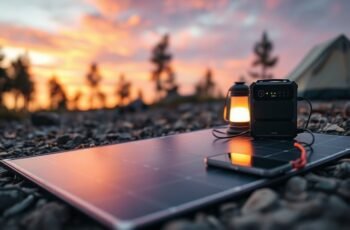
Have you considered how to optimize your power station’s energy consumption to guarantee a reliable supply throughout your camping trip? Managing power usage involves strategic planning, especially when using solar panels and preserving battery lifespan. We recommend prioritizing essential devices and avoiding overloading outlets. Use solar panels efficiently by positioning them for maximum sun exposure, ensuring consistent energy input. Regularly monitor your battery levels to prevent deep discharges, which can shorten battery lifespan. Implementing power-saving settings on devices and turning off unused appliances can markedly extend your station’s operational time. Additionally, consider integrating a power management app if available, to track consumption patterns. Proper management helps maintain a steady energy supply, prolongs battery life, and guarantees your power station remains reliable throughout your outdoor adventure.
Troubleshooting Common Power Station Issues
When our power station encounters issues, pinpointing the root cause quickly becomes essential to maintaining reliable energy supply during outdoor adventures. Common problems often relate to solar panel efficiency or battery life. To troubleshoot effectively:
- Check the solar panel for dirt, debris, or shading that could reduce energy absorption.
- Verify connections between the solar panel and the power station are secure and free of corrosion.
- Monitor battery health through the display or app; a declining battery capacity signals it may need replacement or reconditioning.
- Ensure the power station isn’t overheating, as thermal issues can impair performance and battery longevity.
Addressing these issues with a systematic approach helps maintain peak operation, ensuring your power station delivers consistent power when you need it most.
Safety Tips for Using Portable Power Sources
While portable power sources offer convenience during outdoor activities, adhering to essential safety practices is critical to prevent accidents and equipment damage. Always keep the power station on a stable, level surface away from water, moisture, and extreme temperatures. Be cautious of wildlife interactions; avoid leaving the power station accessible to curious animals that might damage it or cause malfunctions. Maintain proper ventilation to prevent overheating, especially when charging or in use for extended periods. When connecting devices, guarantee compatibility to avoid electrical surges. At the campsite, prioritize safety by keeping cords organized and out of high-traffic areas to prevent trips or accidental disconnections. These measures enhance campsite safety, protect your equipment, and promote responsible outdoor power use.
Maintaining and Caring for Your Camping Power Station
Proper maintenance and care are essential to guaranteeing your camping power station remains reliable and efficient over time. Regularly inspecting the battery for corrosion, ensuring it’s charged correctly, and avoiding complete discharges helps prolong its lifespan. Proper cord storage prevents fraying and damage; always coil cords loosely and store them in designated compartments. Additionally, clean the power station’s vents and ports to prevent dust buildup that can impair performance. Keep the device in a cool, dry place when not in use to avoid moisture damage. Periodically test the unit to verify it’s functioning correctly. Finally, follow manufacturer instructions for firmware updates and recommended maintenance schedules. These steps ensure your power station stays ready when you need it most, providing dependable power during your outdoor adventures.
Frequently Asked Questions
Can a Camping Power Station Charge Multiple Devices Simultaneously?
Yes, camping power stations can charge multiple devices simultaneously, thanks to their multiple charging ports and substantial battery capacity. We recommend checking the port types and total output to guarantee efficient, safe, and effective charging for all your devices.
How Long Does a Typical Camping Power Station Last on a Full Charge?
A camping power station typically lasts 8 to 12 hours on a full charge, depending on battery capacity and device power draw. We consider charging speed and device efficiency to optimize usage, ensuring reliable power throughout your adventure.
Are Camping Power Stations Affected by Extreme Weather Conditions?
Camping power stations are affected by extreme weather, as weather resilience varies; high temperatures can reduce battery efficiency, while cold impacts performance. We analyze these factors to guarantee reliable power, emphasizing proper storage and choosing weather-resistant models for maximum resilience.
What Is the Average Weight of Portable Camping Power Stations?
We find that portable camping power stations typically weigh between 5 to 15 pounds, balancing battery capacity and portability features for practical outdoor use. This range guarantees efficient power supply without sacrificing ease of transport.
Can I Use a Camping Power Station Indoors Safely?
Yes, you can use a camping power station indoors safely if you guarantee proper ventilation and follow indoor safety guidelines. We carefully monitor for electrical hazards, avoiding overloads, and keep the device away from water to prevent accidents.
Conclusion
In fact, a well-prepared camping power station can extend your outdoor adventures by up to 40%, ensuring you stay connected and powered throughout your trip. By carefully selecting features, capacity, and accessories, and following safety and maintenance routines, we can maximize efficiency and longevity. Proper organization and setup prevent disruptions, making your experience smoother and more enjoyable. Ultimately, investing time in planning and care transforms your camping trip into a safer, more comfortable, and truly memorable outdoor escape.