Ad Blocker Detected
Our website is made possible by displaying online advertisements to our visitors. Please consider supporting us by disabling your ad blocker.
Understanding inverter efficiency percentages in portable power systems is essential for optimizing performance and longevity. These figures reflect how effectively an inverter converts stored DC energy into usable AC power, directly impacting runtime, thermal management, and operational costs. As technology advances, selecting inverters with higher efficiencies becomes increasingly critical for reliable, cost-effective solutions. Exploring the factors that influence efficiency and their practical implications can help us make more informed decisions about portable power investments.
Key Takeaways
- Higher inverter efficiency (85-95%) reduces energy loss, extending battery life and improving overall portable power system performance.
- Efficient inverters generate less heat, enhancing device reliability and minimizing thermal stress on batteries.
- Selecting inverters with optimal efficiency ratings ensures stable voltage output for sensitive electronics.
- Efficiency varies with load, temperature, and input voltage, peaking at ideal operating conditions for maximum performance.
- Proper maintenance, cooling, and load management help sustain inverter efficiency and prolong portable power system lifespan.
What Is Inverter Efficiency and Why Does It Matter?
Understanding inverter efficiency is essential because it directly impacts the performance and energy loss of portable power systems. It reflects how effectively an inverter converts DC power into usable AC power, which depends on inverter design and component quality. Efficiency testing measures this conversion, revealing the proportion of input energy retained as output. Precise efficiency evaluation enables us to identify losses due to heat, switching, or other factors, allowing for optimization. High inverter efficiency minimizes wasted energy, prolongs battery life, and enhances system reliability. Recognizing the importance of inverter design in reducing losses guides us toward selecting models with superior efficiency ratings. Ultimately, understanding inverter efficiency helps improve overall portable power performance, ensuring energy is conserved and system operation remains consistent under varying loads.
How Inverter Efficiency Affects Portable Power Performance
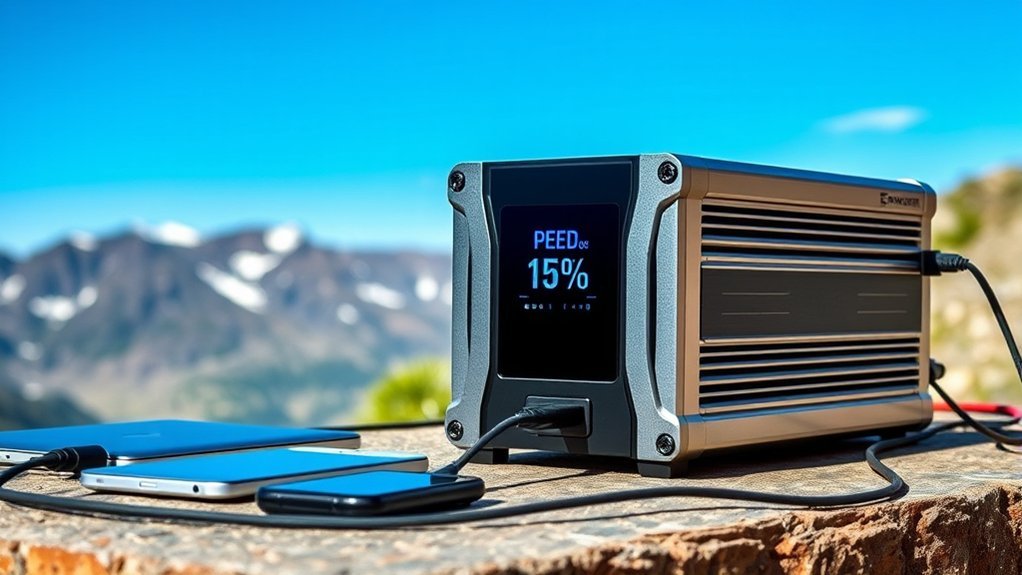
Inverter efficiency directly influences how effectively portable power systems deliver their maximum output, impacting overall performance. Higher efficiency minimizes energy losses, which helps preserve battery life and guarantees consistent device operation. Additionally, the compatibility of the inverter with various devices depends on its ability to maintain stable power delivery across different load conditions.
Power Output Optimization
Since inverter efficiency directly determines how much of the input energy is converted into usable power, enhancing this efficiency is essential for maximizing portable power performance. Effective power output optimization involves balancing load demands, ensuring stable voltage, and maintaining compatibility with solar integration and grid requirements. High efficiency minimizes energy loss during conversion, improving overall system reliability and performance. To illustrate, consider the following:
| Aspect | Impact | Optimization Strategy |
|---|---|---|
| Solar Integration | Ensures seamless energy transfer | Match inverter specs to solar array |
| Grid Compatibility | Maintains stable power delivery | Implement advanced grid synchronization |
| Load Management | Prevents overloads and fluctuations | Use dynamic power regulation |
Optimized inverter efficiency enhances portable power, especially in variable conditions, ensuring consistent, reliable output.
Battery Life Preservation
Higher inverter efficiency directly impacts battery longevity by reducing energy losses during power conversion, thereby minimizing unnecessary discharge cycles and heat generation. Reduced heat limits thermal stress on the battery, decreasing the risk of battery degradation over time. Efficient inverters enhance power stabilization, ensuring consistent voltage and current delivery, which further preserves battery health. When an inverter operates at greater efficiency, less energy is wasted as heat, allowing the battery to retain charge longer and undergo fewer cycles that accelerate degradation. This precise regulation also prevents voltage spikes that can accelerate battery wear. Consequently, high inverter efficiency not only prolongs overall battery lifespan but also sustains ideal performance, making portable power systems more reliable and cost-effective over extended periods.
Device Compatibility Factors
Efficient inverters considerably influence device compatibility by ensuring that a broad range of electronic devices operate reliably within portable power systems. The inverter ratings, typically expressed in wattage capacity, directly determine which devices can be powered without overloads or performance issues. High inverter efficiency minimizes energy loss, preserving power quality and stability, which is vital for sensitive electronics. Compatibility depends on matching inverter ratings to device power requirements, avoiding undervoltage or overvoltage conditions that could damage equipment. Additionally, higher efficiency inverters reduce heat generation and extend operational lifespan, enabling safer and more reliable device integration. Ultimately, understanding inverter ratings and their efficiency percentage is essential for optimizing portable power systems, ensuring broad device compatibility, and maintaining consistent performance across diverse electronic applications.
Factors That Influence Inverter Efficiency Percentage
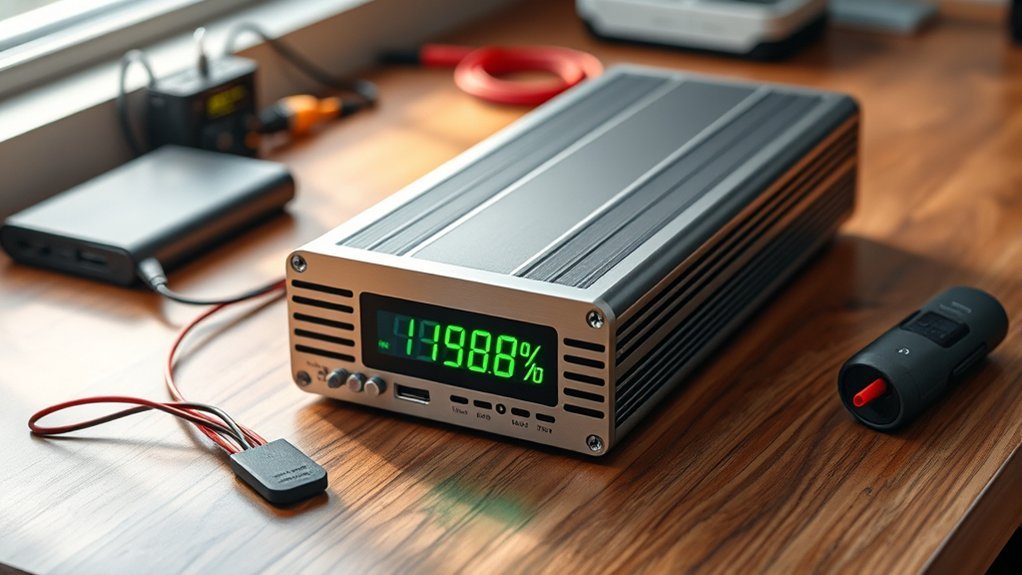
The efficiency of an inverter is directly impacted by the quality of its components and the operating conditions it encounters. High-grade components reduce energy losses, while stable operating environments minimize fluctuations that lower efficiency. Understanding these factors allows us to optimize inverter performance for portable power applications.
Quality of Components
The quality of internal components directly impacts an inverter’s efficiency by affecting how smoothly electrical energy is converted and transmitted. High-quality components ensure precise voltage regulation, minimizing energy loss during conversion. Reliable voltage regulation maintains stable output despite fluctuating input conditions, enhancing overall efficiency. Additionally, superior components contribute to effective thermal management, preventing overheating that can degrade performance and cause inefficiencies. Superior thermal management systems dissipate heat efficiently, reducing thermal stress on crucial components and maintaining ideal operating conditions. Variations in component quality influence the inverter’s ability to sustain high efficiency levels over time, with better materials and design reducing internal resistance and energy dissipation. Consequently, investing in high-quality components is essential for maximizing inverter efficiency, especially in portable power applications where consistent performance is critical.
Operating Conditions
How do operating conditions influence the efficiency percentage of an inverter? Factors such as temperature, load variability, and input voltage stability directly impact performance. Elevated temperatures can increase internal resistance, reducing efficiency, especially during solar integration or grid compatibility tasks. Load fluctuations cause transient losses, affecting overall output. Stable input voltage maintains ideal conversion rates, minimizing power dissipation. The following table highlights key influences:
| Operating Condition | Impact on Efficiency |
|---|---|
| Temperature | Higher temps decrease efficiency |
| Load Variability | Causes transient efficiency losses |
| Input Voltage Stability | Ensures maximum power conversion |
| Power Factor | Affects grid compatibility and efficiency |
| Operating Range | Efficiency peaks within specified limits |
Comparing Inverter Efficiency Ratings in Portable Power Devices
When evaluating portable power devices, understanding their inverter efficiency ratings is essential, as these figures directly impact overall performance and energy conservation. Inverter ratings typically range from 85% to over 95%, with higher percentages indicating less energy loss during conversion. Comparing these ratings requires examining how efficiency influences practical features like wireless charging and solar compatibility. Devices with superior inverter efficiency better optimize battery use, enabling longer operation and improved energy transfer from solar panels. Additionally, higher efficiency minimizes heat generation, which benefits portable units subjected to variable operating conditions. When appraising inverter ratings, consider the device’s ability to maintain high efficiency across different loads, ensuring consistent performance whether powering wireless charging stations or integrating with solar setups.
How to Choose a Portable Power Unit With High Inverter Efficiency
Selecting a portable power unit with high inverter efficiency requires careful evaluation of several key factors. First, examine the battery chemistry, as lithium-ion batteries typically offer higher efficiency and longer lifespan compared to lead-acid types, reducing energy loss. Next, consider solar compatibility; units designed for solar input often incorporate MPPT (Maximum Power Point Tracking) technology, optimizing energy transfer and inverter performance. High inverter efficiency depends on sophisticated power management systems that minimize conversion losses, so verify specifications for peak efficiency ratings. Additionally, assess the unit’s overall build quality and cooling systems, which impact thermal performance and sustained efficiency. By focusing on battery chemistry and solar compatibility, you guarantee the selection of a power unit that maximizes energy conversion, reduces waste, and enhances long-term reliability.
Common Misconceptions About Inverter Efficiency
Many people assume that inverter efficiency remains constant regardless of operating conditions, but in reality, this is a misconception. Inverter efficiency varies with load levels, temperature, and input voltage, making it dynamic rather than static. Such inverter efficiency myths often lead to common inverter mistakes, like oversizing units or ignoring real-world performance factors. To clarify, consider this comparison:
| Operating Condition | Efficiency Impact |
|---|---|
| Low load | Reduced efficiency |
| Optimal load | Peak efficiency |
| High temperature | Efficiency drops |
| Voltage fluctuations | Increased inefficiencies |
Understanding these nuances helps avoid common inverter mistakes and guarantees accurate performance expectations. Recognizing that efficiency fluctuates prevents oversimplification and enhances portable power system design.
The Impact of Inverter Efficiency on Battery Life and Runtime
The efficiency of an inverter directly influences both battery lifespan and runtime in portable power systems. Higher efficiency minimizes energy losses during conversion, extending runtime and reducing battery degradation over time. This is especially critical in renewable integration applications, where maximizing energy harvest from sources like solar or wind is essential. Improved inverter efficiency ensures more effective grid synchronization, reducing fluctuations that can strain batteries and decrease their longevity. Conversely, low-efficiency inverters generate excess heat and waste energy, accelerating battery wear and limiting operational duration. By selecting inverters with peak efficiency ratings, we enhance overall system durability and performance, ensuring reliable power delivery for extended periods. Ultimately, efficiency directly correlates with the sustainability and economic viability of portable power solutions.
Tips to Maximize Efficiency in Your Portable Power System
Maximizing efficiency in your portable power system requires deliberate strategies to reduce energy losses and enhance performance. Prioritizing energy conservation minimizes unnecessary power drain, directly boosting inverter efficiency and prolonging battery life. Implementing load management—using devices within the inverter’s ideal power range—reduces stress on components and prevents energy wastage. Regular maintenance ensures connections are secure and components operate at peak efficiency, further decreasing losses. Additionally, selecting high-quality inverters with superior efficiency ratings reduces environmental impact by lowering overall energy consumption. Proper system design, including adequate cooling and proper wiring, minimizes heat buildup and resistive losses. These technical measures collectively improve system performance, extend operational runtime, and promote environmentally responsible energy use.
Understanding Inverter Efficiency for Cost-Effective Power Solutions
Understanding inverter efficiency is essential for developing cost-effective power solutions because it directly impacts energy consumption and operational costs. High efficiency minimizes energy losses during power conversion, which is paramount for optimizing energy storage systems and ensuring maximum usable power output. When an inverter operates efficiently, less energy is wasted as heat, reducing cooling requirements and extending device longevity. Precise efficiency ratings—often expressed as a percentage—reflect the inverter’s ability to convert DC from energy storage into AC power with minimal loss. This performance directly influences the overall cost-effectiveness of portable power systems, especially in applications where energy conservation is indispensable. Accurate understanding of inverter efficiency enables better system design, lower energy costs, and improved reliability in power conversion.
Frequently Asked Questions
How Does Inverter Efficiency Vary With Different Power Loads?
We observe inverter efficiency peaks at moderate loads, declining at very low or high loads. Effective load management enhances efficiency maximization, ensuring the inverter operates within ideal parameters for consistent power conversion and minimal energy loss.
What Role Does Inverter Efficiency Play in Renewable Energy Systems?
We find inverter efficiency vital in renewable energy systems, as higher efficiency minimizes energy losses during conversion from solar panels and energy storage, ensuring maximum power delivery and optimizing overall system performance.
Are There Specific Brands Known for Higher Inverter Efficiency?
We find brands like SMA and Fronius excel in inverter efficiency, especially with advanced inverter cooling systems and seamless battery integration, ensuring peak performance, durability, and energy conversion efficiency in renewable systems.
How Does Inverter Efficiency Impact Device Compatibility?
Higher inverter efficiency improves device compatibility by optimizing battery performance and reducing energy loss, making inverter sizing more accurate, ensuring devices operate smoothly without overloads or underperformance, and enhancing overall power system reliability.
Can Inverter Efficiency Be Improved Through Maintenance or Upgrades?
Yes, inverter efficiency can be improved through maintenance tips like cleaning cooling fans and ensuring proper ventilation, while upgrade options such as replacing outdated components or installing higher-quality inverters can optimize performance and reduce energy loss.
Conclusion
Understanding inverter efficiency is vital for optimizing portable power systems. Devices with efficiencies above 90% can reduce energy loss by up to 10%, notably extending runtime and battery life. Prioritizing high-efficiency inverters ensures reliable, cost-effective performance while minimizing thermal stress and operational costs. By carefully evaluating inverter ratings and maximizing system efficiency, we can achieve more sustainable, long-lasting portable power solutions—an important consideration in today’s energy-conscious environment.