Ad Blocker Detected
Our website is made possible by displaying online advertisements to our visitors. Please consider supporting us by disabling your ad blocker.
Understanding how portable generators convert fuel into usable electricity reveals much about their true efficiency. Factors like engine design, fuel type, and load management directly influence performance and fuel economy. While many assume size alone determines effectiveness, the interplay of components and technological advancements plays a vital role. Exploring these elements can help us identify what truly impacts a generator’s efficiency and how to optimize its operation in practical settings.
Key Takeaways
- Actual efficiency depends on engine design, combustion quality, and load management, not just generator size.
- Fuel type and combustion technology significantly influence the conversion rate from fuel to electrical energy.
- Proper load matching and load distribution optimize fuel consumption and reduce energy losses.
- High-quality parts and advanced components minimize mechanical and electrical energy losses for better efficiency.
- Hybrid systems and renewable integrations can enhance overall generator efficiency and reduce reliance on fossil fuels.
How Do Portable Generators Convert Fuel Into Electricity?
Portable generators convert fuel into electricity through a process that involves combustion within an internal combustion engine, which then drives an alternator. This fuel conversion initiates with the combustion of fuel—typically gasoline or diesel—in the engine’s cylinders, releasing chemical energy. This energy transfer converts chemical energy into mechanical energy, causing the engine’s crankshaft to rotate. The rotating crankshaft turns the alternator’s rotor, creating a magnetic field that induces electrical current in the stator windings. This process exemplifies direct energy transfer, where chemical energy from fuel transforms into mechanical energy and ultimately into electrical energy. Efficient fuel conversion depends on precise combustion and effective energy transfer within the engine, ensuring maximum electricity output with minimal fuel wastage.
What Factors Affect the Efficiency of Portable Generators?
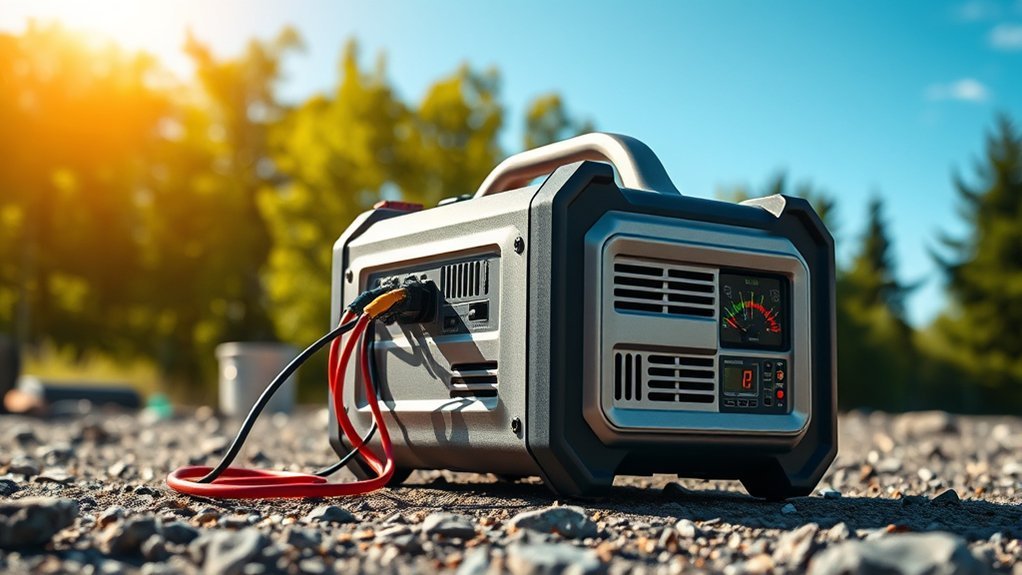
The efficiency of portable generators is primarily influenced by fuel consumption rates and how well the load is managed. Optimizing fuel use requires understanding the generator’s operating parameters and adjusting load levels accordingly. Effective load management can markedly enhance overall efficiency by preventing unnecessary strain and fuel wastage.
Fuel Efficiency and Consumption
While numerous factors influence the fuel efficiency of portable generators, understanding these variables is essential for enhancing performance and minimizing operating costs. Fuel economy hinges on engine design, fuel type, and combustion efficiency, which directly impact energy output and consumption rates. Modern generators incorporate advanced carburetion and ignition systems to improve fuel combustion, reducing consumption and emissions. Emission reduction strategies, such as catalytic converters, can slightly affect fuel efficiency but are crucial for environmental compliance. Load stability and operational parameters also influence fuel consumption, with steady loads promoting ideal fuel use. Ultimately, selecting generators with high thermal efficiency and implementing precise maintenance routines are key to maximizing fuel economy while minimizing emissions, ensuring cost-effective and environmentally responsible operation.
Load Management Strategies
Effective load management is critical to maximizing the efficiency of portable generators, as fluctuating or improperly balanced loads can substantially impact fuel consumption and engine performance. By implementing strategic load distribution, we can prevent engine overloads and reduce unnecessary fuel burn. Integrating battery storage enables smoothing of power demand, allowing surplus energy to be stored during low usage periods and released during peak loads, thereby enhancing overall efficiency. Additionally, renewable integration, such as solar or wind sources, can supplement generator output, decreasing reliance on fossil fuels and stabilizing load variations. Proper load management not only minimizes fuel consumption but also extends engine lifespan and reduces emissions. Combining battery storage with renewable sources creates a more resilient and efficient power system, ensuring optimal generator performance across variable load conditions.
Comparing Fuel Consumption and Runtime Performance
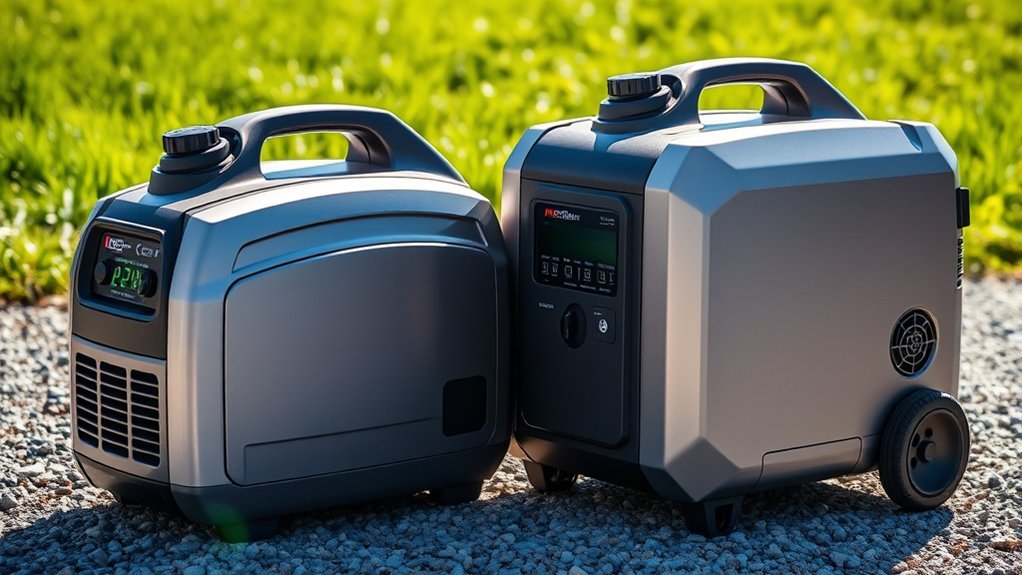
When evaluating portable generators, understanding their fuel consumption and runtime performance is essential for selecting the most effective model. Fuel economy directly impacts operational costs and influences emissions reduction, as less fuel use results in lower pollutant output. Analyzing fuel consumption rates under various loads helps identify models that maximize runtime while minimizing fuel use. Efficient generators optimize fuel-to-power ratios, providing longer runtimes on smaller fuel quantities. Additionally, models with superior fuel economy contribute to reduced emissions, aligning with environmental standards. Precise measurement of these factors allows us to compare performance objectively and select generators that deliver ideal runtime without excessive fuel consumption. Ultimately, this ensures a balance between operational efficiency, cost savings, and environmental responsibility.
How Reliable Are Portable Generators in Different Conditions?
The reliability of portable generators under varying conditions hinges on their design, build quality, and ability to withstand environmental stressors. Weather resilience is critical; models with robust enclosures and corrosion-resistant components perform better in rain, snow, or high humidity. However, extreme weather can still pose challenges, affecting engine performance and electrical stability. Portability challenges also influence reliability; lightweight, compact units may sacrifice durability, making them more susceptible to damage from rough handling or adverse conditions. Conversely, larger models provide added stability but compromise ease of transport. Overall, dependable portable generators incorporate weather-resistant features and durable construction to mitigate environmental impacts, but their performance still varies depending on the severity of conditions and how well they are designed to handle such stressors.
Understanding Power Output and Energy Losses
Understanding power output and energy losses in portable generators requires a precise examination of their electrical and mechanical efficiencies. Energy transfer within the generator involves converting mechanical energy into electrical energy, where inefficiencies cause energy to dissipate as heat. Power regulation plays a critical role, ensuring stable voltage and current, but it can introduce additional losses through components like voltage regulators and electronic circuitry. Mechanical inefficiencies, such as friction in moving parts, also contribute to reduced effective power output. By analyzing these factors, we can identify how much of the input energy translates into usable electrical power versus how much is lost during transfer. Recognizing these aspects allows for better design and operation to optimize overall generator efficiency.
The Role of Maintenance and Quality in Generator Efficiency
Maintaining portable generators through regular inspections and timely replacements guarantees peak performance and minimizes downtime. Utilizing high-quality components reduces wear and enhances overall reliability, directly impacting efficiency. By prioritizing these practices, users can sustain consistent power output and extend the lifespan of their equipment.
Regular Maintenance Practices
How does consistent maintenance impact a generator’s efficiency and lifespan? Regular upkeep guarantees ideal fuel storage conditions, preventing contamination and fuel degradation that can impair combustion efficiency. Well-maintained fuel systems reduce emissions and fuel consumption, directly influencing operational costs. Additionally, routine checks on engine components and lubrication minimize wear, extending the generator’s service life. Proper maintenance also helps control noise levels by ensuring sound-dampening features and exhaust systems function correctly, reducing noise pollution. Neglecting these practices can lead to inefficient fuel use, increased emissions, and premature component failure. Consequently, disciplined maintenance not only sustains high efficiency but also preserves the overall integrity of portable generators, making them more reliable, cost-effective, and environmentally responsible over their service life.
High-Quality Components
High-quality components are fundamental to maximizing a generator’s efficiency and durability, especially when combined with proper maintenance. These components undergo rigorous durability testing to guarantee resilience under continuous use, minimizing breakdowns and extending operational lifespan. Superior parts, such as precision-engineered engines and advanced alternators, contribute to consistent power output and reduce inefficiencies. Additionally, quality components play a critical role in noise reduction, which enhances user experience and compliance with noise regulations. When components are designed with attention to vibration control and sound-dampening materials, the overall operational noise diminishes, leading to quieter performance. Investing in high-quality parts not only improves immediate efficiency but also reduces long-term maintenance costs, making maintenance more effective and ensuring reliable power delivery over time.
Choosing the Most Efficient Portable Generator for Your Needs
Selecting the most efficient portable generator requires a careful assessment of your specific power needs and operational conditions. First, evaluate fuel types, considering options such as gasoline, propane, or dual-fuel systems, which influence efficiency and availability. Second, examine noise levels, as quieter models reduce environmental impact and improve usability in residential areas. Third, analyze load demands—matching generator capacity to your peak power requirements prevents unnecessary fuel consumption and minimizes waste. By weighing these factors, you optimize operational efficiency; for instance, a dual-fuel generator with lower noise emissions offers versatile, environmentally friendly performance. Ultimately, understanding how fuel types and noise levels affect efficiency allows us to select a generator that aligns with our needs while maximizing performance and minimizing operational costs.
Common Myths About Portable Generator Efficiency Debunked
Many common beliefs about portable generator efficiency are misconceptions that can lead users to make suboptimal choices. One widespread myth is that larger, more powerful units always deliver better efficiency; in reality, proper load management and solar integration optimize performance without excess fuel consumption. Another misconception concerns noise reduction; some assume that quieter generators sacrifice efficiency, but advancements in technology demonstrate that noise mitigation can be achieved without compromising output. Additionally, the idea that solar integration reduces overall efficiency is false—integrating solar panels can enhance efficiency by supplementing fuel use, especially in hybrid systems. Recognizing these misconceptions allows for more informed decisions, ensuring that portable generators operate at peak efficiency while addressing practical concerns like noise reduction and sustainable energy sources.
Frequently Asked Questions
How Does Altitude Impact Portable Generator Efficiency?
Altitude effects reduce portable generator efficiency by decreasing air density, which challenges combustion processes. This results in lower power output and increased fuel consumption, requiring adjustments like carburetor tuning or altitude-specific modifications to mitigate efficiency challenges.
Do Inverter Generators Offer Better Efficiency Than Conventional Models?
We find inverter generators offer superior fuel economy and lower noise levels compared to conventional models, thanks to their advanced inverter technology that optimizes power output, making them more efficient and environmentally friendly for varied applications.
How Does Load Size Influence Generator Fuel Consumption?
Load size critically impacts fuel efficiency; as engine load increases, fuel consumption rises proportionally. Maintaining ideal load levels ensures better efficiency, preventing overworking the engine and promoting balanced fuel use for extended generator performance.
What Is the Typical Lifespan of an Efficient Portable Generator?
A typical portable generator lasts 10-20 years, balancing fuel maintenance and noise levels; efficient models extend lifespan through reduced wear, while neglect accelerates degradation, much like a car’s durability depends on upkeep and operating conditions.
Can Using Renewable Fuels Improve Generator Efficiency?
Using renewable fuels can enhance generator efficiency by reducing emissions, which often leads to cleaner combustion. This process improves overall performance, minimizes environmental impact, and supports sustainable energy use, making generators more effective and eco-friendly.
Conclusion
Ultimately, understanding the intricacies of portable generator efficiency enables us to optimize performance and reliability. By examining factors from fuel type to maintenance, we can make informed choices that maximize runtime and minimize waste. Isn’t it our responsibility to select and operate generators with precision? Recognizing these technical elements equips us to achieve dependable power in diverse environments, ensuring both efficiency and sustainability in our energy solutions.