Ad Blocker Detected
Our website is made possible by displaying online advertisements to our visitors. Please consider supporting us by disabling your ad blocker.
Like a modern-day compass guiding us through uncertain terrain, choosing between portable power stations and whole house battery backups hinges on understanding their distinct strengths and limitations. Both options promise energy resilience, but their suitability depends on specific needs, costs, and installation considerations. As we analyze these systems’ technical nuances, it becomes clear that making an informed decision requires careful examination of your energy demands and lifestyle—an exploration that can considerably impact your long-term reliability.
Key Takeaways
- Portable power stations are mobile, suitable for short-term outdoor or emergency use, while whole house backups are stationary, designed for long-term home power.
- Whole house systems have higher capacity, longer battery lifespan, and support continuous power during extended outages.
- Portable units are lower-cost, easy to install, and ideal for temporary needs; home backups involve higher investment and permanent installation.
- Power stations excel in emergency scenarios and renewable integration; whole house backups provide seamless, long-term reliability for critical home functions.
- Choice depends on energy needs, outage frequency, mobility requirements, and long-term sustainability goals.
How Do Portable Power Stations and Whole House Battery Backups Differ?
While both portable power stations and whole house battery backups serve to provide electrical power during outages, they differ markedly in design, capacity, and application scope. Portable units focus on flexible energy storage, offering mobility and ease of use for small to medium loads. They integrate advanced power management systems to optimize energy flow, ensuring efficient operation and prolonging battery life. Whole house backups, however, are designed for high-capacity energy storage, capable of powering an entire residence for extended periods. Their power management systems coordinate multiple circuits, prioritizing critical loads while maximizing energy utilization. This distinction reflects their intended applications: portability and convenience versus comprehensive home coverage. Both rely on sophisticated power management, but their scale and integration fundamentally set them apart.
Which Use Cases Are Best Suited for Portable Power Stations?
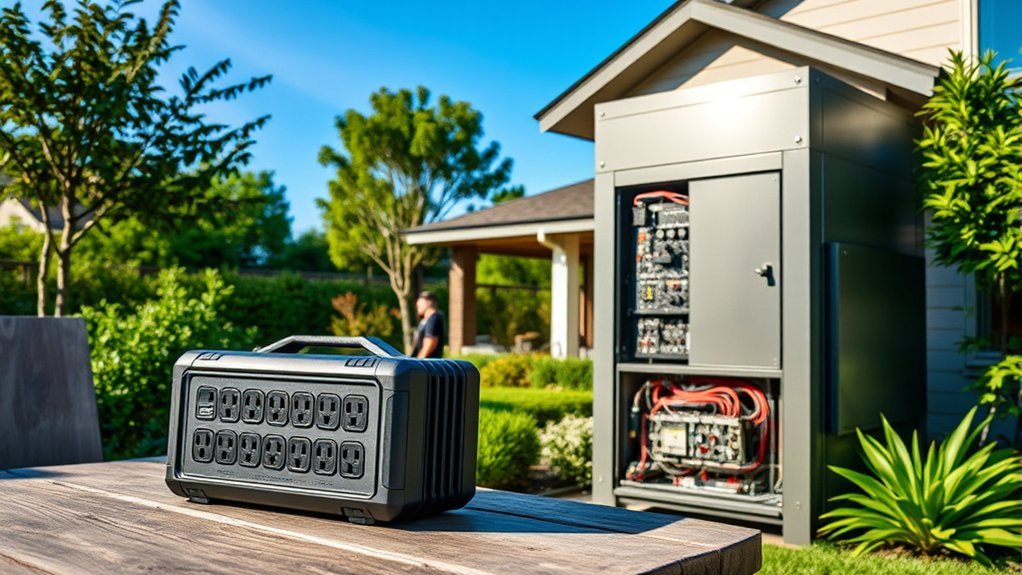
Portable power stations are particularly effective for outdoor adventures and camping, where mobility and ease of use are critical. They provide reliable power for essential devices without the need for grid access, making them ideal for remote locations. Additionally, their portability makes them a valuable resource for emergency power needs during outages or natural disasters.
Outdoor Adventures and Camping
Have you ever wondered which power solutions are best suited for outdoor adventures and camping? Portable power stations excel in these scenarios due to their portability, recharge options, and reliable power output. They effectively support lighting, charging devices, and small appliances. When evaluating their suitability, consider solar efficiency and battery lifespan; high solar efficiency allows quicker recharging via solar panels, while a longer battery lifespan ensures durability over multiple trips. The following table compares key features:
| Feature | Suitability for Camping |
|---|---|
| Solar Efficiency | Critical for remote, off-grid recharging |
| Battery Lifespan | Ensures long-term reliability |
| Portability | Essential for easy transport |
These factors make portable power stations an ideal choice for outdoor enthusiasts seeking dependable, renewable energy solutions.
Emergency Power Needs
When addressing emergency power needs, the versatility and rapid deployment of portable power stations become evident. These units excel in scenarios requiring immediate, reliable power, such as natural disasters or grid outages. Their ability to support renewable integration allows for sustainable energy sources like solar panels, enhancing resilience. Smart technology embedded in modern units facilitates real-time monitoring, efficient power management, and quick troubleshooting, making them ideal for emergency situations. Portable power stations can efficiently power essential devices—medical equipment, communication tools, and lighting—without complex installation. Their mobility allows quick relocation to affected areas, ensuring continuous power supply during critical times. Overall, their adaptability, coupled with advanced features, makes portable power stations well-suited for diverse emergency power needs.
When Is a Whole House Battery Backup the Smarter Choice?
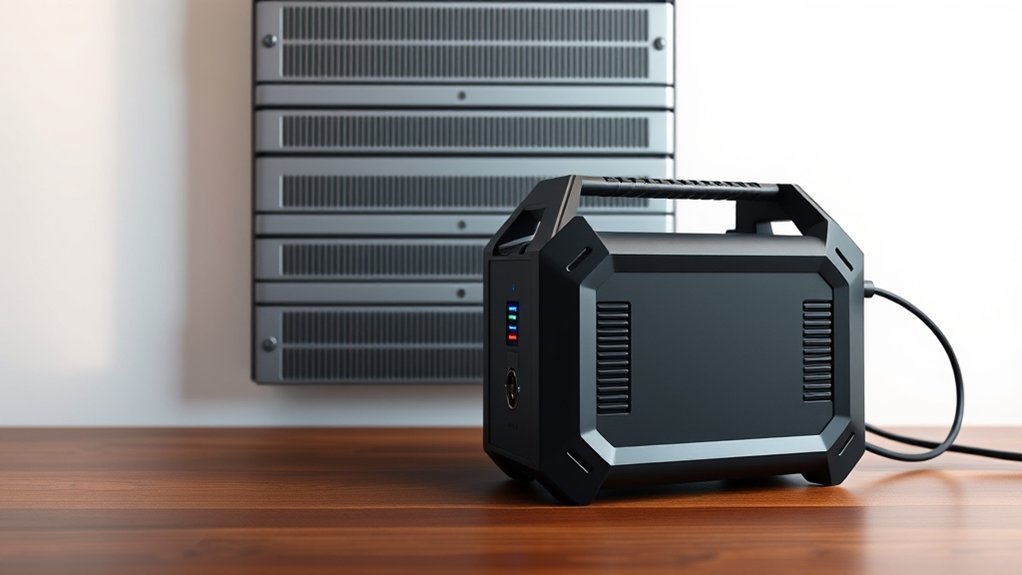
A whole house battery backup becomes the smarter choice when a complete, uninterrupted power supply is essential for maintaining critical home functions during outages. This is especially true for homes integrating renewable energy systems, where seamless energy management is crucial. In a smart home, the ability to automatically prioritize essential circuits ensures continuous operation of security systems, refrigeration, and medical devices. Whole house systems provide higher capacity and longer backup durations compared to portable solutions, making them suitable for prolonged outages. They also allow for better integration with energy storage and management systems, optimizing renewable energy use and reducing reliance on the grid. When reliability, automation, and energy efficiency are top priorities, a whole house battery backup offers a thorough, resilient solution.
What Factors Should You Consider When Choosing Between the Two?
When choosing between a portable power station and a whole house battery backup, we need to evaluate their power capacity and runtime to meet your energy demands effectively. Additionally, factors like portability, ease of installation, and integration into existing infrastructure considerably influence the most suitable choice. Analyzing these technical considerations ensures an informed decision aligned with your specific use case.
Power Capacity and Duration
Evaluating power capacity and duration requires a detailed understanding of your energy demands and the operational limits of each system. Portable power stations generally have lower capacities, suitable for short-term use, with charging speed affecting how quickly they can be replenished after depletion. Whole house battery backups offer markedly higher capacity, capable of sustaining essential appliances over extended periods. When considering these options, it’s vital to assess battery lifespan, as frequent deep discharges can shorten lifespan, impacting long-term reliability. While portable units excel in quick, flexible deployment, their limited capacity restricts prolonged use. Conversely, whole house systems provide sustained power but involve longer installation times and larger capacity considerations. Balancing these factors ensures you select a system aligned with your specific power and duration requirements.
Portability and Installation
Choosing between portable power stations and whole house battery backups involves evaluating how their design influences ease of movement and setup complexity. Portable units excel in mobility due to their compact design aesthetics, allowing quick relocation and minimal installation effort. In contrast, whole house systems require a more permanent, integrated setup, often involving electrical modifications, which can be complex and time-consuming. When considering installation, evaluating the brand reputation is vital, as reputable brands tend to offer clearer guidance and reliable components, reducing setup challenges. Portability hinges on weight, size, and construction quality, while installation depends on compatibility with existing electrical infrastructure. Ultimately, the choice depends on whether you prioritize flexible, on-the-go power or a more permanent, integrated energy solution.
How Do Costs and Installation Requirements Compare?
While both portable power stations and whole house battery backups aim to provide reliable energy, their costs and installation processes differ considerably. A detailed cost analysis reveals that portable power stations typically involve lower upfront expenses, often ranging from a few hundred to a couple thousand dollars, with minimal installation complexity. They are plug-and-play devices requiring no professional setup. Conversely, whole house battery backups involve significant investment, frequently exceeding ten thousand dollars, due to the high-capacity batteries and extensive electrical integration needed. Installation intricacy is also greater, often requiring a licensed electrician to perform site assessments, wiring, and system integration. This difference in costs and installation demands makes each option suitable for different priorities—portability versus all-encompassing home coverage.
Which Backup Power Solution Fits Your Lifestyle and Energy Needs?
Determining which backup power solution best aligns with your lifestyle and energy requirements involves evaluating both your usage patterns and long-term priorities. Portable power stations offer flexibility for intermittent, short-term needs and typically have shorter battery lifespans, making them suitable for occasional use and renewable integration with solar panels. Whole house battery backups provide continuous, reliable power for essential systems, with longer battery lifespans optimized for durability and scalability. If frequent power outages occur or you aim for long-term sustainability, a whole house system may be more appropriate. Conversely, if mobility and quick deployment are priorities, portable stations suit your needs better. Ultimately, understanding your energy consumption, maintenance capacity, and integration goals helps identify the most suitable solution for your lifestyle.
Frequently Asked Questions
How Long Do Portable Power Stations Typically Last per Charge?
Typically, portable power stations last between 3 to 8 hours per charge, depending on usage. Battery lifespan and charging cycles influence longevity, with most units capable of 300-500 cycles before capacity diminishes markedly.
Can Whole House Batteries Integrate With Existing Solar Systems?
Yes, whole house batteries can integrate with existing solar systems, offering improved solar compatibility and extended battery lifespan through optimized charge/discharge cycles, ensuring reliable backup power while maintaining system efficiency and longevity.
What Are the Environmental Impacts of Each Backup Option?
Both options reduce reliance on fossil fuels, lowering your carbon footprint. Portable power stations offer temporary, eco-friendly renewable energy solutions, while whole house batteries provide integrated, long-term sustainability, minimizing environmental impacts through efficient energy storage and reduced emissions.
How Quickly Can Each System Restore Power After an Outage?
In moments of outage, we find that whole house batteries restore power instantly through rapid energy transfer, leveraging higher power capacity, whereas portable stations take seconds to minutes, limited by their smaller capacity and slower energy transfer rates.
Are There Size or Weight Restrictions for Portable Power Stations?
We consider size and weight restrictions for portable power stations based on battery lifespan and weight considerations, ensuring ideal portability without compromising performance, as heavier units often have increased capacity but may hinder mobility and ease of use.
Conclusion
Ultimately, choosing between a portable power station and a whole house backup is like selecting between a nimble sailboat and a sturdy yacht—each suited to different journeys. Portable units offer flexibility and quick deployment, ideal for transient needs, while whole house systems provide a steady, robust foundation for daily life. By analyzing your energy demands and mobility needs, you can navigate toward the solution that guarantees your home remains a resilient harbor in any situation.