Ad Blocker Detected
Our website is made possible by displaying online advertisements to our visitors. Please consider supporting us by disabling your ad blocker.
Choosing between waterproof and non-waterproof portable power stations is like steering a river with shifting currents—each option has its own strengths and limitations. We must analyze their protective features, durability, costs, and practical applications to determine which aligns best with our needs. As we explore these differences, it becomes clear that understanding the environment and usage scenarios is essential for making an informed decision. But what factors truly tip the scale?
Key Takeaways
- Waterproof power stations provide enhanced protection against water, suitable for outdoor and humid environments.
- Non-waterproof models are lighter, more portable, and ideal for indoor or dry conditions.
- Waterproof units tend to be heavier and more expensive but offer better durability and long-term reliability.
- Environmental exposure influences the choice; waterproof stations resist moisture, while non-waterproof ones require dry settings.
- Consider usage scenarios, balancing environmental protection needs with portability, capacity, and budget constraints.
How Waterproof Power Stations Protect Your Devices During Outdoor Adventures
When venturing into outdoor environments where exposure to moisture is inevitable, waterproof power stations are essential for protecting your devices. Their robust sealing mechanisms prevent water ingress, ensuring uninterrupted power supply even in heavy rain or humid conditions. Solar compatibility in these stations allows for sustainable energy harvesting, maintaining device operation without reliance on grid power. Weighing these units involves balancing durability with portability; waterproof models tend to be heavier due to sealed enclosures and rugged construction. This weight consideration is critical for planning extended outdoor activities, where carrying capacity impacts mobility. By safeguarding against moisture damage and integrating renewable energy sources, waterproof power stations offer reliable, resilient power solutions tailored for harsh environments, effectively minimizing risks associated with water exposure during outdoor adventures.
The Advantages of Non-Waterproof Portable Power Stations for Lightweight Travel
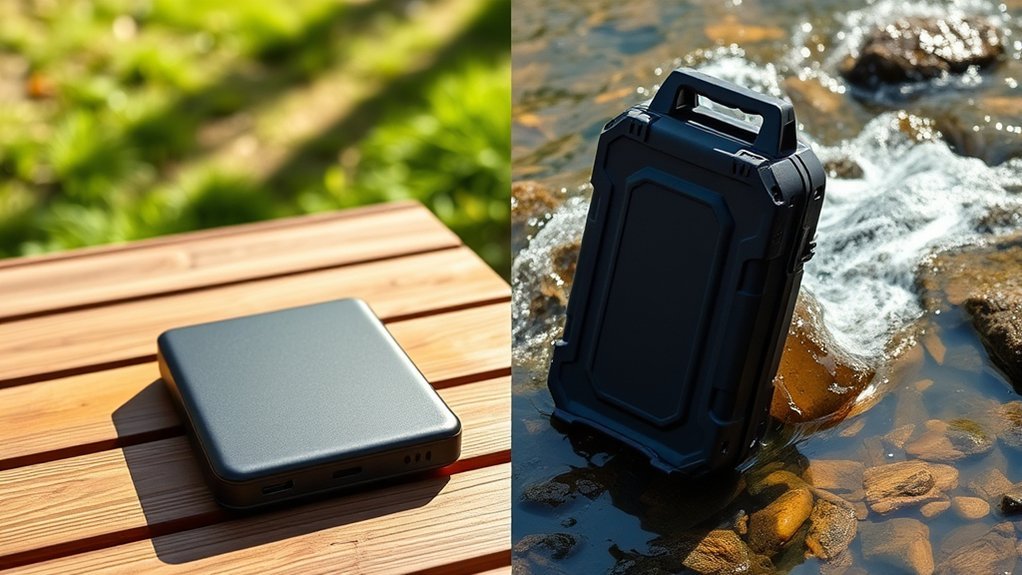
While waterproof power stations excel in protecting devices against moisture, their added weight and bulk can hinder portability. Non-waterproof models, however, often offer a more streamlined design, making them ideal for lightweight travel. They typically provide sufficient battery capacity for short trips or emergency use, focusing on essential power needs without unnecessary bulk. Their charging speed tends to be optimized for quick replenishment, ensuring reliable power availability on the go. The absence of waterproof features reduces weight, enhancing ease of transport and handling. For travelers prioritizing minimalism and efficiency, non-waterproof power stations strike a practical balance between capacity, weight, and charging performance, enabling more flexible, lightweight journeys without compromising essential power functions.
Key Factors to Consider When Choosing Between Waterproof and Non-Waterproof Models
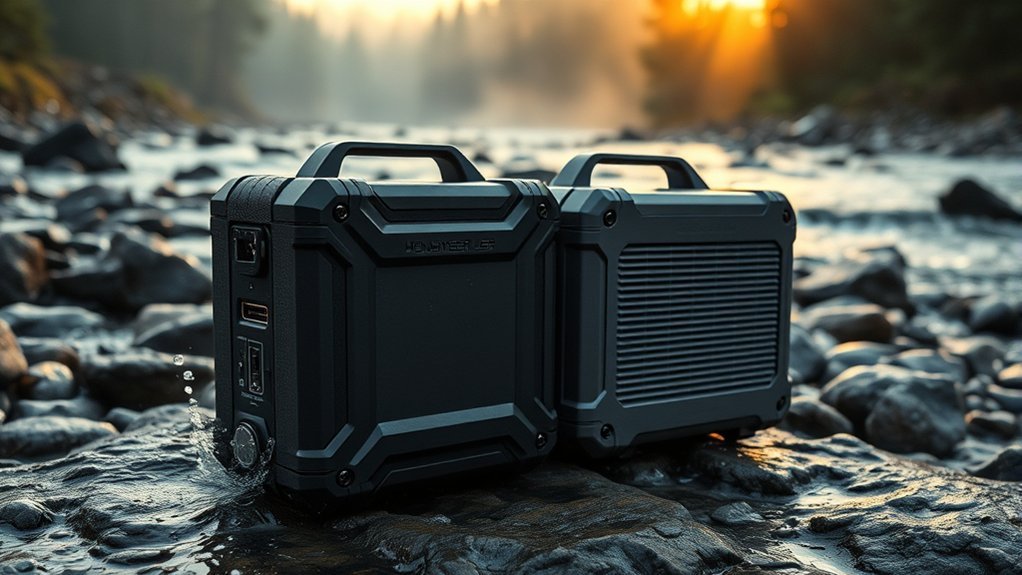
Choosing between waterproof and non-waterproof portable power stations requires careful evaluation of several critical factors. Primarily, we consider battery capacity, which determines how long your devices can run, and whether the model’s waterproof features impact this capacity. Waterproof units often have sealed enclosures that may slightly limit internal cooling, potentially affecting overall capacity, but provide protection in wet environments. Charging speed is also essential; waterproof models tend to incorporate more robust protection systems that might slightly delay charging times, though advances are reducing this gap. When selecting, analyze the intended use environment, balancing the need for environmental protection against performance metrics like battery capacity and charging speed, ensuring the chosen model aligns with operational demands.
Durability and Reliability: Which Power Station Type Performs Better in Harsh Conditions?
In harsh conditions, the durability and reliability of portable power stations become crucial factors that directly impact performance and longevity. Waterproof models often excel here due to their sealed enclosures, which protect internal components from moisture and dust, enhancing overall resilience. Battery chemistry also plays a essential role; lithium-ion batteries with robust thermal management can withstand temperature fluctuations better, improving reliability. Non-waterproof units, while potentially lighter, may rely on less protected circuitry, risking damage in extreme environments. Charging methods influence durability too—solar charging, for example, demands rugged, weather-resistant panels. Overall, waterproof units generally perform better in challenging conditions because their construction and advanced battery chemistries support sustained operation despite environmental stressors, ensuring consistent power delivery and extended lifespan.
Cost and Value: Are Waterproof Units Worth the Extra Investment?
Investing in a waterproof portable power station typically involves a higher upfront cost compared to non-waterproof models, but this expense must be evaluated against the potential benefits and long-term value. Waterproof units often feature enhanced protection for critical components, potentially extending battery capacity and maintaining ideal charging speed over time. They are especially valuable in environments where exposure to moisture could compromise performance. However, the additional cost may not be justified for all users. Consider these factors:
Waterproof power stations offer durability and reliability in moisture-prone environments, but weigh costs against long-term benefits.
- Increased durability reduces replacement and maintenance expenses
- Superior weather resistance ensures consistent performance in adverse conditions
- Potential for higher battery capacity and sustained charging speeds in challenging environments
Ultimately, the decision hinges on your specific needs, environmental risks, and how much value you place on long-term reliability versus initial investment.
Practical Usage Scenarios: When Is Waterproof Essential, and When Is Non-Waterproof Sufficient?
Evaluating the appropriate power station depends on exposure to moisture, environmental conditions, and intended use. Waterproof models are critical in wet environments or during outdoor activities with potential water contact, while non-waterproof units often suffice for indoor or emergency scenarios. Understanding these practical contexts helps determine when the added protection is justified.
Wet Environments and Exposure
Have you considered how exposure to water influences the choice between waterproof and non-waterproof portable power stations? Waterproof durability is critical in environments with consistent or unpredictable moisture, where protection against splashes, rain, or submersion is necessary. Conversely, non-waterproof units offer greater flexibility in design, often benefiting from lighter weight and simpler maintenance, suitable for dry conditions. When evaluating wet environments, consider:
- The likelihood of continuous water exposure versus sporadic splashes
- The level of protection needed against harsh weather or accidental submersion
- The importance of portability versus rugged durability
Understanding these factors helps determine whether waterproof durability is essential or if non-waterproof flexibility suffices, ensuring ideal performance and longevity in wet conditions.
Outdoor Adventure Needs
When planning outdoor adventures, the decision to choose a waterproof or non-waterproof portable power station hinges on specific environmental conditions and activity requirements. For extended trips where high battery capacity is essential, especially in remote areas, a waterproof station offers added protection against unexpected weather, guaranteeing consistent power delivery. Conversely, if the adventure involves short durations or predictable weather, a non-waterproof model with fast charging speed may suffice, reducing weight and cost. The choice ultimately depends on balancing battery capacity needs with environmental exposure risks. Waterproof stations provide durability in unpredictable conditions, while non-waterproof units can deliver rapid recharge times in controlled environments. Evaluating these factors ensures ideal performance aligned with the adventure’s demands.
Indoor and Emergency Use
Indoor and emergency scenarios often demand reliable power sources, but the necessity of waterproofing depends on specific conditions. For indoor convenience and emergency preparedness, non-waterproof power stations generally suffice, provided they’re protected from moisture. However, in environments with potential water exposure or high humidity, waterproof units become critical. Consider these factors:
- Proximity to water sources or high humidity levels
- Risk of accidental spills or flooding during emergencies
- Need for durability in unstable or unpredictable environments
Waterproof stations ensure continuous operation in adverse conditions, reducing risk of failure. Conversely, non-waterproof models offer lighter, more portable options where environmental control is manageable. Ultimately, the choice hinges on evaluating exposure risk and the importance of uninterrupted power during critical situations.
Maintenance and Longevity: How Each Type Handles Wear and Tear Over Time
Waterproof portable power stations are generally designed with enhanced seals and ruggedized casings, which help mitigate the effects of environmental exposure over time. This design focus improves corrosion resistance, reducing the risk of moisture-induced damage, and extends overall battery lifespan. Because these stations are built to endure harsh conditions, their internal components, including batteries, tend to experience less degradation from external elements. Conversely, non-waterproof models lack such protective features, making them more susceptible to corrosion and environmental wear, which can shorten battery lifespan and increase maintenance needs. Over time, waterproof units typically require less frequent servicing related to environmental damage, whereas non-waterproof stations may need regular inspections and repairs to maintain performance. Ultimately, waterproof designs offer better longevity in challenging conditions, ensuring sustained reliability.
Final Tips for Selecting the Right Portable Power Station Based on Your Needs
Selecting the appropriate portable power station requires careful consideration of your specific energy needs and usage environment. Key factors include examining battery technology, which influences capacity, recharge cycles, and longevity. Additionally, evaluating charging options—such as AC, solar, or vehicle power—ensures flexibility in diverse scenarios.
To refine your choice, consider:
- The capacity and type of battery technology suitable for your energy demands
- Compatibility with multiple charging options for versatility
- Power output capacity relative to your device requirements
Frequently Asked Questions
Are There Any Safety Concerns Specific to Waterproof Power Stations?
Waterproof power stations reduce moisture ingress, but safety concerns include corrosion resistance and potential electrical faults if seals weaken, so regular inspection is essential. We recommend thorough testing to maintain peak safety and performance standards.
How Do Waterproof Power Stations Impact Overall Device Weight?
Waterproof power stations typically add weight due to reinforced casing, affecting weight distribution and carrying convenience. While they enhance durability, the extra bulk can hinder portability, prompting us to weigh protection against practicality for ideal device performance.
Can Non-Waterproof Stations Be Upgraded to Waterproof Models Later?
Non-waterproof stations generally can’t be upgraded to waterproof models due to structural differences, impacting durability comparison. Upgrade options are limited, so selecting a waterproof station initially offers better long-term protection and resilience against environmental factors.
What Certifications Ensure a Power Station’s Waterproof Capabilities?
We note that IP ratings, like IP67 or IP68, certify a power station’s waterproof capabilities, ensuring weather resistance through stringent material durability standards, which are critical for reliable performance in challenging environments.
Do Waterproof Units Have Faster Charging Times Than Non-Waterproof Ones?
Waterproof units don’t inherently have faster charging speeds; their battery efficiency is similar to non-waterproof models. We analyze charging speed and durability, finding waterproofing primarily enhances protection, not necessarily improving charge times or efficiency.
Conclusion
Ultimately, choosing between waterproof and non-waterproof portable power stations hinges on our specific needs and environments. Picture a rugged trail rainstorm versus a sunny indoor setup—each demands a different level of protection. By analyzing durability, cost, and practical use, we can select a station that seamlessly integrates into our adventures or daily routines. It’s about aligning technology with the unpredictable nature of outdoor life and the precision of our energy requirements.