Ad Blocker Detected
Our website is made possible by displaying online advertisements to our visitors. Please consider supporting us by disabling your ad blocker.
When evaluating portable power devices, understanding their efficiency is vital for optimizing performance and longevity. We analyze how effectively these units convert input energy into usable power, considering factors like battery capacity and cycle stability. This process involves precise testing protocols and measurement tools to identify internal inefficiencies that may impact real-world use. Exploring these methods reveals essential insights that can influence design choices and user decisions, making it important to grasp the nuances of efficiency testing before proceeding further.
Key Takeaways
- Efficiency testing measures how effectively portable power devices convert input energy into usable power, focusing on battery performance and internal components.
- Standardized testing protocols control variables like temperature and load to ensure accurate, repeatable efficiency measurements.
- Repeated charge-discharge cycles assess battery longevity and degradation, providing insights into long-term performance.
- Analyzing internal components such as voltage regulators identifies energy losses affecting overall efficiency.
- Test results guide design improvements, optimize power management, and ensure device performance under varying environmental conditions.
What Is Efficiency Testing for Portable Power Devices?
What precisely does efficiency testing for portable power devices entail? It involves systematically measuring how effectively a device converts input energy into usable power, focusing on key metrics like battery longevity and power capacity. We analyze the device’s ability to sustain performance over multiple charge-discharge cycles, guaranteeing minimal degradation. By evaluating power capacity, we determine whether the device delivers consistent output relative to its rated specifications. Efficiency testing also evaluates internal components, such as voltage regulators and converters, to identify energy losses. This process provides a clear picture of how well the device maintains its operational integrity over time, enabling us to predict lifespan and reliability. Ultimately, these tests help optimize design, enhance durability, and ensure that portable power sources meet expected performance standards.
Why Measuring Energy Efficiency Matters for Your Portable Power Sources
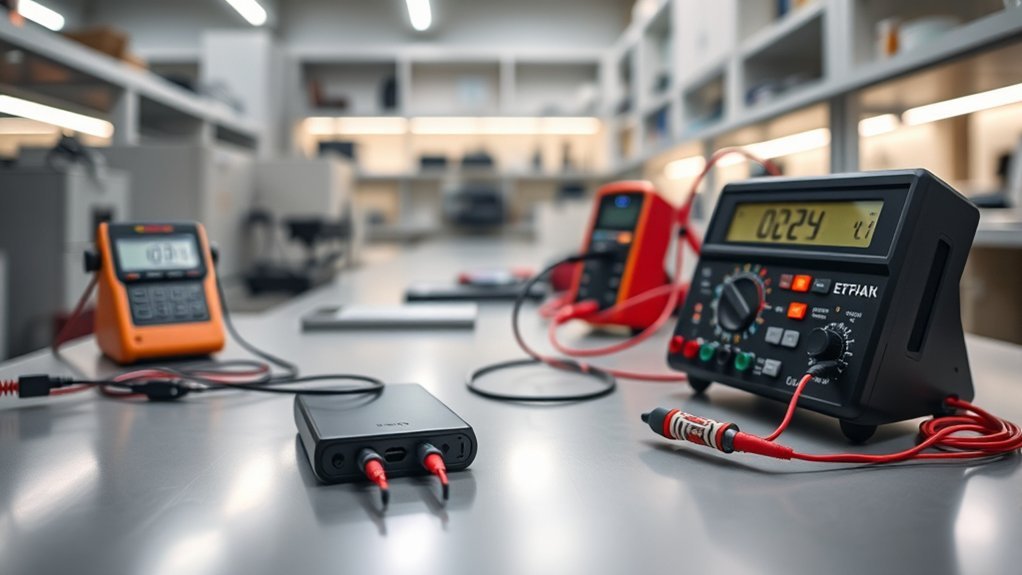
Understanding the importance of measuring energy efficiency in portable power sources is crucial for optimizing performance and ensuring reliability. Accurate efficiency metrics directly influence battery lifespan by revealing how effectively energy is stored and used, reducing unnecessary strain on components. Furthermore, efficiency impacts charging speed, as higher efficiency minimizes energy loss during recharging, leading to faster, more consistent charging cycles. By quantifying these aspects, we can identify inefficiencies that may cause premature battery degradation or inconsistent power delivery. This analytical approach informs design improvements, extends device longevity, and enhances user experience. Ultimately, precise efficiency measurements enable us to develop portable power sources that are not only more durable but also more responsive to the demands of modern portable applications.
Key Factors to Consider When Testing Portable Power Efficiency
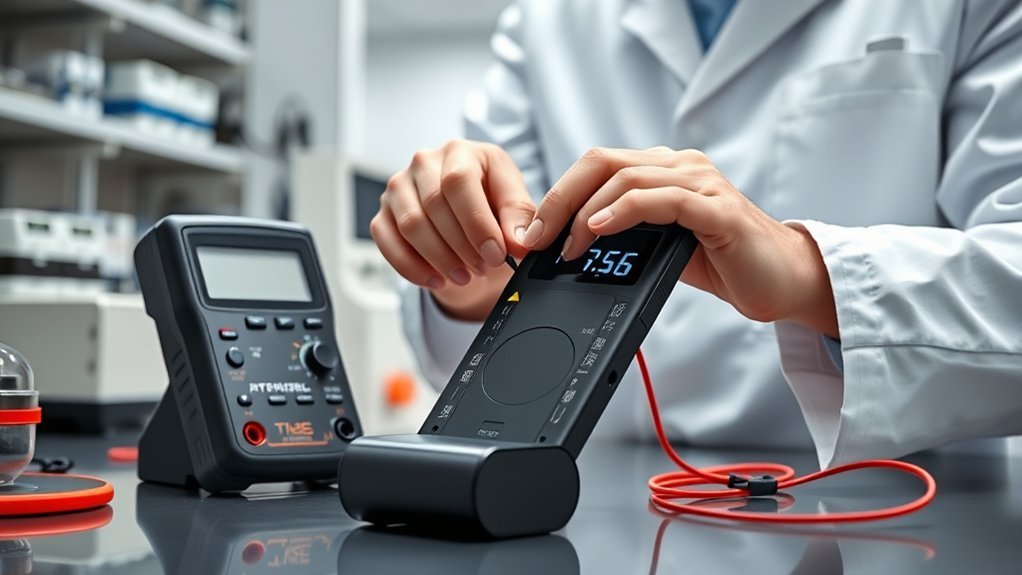
Effective testing of portable power efficiency requires careful consideration of several key factors that can influence measurement accuracy. First, battery lifespan impacts efficiency metrics, as aging batteries exhibit reduced performance, skewing results. Second, portability considerations are vital; a lightweight, compact unit may have different efficiency characteristics than larger models. Third, environmental conditions such as temperature fluctuations can affect power output and measurement consistency. Fourth, the testing setup itself must be standardized, ensuring consistent load profiles and measurement techniques. Addressing these factors helps identify true efficiency performance, enabling accurate comparisons across devices. By focusing on battery health, portability attributes, environmental stability, and rigorous testing protocols, we can derive meaningful insights into portable power units’ efficiency.
How to Conduct Accurate Efficiency Tests on Portable Power Units
To conduct accurate efficiency tests on portable power units, we must establish a standardized testing protocol that guarantees consistency and reliability. This involves systematically measuring output efficiency under controlled conditions, accounting for variables like temperature and load. Monitoring battery longevity during tests is vital, as it reflects how efficiency may degrade over time with repeated charging cycles. We track the number of charging cycles to assess how performance diminishes, ensuring the unit maintains peak output over its lifespan. Precise documentation of input versus output power, along with cycle count data, enables us to evaluate true operational efficiency. By maintaining strict testing parameters, we can reliably compare different units and determine their long-term performance, ensuring accurate and meaningful efficiency assessments.
Common Methods and Tools Used in Efficiency Testing
When conducting efficiency testing on portable power units, selecting appropriate methods and tools is essential to obtaining accurate and reliable data. Precise measurement techniques help evaluate how battery chemistry influences efficiency and how power density impacts performance.
Key methods include:
- Electrical load testing – simulates real-world usage, measuring voltage, current, and power output under controlled conditions.
- Thermal analysis – assesses heat generation, which correlates with efficiency losses linked to battery chemistry.
- Capacitance and impedance testing – evaluates internal resistance and power density, critical for performance insights.
- Cycle life testing – gauges long-term efficiency, revealing how battery chemistry affects degradation over time.
These tools ensure exhaustive efficiency assessments, enabling informed optimization decisions.
Interpreting Efficiency Test Results to Find the Best Power Source
Interpreting efficiency test results requires a systematic approach to identify the most suitable power source for specific applications. We analyze metrics like battery lifespan and charging cycles to assess long-term performance. Higher efficiency indicates less energy loss, but it’s also essential to evaluate how the power source performs over multiple cycles. For example, a battery with an initial high efficiency may degrade quickly, reducing overall lifespan. The following table summarizes key factors:
| Power Source | Efficiency (%) | Expected Battery Lifespan | Charging Cycles |
|---|---|---|---|
| Lithium-ion | 85-95 | 500-1000 | 300-500 |
| Lead-acid | 70-85 | 200-300 | 200-400 |
| Lithium-polymer | 88-96 | 600-1200 | 500-700 |
| Nickel-metal hydride | 75-85 | 500-800 | 400-600 |
| Solid-state | 90-98 | 1000+ | 1000+ |
This data helps us determine the most appropriate balance between efficiency, lifespan, and cycle durability.
Comparing Different Portable Power Devices Based on Efficiency Data
By analyzing efficiency data across various portable power devices, we can objectively compare their performance to identify the most suitable option for specific applications. Key factors include battery chemistry, which influences charge retention and cycle life, and power capacity, determining how much energy each device can deliver.
Our comparison focuses on:
- Energy conversion effectiveness—how effectively stored energy converts to usable power.
- Battery chemistry impact—comparing lithium-ion, lithium-polymer, and other chemistries on efficiency.
- Power capacity relative to effectiveness—evaluating devices with similar capacities for peak performance.
- Discharge rates—assessing how quickly devices lose efficiency under load.
This analytical approach ensures precise selection based on measurable performance metrics, tailored to specific energy demands.
Tips to Improve the Energy Efficiency of Your Portable Power System
Enhancing the energy efficiency of your portable power system involves targeted adjustments that optimize performance and extend battery life. Prioritizing controlled charging cycles minimizes stress on the battery, reducing degradation and preserving its lifespan. Avoid frequent full discharges and overcharging, as these practices accelerate capacity loss. Implementing ideal charging protocols, such as maintaining charge levels between 20% and 80%, can greatly prolong battery lifespan. Additionally, selecting high-quality, compatible chargers ensures consistent voltage delivery, reducing energy waste. Regularly monitoring system performance allows early detection of inefficiencies, enabling timely adjustments. By mastering these technical strategies, you improve energy transfer efficiency, maximize runtime, and extend the useful life of your portable power system, ensuring sustained operational reliability and cost-effectiveness over time.
Limitations and Challenges in Efficiency Testing of Portable Power Devices
Measurement inconsistencies and environmental variability pose significant challenges to accurately evaluating portable power device efficiency. Fluctuations in test conditions can lead to data discrepancies, undermining result reliability. Addressing these issues requires rigorous standardization and controlled testing environments to ensure meaningful comparisons.
Measurement Inconsistencies Arise
Despite advances in testing methodologies, inconsistencies in measurement often hinder accurate efficiency assessments of portable power devices. Variations stem from factors such as battery degradation, which affects capacity and discharge characteristics, and fluctuating power density, influencing performance metrics. Key issues include:
- Inconsistent load profiles that fail to reflect real-world usage, skewing efficiency data.
- Measurement timing differences that overlook battery aging and degradation over time.
- Variability in test equipment calibration leading to discrepancies between labs.
- Environmental controls that inadequately simulate operational conditions, impacting power density and device responses.
These challenges complicate comparisons and hinder precise evaluation of portable power efficiency, emphasizing the need for standardized protocols to address measurement variability.
Environmental Variability Impact
Environmental variability introduces significant challenges in accurately evaluating the efficiency of portable power devices. Fluctuating climate conditions, such as temperature and humidity shifts, directly affect device performance, complicating consistent testing. Achieving climate resilience in testing protocols becomes essential to reflect real-world operational environments reliably. Furthermore, such variability can hinder regulatory compliance, as standards often require controlled conditions that are difficult to replicate across diverse environments. These factors demand adaptable testing frameworks capable of accounting for environmental fluctuations without sacrificing precision. Ensuring accurate efficiency assessments necessitates rigorous control and documentation of ambient conditions during testing, alongside robust calibration procedures. Ultimately, understanding and mitigating environmental variability’s impact is critical for developing portable power solutions that are both resilient to climate challenges and compliant with evolving regulatory standards.
Making Smarter Choices: Using Efficiency Testing to Select the Right Portable Power Source
How can we guarantee we’re choosing the most efficient portable power source for our needs? Efficiency testing provides critical insights into battery longevity and power management. By systematically evaluating performance metrics, we can identify sources that maximize runtime while minimizing energy loss.
Efficiency testing reveals the best portable power sources by maximizing runtime and minimizing energy loss.
Key considerations include:
- Energy Conversion Efficiency: Analyzing how effectively the device converts stored energy into usable power.
- Charge Cycles and Battery Longevity: Assessing how well the power source maintains performance over repeated use.
- Power Management Features: Evaluating integrated systems that optimize energy flow and prevent wastage.
- Environmental Adaptability: Ensuring the source performs reliably under variable conditions affecting efficiency.
These factors help us make informed, data-driven decisions, ensuring we select a portable power source tailored to our specific energy demands.
Frequently Asked Questions
How Often Should Efficiency Testing Be Performed on Portable Power Devices?
We recommend testing portable power device efficiency quarterly, including battery calibration checks and power consumption analysis, to guarantee peak performance and longevity, especially under varying load conditions and environmental factors.
What Safety Precautions Are Essential During Efficiency Testing?
Aren’t safety protocols crucial during efficiency testing? We guarantee proper use of testing equipment, wear personal protective gear, and follow manufacturer guidelines strictly, minimizing risks like electrical shock or equipment damage through meticulous safety precautions.
Can Efficiency Testing Damage or Reduce the Lifespan of Portable Power Units?
Efficiency testing can cause battery degradation if done improperly, potentially reducing lifespan. However, when conducted with precise methods and accurate testing, the risk is minimized, ensuring reliable results without compromising the portable power unit’s longevity.
How Do Environmental Factors Affect Efficiency Testing Results?
Environmental conditions act like unpredictable weather, clouding testing accuracy by influencing battery performance. Fluctuations in temperature, humidity, and pressure distort results, making it crucial to control these factors for precise efficiency testing outcomes.
Are There Industry Standards or Certifications for Portable Power Efficiency Testing?
We adhere to industry standards like IEC and UL certifications for portable power efficiency testing, emphasizing battery longevity and proper charging protocols, ensuring our methods meet rigorous performance benchmarks and provide reliable, consistent results across diverse environmental conditions.
Conclusion
By rigorously testing efficiency, we gain critical insights into portable power device performance, enabling us to identify weaknesses and optimize design. For example, a recent case study revealed that upgrading battery management systems enhanced runtime by 15%. Such data-driven decisions help us choose more reliable, energy-efficient solutions, ultimately extending device longevity and reducing energy waste. Embracing precise efficiency testing is essential for making informed, technical choices that maximize power system performance in real-world applications.