Ad Blocker Detected
Our website is made possible by displaying online advertisements to our visitors. Please consider supporting us by disabling your ad blocker.
Did you know that up to 40% of the energy generated in power stations can be lost before it reaches end-users? These losses stem from multiple factors, including inefficiencies in turbines, electrical resistance, and transmission distances. Understanding where and why these losses occur is essential for improving overall efficiency. As technology advances, addressing these challenges becomes more feasible, prompting us to think about how innovations could make our energy systems more sustainable and cost-effective.
Key Takeaways
- Energy dissipates as heat and noise during conversion and transmission, reducing overall efficiency.
- Resistance in conductors causes electrical energy to convert into heat, leading to power losses.
- Mechanical friction and thermal inefficiencies in turbines and generators waste energy.
- Aging equipment and poor maintenance increase wear and decrease operational efficiency.
- Infrastructure limitations and reactive power issues hinder optimal energy flow and grid stability.
What Causes Energy Losses in Power Stations?
Energy losses in power stations primarily result from the inherent inefficiencies in converting and transmitting energy. These losses are influenced by the type of energy source used, such as renewable energy, which can reduce environmental impact but still faces conversion inefficiencies. For instance, solar and wind power involve energy transformations—solar panels convert sunlight, and turbines harness kinetic energy—where some energy dissipates as heat or noise. Transmission over long distances also causes resistive losses in cables, further decreasing overall efficiency. While renewable energy sources tend to have a lower environmental impact, they are not immune to these inherent inefficiencies. Recognizing these factors helps us understand how energy loss impacts the sustainability and environmental footprint of power stations, emphasizing the importance of optimizing conversion and transmission processes.
Inefficiencies in Turbines and Generators
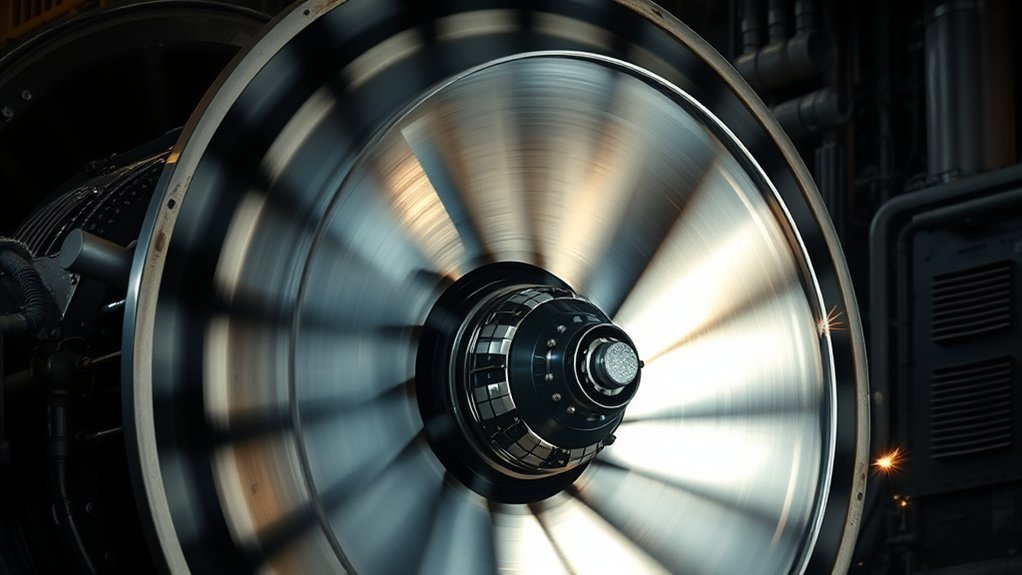
We observe that mechanical friction within turbines and generators causes unavoidable energy losses that reduce overall efficiency. Thermal inefficiencies also play a significant role, as heat generated during operation diminishes the energy available for conversion. Additionally, magnetic field limitations constrain the maximum achievable power output, further impacting the system’s effectiveness.
Mechanical Friction Losses
Mechanical friction losses in turbines and generators represent a significant source of efficiency reduction within power stations. These losses arise from contact between moving parts, resulting in energy dissipation primarily as heat. To mitigate this, vibrational damping techniques are employed to reduce oscillations that exacerbate friction wear. Proper lubricating techniques are essential, ensuring continuous, uniform lubrication that minimizes metal-to-metal contact and frictional resistance. High-quality lubricants reduce wear and thermal stress, maintaining component alignment and smooth operation. Regular maintenance of lubrication systems, along with the implementation of damping materials, helps control vibrational energy, thereby decreasing mechanical friction. These measures collectively improve the operational efficiency of turbines and generators, ultimately reducing energy losses attributable to mechanical friction.
Thermal Inefficiencies
Thermal inefficiencies in turbines and generators stem from heat losses that occur during operational processes, leading to reduced overall efficiency. These losses originate from imperfect combustion, heat conduction, and radiation, which dissipate energy that could otherwise generate electricity. Such inefficiencies impact the integration of renewable sources like solar, as excess heat reduces system responsiveness and can destabilize the grid. To optimize performance, power stations focus on:
- Improving heat exchange mechanisms
- Utilizing advanced cooling systems
- Minimizing thermal conduction losses
- Enhancing turbine and generator material resilience
Addressing thermal inefficiencies is vital for maintaining grid stability, especially as renewable energy penetration increases. Reducing heat loss not only boosts efficiency but also guarantees more reliable energy delivery in diverse operational conditions.
Magnetic Field Limitations
Magnetic field limitations considerably constrain the efficiency of turbines and generators by restricting the maximum achievable electrical output. Magnetic saturation occurs when the core material cannot magnetize further, capping flux density and reducing efficiency. This saturation limits the magnetic field strength, preventing the generator from reaching higher power levels. Additionally, field shielding is used to contain and direct magnetic flux, but it introduces losses through eddy currents and hysteresis. These losses diminish the effective magnetic field, further reducing energy conversion efficiency. As a result, the design must balance magnetic saturation and effective field shielding to optimize performance. Understanding these magnetic field limitations is essential for improving generator capacity and minimizing energy losses in power stations.
Energy Loss During Transmission and Distribution
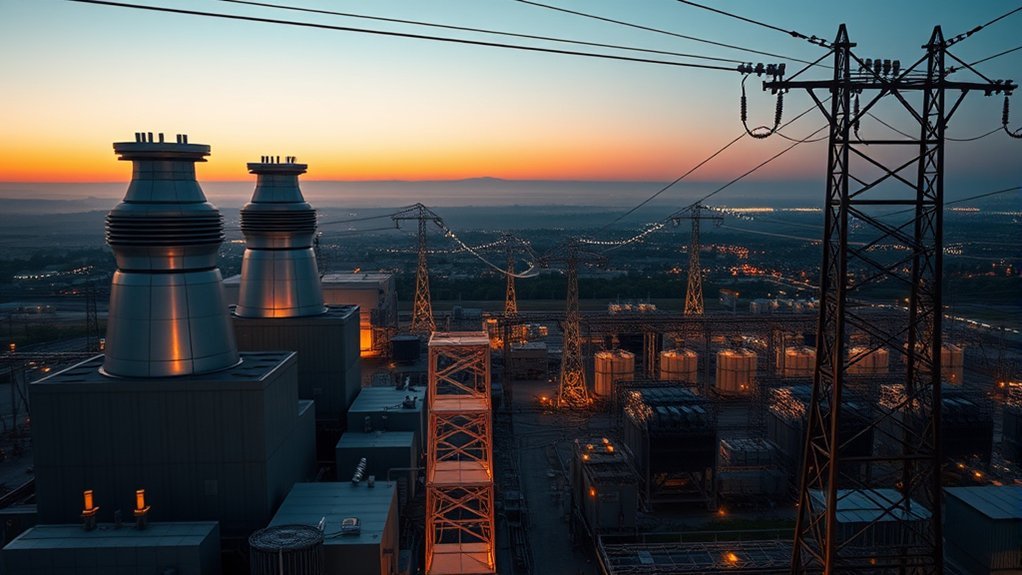
Although power stations generate electricity efficiently, a significant portion of that energy is lost during transmission and distribution. This loss primarily results from resistance in conductors, which converts electrical energy into heat, and from reactive power issues affecting grid stability. As renewable integration increases, maintaining grid stability becomes more complex, often requiring higher transmission capacities. Key factors include:
Energy losses during transmission hinder efficiency and challenge renewable integration.
- Resistance in transmission lines causing resistive losses
- Voltage drops reducing delivered energy efficiency
- Reactive power affecting voltage regulation
- Infrastructure limitations hindering ideal energy flow
These losses diminish overall system efficiency and complicate efforts to expand renewable sources. Understanding and addressing these technical challenges is essential for minimizing energy waste and ensuring reliable, sustainable power delivery.
Heat Losses and Thermal Inefficiencies
Heat losses in power stations occur primarily due to the conversion of electrical energy into thermal energy within components like transformers, generators, and conductors. These thermal inefficiencies directly reduce overall efficiency, as excess heat must be dissipated or managed. Advances in renewable integration challenge traditional thermal losses, prompting innovations aimed at minimizing waste heat and optimizing energy conversion processes. Policy incentives increasingly support research into more efficient thermal management systems, encouraging the adoption of technologies that reduce heat dissipation. By improving thermal efficiency, power stations can better align with sustainability goals and renewable energy integration strategies. Addressing heat losses is essential for maximizing energy output and reducing environmental impact, making thermal efficiency a critical focus in modern power generation.
Impact of Equipment Age and Maintenance
As power stations age, their equipment tends to experience increased wear and tear, which directly impacts operational efficiency and reliability. Over time, the equipment lifespan diminishes, making regular maintenance schedules critical for peak performance. Neglecting timely maintenance accelerates degradation, leading to higher energy losses.
Key impacts include:
- Reduced thermal efficiency due to worn components
- Increased likelihood of unplanned outages
- Greater energy consumption for the same output
- Elevated risk of equipment failure and safety hazards
Maintaining equipment through scheduled inspections and timely part replacements helps mitigate energy losses caused by aging infrastructure. Understanding the relationship between equipment age and maintenance is essential for maximizing power station operations and minimizing energy dissipation.
Innovative Technologies to Reduce Energy Losses
Advancements in turbine design, such as aerodynamic improvements, considerably reduce mechanical losses and improve overall efficiency. Additionally, implementing smart energy monitoring systems enables real-time detection of inefficiencies and facilitates targeted maintenance. Coupling these with high-efficiency conductors minimizes electrical losses, further optimizing power transmission within stations.
Advanced Turbine Designs
How can turbine designs evolve to minimize energy losses in power stations? Advanced turbines focus on optimizing aerodynamic blades to reduce drag and improve airflow efficiency. Innovations also include enhanced cooling systems that maintain ideal operating temperatures, preventing efficiency drops from heat-related stress. These improvements enable turbines to operate closer to their theoretical maximum efficiency. Key strategies involve:
- Utilizing aerodynamically optimized blades to minimize turbulence and energy dissipation
- Implementing advanced cooling systems for better thermal management
- Incorporating variable blade pitch for adaptive airflow control
- Employing precision manufacturing to reduce surface imperfections that cause energy losses
Smart Energy Monitoring
Smart energy monitoring systems are transforming how we identify and reduce energy losses in power stations by providing real-time, granular data on operational performance. These systems enhance monitoring accuracy, allowing us to track energy consumption patterns with precision. By integrating advanced sensors and data analytics, we can detect inefficiencies and anomalies that were previously overlooked. This heightened visibility enables targeted interventions, reducing waste and optimizing system efficiency. Accurate measurement of energy flows is crucial for minimizing losses, especially in complex power station environments where multiple variables influence performance. As a result, we can make informed decisions, improve maintenance schedules, and implement corrective actions swiftly. Overall, smart energy monitoring is a essential technology for advancing energy efficiency and curbing unnecessary energy consumption in power generation.
High-Efficiency Conductors
High-efficiency conductors are at the forefront of reducing energy losses in power transmission and distribution systems. These conductors utilize advanced conductive materials designed to maximize electrical conductivity, minimizing resistive losses. Innovations include the use of high-temperature superconductors, which offer near-zero resistance at specific temperatures, and aluminum-conductor composites that combine low weight with high conductivity. Additionally, optimizing conductor cross-sectional designs enhances current-carrying capacity while reducing resistive heat. Implementing these technological advancements leads to significant efficiency gains, lower operational costs, and decreased environmental impact. As we improve the quality of conductive materials and refine conductor engineering, the potential for reducing energy losses becomes increasingly feasible, making high-efficiency conductors a critical component in modern power infrastructure.
How Improving Power Station Efficiency Benefits the Environment and Economy
Enhancing power station efficiency directly reduces fuel consumption and minimizes the emission of greenhouse gases, which is essential for mitigating climate change. Improved efficiency enables greater integration of renewable energy sources, lowering reliance on fossil fuels and decreasing overall emissions. Additionally, increased efficiency attracts policy incentives that support cleaner energy development, fostering investments in technologies like combined heat and power systems. These policies incentivize operational improvements that maximize output while reducing environmental impact. By optimizing energy conversion processes, we also strengthen economic stability through reduced fuel costs and enhanced grid reliability. The combination of technological advancements and supportive policy frameworks creates a sustainable cycle—reducing emissions, promoting renewable integration, and boosting economic resilience. This multifaceted approach emphasizes the direct link between efficiency gains and environmental and economic benefits.
Frequently Asked Questions
How Do Renewable Energy Sources Compare in Efficiency to Traditional Power Stations?
Renewable sources like solar and wind often have lower transmission efficiency and energy storage challenges compared to traditional power stations, but they excel in sustainability. We analyze these factors to optimize overall efficiency and reduce energy loss.
What Role Does Grid Design Play in Energy Loss Reduction?
We find that optimized grid topology and high-quality transmission lines considerably reduce energy loss by minimizing resistance and line length, ensuring efficient power flow. Proper design enhances reliability and decreases unnecessary energy dissipation across the network.
Can Software Optimization Improve Power Station Energy Efficiency?
Software enhancement, utilizing real-time monitoring and AI algorithms, can considerably improve power station energy efficiency by swiftly detecting inefficiencies and adjusting operations dynamically, ensuring ideal performance and minimizing energy loss through continuous, data-driven decision-making.
How Do Environmental Regulations Impact Power Station Energy Losses?
Environmental regulations, like emission controls, often lead to energy losses due to additional equipment and operational constraints. We must balance regulatory compliance with efficiency, ensuring emission limits are met without considerably compromising power station energy performance.
What Future Innovations Could Drastically Reduce Power Station Energy Waste?
We believe innovations like advanced energy storage and waste heat recovery systems will revolutionize efficiency. By symbolizing energy flow’s harmony, these technologies optimize power use, drastically reducing waste heat and transforming power stations into sustainable, energy-efficient systems.
Conclusion
By addressing inefficiencies and adopting innovative technologies, we can markedly reduce energy losses in power stations. For example, upgrading equipment and optimizing maintenance can improve overall efficiency by up to 10%, translating into substantial economic and environmental benefits. This not only lowers operational costs but also decreases greenhouse gas emissions, making our energy systems more sustainable. As we continue to refine these processes, the potential for cleaner, more efficient power generation becomes increasingly attainable, benefiting society as a whole.